Color consistency is one of the most visible and commercially critical quality attributes in plastic film production. Whether it is a vibrant shopping bag, a precisely tinted agricultural mulch film, or a brand-colored shrink wrap, the end customer judges quality by what they see. At the heart of this visual performance lies the color masterbatch — and its ability to deliver uniform, speck-free dispersion across thousands of meters of film. A poorly dispersed masterbatch produces visible color streaks, pigment agglomerates, and batch-to-batch shade variation that can render entire production runs unusable. This guide examines the complete chain of color masterbatch quality for film applications: from pigment selection and twin-screw extrusion process design through to dispersion measurement and real-world troubleshooting. As of 2026, with global masterbatch demand projected to exceed 5.5 million tons annually according to AMI Consulting, film converters and masterbatch producers alike face intensifying pressure to deliver flawless color consistency at competitive costs.
What Is Color Masterbatch and How Does It Work in Film Applications?
Color masterbatch is a concentrated granular compound consisting of pigments or dyes dispersed in a polymer carrier resin at loadings typically ranging from 20% to 70% by weight. When added to natural polymer at the film extruder hopper — usually at a let-down ratio between 2% and 5% — the masterbatch pellets melt, mix, and distribute color uniformly throughout the film matrix. The fundamental challenge is de-agglomeration: raw pigment particles arrive from the manufacturer as tightly bound aggregates and agglomerates measuring 1 to 100 microns across. These must be broken down to individual primary particles (0.01–1 micron) and wetted by the polymer melt to achieve optical clarity and color strength.
In film production, dispersion quality directly governs three critical performance dimensions. Appearance is the most obvious: visible pigment specks, streaks, or color bands are immediate rejection criteria for brand-sensitive packaging. Mechanical properties are affected because undispersed pigment agglomerates act as stress concentrators that reduce film tear strength and dart impact resistance — a film with 50-micron pigment agglomerates can show a 10–15% reduction in tear strength compared to one with well-dispersed <5-micron particles. Processability suffers when poorly dispersed masterbatch increases screen pack pressure, clogs filters, and causes melt fracture at the die lip. For film manufacturers, these three factors make dispersion quality not just an aesthetic concern but a direct determinant of production efficiency and product performance.
Pigment Selection: The Foundation of Dispersion Quality
Dispersion begins long before the masterbatch enters the extruder — it starts with pigment selection. The physical and chemical characteristics of the chosen pigment determine how much shear energy is required, how the pigment interacts with the carrier resin, and what the ultimate dispersion limit will be.
Organic vs. Inorganic Pigments
Organic pigments — such as phthalocyanine blues and greens, quinacridone reds, and diarylide yellows — deliver higher tinting strength per unit weight but are more difficult to disperse because their finer primary particle size (0.01–0.1 micron) creates stronger inter-particle forces. These pigments require intensive shear in the twin-screw extruder to break agglomerates. Inorganic pigments — titanium dioxide (TiO₂), iron oxides, ultramarine blue, and chrome yellows — have larger primary particles (0.2–1 micron) and disperse more easily, but their higher density can cause settling and feeding challenges.
Key Pigment Properties Affecting Dispersion
| Property | Impact on Dispersion | Typical Target Range for Film |
|---|---|---|
| Primary particle size | Smaller = harder to disperse, better transparency | 0.01–0.5 μm (organic), 0.2–1.0 μm (inorganic) |
| Oil absorption | Higher = more carrier resin needed for wetting | 20–60 g/100g (organic), 15–30 (inorganic) |
| Surface treatment | Determines pigment-polymer interfacial adhesion | Stearate, silane, or titanate coated |
| Bulk density | Affects feeding consistency into extruder | 0.2–0.6 g/cm³ (organic), 0.5–1.5 (inorganic) |
| Heat stability | Must withstand processing temperature without degradation | >280°C for PP films, >240°C for PE |
| Migration resistance | Prevents color bleeding in food-contact films | Grade 4–5 per EN 12877 |
For high-performance film masterbatch, pigment pre-treatment through surface coating with dispersing agents is a widely adopted strategy. A stearate or wax coating applied to the pigment surface during the manufacturing stage reduces inter-particle friction, improves wetting by the polymer melt, and can reduce the specific energy input required for full dispersion by 15–25%. In 2026, leading pigment suppliers such as Clariant, DIC, and Heubach offer film-grade pigments specifically surface-treated for masterbatch applications.
Twin-Screw Extrusion: Critical Process Parameters for Masterbatch Dispersion
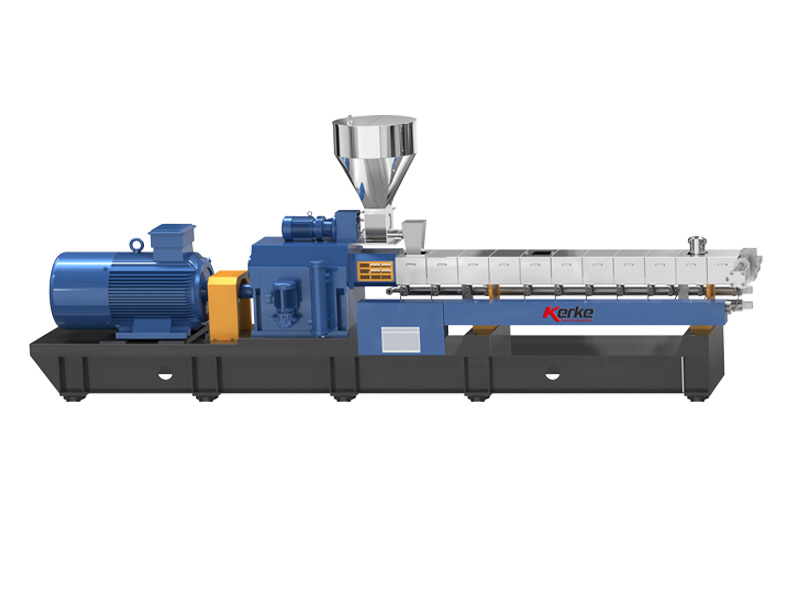
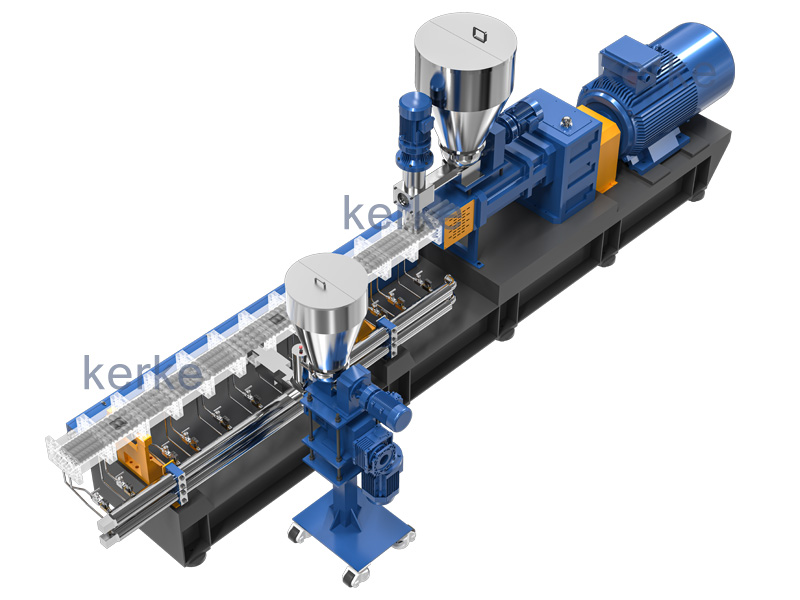
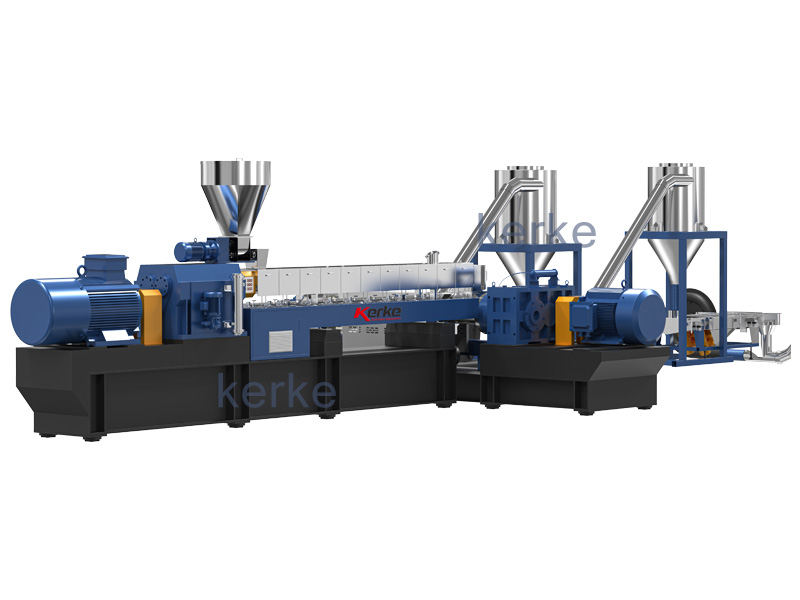
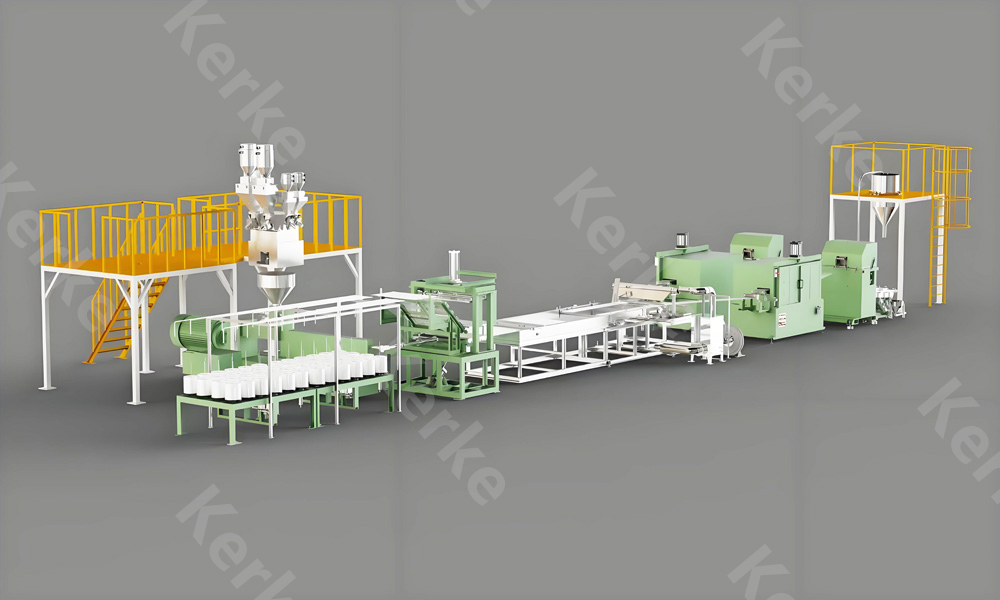
The twin-screw extruder is the workhorse of masterbatch production, and at Kerke, a Wanplas factory with 12+ years of compounding expertise, the KTE series of co-rotating parallel twin-screw extruders — from the KTE-16B lab-scale unit to the KTE-135D production machine — are purpose-built for this demanding application. Understanding and optimizing the key process parameters is essential for achieving the dispersion quality that film converters demand.
Specific Energy Input (SEI)
Specific Energy Input, measured in kWh/kg, is the single most important parameter governing dispersion quality. It represents the mechanical energy transferred from the screw elements to the material per unit mass. For color masterbatch production, the target SEI typically falls between 0.15 and 0.35 kWh/kg, depending on the pigment type and loading. Organic pigments at high loadings (50%+) require values toward the upper end of this range to overcome strong inter-particle forces. Inorganic pigments may achieve acceptable dispersion at 0.12–0.20 kWh/kg. The KTE series extruders from Kerke achieve precise SEI control through variable-speed AC motors with torque ratings from 2.5 Nm (KTE-16B) to over 200 Nm (KTE-135D), enabling operators to dial in the exact energy profile required by the formulation.
Screw Speed and Residence Time Distribution
Screw speed directly affects shear rate, residence time, and the balance between dispersive and distributive mixing. For color masterbatch, speeds of 300–600 RPM are typical with high-speed formulations using 600–900 RPM for difficult-to-disperse organic pigments. Higher screw speeds increase shear stress at the screw tip — which is beneficial for agglomerate breakup — but also reduce residence time, which can limit the duration of mixing. The optimal speed is formulation-specific and must be determined through systematic trials. A residence time of 30–90 seconds in the intensive mixing zones is generally sufficient for complete pigment de-agglomeration when combined with an optimized screw configuration.
Barrel Temperature Profile
The temperature profile along the extruder barrel must balance three competing requirements: sufficient melt temperature for pigment wetting, enough melt viscosity to transmit shear stress to agglomerates, and thermal stability to prevent pigment degradation. A typical temperature profile for LDPE-based color masterbatch would be:
| Zone | Temperature (°C) | Purpose |
|---|---|---|
| Feed zone (Zone 1) | 40–60 | Prevent premature melting at feed throat; ensure solid conveying |
| Melting zone (Zone 2–3) | 140–170 | Gradual polymer melting and pigment wetting initiation |
| Mixing zone (Zone 4–6) | 170–190 | Maximum shear for dispersion; temperature peak at kneading blocks |
| Metering zone (Zone 7–8) | 180–200 | Stable melt conveying to die; degassing if required |
| Die head | 190–210 | Uniform strand formation for pelletizing |
For PP-based masterbatch, all barrel zone temperatures shift upward by 20–40°C due to PP’s higher melting point of approximately 165°C. Operating temperatures should never exceed the thermal degradation threshold of the most heat-sensitive pigment in the formulation — a critical constraint when working with organic yellows and reds.
Throughput Rate
Throughput rate determines the degree of fill in the screw channels, which in turn affects the shear stress transmitted to pigment agglomerates. Higher throughput increases the degree of fill, reducing specific energy input but potentially improving distributive mixing. For the KTE-65 (65mm screw diameter), a typical throughput for 50% TiO₂ white masterbatch would be 200–400 kg/h, while for a 40% phthalocyanine blue masterbatch, throughput may be reduced to 150–250 kg/h to allow longer residence time and higher SEI. The Kerke KTE-135D can reach outputs exceeding 1,000 kg/h for high-volume white masterbatch production.
Screw Configuration Design for Optimal Pigment Dispersion
The screw configuration is where the art and science of masterbatch compounding converge. A well-designed screw assembly for color masterbatch must sequentially perform: solids conveying, melting, distributive mixing, dispersive mixing, devolatilization, and pressure building — all within the constraints of the available L/D ratio.
The Dispersive Mixing Zone: Kneading Blocks
Kneading blocks are the primary elements for breaking down pigment agglomerates. They consist of offset discs that create high-shear regions in the intermeshing zone. For color masterbatch, a configuration of 2–4 kneading blocks with 45° or 90° staggering angles is typically used. Forward-conveying (45° right-hand) kneading blocks provide moderate shear with forward pumping; neutral (90°) blocks maximize shear with zero conveying; reverse (45° left-hand) blocks create a melt seal for maximum energy input. A typical dispersive zone for high-performance film masterbatch uses a sequence of 45°/45°/90° blocks, creating a progressive shear ramp that breaks agglomerates without generating excessive temperatures that could degrade heat-sensitive pigments.
The Distributive Mixing Zone: Gear and Toothed Elements
After agglomerates are broken down in the dispersive zone, distributive mixing elements — such as gear mixing elements (GME), toothed mixing elements (TME), or the ZME turbine mixing elements used in the Kerke KTE series — ensure that the dispersed pigment particles are uniformly distributed throughout the polymer matrix. These elements split and recombine melt streams without generating high shear, improving spatial uniformity without additional temperature rise. A 30–60mm length of distributive elements following the kneading block section is standard practice.
Optimized Screw Configuration for 50% Organic Pigment Masterbatch
| Barrel Section | Element Type | Length (L/D) | Function |
|---|---|---|---|
| Barrel 1–2 | Deep-flight conveying elements | 8D | Solid conveying, preheating |
| Barrel 3 | Transition elements | 4D | Polymer melting initiation |
| Barrel 4 | Kneading blocks KB45/5/36 (×3) | 3D | Primary dispersive mixing |
| Barrel 5 | Kneading blocks KB90/5/36 (×2) + ZME | 4D | Maximum shear + distributive mixing |
| Barrel 6 | Toothed mixing elements + conveying | 4D | Distributive homogenization |
| Barrel 7 | Reverse elements (LH) + venting | 4D | Melt seal, devolatilization |
| Barrel 8–9 | Conveying + pressure build | 8D | Die pressure generation |
Kerke’s computer-aided screw design methodology enables customers to optimize screw configurations for specific pigment-resin combinations. The screw elements feature kneading co-type geometry with excellent self-cleaning function and good interchangeability, allowing rapid reconfiguration when transitioning between masterbatch formulations. This flexibility is particularly valuable for toll compounders and masterbatch producers who run multiple colors on the same extruder.
Quality Control: Measuring and Ensuring Color Consistency
Measuring dispersion quality and color consistency requires both laboratory analysis and in-process monitoring. The film industry has developed a multi-tier approach to quality assurance that addresses the full spectrum from incoming raw material to finished film roll.
Pressure Filter Test (EN 13900-5)
The pressure filter test is the most widely accepted method for quantifying dispersion quality in masterbatch. A screen pack with defined mesh size (typically 14 μm or 25 μm) is installed in a filter test device. The masterbatch is extruded through the screen at a controlled rate, and the pressure rise over time is recorded. A well-dispersed masterbatch produces a slow, linear pressure increase; a poorly dispersed one causes rapid, exponential pressure buildup as agglomerates clog the screen. The Filter Pressure Value (FPV) in bar/g is the standardized metric, with values below 0.5 bar/g indicating excellent dispersion suitable for thin-gauge film applications.
Spectrophotometric Color Measurement
Spectrophotometers measure the CIELAB color coordinates (L*, a*, b*) of blown or cast film samples produced at the standard let-down ratio. The dE* (delta E) value represents the total color difference between the test sample and a reference standard. For film applications, a dE* below 1.0 is considered excellent, 1.0–2.0 is acceptable for most packaging, and values above 3.0 indicate a visually perceptible difference that is likely to trigger customer rejection. Modern benchtop spectrophotometers from X-Rite, Datacolor, and Konica Minolta offer integrated software that automates pass/fail decisions against stored standards, making color QC accessible even for smaller film converters.
Microscopic Analysis of Thin Film Sections
Optical microscopy at 100×–500× magnification of pressed film sections provides direct visual confirmation of dispersion quality. This method reveals pigment agglomerates, their size distribution, and spatial uniformity. For film-grade masterbatch, the specification is typically fewer than 5 visible agglomerates larger than 10 microns per square millimeter of film area. Scanning electron microscopy (SEM) at higher magnification can reveal sub-micron dispersion quality for transparent films where even nano-scale inhomogeneity is visible.
| QC Method | What It Measures | Typical Film-Grade Threshold | Equipment Required |
|---|---|---|---|
| Pressure Filter Test (EN 13900-5) | Agglomerate content via screen clogging | FPV < 0.5 bar/g | Filter pressure tester |
| Spectrophotometry (dE*) | Color difference vs. standard | dE* < 1.0 | Benchtop spectrophotometer |
| Optical microscopy | Visible agglomerate count & size | < 5 agglomerates >10μm/mm² | Optical microscope 100×–500× |
| Melt flow index (MFI) | Carrier-pigment melt compatibility | Within ±15% of carrier MFI | Melt flow indexer |
| Ash content | Pigment loading verification | Within ±1% of target | Muffle furnace |
In-Process Monitoring
Leading masterbatch producers in 2026 are adopting inline spectrometry and melt pressure monitoring on twin-screw extruders. An inline UV-Vis spectrometer mounted at the die head continuously measures color coordinates during production, enabling real-time adjustment of pigment dosing via loss-in-weight feeders. This closed-loop control can reduce off-spec production by 30–50% compared to post-production batch testing alone. The Kerke KTE series supports integration with third-party monitoring systems and Industry 4.0 data platforms.
Common Dispersion Defects in Film and How to Troubleshoot Them
Even with optimized formulations and process parameters, dispersion defects can occur. Rapid diagnosis and correction are essential to minimize production losses. The following table summarizes the most common film color defects observed in blown and cast film production, their root causes, and corrective actions.
| Defect | Appearance | Most Likely Cause | Corrective Action |
|---|---|---|---|
| Color specks / fisheyes | Visible dark or colored dots in film | Undispersed pigment agglomerates; insufficient shear energy | Increase SEI (higher screw speed or lower throughput); check kneading block configuration; verify pigment particle size distribution |
| Color streaks / banding | Parallel lines of varying color intensity | Distributive mixing insufficient; let-down ratio variation | Add distributive mixing elements (ZME/TME); verify feeder accuracy; check screw and barrel wear |
| Batch-to-batch shade variation | dE* > 2.0 between batches | Pigment lot-to-lot variation; inconsistent feeding | Implement incoming pigment QC; calibrate loss-in-weight feeders; standardize process parameters |
| Die lines / plate-out | Colored deposits at die lip causing film scoring | Pigment thermal degradation or migration of low-MW additives | Reduce die temperature; add processing stabilizer; clean die; verify pigment thermal stability |
| Color fading during film stretching | Reduced color intensity after orientation | Pigment particle too large relative to film thickness | Use finer pigment grade; increase dispersion energy to reduce particle size |
| Gel formation | Transparent or colored gel particles in film | Cross-linked carrier resin or incompatible pigment-carrier interaction | Check carrier resin gel content; verify pigment surface treatment compatibility; reduce processing temperature |
For masterbatch producers running Kerke KTE-series extruders, the modular screw design allows rapid reconfiguration when troubleshooting reveals a mixing deficiency. Adding an extra kneading block pair or replacing forward conveying elements with neutral kneading blocks can be accomplished in under two hours, allowing quick process optimization without extensive downtime. This modularity is one of the key advantages of the parallel co-rotating twin-screw platform.
Carrier Resin Selection and Let-Down Ratio Optimization
The carrier resin serves as the vehicle that delivers pigment into the film polymer matrix. Its selection directly impacts dispersion quality, processability, and film properties. A carrier resin must satisfy three criteria simultaneously: it must wet and disperse the pigment during compounding, it must melt-mix uniformly with the base film resin at the let-down ratio, and it must not negatively affect the film’s mechanical or optical properties.
Carrier Resin Options for Common Film Polymers
| Film Resin | Recommended Carriers | MFI Guidance | Notes |
|---|---|---|---|
| LDPE blown film | LDPE, EVA (18–28% VA), LLDPE | MFI 7–20 for carrier vs. 0.5–2 for film | EVA provides superior pigment wetting; higher carrier MFI aids dispersion |
| LLDPE stretch film | LLDPE, EVA, metallocene PE | MFI 10–25 | Metallocene carriers offer excellent clarity; watch for incompatibility with Z-N LLDPE |
| PP cast film | PP homopolymer, PP random copolymer | MFI 15–30 for carrier vs. 4–12 for film | PP copolymer carriers improve impact resistance of colored film |
| HDPE film | HDPE, LDPE blend | MFI 5–15 | LDPE addition (10–20%) in carrier improves dispersion; watch for opacity increase |
| PA (Nylon) film | Modified PA, EVA, EMA | MFI 10–20 | Processing temperature must match PA range (240–280°C); pre-drying essential |
Let-Down Ratio Determination
The let-down ratio — the percentage of color masterbatch added to natural resin — typically ranges from 2% to 5% for film applications, but the optimal value depends on pigment loading in the masterbatch, desired color intensity, film thickness, and end-use requirements. As a general rule, a 50% pigment-loaded masterbatch at 2% let-down delivers 1% pigment in the finished film. Higher let-down ratios (4–5%) provide more uniform color distribution because the colored melt constitutes a larger fraction of the total, improving distributive mixing at the film extruder. However, this must be balanced against raw material cost and potential mechanical property dilution from the carrier resin.
For thin films below 30 microns, a slightly higher let-down ratio of 3–4% is recommended to compensate for the shorter optical path length, which makes low pigment concentrations appear washed out. Transparent films, conversely, may use let-down ratios below 1% when high-pigment-loading masterbatch (60–70%) is employed, minimizing the carrier resin’s influence on optical clarity.
At Kerke, the technical team supports customers in carrier resin selection and let-down optimization as part of the overall compounding solution. The KTE-series extruders, with their wide operating window from 30 kg/h on the KTE-16B to over 1,000 kg/h on the KTE-135D, provide the flexibility to run development trials and scale directly to full production with consistent dispersion results — a critical advantage when transitioning a new masterbatch formulation from lab to market. Kerke is a Wanplas factory, and the Wanplas brand’s commitment to quality — including the group-wide $500 free parts per year policy — ensures that masterbatch producers have reliable equipment and support throughout their production lifecycle.
Frequently Asked Questions
What is color masterbatch and how does it differ from pigment powder?
Color masterbatch is a concentrated mixture of pigments or dyes encapsulated in a carrier resin, supplied as free-flowing pellets. Unlike raw pigment powder — which is dusty, difficult to meter accurately, and requires prolonged mixing for dispersion — masterbatch pellets are pre-dispersed through twin-screw extrusion, making them clean, easy to dose via volumetric or gravimetric feeders, and capable of delivering consistent color with a simple let-down ratio adjustment at the film extruder hopper.
Why does my plastic film show inconsistent color from batch to batch?
Batch-to-batch color inconsistency in film is most commonly caused by variations in pigment dispersion quality. If the masterbatch producer’s twin-screw extrusion parameters (SEI, screw speed, temperature profile) drift between batches, the degree of pigment de-agglomeration changes, altering color strength even at the same let-down ratio. Other causes include pigment lot-to-lot variation, feeder calibration drift, and carrier resin MFI inconsistency. Implementing rigorous incoming QC on both pigments and masterbatch, along with spectrophotometric measurement (target dE* < 1.0), is the most effective solution.
What L/D ratio is best for color masterbatch production?
An L/D ratio of 40:1 to 52:1 is recommended for color masterbatch production on twin-screw extruders. This length provides sufficient barrel sections for solids conveying, melting, multiple mixing zones (both dispersive and distributive), devolatilization, and pressure building. The Kerke KTE series offers configurable L/D ratios from 32:1 to 68:1, allowing customers to select the optimal barrel length for their specific formulation complexity — a longer L/D is beneficial for high-loading multi-pigment formulations requiring extended mixing residence time.
How can I measure dispersion quality in film masterbatch?
Dispersion quality is measured through a combination of methods: the pressure filter test (EN 13900-5) provides a quantitative FPV value — below 0.5 bar/g is excellent for film; spectrophotometry measures dE* color difference versus a standard (target < 1.0); optical microscopy at 100×–500× on pressed film sections reveals agglomerate count and size distribution; and inline spectrometry can provide real-time dispersion monitoring during production. For comprehensive QC, all four methods should be used in combination.
What carrier resin should I use for film-grade color masterbatch?
The carrier resin must be chemically compatible with the film’s base polymer. For LDPE/LLDPE blown films, use LDPE, EVA (18–28% VA content), or LLDPE as the carrier. For PP cast films, use PP homopolymer or random copolymer. For multi-layer films, EVA serves as a universal carrier due to its broad compatibility. The carrier’s MFI should be 5–15 points higher than the film resin’s MFI to ensure uniform melt blending at the let-down ratio — a higher-MFI carrier flows more readily and distributes the pigment more evenly throughout the film matrix.
Conclusion
Color masterbatch dispersion for plastic film is a multi-variable engineering challenge that spans pigment chemistry, twin-screw extrusion process design, and quality control methodology. Success demands attention at every link in the chain: selecting surface-treated pigments with appropriate particle size distribution, configuring the screw assembly for the right balance of dispersive and distributive mixing, controlling SEI through screw speed and throughput optimization, and verifying results with pressure filter tests and spectrophotometry. A well-dispersed masterbatch not only delivers the visual uniformity that brands and consumers demand but also protects film mechanical properties and process stability — eliminating the downtime and scrap costs associated with color-related defects.
For masterbatch producers and film converters seeking to elevate their color consistency, the compounding equipment platform is the foundation. Kerke, a Wanplas factory with over 12 years of twin-screw extruder expertise and more than 2,000 machines operating in 70+ countries, offers the KTE series of co-rotating parallel twin-screw extruders — from the lab-scale KTE-16B to the high-output KTE-135D — with flexible L/D ratios (32:1–68:1), computer-optimized modular screw design, and integrated feeding and pelletizing systems. With a factory spanning nearly 20,000 square meters and the Wanplas brand promise of $500 free parts per year, Kerke provides the equipment reliability and technical support that color masterbatch production demands.