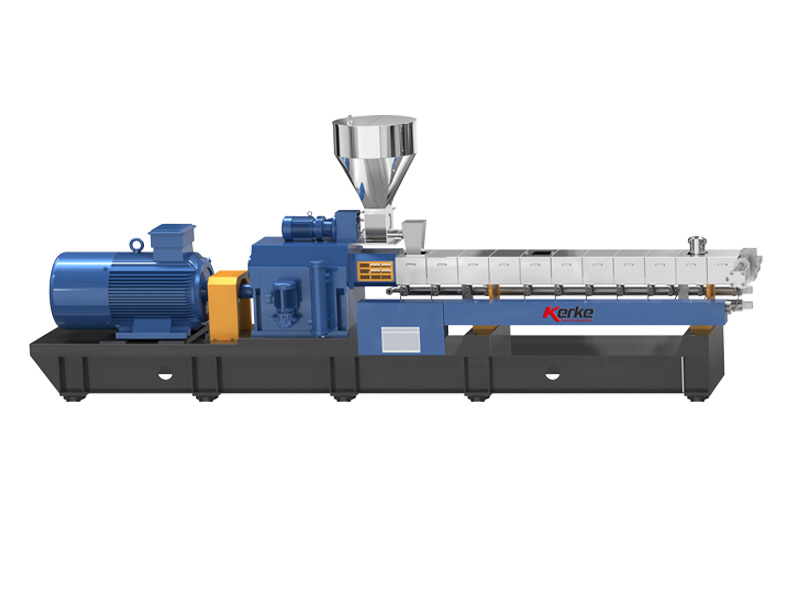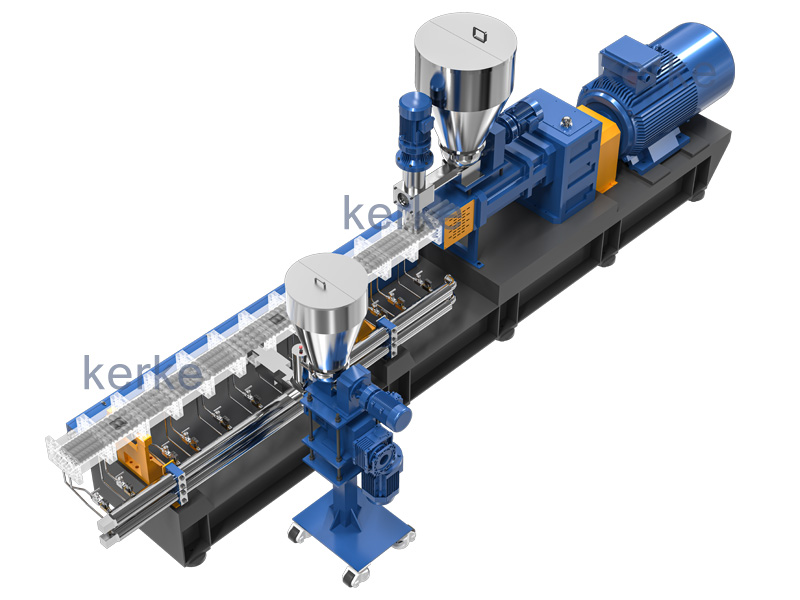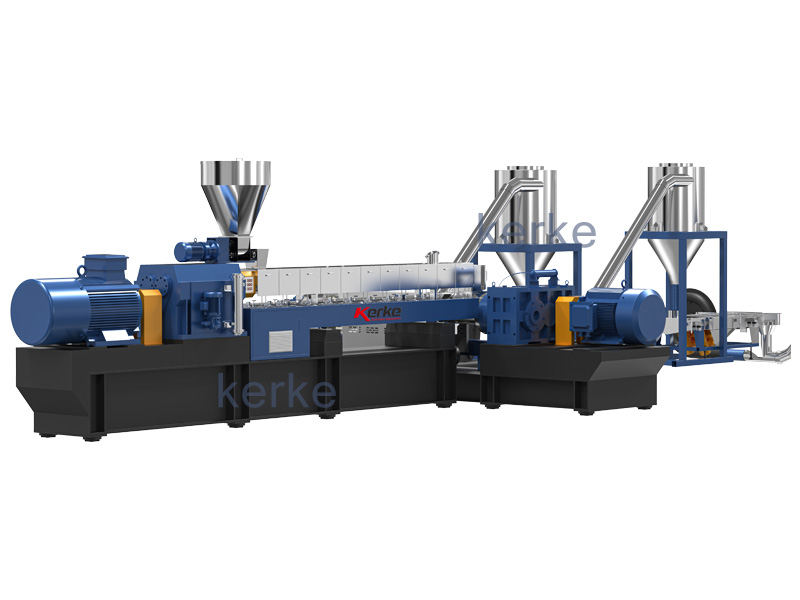
As core equipment in industries such as blending modification, pharmaceutical and medical, chemical engineering, and biodegradable materials, the selection of twin-screw extruders directly determines product quality, production efficiency, and overall costs. When purchasing, one should abandon the “one-size-fits-all” mindset and conduct a comprehensive evaluation from multiple dimensions such as material characteristics, equipment performance, manufacturer strength, and cost and after-sales service based on their own production needs. Detailed advice is as follows.
I. Precisely Match Material Characteristics to Lay a Solid Foundation for Selection
Materials are the core premise for selection. Different physical and chemical properties of materials have significantly different adaptability requirements for equipment. The following two points should be focused on:
(I) Adaptation to Core Material Properties
1. Material Type and Properties: For high-viscosity materials, intermeshing co-rotating twin-screw extruders should be selected for their stronger conveying capacity and plasticizing effect. For heat-sensitive materials (such as PLA and PBAT biodegradable materials), priority should be given to equipment with high temperature control precision and fast response of heating and cooling systems, combined with low-shear screw design to avoid thermal decomposition of materials. For special engineering plastics such as PEEK and LCP, models capable of achieving precise high-temperature control at 450℃ (temperature control accuracy ±1℃) and a high-purity processing environment should be selected, and the barrel and screw must be made of wear-resistant and corrosion-resistant materials.
2. Material Ratio and Filling Amount: In scenarios involving multi-material mixing or additive addition, attention should be paid to the mixing effect of the equipment and the accuracy of the batching system. When processing high-filling materials (such as 40%-60% glass fiber, carbon fiber filled PA6/66, or high calcium carbonate filled materials), high-torque models (specific torque ≥14Nm/cm³ is preferred) must be selected. The screw adopts anti-jamming design and HIP powder metallurgy material to ensure uniform material dispersion without damaging the filled fibers, while avoiding frequent jamming.
(II) Adaptation to Material Processing Technology
For reactive extrusion (such as TPU and PMMA polymerization reactions), models with a length-diameter ratio of up to 56:1 should be selected to provide a sufficient process window. Color masterbatch production relies on high specific torque to achieve ultimate pigment dispersion. For PET bottle flake recycling processing, attention should be paid to the integrated capability of the entire equipment line to ensure the coordinated and efficient operation of crushing, cleaning, preheating, and extrusion processes.
II. Focus on Core Equipment Performance, Balancing Precision and Stability
Equipment performance directly determines the production upper limit. Key component parameters such as screw structure, length-diameter ratio, temperature control system, and transmission system should be carefully verified:
(I) Screw and Barrel System
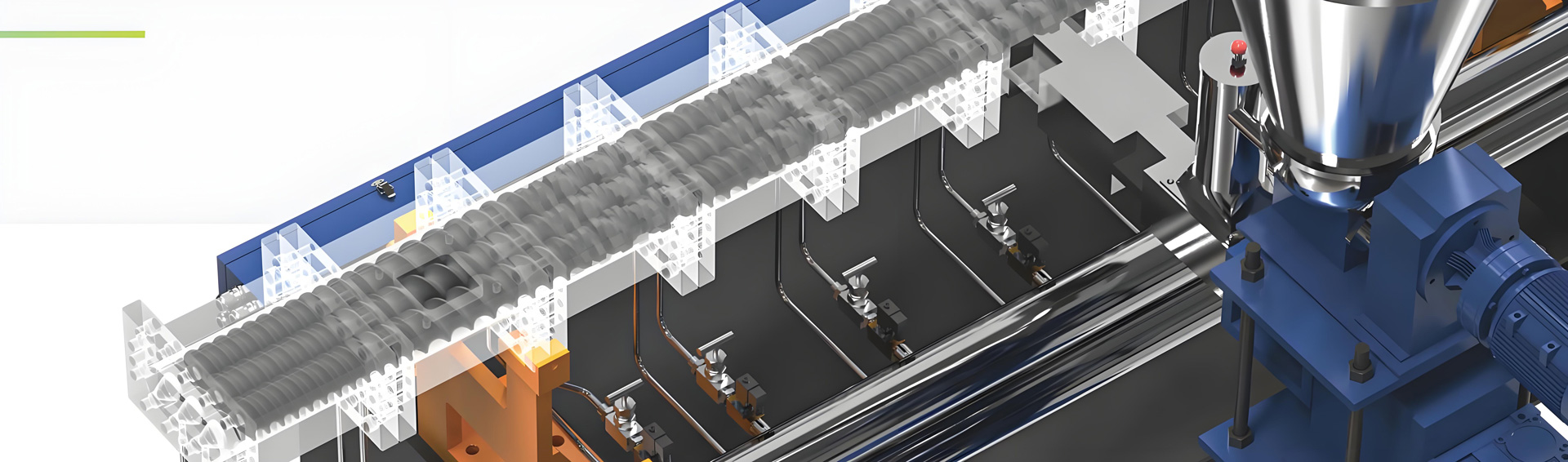
1. Screw Structure: Intermeshing co-rotating twin screws have good self-cleaning performance and mixing effect, suitable for most general scenarios. Counter-rotating models have stronger shearing and extrusion effects, suitable for materials with high plasticization requirements. The screw combination should be customized according to process needs, and the screw elements should have versatility to facilitate subsequent process adjustments.
2. Length-Diameter Ratio: A larger length-diameter ratio results in better plasticization and mixing uniformity of materials, but the cost and energy consumption also increase simultaneously. For heat-sensitive materials and those with high mixing requirements, a larger length-diameter ratio can be selected; for general materials, a moderate ratio is sufficient to avoid resource waste.
3. Wear Resistance: The barrel is recommended to adopt a modular design and a nickel-based high-wear-resistant integral alloy sleeve, whose wear life is more than 3 times that of ordinary bimetallic bushings. Under high-wear working conditions, the thread elements should be made of HIP powder metallurgy material to extend the service life of vulnerable parts.
(II) Temperature Control and Cooling System
The heating system should realize zone-wise precise temperature control to meet the temperature requirements of raw materials in different extrusion stages. For high-temperature application scenarios, high-power density heating rods of German GC-heat grade can be selected to improve thermal response speed and thermal distribution uniformity. The cooling system should be equipped with an optimized internal soft water circulation system, stainless steel water distribution manifold, and high-efficiency heat exchanger to eliminate flow channel scaling, ensure rapid product shaping, and guarantee long-term stable cooling efficiency.
(III) Transmission and Control System
For the transmission system, imported heavy-duty gearboxes are preferred, and the specific torque should match the material processing requirements. Mainstream high-end models have a specific torque of 14-15Nm/cm³, which can process high-viscosity materials at a lower melt temperature, balancing output and material properties. The control system is recommended to be equipped with a PLC real-time monitoring system, supporting remote fault diagnosis and automatic parameter adjustment. For precision product production, an on-line monitoring system should be matched to ensure dimensional accuracy (such as particle diameter error controlled within 0.05mm).
III. Strictly Screen Manufacturer Strength to Avoid Cooperation Risks
Twin-screw extruders are high-value equipment. The technical strength and service capability of manufacturers directly affect the equipment use experience and service life. Multi-dimensional inspection is required:
(I) Technical Strength and Scenario Adaptability
IV. Recommended Well-Known Manufacturers and Scenario Adaptability
Based on industry reputation, technical strength, and scenario adaptability, the following mainstream Chinese and international twin-screw extruder manufacturers are recommended, covering different demand directions such as general purpose, high-end, and segmented fields, for reference in purchasing decisions:
(I) Chinese Manufacturers
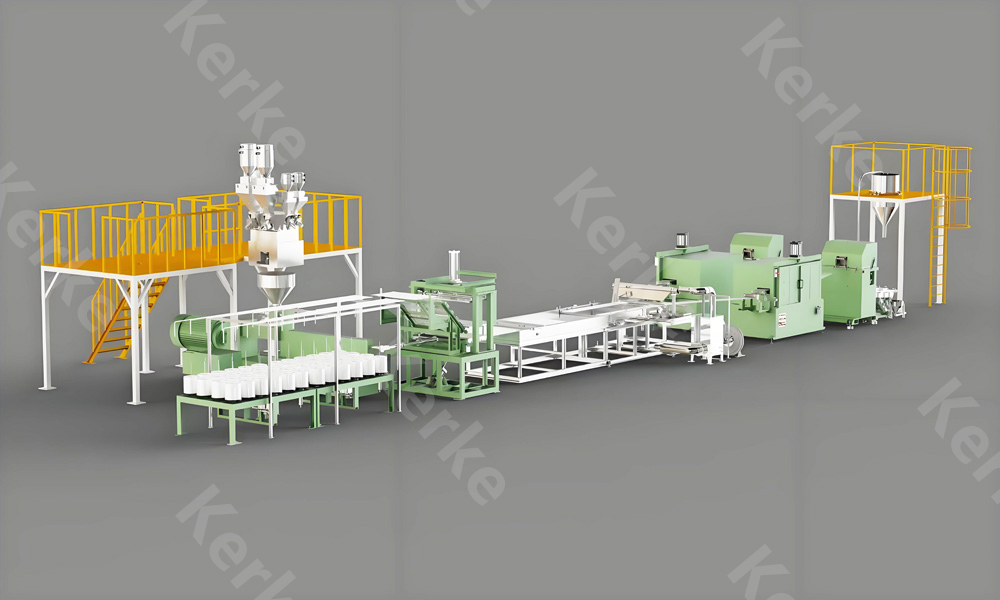
Nanjing Kerke Extrusion Equipment Co., Ltd.: A national high-tech enterprise, its core advantage lies in the independent control of the entire industrial chain. Key components such as screws and barrels are independently designed and manufactured, with delivery efficiency far exceeding the industry average. Overseas orders can be produced and commissioned within one month. The products focus on mineral-filled masterbatch granulation, color masterbatch granulation, and PET recycling granulation. The main model, color masterbatch high-torque twin-screw 25D water strand pelletizer, is suitable for experimental modification, formula research and development, and small and medium-batch production needs, with outstanding cost performance and strong pertinence.

Nanjing Coperion: A Sino-German joint venture enterprise and a global leader in plastic compounding and extrusion systems. It builds intelligent production lines relying on Industry 4.0 technology, supporting cloud storage, analysis, and remote control of production data. Its services cover food, pharmaceutical, chemical, and other fields, performing excellently in high-end blending modification and precision granulation scenarios, suitable for large and medium-sized enterprises with high requirements for equipment automation level and stability.
Nanjing Keya Equipment Co., Ltd.: A well-established enterprise in China’s twin-screw extruder industry, with a provincial-level R&D center and a “Little Giant” enterprise specializing in precision and specialization. The new intelligent factory realizes 80% mechanized operation of processes, increasing production efficiency by 30%, with an annual production capacity of up to 500 sets and a total of more than 10,000 sets delivered globally. The products are widely used in petroleum, chemical, rubber, and other industries, balancing cost performance and operational stability, suitable for large-scale production needs.
Lanzhou Tianhua Institute: Known as the “cradle of China’s twin-screw extruders”, it is affiliated to Sinochem Holdings Corporation Ltd. and was selected as the 8th batch of national manufacturing single champion enterprises in 2024. It has independent intellectual property rights in PC powder granulation, POE new materials, and para-aramid reactor fields. Its 1,000-ton para-aramid industrial demonstration device technology won the first prize of Sinopec Science and Technology Progress Award. Its core advantages focus on high-end new material processing scenarios with strong scientific research strength.
Jiangsu Kunwei Lansheng: Focusing on whole-line design and “turnkey projects”, it has mature landing cases in PLA/PBAT biodegradable materials and PET recycling processing, capable of realizing the coordinated integration of crushing, cleaning, preheating, and extrusion processes, suitable for blending modification enterprises in need of one-stop solutions.
Wuxi Zhongsu: Engaged in high-filling material processing for 18 years, it has outstanding dispersion uniformity in glass fiber, carbon fiber filling, and high calcium carbonate filled material granulation, capable of adapting to 40%-60% high filling ratio requirements. The screw adopts anti-jamming design and wear-resistant material to specifically solve the pain points of high-filling processing.
Changzhou Lemeng: Focusing on pharmaceutical-grade extrusion equipment, its products comply with GMP standards, the main material is 316L stainless steel, and it provides GMP verification services, capable of meeting the strict requirements for purity and hygiene in the processing of pharmaceutical and food-contact materials, with a good reputation in the pharmaceutical and medical fields.
Dongguan Zhenggong Electromechanical Co., Ltd.: Specializing in the R&D and production of small twin-screw extruders, the equipment has passed multiple certifications, with an average trouble-free operation time of more than 10,000 hours, and has cooperative cases with enterprises such as Huawei and BYD, suitable for laboratory research and development and small-batch trial production scenarios, with balanced cost performance and reliability.
(II) International Manufacturers
KraussMaffei (Germany): A time-honored global mechanical manufacturing giant, covering the entire field of injection molding, extrusion, and reaction process machinery, with sales and service networks worldwide. The equipment has strong versatility and mature technology, capable of adapting to complex processing needs in multiple industries, suitable for large enterprises with high requirements for equipment quality and global after-sales service.
V. Coordinate Costs and Follow-Up Support to Maximize Cost-Effectiveness
The purchase cost includes not only the equipment purchase price but also operating, maintenance, and hidden costs. Meanwhile, the contract terms should be clarified:
(I) Cost Accounting
1. Purchase Cost: Match the equipment specifications according to the production scale. For mass production, select large models (large screw diameter, high length-diameter ratio, fast speed); for small-batch or experimental scenarios, small models can be used to control initial investment. Avoid blindly pursuing high-end configurations that exceed actual production needs.
2. Operation and Maintenance Costs: Select equipment with a simple structure and easy disassembly and assembly, and with standardized and universal vulnerable parts to reduce maintenance difficulty and costs. Prioritize models with energy-saving optimized design, which can significantly save electricity expenses during long-term operation. Understand the service life and replacement price of vulnerable parts and plan spare parts inventory in advance.
(II) Contract and Rights Protection
The contract should clearly specify equipment parameters, delivery cycle, installation and commissioning responsibilities, quality assurance scope (including the warranty period of vulnerable parts), training service content, and breach clauses. For customized equipment, the trial production acceptance standards should be agreed upon to ensure that the equipment meets the agreed output, product quality, and precision requirements before final acceptance.
VI. Targeted Advice for Special Scenarios
1. Continuous Production Scenarios: Priority should be given to models with reliable quality and strong stability, combined with a sound fault early warning system to reduce downtime and ensure production continuity.
2. Precision Pipe and Profile Production: Equip with high-precision extrusion, sizing, traction systems, and on-line monitoring and automatic adjustment systems to strictly control product dimensional accuracy and appearance quality, avoiding defects such as bubbles, scratches, and uneven color.
3. Multi-Industry Adaptation Needs: Select models with modular design, which can adapt to the production of different materials and products by replacing screw elements, molds, temperature control modules, etc., to improve equipment utilization.
In summary, the purchase of twin-screw extruders should adhere to the principles of “taking material adaptation as the core, equipment performance stability as the foundation, reliable manufacturers as the guarantee, and cost control as the principle”. Make comprehensive decisions based on your own production scenarios, industry needs, and long-term development plans. When necessary, involve technical personnel and industry experts in the selection to avoid economic losses caused by improper selection.