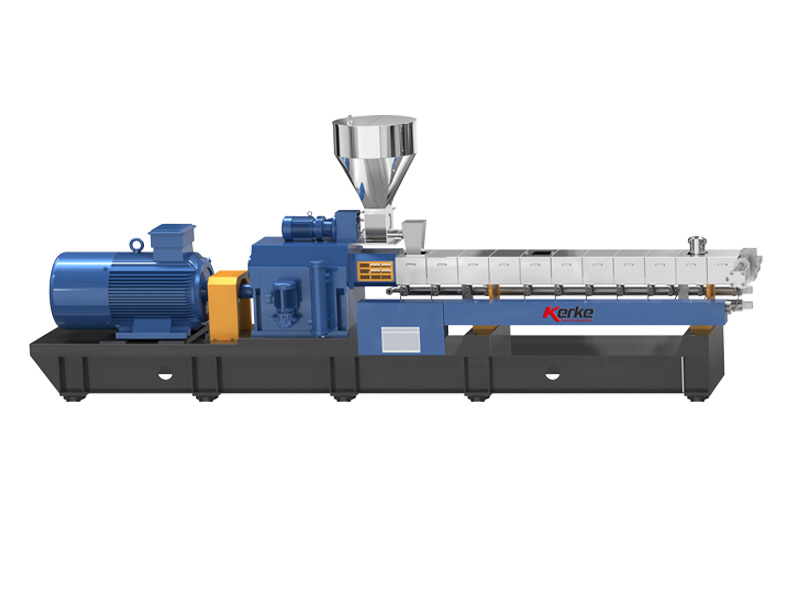
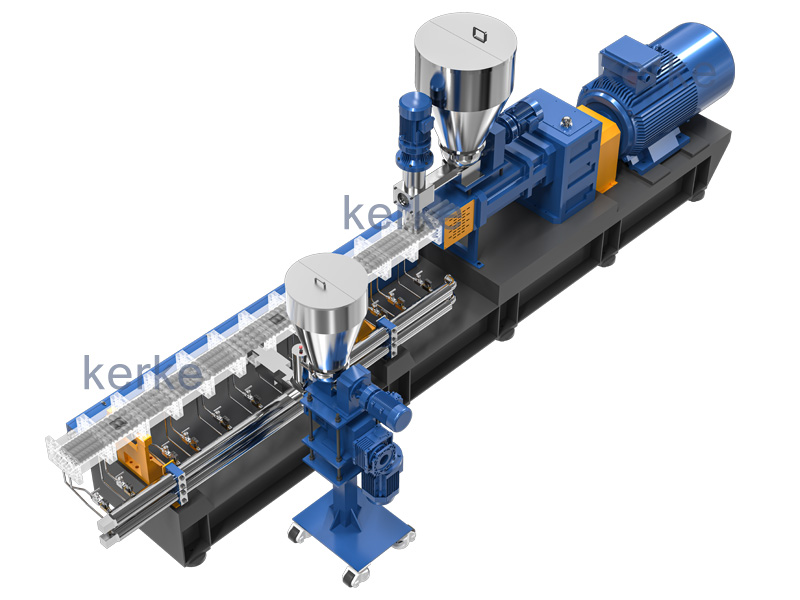
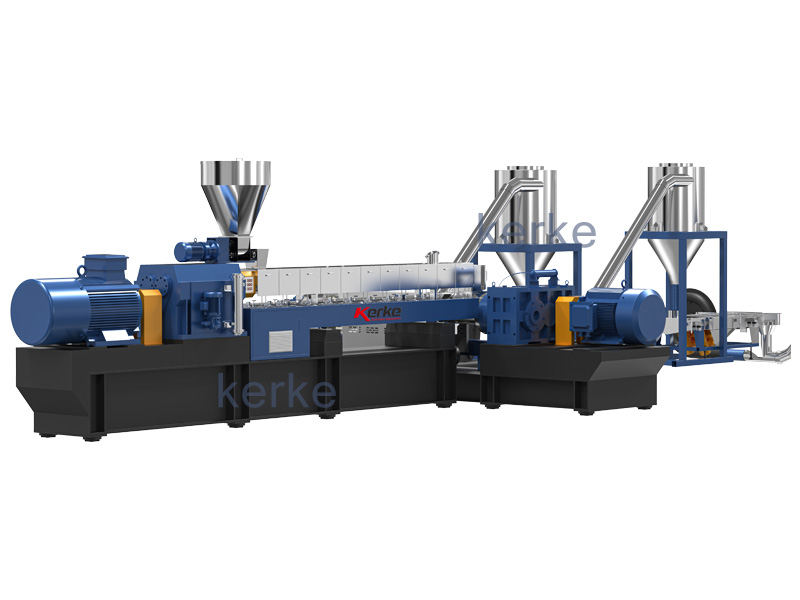
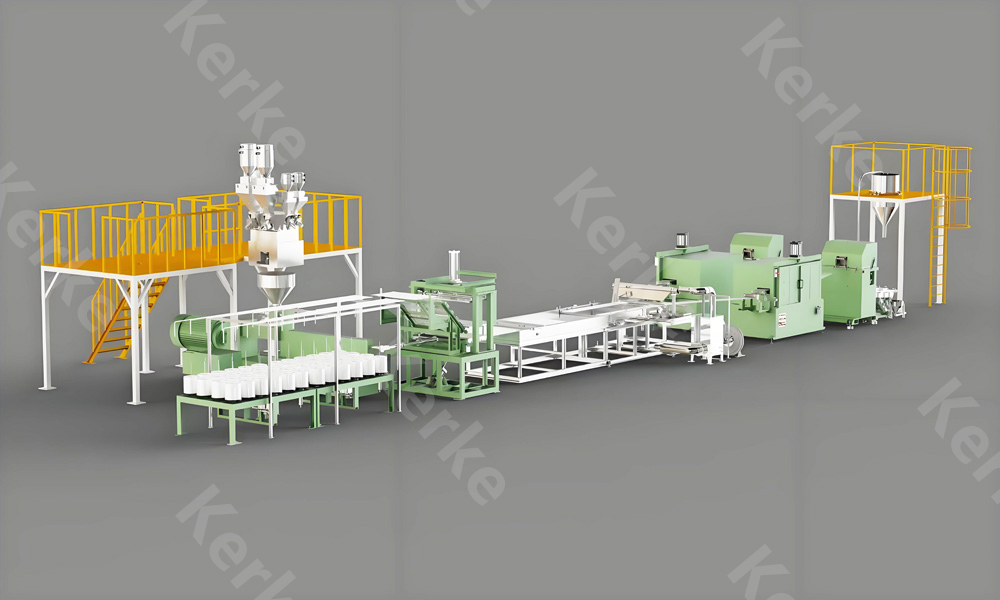
As a core equipment in the field of polymer material processing, the stability of the extrusion output of the twin-screw extruder directly determines the consistency of product quality, production efficiency, and production costs. In actual production, fluctuations in extrusion output are a common problem, which not only lead to deviations in product dimensions and uneven performance, but also may cause chain problems such as equipment overload and material degradation. This article will deeply analyze the core causes of unstable extrusion output from key dimensions such as raw material characteristics, equipment status, operating parameters, and process environment, and propose scientifically feasible solutions to provide technical reference for production practice.
I. Analysis of Core Causes for Unstable Extrusion Output
(I) Fluctuations in Raw Material Characteristics: Basic Inducing Factors
Raw materials are the foundation of extrusion processing, and fluctuations in their physical and chemical properties will directly disrupt the material balance in the extrusion process, leading to unstable extrusion output. The specific manifestations are as follows:
- Uneven Particle Size and Distribution of Raw Materials: If the particle size of raw materials varies greatly, or there are agglomeration and excessive fine powder, it will cause fluctuations in the filling density of materials during the feeding process. Large particles are likely to cause blockage of the feed port, while fine powder may cause bridging due to excessive fluidity. Both will make the amount of materials entering the barrel fluctuate, directly leading to fluctuations in extrusion output.
- Excessive or Fluctuating Moisture Content of Raw Materials: For hygroscopic polymer materials (such as PVC, PA, PET, etc.), if the drying is insufficient or the drying degree is inconsistent, the moisture in the materials will quickly vaporize under the high-temperature environment of the barrel, generating a large number of bubbles. Bubbles will occupy the effective space in the barrel, disrupting the continuous conveying of materials. At the same time, the bubble bursting process will impact the material flow, leading to periodic fluctuations in extrusion output. In addition, moisture may also cause material degradation, further exacerbating extrusion instability.
- Differences in Raw Material Formulations and Properties: In the same batch of raw materials, inconsistent resin molecular weight distribution and melt flow rate (MFR), or deviations in the proportion and dispersibility of additives (such as plasticizers, fillers, stabilizers) will cause fluctuations in the melting characteristics and viscosity of materials. When the viscosity is too high, the material conveying resistance increases and the extrusion output decreases; when the viscosity is too low, the material is prone to slippage and the conveying efficiency is unstable, which ultimately manifests as fluctuations in extrusion output.
(II) Equipment System Failures: Core Crux
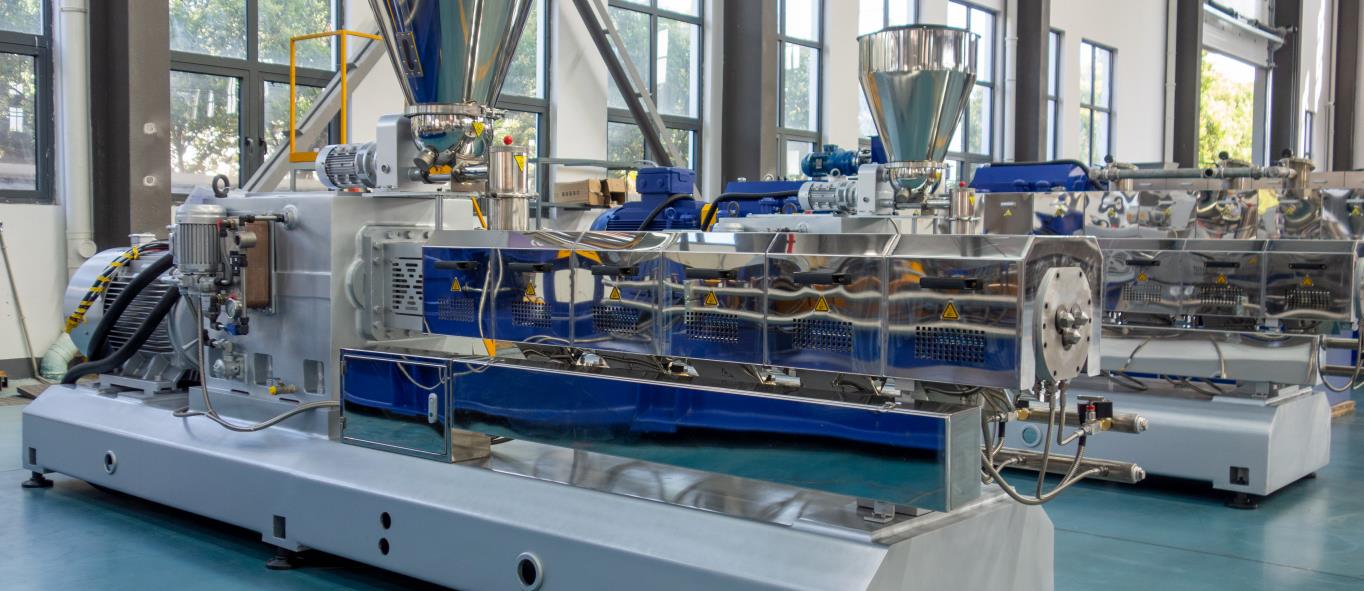
The status of core components of the twin-screw extruder, such as the feeding system, screw-barrel assembly, transmission system, and temperature control system, directly determines the stability of the extrusion process. Equipment failures or wear are the main crux leading to unstable extrusion output, including the following specific aspects:
- Abnormal Feeding System: The feeding system is the first pass for materials to enter the barrel, and its stability directly affects the feeding amount. Common problems include: ① Fluctuations in the speed of the feeder, such as frequency conversion speed control system failures, decreased motor performance, and wear of the reducer, leading to unstable speed of the feeding screw; ② Wear or blockage of the feeding screw, wear will reduce feeding efficiency, and blockage will cause interruption or unsmooth feeding; ③ Unreasonable design of the feed port, such as too small angle of the feed channel and dead corners, leading to material accumulation or unsmooth flow, affecting the continuity of feeding.
- Wear or Assembly Deviation of Screw-Barrel Assembly: The screw and barrel are the core components for material conveying, melting, and mixing, and their matching accuracy directly affects the conveying efficiency. ① Screw wear: After long-term use, the screw flight and screw groove will be worn, leading to increased leakage of materials in the screw groove, and the effective conveying capacity will decrease and fluctuate; ② Barrel wear: After the inner wall of the barrel is worn, the gap with the screw increases, which also exacerbates material leakage and disrupts the conveying stability; ③ Screw assembly deviation: Improper adjustment of the parallelism and meshing gap of the twin screws will cause uneven force during the operation of the screws, speed fluctuations, and thus affect the extrusion output; ④ Thrust bearing damage: The thrust bearing is responsible for bearing the axial force of the screw. If damaged, it will cause axial movement of the screw, disrupting the stable conveying of materials in the barrel and triggering severe fluctuations in extrusion output.
- Failure of Temperature Control System: Temperature is a key parameter for material melting and flow. Failures of the temperature control system will cause fluctuations in the temperature of each section of the barrel, thereby affecting the material viscosity and conveying characteristics. ① Heater failure: Such as heater damage and poor contact, leading to low local temperature, insufficient material melting, cold material, and increased conveying resistance; ② Cooling system failure: Blockage or insufficient flow of the cooling fan and cooling water circuit, leading to excessive barrel temperature, material degradation or excessive viscosity drop, and unstable conveying efficiency; ③ Temperature sensor failure: Measurement deviation or failure of the sensor leads to misjudgment of the temperature control system, outputting incorrect heating/cooling commands, and triggering severe temperature fluctuations.
- Transmission System Failure: The transmission system is responsible for providing stable power for the operation of the screw, and its failure will directly cause fluctuations in the screw speed. ① Motor failure: Unstable motor speed, insufficient output power, or frequent triggering of overload protection; ② Reducer failure: Wear of reducer gears and poor lubrication lead to decreased transmission efficiency and unstable speed transmission; ③ Belt/chain transmission failure: Loose belts, worn chains, or improper tension will cause slipping and jumping during speed transmission, leading to fluctuations in screw speed.
(III) Improper Setting of Operating Parameters: Human Influence
The rationality of operating parameters directly affects the stability of the extrusion process. Improper parameter settings or frequent adjustments will disrupt the melting and conveying balance of materials in the barrel, leading to fluctuations in extrusion output:
- Mismatch between Screw Speed and Feeding Speed: The extrusion output of the twin-screw extruder is closely related to the screw speed and feeding speed, and the two need to maintain a certain proportional balance. If the feeding speed is too fast, exceeding the maximum conveying capacity of the screw, it will cause material accumulation and blockage at the feed port; if the feeding speed is too slow, the screw groove cannot be fully filled, resulting in insufficient effective conveying capacity. In addition, if the adjustments of the two are not synchronized, it will cause fluctuations in the material filling rate, thereby leading to unstable extrusion output.
- Unreasonable Temperature Parameter Settings: ① Improper setting of the temperature gradient in each section of the barrel, such as excessively high temperature in the feeding section leading to premature melting and adhesion of materials to the screw, or excessively low temperature in the homogenizing section leading to insufficient material melting; ② Frequent temperature adjustments with excessive amplitude each time, disrupting the stable state of material melting and flow.
- Excessive Fluctuations in Die Head Pressure: The die head pressure is negatively correlated with the extrusion output. If the die head mold is blocked or the filter screen is not replaced in time, the die head pressure will rise sharply and the extrusion output will decrease; if the die outlet is worn or has dimensional deviations, the pressure will be unstable, thereby leading to fluctuations in extrusion output. In addition, failures of the melt pump (if equipped) will also cause fluctuations in die head pressure and extrusion output.
(IV) Process Environment Interference: External Factors
Fluctuations in the production environment will also indirectly affect the stability of the extrusion process, leading to fluctuations in extrusion output: ① Fluctuations in power supply voltage: Unstable voltage of the workshop power grid will affect the normal operation of the motor, temperature control system, and feeding system, leading to fluctuations in the operating parameters of various components; ② Changes in ambient temperature and humidity: Too low ambient temperature will affect the fluidity and feeding stability of raw materials, and too high ambient humidity will cause hygroscopic raw materials to absorb moisture again, exacerbating fluctuations in moisture content; ③ Vibration interference: Vibration generated by the operation of other equipment in the workshop is transmitted to the extruder, which will affect the stability of screw operation and the feeding system, and indirectly trigger fluctuations in extrusion output.
II. Targeted Solutions
(I) Strictly Control Raw Material Quality and Stabilize Material Characteristics
- Standardize Raw Material Procurement and Inspection Processes: Establish a strict screening mechanism for raw material suppliers, requiring suppliers to provide stable raw material quality reports (including parameters such as particle size distribution, MFR, moisture content, and formula composition); before raw materials are put into the warehouse, sample and test key indicators to ensure they meet production requirements and prevent unqualified raw materials from being put into production.
- Optimize Raw Material Pretreatment Processes: ① For hygroscopic raw materials, formulate standardized drying processes, clarify parameters such as drying temperature, time, and air volume, to ensure that the moisture content of the dried raw materials is stably within the specified range (for example, the moisture content of PA raw materials should be controlled below 0.05%); ② Screen and crush raw materials with uneven particle size or agglomeration to ensure uniform particle size and good fluidity of raw materials; ③ If the raw material formula contains multiple additives, pre-mix them in advance to ensure uniform dispersion of additives and avoid local performance deviations.
- Strengthen Raw Material Storage Management: Store raw materials in a dry, ventilated, and constant-temperature warehouse to avoid moisture and temperature changes; store raw materials of different batches and types separately to prevent confusion and ensure the consistency of raw materials during the production process.
(II) Comprehensive Equipment Maintenance to Ensure Stable Operation
- Optimize the Feeding System: ① Regularly inspect the motor, frequency converter, and reducer of the feeder to ensure their normal operation and stable speed; if wear or failure occurs, repair or replace them in time; ② Regularly clean the feeding screw and feed port to avoid material residue and blockage; repair or replace the worn feeding screw to ensure feeding efficiency; ③ Optimize the design of the feed port, increase the angle of the feed channel, remove dead corners, and install vibration devices if necessary to promote material flow.
- Maintain the Screw-Barrel Assembly: ① Regularly inspect the wear of the screw and barrel. If the wear exceeds the allowable range (for example, the wear of the screw flight is greater than 1mm), repair or replace them in time; ② When assembling the screw, strictly adjust the parallelism and meshing gap of the twin screws to meet the technical requirements of the equipment; ③ Regularly inspect the wear and lubrication of the thrust bearing, replace the damaged bearing in time, and ensure sufficient lubrication to avoid axial movement of the screw.
- Calibrate the Temperature Control System: ① Regularly inspect the heater, cooling fan, and cooling water circuit to ensure the normal operation of heating and cooling functions; clean the scale in the cooling water circuit to ensure stable cooling flow; ② Regularly calibrate the temperature sensor to ensure temperature measurement accuracy and avoid misjudgment of the temperature control system; ③ Optimize the temperature control program, adopt segmented gradient temperature control, and avoid frequent and large-scale temperature adjustments.
- Overhaul the Transmission System: ① Regularly inspect the operation status of the motor, test the speed stability and output power, and handle motor failures in time; ② Regularly lubricate and maintain the reducer, replace aged lubricating oil, inspect the wear of gears, and repair or replace them if necessary; ③ Adjust the tension of the belt/chain, replace the worn belt/chain, and avoid slipping and jumping during transmission.
- Maintain the Die Head and Melt Pump: ① Regularly clean the die head mold and replace the filter screen to avoid sharp pressure rise caused by blockage; inspect the wear of the die outlet and repair or replace it in time; ② If a melt pump is equipped, regularly inspect the operation status and sealing performance of the melt pump to ensure stable conveying and pressure fluctuations within the allowable range.
(III) Optimize Operating Parameters and Standardize Production Processes
- Match Screw Speed and Feeding Speed: Determine the optimal ratio of screw speed to feeding speed through experiments according to raw material characteristics and equipment model, and fix the parameter combination; during production, avoid frequent adjustments of the two speeds. If adjustments are needed, perform them slowly and synchronously to ensure stable material filling rate.
- Optimize Temperature and Pressure Parameters: ① Formulate standardized temperature gradient parameters according to the melting characteristics of raw materials to ensure stable temperature in each section of the barrel, sufficient material melting without degradation; ② Install pressure sensors to monitor the die head pressure in real time. If the pressure fluctuates excessively, timely check for faults such as molds, filter screens, and melt pumps to ensure the pressure is stable within the specified range.
- Standardize Operating Procedures: Formulate detailed operating procedures, clarify the operating steps for equipment start-up, operation, and shutdown; strengthen operator training to improve operating skills and avoid fluctuations in extrusion output caused by human errors (such as incorrect parameter settings and excessive adjustment speed); establish a production recording system to record key parameters such as extrusion output, temperature, and pressure to facilitate subsequent traceability and optimization.
(IV) Improve the Process Environment and Reduce External Interference
- Stabilize Power Supply Voltage: Install voltage stabilizers and frequency converters in the power supply circuit of the extruder to avoid the impact of grid voltage fluctuations on the equipment; regularly inspect the power supply lines to ensure stable connections and no poor contact.
- Control Ambient Temperature and Humidity: Control the temperature of the production workshop at 18-28℃ and the humidity at 50%-60%; install air conditioners, dehumidifiers, humidifiers and other equipment in the workshop to avoid severe changes in ambient temperature and humidity; perform local sealing and drying treatment on the feeding area of hygroscopic raw materials to prevent reabsorption of moisture by raw materials.
- Reduce Vibration Interference: Install the extruder on a shock-absorbing foundation and keep a certain distance from other equipment with large vibration; regularly inspect the fixing bolts of the equipment to ensure they are tight and avoid severe vibration during equipment operation.
III. Conclusion
The unstable extrusion output of the twin-screw extruder is the result of the combined effect of multiple factors such as raw materials, equipment, operation, and environment. Its core solution is “source control, process optimization, and full-process monitoring”. Effectively improving the stability of extrusion output can be achieved by strictly controlling raw material quality, comprehensively ensuring stable equipment operation, optimizing operating parameters, and improving the process environment. In addition, establishing a regular equipment maintenance system, standardized production operating procedures, and a real-time parameter monitoring system are the keys to ensuring long-term extrusion stability. In actual production, it is necessary to conduct targeted troubleshooting and formulate personalized solutions in combination with specific equipment models, raw material characteristics, and product requirements to maximize production efficiency and product quality.