In the global plastic processing industry, cost control and performance optimization have always been the core demands of manufacturers. Sodium sulfate filler masterbatch and high filling compounds, as high-cost-performance inorganic additive solutions, have been widely used in PE, PP, EVA and other polymer materials. They not only significantly reduce raw material costs but also improve the rigidity, dimensional stability and molding performance of plastic products. This article will comprehensively interpret sodium sulfate filler masterbatch from definition, characteristics, types, applications, formulations, production processes to market trends, helping industry practitioners and procurement personnel grasp the core value and application points of this material.

I. Definition – Sodium Sulfate Filler Masterbatch: The Cost-Saving Core of Plastic Compounding
Sodium sulfate filler masterbatch, also known as Sodium Sulphate Filler Masterbatch, is a granular inorganic additive product specially developed for plastic compounding. It takes sodium sulfate (anhydrous sodium sulfate, with stable chemical properties and low cost) as the main filling component, and is uniformly mixed and granulated with polymer carriers (such as PE, PP) and functional additives (dispersants, lubricants) through twin-screw compounding technology.
Different from traditional organic fillers, sodium sulfate filler has excellent compatibility with PE, PP, EVA and other polyolefin materials. Its biggest advantage lies in the “cost-performance balance”: while replacing 40%-80% of expensive polymer raw materials, it does not significantly reduce the basic performance of plastic products. It is precisely because of this characteristic that it has become a preferred cost-saving solution for small and medium-sized plastic manufacturers and large-scale packaging enterprises.
II. Core Features: Why Sodium Sulfate Filler Masterbatch Is Favored by the Industry
1. Significant Cost Reduction: The Core Competitiveness
The market price of sodium sulfate is only 1/5-1/10 of that of PE and PP raw materials. By adding 40%-70% of sodium sulfate filler masterbatch to plastic formulations, manufacturers can reduce raw material costs by 15%-30%. Taking PE film production as an example, using 50% sodium sulfate filler can save about 20% of the raw material cost per ton, which is a huge cost advantage for enterprises with large production volumes.
2. Enhanced Stiffness and Dimensional Stability
Sodium sulfate is an inorganic rigid particle. After being uniformly dispersed in the plastic matrix, it can effectively improve the rigidity and hardness of the product. For example, in PP injection molding products (such as plastic boxes, daily necessities), adding 30%-50% sodium sulfate filler can increase the flexural modulus of the product by 20%-40%, reducing product deformation during use. At the same time, it can reduce the shrinkage rate of plastic products, improve dimensional precision, and reduce the rejection rate of finished products.
3. Excellent Thermal Stability: Adapt to Various Processing Conditions
Anhydrous sodium sulfate has a melting point as high as 884℃, which is far higher than the processing temperature of common plastics (PE processing temperature: 150-200℃; PP processing temperature: 170-220℃). During the plastic processing process, it will not decompose, volatilize or produce harmful gases, ensuring the stability of the processing process and the safety of finished products. This makes sodium sulfate filler masterbatch applicable to various processing methods such as extrusion, injection molding, blow molding and film blowing.
4. Reduced Shrinkage and Improved Molding Performance
Plastic products are prone to shrinkage and warpage during cooling and molding, which affects the appearance and performance of the products. Sodium sulfate filler can adjust the crystallization rate of the plastic matrix, reduce the shrinkage rate of the product by 10%-25%, and improve the dimensional consistency of the product. In addition, the optimized formula of sodium sulfate filler masterbatch (adding lubricants and dispersants) can improve the fluidity of the melt, making the molding process smoother and suitable for high-speed extrusion production.
III. Classification of Sodium Sulfate Filler Masterbatch: Choose According to Application Scenarios
1. Standard Grade: Suitable for General Plastic Film Production
Standard grade sodium sulfate filler masterbatch has a filling amount of 40%-60%, and the particle size is controlled at 200-400 mesh. It is mainly used in the production of PE and PP films (such as shopping bags, agricultural mulch films, packaging films). It can improve the stiffness and transparency of the film while reducing costs, and does not affect the film’s stretching performance and tearing strength.
2. High Filling Masterbatch: Cost-Saving Leader for Large-Volume Products
The filling amount of high filling masterbatch can reach 60%-80%, which is the product with the most significant cost-saving effect. It is suitable for products with low performance requirements but large production volumes, such as disposable plastic tableware, plastic trays, and blow-molded hollow products. When using, it needs to be matched with a high-torque twin-screw extruder to ensure uniform dispersion of the filler.
3. Modified Functional Grade: Improve Comprehensive Performance
Modified functional grade sodium sulfate filler masterbatch is added with coupling agents (such as silane coupling agents) or dispersants on the basis of the standard grade. The coupling agent can enhance the bonding force between sodium sulfate and the plastic matrix, improving the impact strength and toughness of the product; the dispersant can prevent the agglomeration of sodium sulfate particles, ensuring uniform dispersion in the plastic. This grade is suitable for high-performance plastic products, such as automotive interior parts, household appliance casings, etc.
4. High Flow Grade: Adapt to High-Speed Processing
High flow grade sodium sulfate filler masterbatch is optimized with a special lubricating system (such as polyethylene wax, stearic acid). It has excellent melt fluidity, which can meet the requirements of high-speed extrusion and injection molding production lines (such as high-speed film blowing machines with a speed of more than 300m/min). It is mainly used in the production of thin-walled injection molding products and high-speed film products.
IV. Application Fields: Covering Multiple Segments of the Plastic Industry
With the advantages of cost reduction and performance improvement, sodium sulfate filler masterbatch has been widely used in various fields of the plastic industry. The specific application scenarios and advantages are as follows:
1. PE and PP Film Industry
It is the largest application field of sodium sulfate filler masterbatch, including shopping bags, garbage bags, agricultural mulch films, food packaging films, etc. Adding 40%-60% of sodium sulfate filler can reduce the cost of the film by 15%-25%, and at the same time improve the stiffness and transparency of the film, making the film not easy to wrinkle during use.
2. Blow Molding Products
Applicable to blow-molded hollow products such as plastic buckets, plastic bottles, and water tanks. The high filling masterbatch (filling amount 60%-70%) can significantly reduce the raw material cost of large-volume blow-molded products, and the improved rigidity can prevent the product from deforming during transportation and storage.
3. Disposable Products
Including disposable plastic tableware (plates, bowls, forks), disposable gloves, disposable masks, etc. These products have a large output and low performance requirements. Using high filling sodium sulfate masterbatch can reduce the cost by 20%-30%, which is the key to improving the competitiveness of enterprises.
4. Household Items
Such as plastic stools, plastic basins, storage boxes, etc. Adding 30%-50% of sodium sulfate filler can improve the rigidity and wear resistance of household items, making them more durable, and at the same time reducing the production cost, making the products more price-competitive in the market.
5. Injection Molding Products
Applicable to various PP and PE injection molding products, such as automotive interior trim parts, plastic gears, electrical appliance casings, etc. The modified functional grade sodium sulfate filler masterbatch can meet the requirements of these products for rigidity, toughness and dimensional precision.
6. EVA Shoe Materials
In EVA shoe soles and insoles, adding sodium sulfate filler masterbatch can reduce the cost, and at the same time improve the hardness and wear resistance of the shoe materials, ensuring the comfort and durability of the shoes.
V. Common Formulations of Sodium Sulfate Filler Masterbatch & High Filling Compounds
The formulation of sodium sulfate filler masterbatch needs to be adjusted according to the type of base plastic, processing method and product performance requirements. The following are the common formulations and ratio ranges in the industry:
1. PE Film Formulation
- PE (low-density polyethylene or high-density polyethylene): 30%-60%
- Sodium sulfate (anhydrous): 40%-70%
- Dispersant (such as polyethylene wax): 1%-3%
- Note: For high-transparency PE films, it is recommended to choose 400-mesh fine sodium sulfate powder and add 0.5%-1% of a transparency improver.
2. High Filling Compounds Formulation
- PE: 20%-40%
- Sodium sulfate (anhydrous): 60%-80%
- Lubricants (such as stearic acid, calcium stearate): 1%-3%
- Note: This formulation requires a high-torque twin-screw extruder for processing to ensure uniform dispersion of the filler.
3. PP Injection Grade Formulation
- PP (homo-polypropylene or co-polypropylene): 40%-70%
- Sodium sulfate (anhydrous): 30%-60%
- Coupling agent (silane coupling agent): 1%-2%
- Lubricant: 0.5%-1.5%
- Note: For products requiring impact resistance, 5%-10% of impact modifier can be added.
VI. Production Process of Sodium Sulfate Filler Masterbatch: Key to Ensuring Product Quality
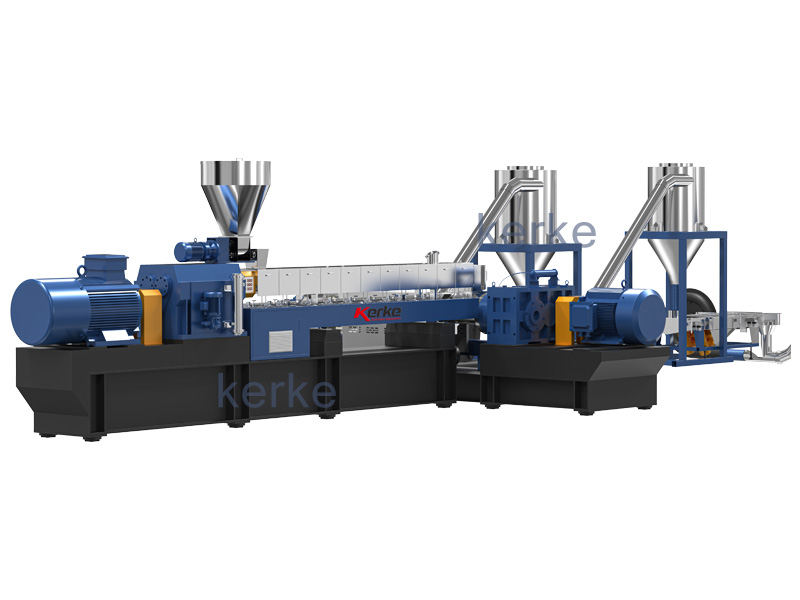
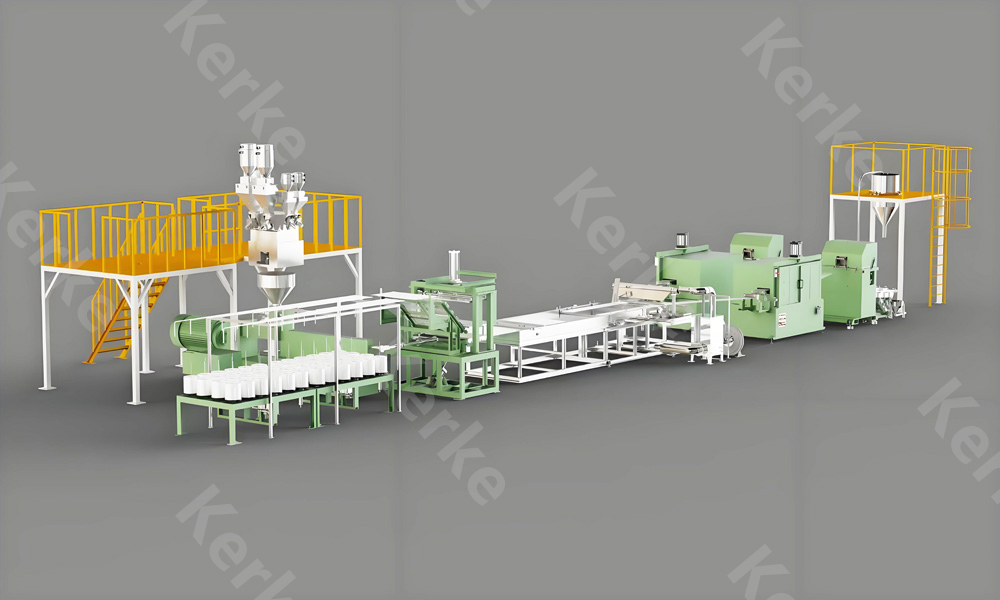
The production of sodium sulfate filler masterbatch mainly adopts a two-stage extrusion system, which can ensure the uniform dispersion of sodium sulfate in the polymer matrix and the stability of product performance. The specific production process is as follows:
1. Premixing: Uniform Mixing of Raw Materials
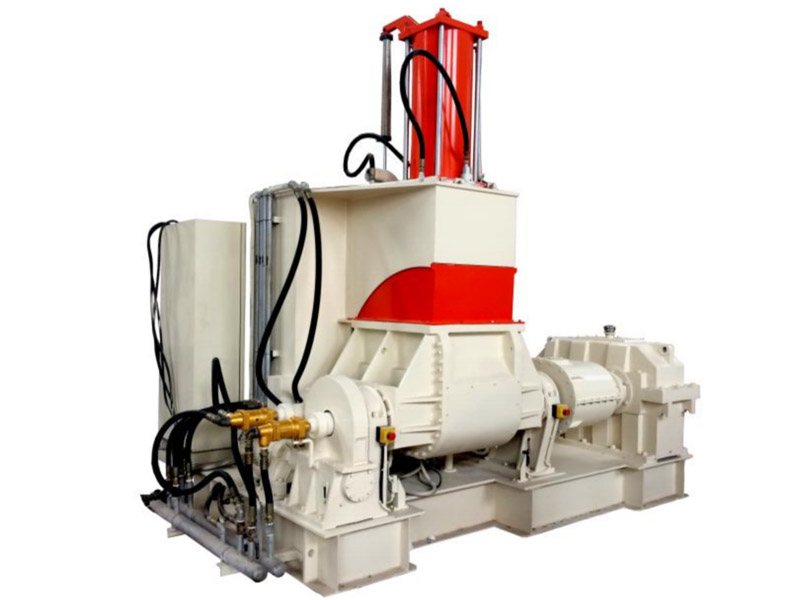
First, put polymer carriers (PE/PP), sodium sulfate powder, dispersants, lubricants and other additives into a high-speed mixer. Under the action of high-speed stirring (rotating speed: 800-1200r/min) and appropriate temperature (80-100℃), the raw materials are uniformly mixed. The purpose of premixing is to make the additives adhere to the surface of the polymer and sodium sulfate particles, laying the foundation for subsequent melting and dispersion.
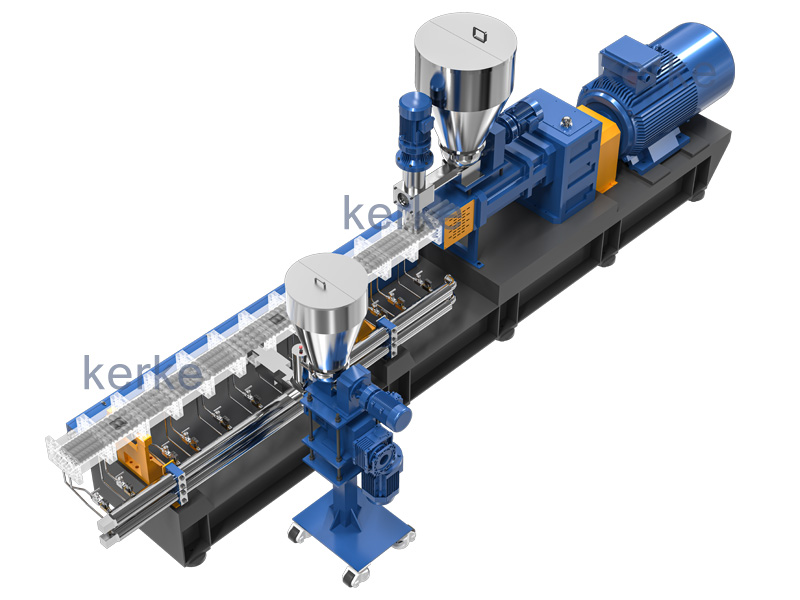
2. Stable Feeding: Conical Twin-Screw Forced Feeder
The premixed raw materials are sent to the twin-screw compounding extruder through a conical twin-screw forced feeder. The conical twin-screw feeder has stable feeding performance and can adapt to the feeding of high-density filler materials, avoiding the problem of uneven feeding caused by the high specific gravity of sodium sulfate.
3. Melting, Dispersion and Mixing: Twin-Screw Compounding Extruder
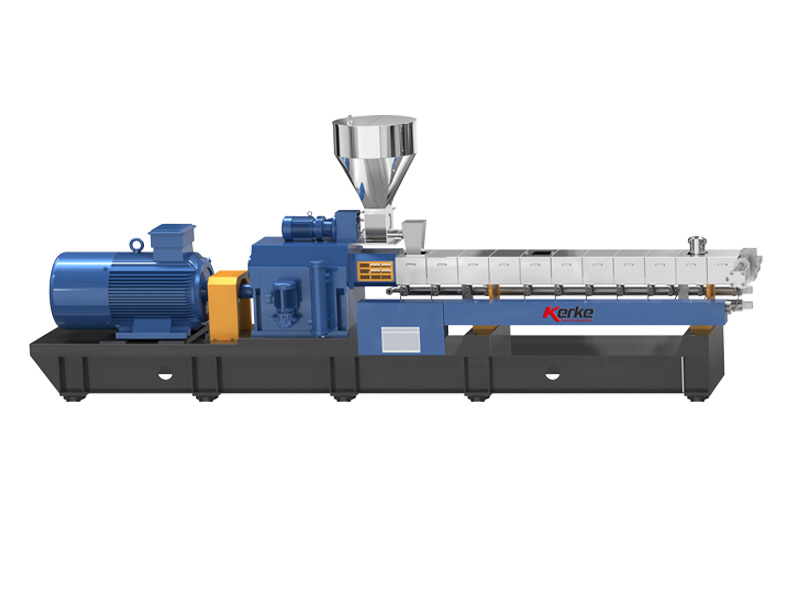
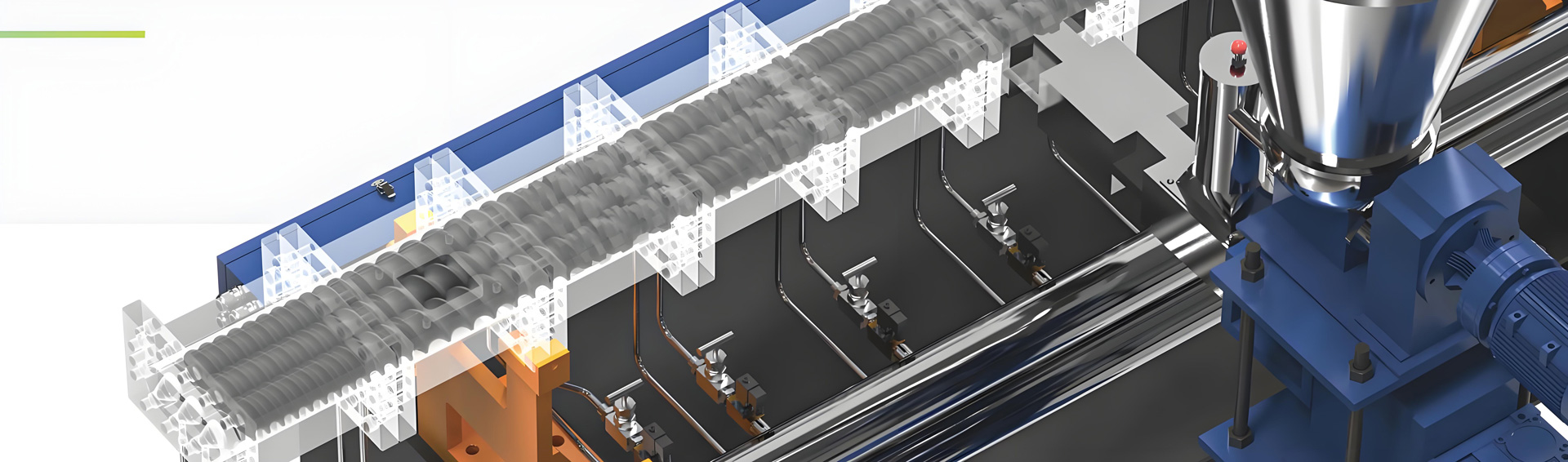
The twin-screw compounding extruder is the core equipment of the production line. It has high torque and strong shearing force, which can realize the melting of polymer carriers, the uniform dispersion of sodium sulfate particles and the thorough mixing of various additives. During the process, the temperature of each section of the extruder is precisely controlled (150-220℃ according to the type of polymer), and the degassing port is used to remove moisture and volatile substances in the raw materials, ensuring the purity of the product.
4. Cooling and Pressure Stabilization: Single-Screw Extruder
The melt extruded from the twin-screw extruder enters the single-screw extruder for secondary extrusion. The single-screw extruder mainly plays the role of cooling and stabilizing the extrusion pressure, making the melt flow more stable, which is conducive to subsequent pelletizing.
5. Pelletizing and Packaging: Air-Cooling Pelletizing System
The stable melt is extruded through the die head, and then cut into granular products by the air-cooling pelletizing system. The air-cooling pelletizing has the advantages of fast cooling speed, no moisture absorption of the product, and stable pellet shape. After pelletizing, the products are sieved, inspected and packaged to obtain the finished sodium sulfate filler masterbatch.
This two-stage extrusion production process is the most widely used configuration in the industry, especially suitable for the production of high filling masterbatch, which can effectively solve the problems of uneven dispersion and poor product stability caused by high filling amount.
VII. Recommended Production Equipment: Kerke Twin-Screw Extruder Series
The quality of sodium sulfate filler masterbatch is closely related to the performance of production equipment. For the production of sodium sulfate filler compounds, it is recommended to use a professional two-stage extrusion production line. The core equipment is selected from Kerke twin-screw extruders, which have the following advantages:
- High torque design: The torque can reach 50-60N·m/cm³, which can meet the mixing requirements of high filling formulas (60%-80% filling amount) and ensure uniform dispersion of sodium sulfate.
- Stable output: The output fluctuation is less than ±3%, which can ensure the consistency of product quality and meet the needs of large-scale production.
- Long service life: The screw and barrel are made of wear-resistant alloy materials, which can resist the wear of sodium sulfate particles and extend the service life of the equipment.
A complete Kerke production line includes: high-speed mixer, conical twin-screw feeder, Kerke twin-screw extruder (main stage), single-screw extruder (second stage), air-cooling pelletizing system and automatic packaging system.
VIII. Production Equipment Price Range
The price of sodium sulfate filler masterbatch production equipment varies according to the output, screw diameter, configuration and other factors. The specific price range (in USD) is as follows:
- Standard twin-screw production line (output: 100-300kg/h, screw diameter: 35-50mm): USD 35,000 – 85,000. Suitable for small and medium-sized enterprises with small production volume and low filling ratio requirements.
- High torque and high filling production line (output: 300-800kg/h, screw diameter: 50-75mm): USD 60,000 – 150,000. Suitable for large-scale enterprises with high filling ratio (60%-80%) and large production volume requirements.
The specific price needs to be determined according to the actual needs of the enterprise, such as output requirements, formula complexity, whether to add automatic control system, etc.
IX. Common Production Problems & Solutions: Improve Production Efficiency
In the production process of sodium sulfate filler masterbatch, due to factors such as raw material quality, equipment parameters and process operation, some problems may occur. The following are common problems, causes and solutions:
1. Poor Dispersion of Filler
Cause: Insufficient shearing force of the extruder, uneven premixing of raw materials, or inappropriate type and dosage of dispersants.
Solution: Increase the shear section of the screw (replace the screw with a stronger shearing element), extend the premixing time or increase the premixing temperature; adjust the type and dosage of dispersants, and select dispersants with better compatibility with sodium sulfate and polymers.
2. Moisture Problems (Bubbles in Products)
Cause: Sodium sulfate powder absorbs moisture during storage, or the premixing temperature is too low to remove moisture, and the degassing effect of the extruder is poor.
Solution: Dry the sodium sulfate powder before use (drying temperature: 100-120℃, drying time: 2-4h); increase the premixing temperature and extend the premixing time; check and clean the degassing port of the extruder to ensure smooth degassing, and increase the vacuum degree of degassing if necessary.
3. Product Brittleness
Cause: The filling amount of sodium sulfate is too high, the content of polymer carrier is too low, or the bonding force between sodium sulfate and polymer is poor.
Solution: Appropriately reduce the filling amount of sodium sulfate and increase the proportion of PE/PP; add coupling agents to enhance the bonding force between sodium sulfate and polymer; add impact modifiers (such as EVA, POE) to improve the toughness of the product.
4. Uneven Pellet Shape
Cause: Unstable extrusion pressure, inappropriate temperature of the die head, or uneven speed of the pelletizing knife.
Solution: Check and adjust the parameters of the single-screw extruder to stabilize the extrusion pressure; adjust the temperature of the die head to ensure the proper fluidity of the melt; calibrate the pelletizing knife to ensure uniform cutting speed.
X. Market Price of Finished Products
The market price of sodium sulfate filler masterbatch is affected by factors such as raw material prices (polymer, sodium sulfate), filling ratio, additive types and product quality. The specific price range (USD/Ton) is as follows:
- Standard grade (filling amount 40%-60%): USD 400 – 700. Mainly used for general PE/PP film production.
- High filling grade (filling amount 60%-80%): USD 300 – 550. Suitable for disposable products and low-cost blow molding products.
- Modified grade (with coupling agent, dispersant): USD 500 – 900. Used for high-performance injection molding products and EVA shoe materials.
It should be noted that the price of finished products will fluctuate with the market price of PE/PP raw materials. When purchasing, enterprises should comprehensively consider product quality and cost, and choose products that meet their own production needs.
XI. Global Market Overview of Sodium Sulfate Filler Masterbatch
In recent years, with the continuous expansion of the global plastic industry and the increasing demand for cost control, the market demand for sodium sulfate filler masterbatch has shown a steady growth trend. The main demand regions are:
- Southeast Asia: Countries such as Vietnam, Thailand and Indonesia have developed plastic processing industries (especially the packaging and disposable products industries), and the demand for cost-saving fillers is huge.
- India: As one of the world’s largest plastic producers and consumers, India’s plastic industry is developing rapidly, and the demand for sodium sulfate filler masterbatch is growing at an annual rate of 8%-10%.
- Middle East and Turkey: Benefiting from the development of the local packaging industry and construction industry, the demand for plastic products is increasing, driving the demand for sodium sulfate filler masterbatch.
- South America: Countries such as Brazil and Argentina have a large demand for disposable plastic products and agricultural plastic films, which is an important emerging market for sodium sulfate filler masterbatch.
The main growth drivers of the global market are: the continuous expansion of the packaging industry, the increase in the output of large-volume disposable products, and the increasing demand for cost-saving solutions in the plastic industry. In addition, the improvement of sodium sulfate filler masterbatch modification technology has also expanded its application fields, further promoting market growth.
XII. Market Trends: Towards High Performance and High Cost-Efficiency
Looking forward to the future, the sodium sulfate filler masterbatch market will show the following development trends:
- Higher Filling Ratios: With the improvement of extrusion technology and the optimization of additive formulas, the filling ratio of sodium sulfate filler masterbatch will continue to increase (expected to reach 85% or more), further reducing the cost of plastic products.
- Popularization of High-Torque Twin-Screw Systems: High-torque twin-screw extruders can better meet the production needs of high filling masterbatch, and will become the mainstream equipment in the market.
- Development of Lightweight and High-Flow Compounds: With the increasing demand for lightweight plastic products, sodium sulfate filler masterbatch will develop towards lightweight and high flow, while ensuring rigidity, reducing the weight of products and improving processing efficiency.
- More Cost-Efficient Formulations: By optimizing the type and dosage of additives and developing new composite fillers, enterprises will continue to improve the cost-performance ratio of sodium sulfate filler masterbatch to meet the increasingly strict cost control needs of the market.
In conclusion, sodium sulfate filler masterbatch and high filling compounds, as cost-saving and performance-improving solutions in the plastic industry, have broad market prospects. With the continuous advancement of production technology and the expansion of application fields, they will play a more important role in the global plastic processing industry.
If you need to purchase sodium sulfate filler masterbatch or related production equipment, please contact us for professional solutions and quotation services.