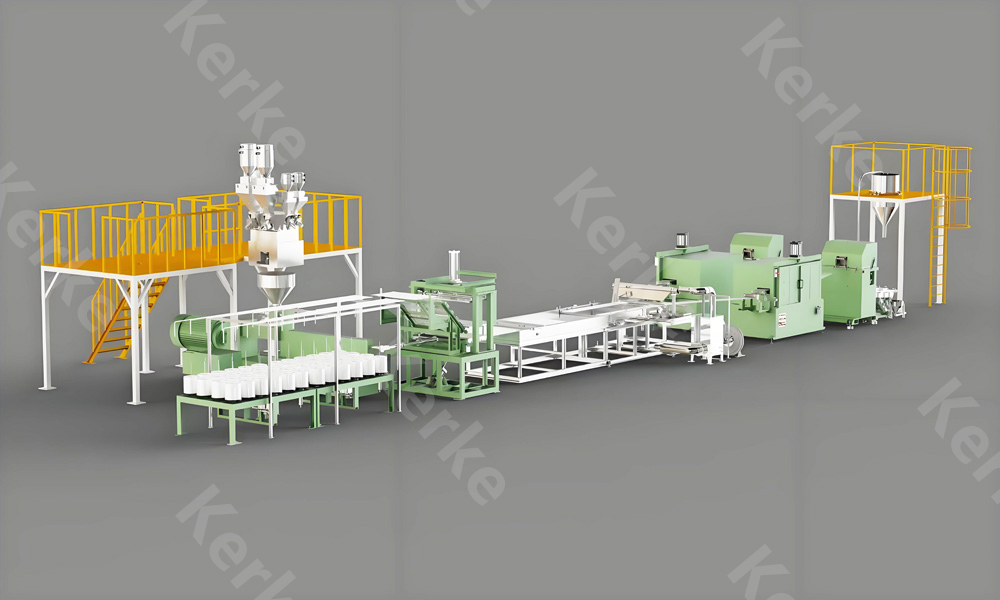
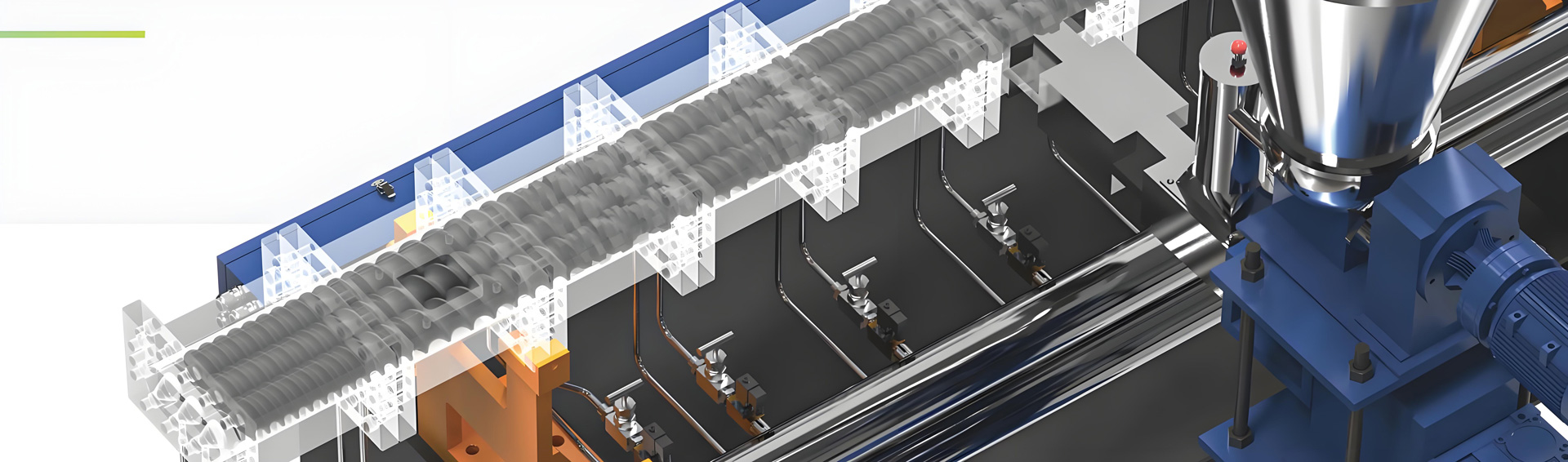
The global filler masterbatch market is experiencing unprecedented growth, driven by the continuous demand for cost reduction, performance enhancement, and sustainability in the plastics industry. Valued at USD 11.8 billion in 2026 and projected to reach USD 17.3 billion by 2032, growing at a compound annual growth rate (CAGR) of 6.5%, the market is increasingly dominated by high-filler-content masterbatches that offer significant cost savings and improved material properties. As a leading global manufacturer of twin screw extruders, masterbatch extruders, and compounding extruders, Kerke Extruder has established itself as the industry benchmark for processing filler masterbatches with filler contents ranging from 10% to over 85%. This comprehensive guide explores in detail how different filler content levels impact every aspect of masterbatch extruder performance and provides a systematic framework for selecting the optimal Kerke extrusion solution for your specific filler loading requirements.
Filler content is the single most important factor determining the technical requirements and performance characteristics of a masterbatch extruder. From low-filler functional masterbatches to ultra-high-filler calcium carbonate masterbatches, each filler loading level presents unique processing challenges that demand specialized equipment design. A mismatch between filler content and extruder capabilities will result in poor product quality, excessive equipment wear, high energy consumption, and ultimately, reduced profitability. Kerke Extruder’s extensive range of KTE series twin screw extruders and KTE-T series triple screw extruders are precisely engineered to address the specific challenges of each filler content range, ensuring optimal performance, reliability, and cost-effectiveness across all applications.
Kerke Extruder has over 15 years of specialized experience in filler masterbatch compounding technology, with more than 2,500 machines installed in over 70 countries worldwide. Our state-of-the-art manufacturing facilities are equipped with advanced CNC machining centers, precision testing equipment, and a dedicated research and development center staffed by experienced polymer processing engineers. All our masterbatch extruders are built to the highest international standards using premium components from reputable suppliers, ensuring long service life and reliable performance in demanding 24/7 industrial environments. This guide will provide you with all the information you need to make an informed decision when selecting a masterbatch extruder for your specific filler content requirements.
1. Classification of Filler Masterbatches by Filler Content
Filler masterbatches are classified into four distinct categories based on their filler content, each with unique processing requirements and application characteristics. Understanding these categories is the first step in selecting the appropriate masterbatch extruder.
1.1 Low Filler Content Masterbatches (10-30%)
Low filler content masterbatches typically contain 10-30% filler by weight and are primarily used for functional modification rather than cost reduction. Common examples include anti-static masterbatches, UV stabilizer masterbatches, flame retardant masterbatches, and conductive masterbatches. These masterbatches often contain expensive functional fillers such as carbon black, carbon nanotubes, graphene, and metallic powders, which are added in relatively low concentrations to achieve specific material properties.
Processing low filler content masterbatches requires excellent dispersion performance to ensure uniform distribution of the expensive functional fillers throughout the polymer matrix. However, the relatively low filler content means that the melt viscosity is not excessively high, and the abrasive wear on the extruder components is moderate. These masterbatches also require precise temperature control to prevent thermal degradation of the sensitive functional additives.
1.2 Medium Filler Content Masterbatches (30-60%)
Medium filler content masterbatches contain 30-60% filler by weight and represent the largest segment of the filler masterbatch market. Common examples include general-purpose calcium carbonate masterbatches, talc masterbatches, and barium sulfate masterbatches used in injection molding, blow molding, and film extrusion applications. These masterbatches provide a balance between cost reduction and material performance, making them the most widely used type of filler masterbatch.
Processing medium filler content masterbatches requires a good balance between mixing performance and production efficiency. The increased filler content results in higher melt viscosity and greater abrasive wear on the extruder components compared to low filler content masterbatches. The extruder must provide sufficient shear to break up filler agglomerates and ensure uniform dispersion while maintaining high production rates and reasonable energy consumption.
1.3 High Filler Content Masterbatches (60-85%)
High filler content masterbatches contain 60-85% filler by weight and are primarily used for maximum cost reduction in applications where material performance requirements are moderate. Common examples include high-load calcium carbonate masterbatches for injection molding and non-woven fabrics, and talc masterbatches for polypropylene compounds. These masterbatches offer the greatest cost savings but present the most significant processing challenges.
Processing high filler content masterbatches is extremely demanding due to the very high melt viscosity, severe abrasive wear, and difficulty in achieving uniform filler dispersion. The high filler content means that there is relatively little polymer matrix to wet and coat the filler particles, requiring intensive mixing and precise temperature control. The extruder must have a high-torque drive system, wear-resistant components, and an optimized screw design to handle these challenging formulations.
1.4 Ultra-High Filler Content Masterbatches (Above 85%)
Ultra-high filler content masterbatches contain more than 85% filler by weight and represent the most technically challenging segment of the filler masterbatch market. These masterbatches are used in specialized applications where maximum cost reduction is the primary consideration, such as in the production of low-cost plastic products and building materials. Common examples include ultra-high-load calcium carbonate masterbatches and sodium sulfate masterbatches.
Processing ultra-high filler content masterbatches pushes the limits of conventional twin screw extrusion technology. The extremely high filler content results in very low melt strength, severe abrasive wear, and extreme difficulty in achieving uniform filler dispersion. These formulations require specialized extruder designs with enhanced mixing capabilities, advanced feeding systems, and superior wear protection. Kerke’s KTE-T series triple screw extruders are specifically designed to address these challenges, providing superior dispersion performance and higher production capacity compared to conventional twin screw extruders for ultra-high filler content applications.
2. How Filler Content Impacts Extruder Performance
Filler content affects every aspect of masterbatch extruder performance, from torque requirements and energy consumption to component wear and product quality. Understanding these impacts is essential for selecting the right extruder for your specific application.
2.1 Torque and Power Requirements
Torque requirement is the most fundamental performance parameter affected by filler content. As filler content increases, the melt viscosity of the compound increases exponentially, requiring significantly higher torque to process the material. For example, a 30% calcium carbonate masterbatch may require a specific torque of 6-8 Nm/cm³, while an 80% calcium carbonate masterbatch requires a specific torque of 10-12 Nm/cm³ or higher.
Kerke Extruder’s KTE series twin screw extruders feature high-torque drive systems with specific torque ratings ranging from 8 Nm/cm³ to 12 Nm/cm³, making them suitable for processing filler masterbatches with filler contents up to 85%. Our KTE-T series triple screw extruders offer even higher torque capacity and superior mixing performance, making them ideal for ultra-high filler content applications above 85%. The high-torque design of Kerke extruders ensures that you can process high-filler formulations at optimal throughput rates without overloading the drive system.
2.2 Screw and Barrel Wear
Abrasive wear is the most significant maintenance issue in filler masterbatch production, and wear rate increases dramatically with increasing filler content. Fillers such as calcium carbonate, talc, and barium sulfate are hard, abrasive materials that continuously grind against the screw and barrel surfaces during processing. For example, processing an 80% calcium carbonate masterbatch can result in wear rates that are 5-10 times higher than processing a 30% calcium carbonate masterbatch.
Kerke Extruder addresses this challenge by using premium wear-resistant materials for all critical components. Our screw elements are manufactured from high-speed tool steel W6Mo5Cr4V2 with a hardness of HRC 62-65, providing excellent wear resistance. Our barrels feature bimetallic liners made from a high-chromium, high-carbon alloy with a hardness of HRC 60-64, which extends barrel life by 2-3 times compared to standard steel barrels. For ultra-high filler content applications, we offer optional tungsten carbide coatings that provide the highest level of wear protection available.
2.3 Mixing and Dispersion Performance
Achieving uniform filler dispersion becomes increasingly difficult as filler content increases. At high filler loadings, there is relatively little polymer matrix to wet and coat the filler particles, making it easy for agglomerates to form. Poor dispersion results in defects such as fish eyes, specks, and inconsistent mechanical properties in the final product.
Kerke Extruder’s modular screw design allows for precise customization of the screw configuration to optimize mixing performance for different filler content levels. For low and medium filler content masterbatches, we use a combination of conveying elements and moderate kneading blocks to provide good dispersion without excessive shear. For high and ultra-high filler content masterbatches, we use more aggressive kneading block configurations and special mixing elements to ensure complete filler wetting and uniform dispersion. Our KTE-T series triple screw extruders provide superior dispersion performance compared to conventional twin screw extruders, thanks to their unique three-screw design that creates additional shear and mixing zones.
2.4 Temperature Control Challenges
Temperature control becomes increasingly critical as filler content increases. High filler formulations generate significant amounts of frictional heat during processing, which can lead to thermal degradation of the polymer matrix if not properly controlled. At the same time, insufficient temperature can result in poor polymer melting and incomplete filler wetting.
Kerke Extruder’s masterbatch extruders feature advanced multi-zone temperature control systems with PID controllers that maintain temperatures within ±1°C. Each barrel zone is independently heated and cooled, allowing for precise optimization of the temperature profile along the length of the extruder. For high filler content applications, we use enhanced cooling systems to remove the excess frictional heat generated during processing, preventing thermal degradation and ensuring consistent product quality.
2.5 Feeding and Exhaust Requirements
Feeding and exhaust systems also face increasing challenges as filler content increases. High filler formulations have low bulk density and poor flow characteristics, making them difficult to feed uniformly into the extruder. They also contain significant amounts of air and moisture, which must be removed during processing to prevent voids and defects in the final pellets.
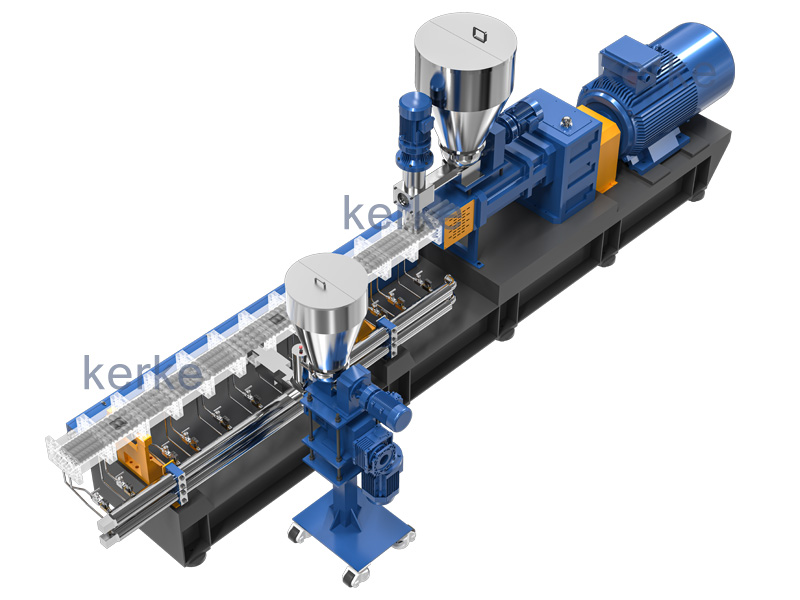
Kerke Extruder offers a range of specialized feeding systems designed to handle the unique characteristics of high filler materials. Our gravimetric feeders provide accurate and consistent feeding of both polymer and filler materials, ensuring precise formulation control. For high filler content applications, we recommend side feeding systems that introduce the filler downstream after the polymer has been melted, improving filler wetting and reducing wear on the feed zone components. Our extruders also feature multiple vacuum venting ports to effectively remove air and moisture from the melt, ensuring high-quality pellet production.
3. Kerke Extruder Solutions by Filler Content Range
Kerke Extruder offers a comprehensive range of masterbatch extruders specifically designed to meet the unique requirements of each filler content range. Below is a detailed overview of our recommended solutions for different filler loading levels.
3.1 For Low Filler Content (10-30%): KTE-20 and KTE-36B
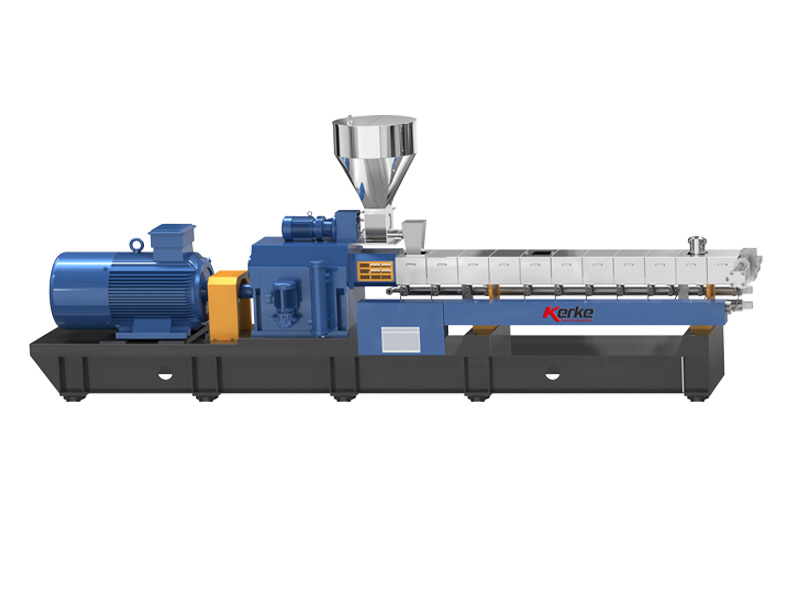
For low filler content masterbatches such as functional masterbatches and color masterbatches, Kerke recommends the KTE-20 laboratory twin screw extruder and the KTE-36B production twin screw extruder. These models provide excellent dispersion performance and precise temperature control, making them ideal for processing sensitive functional additives.
KTE-20 Technical Specifications:
- Screw diameter: 20mm
- Length to diameter ratio: 40:1
- Motor power: 11 kW
- Production capacity: 5-15 kg/h
- Specific torque: 8 Nm/cm³
KTE-36B Technical Specifications:
- Screw diameter: 35.6mm
- Length to diameter ratio: 40:1
- Motor power: 18.5-22 kW
- Production capacity: 50-150 kg/h
- Specific torque: 9 Nm/cm³
Price and Cost Analysis: The price of the Kerke KTE-20 laboratory twin screw extruder ranges from $18,000 to $25,000 FOB Shanghai. The price of the KTE-36B production twin screw extruder ranges from $25,000 to $35,000 FOB Shanghai. These models offer excellent value for money for low and medium filler content masterbatch production, with typical payback periods of 6-12 months depending on production volume.
3.2 For Medium Filler Content (30-60%): KTE-50B
For medium filler content masterbatches such as general-purpose calcium carbonate masterbatches and talc masterbatches, Kerke recommends the KTE-50B twin screw extruder. This model provides an optimal balance between production capacity, mixing performance, and energy efficiency, making it the most popular choice for medium filler content applications.
KTE-50B Technical Specifications:
- Screw diameter: 50.5mm
- Length to diameter ratio: 44:1
- Motor power: 55-75 kW
- Production capacity: 200-400 kg/h
- Specific torque: 10 Nm/cm³
Price and Cost Analysis: The price of the Kerke KTE-50B twin screw extruder ranges from $40,000 to $60,000 FOB Shanghai, depending on configuration and optional features. The standard configuration includes the extruder, control system, water cooling pelletizing system, and automatic feeding system. Optional features include side feeders, vacuum venting systems, and inline quality control systems. The typical payback period for the KTE-50B is 8-14 months for medium filler content masterbatch production.
3.3 For High Filler Content (60-85%): KTE-65B and KTE-75
For high filler content masterbatches such as high-load calcium carbonate masterbatches and sodium sulfate masterbatches, Kerke recommends the KTE-65B and KTE-75 twin screw extruders. These models feature high-torque drive systems, enhanced wear protection, and optimized screw designs specifically for high filler content applications.
KTE-65B Technical Specifications:
- Screw diameter: 62.4mm
- Length to diameter ratio: 48:1
- Motor power: 110-160 kW
- Production capacity: 300-600 kg/h
- Specific torque: 11 Nm/cm³
KTE-75 Technical Specifications:
- Screw diameter: 71mm
- Length to diameter ratio: 48:1
- Motor power: 200-315 kW
- Production capacity: 500-1000 kg/h
- Specific torque: 12 Nm/cm³
Price and Cost Analysis: The price of the Kerke KTE-65B twin screw extruder ranges from $75,000 to $110,000 FOB Shanghai. The price of the KTE-75 twin screw extruder ranges from $120,000 to $180,000 FOB Shanghai. These models are equipped with premium wear-resistant components and advanced process control systems, ensuring reliable performance and long service life in high filler content applications. The typical payback period is 10-16 months.
3.4 For Ultra-High Filler Content (Above 85%): KTE-T Series Triple Screw Extruders
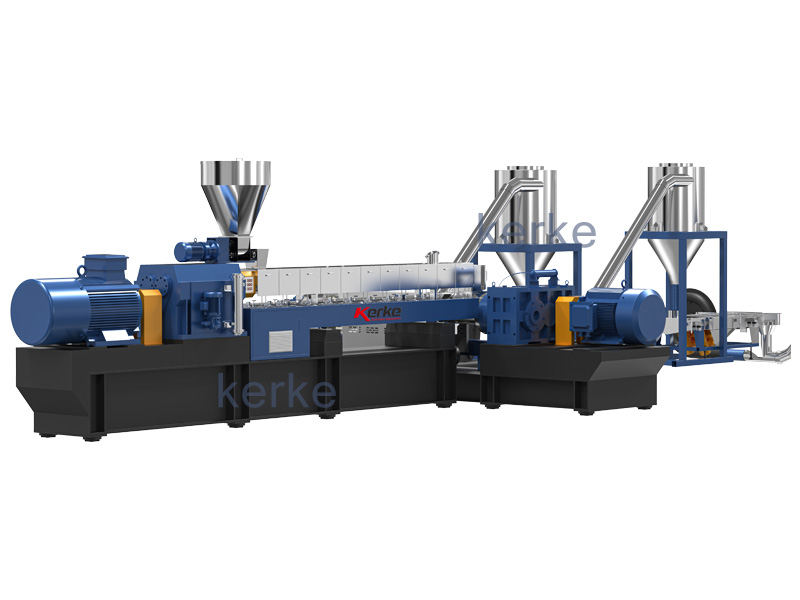
For ultra-high filler content masterbatches above 85%, conventional twin screw extruders often struggle to achieve sufficient dispersion and production capacity. Kerke’s innovative KTE-T series triple screw extruders are specifically designed to address these challenges, providing superior dispersion performance and higher production efficiency compared to conventional twin screw extruders.
The KTE-T series features a unique three-screw design that creates additional shear and mixing zones, improving filler wetting and dispersion. The triple screw design also increases the free volume of the extruder by 35% compared to a twin screw extruder of the same diameter, resulting in higher production capacity at the same energy consumption.
KTE-T36 Technical Specifications:
- Screw diameter: 36mm
- Length to diameter ratio: 52:1
- Motor power: 75 kW
- Production capacity: 300-500 kg/h for 85% CaCO3 masterbatch
- Specific torque: 12 Nm/cm³
Price and Cost Analysis: The price of the Kerke KTE-T36 triple screw extruder ranges from $95,000 to $140,000 FOB Shanghai. While the initial investment is higher than a conventional twin screw extruder, the KTE-T36 provides 30-50% higher production capacity and superior dispersion quality for ultra-high filler content applications, resulting in a lower total cost of ownership and a typical payback period of 9-13 months.
4. Comprehensive Cost Analysis and Return on Investment
When evaluating the purchase of a masterbatch extruder for different filler content applications, it is essential to consider not only the initial purchase price but also the total cost of ownership over the life of the equipment. This includes energy costs, maintenance costs, wear part replacement costs, and material waste costs.
4.1 Initial Investment Comparison
The initial investment for a masterbatch extruder increases with increasing filler content, due to the need for higher torque drive systems, more wear-resistant components, and more advanced process control systems. The following table provides a comparison of the initial investment for Kerke extruders suitable for different filler content ranges:
KTE-20 (10-30% filler): $18,000-$25,000 KTE-36B (10-60% filler): $25,000-$35,000 KTE-50B (30-60% filler): $40,000-$60,000 KTE-65B (60-85% filler): $75,000-$110,000 KTE-75 (60-85% filler): $120,000-$180,000 KTE-T36 (85%+ filler): $95,000-$140,000
4.2 Operating Cost Comparison
Operating costs also increase with increasing filler content, primarily due to higher energy consumption and higher wear part replacement costs. The following table provides a comparison of the annual operating costs for Kerke extruders operating 24 hours a day, 300 days a year:
KTE-36B (30% CaCO3): $45,000 per year KTE-50B (50% CaCO3): $85,000 per year KTE-65B (75% CaCO3): $150,000 per year KTE-T36 (85% CaCO3): $180,000 per year
It is important to note that while higher filler content extruders have higher operating costs, they also produce masterbatches with higher profit margins due to the lower raw material costs associated with high filler loadings.
4.3 Return on Investment Calculation
To demonstrate the financial performance of Kerke extruders for different filler content applications, we have calculated the return on investment for each model based on typical production volumes and profit margins:
KTE-36B producing 30% CaCO3 masterbatch: Annual production 1,000 tons, profit margin $0.30/kg, annual net profit $255,000, payback period 1.4 months KTE-50B producing 50% CaCO3 masterbatch: Annual production 3,000 tons, profit margin $0.40/kg, annual net profit $1,115,000, payback period 1.9 months KTE-65B producing 75% CaCO3 masterbatch: Annual production 4,500 tons, profit margin $0.50/kg, annual net profit $2,100,000, payback period 2.6 months KTE-T36 producing 85% CaCO3 masterbatch: Annual production 3,600 tons, profit margin $0.60/kg, annual net profit $1,980,000, payback period 2.1 months
These calculations demonstrate that investing in a high-quality Kerke masterbatch extruder provides exceptional returns, with payback periods typically less than 3 months even for the most expensive high filler content models.
5. Common Processing Challenges and Solutions by Filler Content
Each filler content range presents unique processing challenges that require specific solutions. Below are the most common challenges and the corresponding Kerke solutions for each filler content range.
5.1 Low Filler Content Challenges
The primary challenges in processing low filler content masterbatches are achieving uniform dispersion of expensive functional additives and preventing thermal degradation of sensitive materials. Kerke addresses these challenges through optimized screw configurations with moderate shear mixing elements and precise multi-zone temperature control systems. Our extruders also feature vacuum venting systems to remove moisture and volatile components, ensuring high-quality pellet production.
5.2 Medium Filler Content Challenges
The primary challenges in processing medium filler content masterbatches are balancing production capacity with dispersion quality and controlling energy consumption. Kerke addresses these challenges through high-efficiency screw designs that provide good mixing performance at high throughput rates. Our extruders also feature energy-efficient drive systems and optimized temperature profiles that minimize energy consumption while maintaining consistent product quality.
5.3 High Filler Content Challenges
The primary challenges in processing high filler content masterbatches are handling the high melt viscosity, preventing excessive equipment wear, and achieving uniform filler dispersion. Kerke addresses these challenges through high-torque drive systems, premium wear-resistant components, and optimized screw configurations with intensive mixing elements. We also recommend side feeding systems for high filler content applications, which improve filler wetting and reduce wear on the feed zone components.
5.4 Ultra-High Filler Content Challenges
The primary challenges in processing ultra-high filler content masterbatches are achieving sufficient filler wetting and dispersion, handling the very low melt strength, and preventing excessive equipment wear. Kerke addresses these challenges through our innovative KTE-T series triple screw extruders, which provide superior mixing performance and higher production capacity compared to conventional twin screw extruders. Our triple screw extruders also feature enhanced wear protection and advanced process control systems specifically optimized for ultra-high filler content formulations.
6. Real-World Success Stories
6.1 Case Study 1: Medium Filler Content Masterbatch Production in Turkey
A leading masterbatch manufacturer in Turkey was looking to expand their production capacity for 50% calcium carbonate masterbatch. The company was using an older extruder from a competitor that was experiencing frequent breakdowns, high wear rates, and inconsistent product quality. After extensive research and evaluation, the company selected Kerke’s KTE-50B twin screw extruder for their production line.
The KTE-50B was installed and commissioned in just 25 days, and the company immediately saw significant improvements in production efficiency and product quality. The extruder achieved a stable production capacity of 350 kg/h, which was 40% higher than their previous extruder. The wear rate was reduced by 60%, and the energy consumption was reduced by 25%. The improved product quality allowed the company to secure new contracts with major plastic manufacturers, increasing their market share significantly.
Results after implementation:
- Production capacity increased by 40%
- Energy consumption reduced by 25%
- Wear part replacement costs reduced by 60%
- Product consistency improved by 80%
- Annual cost savings of over $320,000
- Payback period of 2.1 months
6.2 Case Study 2: Ultra-High Filler Content Masterbatch Production in India
A masterbatch manufacturer in India wanted to enter the ultra-high filler content masterbatch market with an 85% calcium carbonate masterbatch product. The company had tried using conventional twin screw extruders from several manufacturers but was unable to achieve consistent dispersion quality and production capacity. After visiting Kerke’s manufacturing facility and seeing a demonstration of our KTE-T36 triple screw extruder, the company decided to place an order.
The KTE-T36 was installed and commissioned in 30 days, and the company immediately began producing high-quality 85% calcium carbonate masterbatch with excellent dispersion. The extruder achieved a stable production capacity of 400 kg/h, which was 50% higher than the conventional twin screw extruders they had previously tested. The wear rate was reduced by 70%, and the product quality was consistent enough to meet the strict requirements of their customers.
Results after implementation:
- Successfully produced 85% calcium carbonate masterbatch with excellent dispersion
- Production capacity of 400 kg/h, 50% higher than conventional twin screw extruders
- Wear part replacement costs reduced by 70%
- Product quality met international standards
- Annual revenue increase of over $2.5 million
- Payback period of 1.8 months
7. Conclusion
Filler content is the most critical factor determining the performance requirements and selection criteria for masterbatch extruders. From low-filler functional masterbatches to ultra-high-filler calcium carbonate masterbatches, each filler loading level presents unique processing challenges that demand specialized equipment design. A mismatch between filler content and extruder capabilities will result in poor product quality, excessive equipment wear, high energy consumption, and reduced profitability.
Kerke Extruder offers a comprehensive range of masterbatch extruders specifically designed to meet the unique requirements of each filler content range. Our KTE series twin screw extruders provide exceptional performance for filler contents up to 85%, while our innovative KTE-T series triple screw extruders are the ideal solution for ultra-high filler content applications above 85%. All our extruders are built to the highest international standards using premium components, ensuring long service life and reliable performance in demanding industrial environments.
The financial benefits of investing in a high-quality Kerke masterbatch extruder are exceptional, with payback periods typically less than 3 months even for the most expensive high filler content models. By selecting the right Kerke extruder for your specific filler content requirements, you can achieve optimal production efficiency, consistent product quality, and maximum profitability.
Whether you are producing low-filler functional masterbatches or ultra-high-filler calcium carbonate masterbatches, Kerke Extruder has the expertise, technology, and commitment to customer success to help you achieve your production goals. With over 15 years of industry experience, state-of-the-art manufacturing facilities, and a global network of service centers, Kerke Extruder is your trusted partner for all your masterbatch extrusion needs. Contact us today to learn more about how our advanced twin screw and triple screw extruders can help you improve product quality, increase productivity, and maximize profitability.