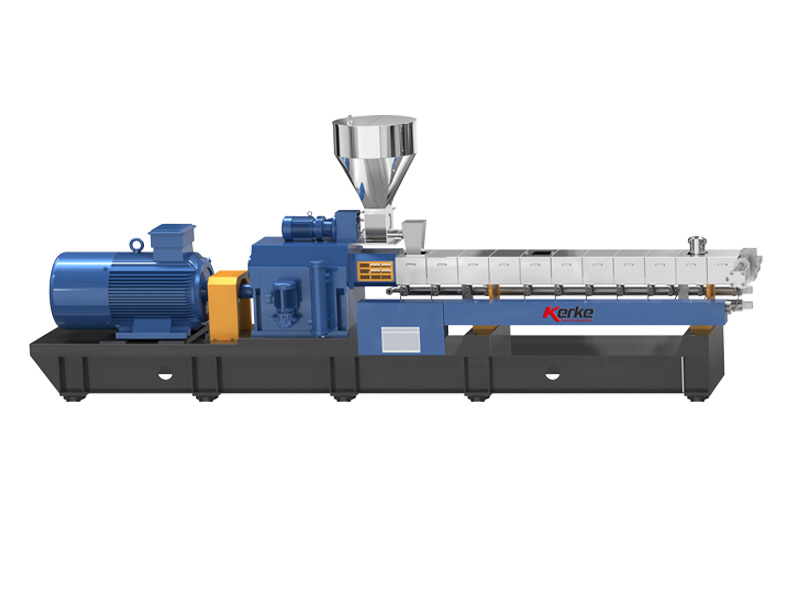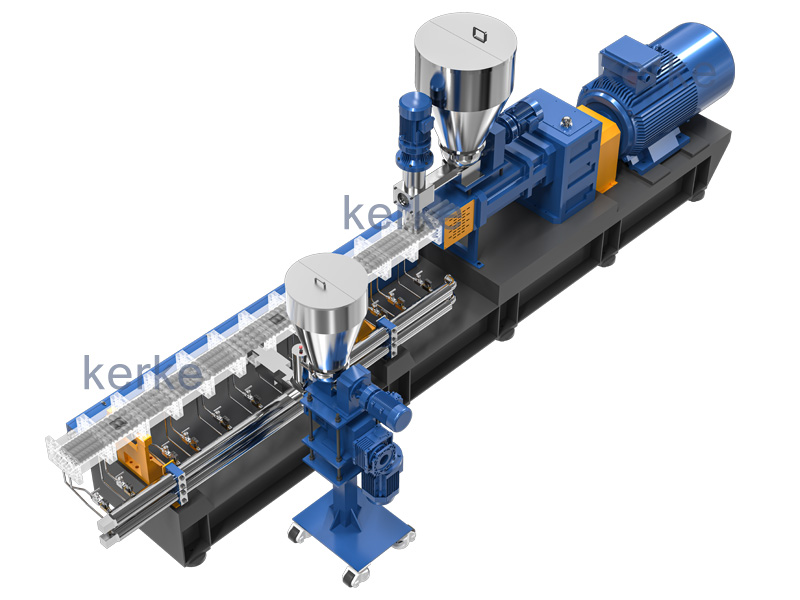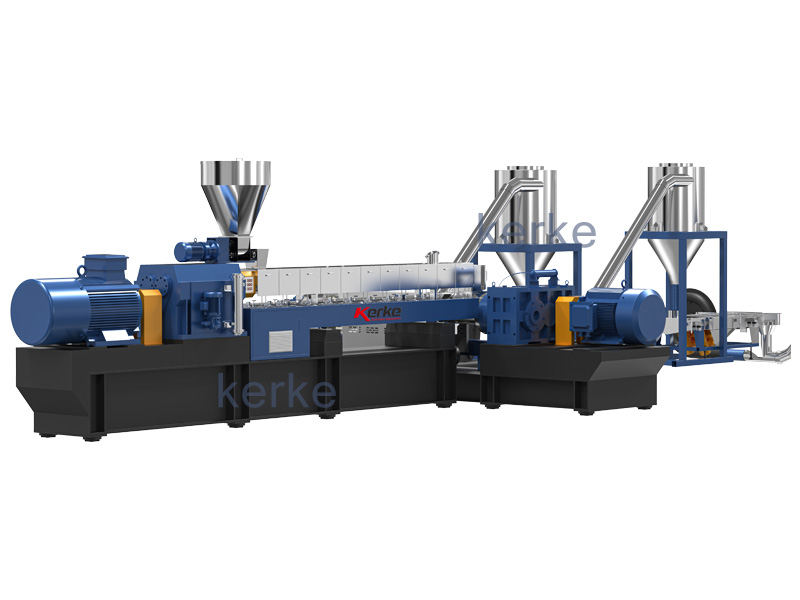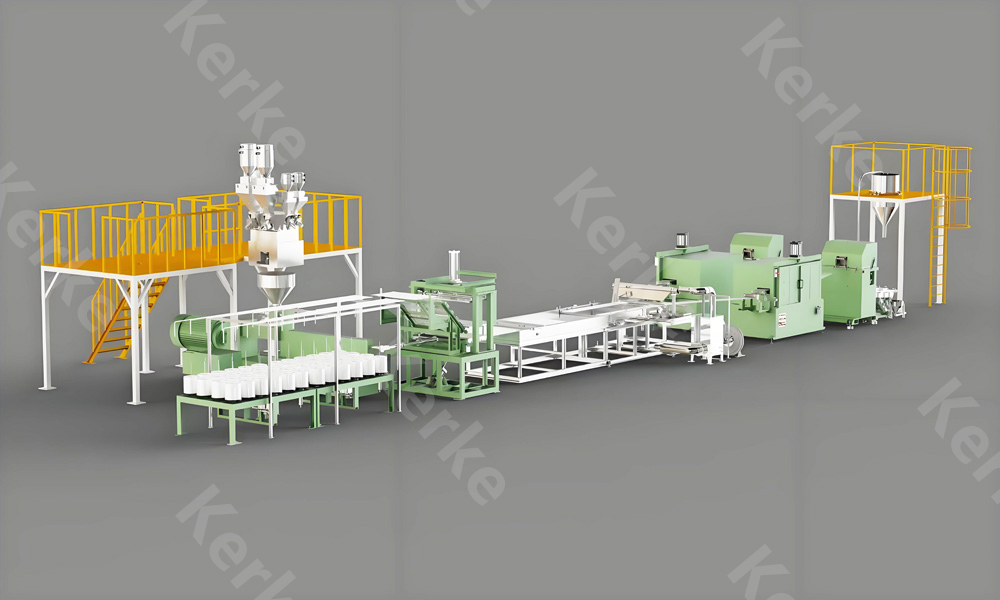
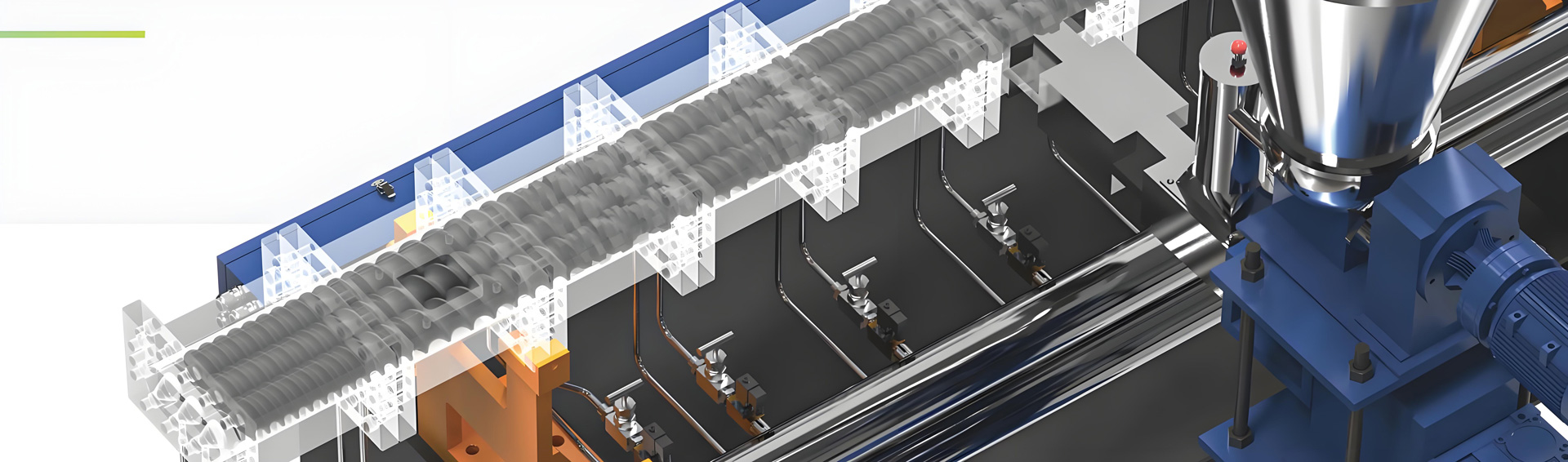
The global masterbatch manufacturing industry is undergoing a digital transformation driven by the adoption of advanced automation technologies. Programmable Logic Controller (PLC) systems have emerged as the central nervous system of modern masterbatch extrusion operations, replacing traditional manual control methods and revolutionizing every aspect of production. As a leading global manufacturer of twin screw extruders, masterbatch extruders, and compounding extruders, Kerke Extruder has integrated state-of-the-art PLC control systems into all our KTE series twin screw extruders and KTE-T series triple screw extruders, delivering unprecedented levels of precision, efficiency, and reliability to masterbatch manufacturers worldwide. This comprehensive guide explores in detail how PLC control systems optimize masterbatch extrusion operations, from process parameter control to quality management, energy efficiency, and predictive maintenance.
Masterbatch production is a complex process that requires precise control over multiple interdependent variables including temperature, pressure, screw speed, feeding rate, and torque. Even minor variations in these parameters can result in significant quality issues such as color inconsistency, poor dispersion, and uneven pellet size. Traditional manual control methods rely heavily on operator experience and judgment, leading to high variability between batches, excessive material waste, and low production efficiency. PLC control systems address these challenges by providing real-time monitoring, automatic parameter adjustment, and centralized control of all extrusion processes, ensuring consistent product quality and maximum operational efficiency.
Kerke Extruder has over 15 years of specialized experience in integrating advanced PLC control systems into masterbatch extrusion equipment. All our extruders are equipped with industrial-grade PLC platforms from leading manufacturers such as Siemens and Mitsubishi, combined with high-resolution touch screen Human-Machine Interfaces (HMIs) that provide intuitive operation and comprehensive process visualization. Our PLC systems are specifically optimized for masterbatch production, with pre-programmed control algorithms, recipe management capabilities, and data logging features tailored to the unique requirements of color masterbatch, functional masterbatch, and filler masterbatch production. This guide will provide you with a complete understanding of how PLC control systems can transform your masterbatch extrusion operations and deliver significant financial benefits.
1. Limitations of Traditional Manual Control in Masterbatch Extrusion
Before exploring the benefits of PLC control systems, it is essential to understand the limitations of traditional manual control methods that have plagued the masterbatch industry for decades. These limitations not only affect product quality and production efficiency but also increase operational costs and safety risks.
1.1 Inconsistent Product Quality
The most significant limitation of manual control is the inherent variability between batches caused by human error and inconsistent operator judgment. In manual systems, operators must constantly monitor multiple process parameters and make manual adjustments based on their experience and observation. This leads to significant variations in temperature, pressure, and feeding rate between different operators and even between different shifts operated by the same person. These variations result in inconsistent product quality, including color differences, poor dispersion, and variable melt flow index, which can lead to customer complaints and lost business.
For example, a temperature variation of just 5°C in the extrusion barrel can significantly affect the melting characteristics of the polymer and the dispersion of pigments and additives. In manual control systems, such variations are common due to delayed operator response and imprecise temperature adjustment. This results in batch-to-batch color differences that are unacceptable for many applications, particularly in the packaging and automotive industries where strict color consistency is required.
1.2 High Material Waste and Production Costs
Manual control systems also result in significantly higher material waste compared to PLC-controlled systems. During startup, shutdown, and formula changeovers, manual systems require extensive operator intervention and produce large amounts of off-specification material that must be scrapped or reprocessed. The average waste rate for manually controlled masterbatch extrusion lines is 8-12% of total production, compared to less than 1.5% for PLC-controlled lines.
In addition to material waste, manual control systems also have higher labor costs and lower production efficiency. Operators must constantly monitor the equipment and make manual adjustments, limiting the number of machines each operator can manage. Manual systems also require longer changeover times between different formulas, reducing the effective production time and increasing labor costs per unit of output.
1.3 Limited Process Visibility and Data Management
Traditional manual control systems provide very limited process visibility and data management capabilities. Operators can only monitor a small number of parameters at any given time, and there is no systematic way to record and analyze production data. This makes it difficult to identify process trends, diagnose quality issues, and implement continuous improvement initiatives.
Without comprehensive data logging and traceability, manufacturers also struggle to meet the increasing regulatory requirements for product traceability in industries such as food packaging and medical devices. Manual record-keeping is time-consuming, error-prone, and often incomplete, making it difficult to track raw materials back to specific production batches or identify the root cause of quality problems.
1.4 Increased Safety Risks
Manual control systems also present increased safety risks compared to PLC-controlled systems. Operators are required to perform potentially dangerous tasks such as opening the barrel for cleaning, adjusting machine components during operation, and handling hot materials. Manual systems also lack comprehensive safety interlocks and automatic shutdown capabilities, increasing the risk of accidents and injuries.
2. Core Components and Features of Kerke PLC Control Systems
Kerke Extruder’s PLC control systems are specifically designed to address the limitations of manual control and optimize every aspect of masterbatch extrusion operations. Our systems consist of several core components that work together to provide comprehensive process control, monitoring, and automation.
2.1 Industrial-Grade PLC Hardware
All Kerke masterbatch extruders are equipped with industrial-grade PLC hardware from leading manufacturers such as Siemens S7 series and Mitsubishi Q series. These PLC platforms are renowned for their reliability, durability, and performance in demanding industrial environments. They feature high-speed processing capabilities, extensive input/output (I/O) capacity, and robust communication interfaces that enable seamless integration with other equipment and systems.
The PLC serves as the central processing unit of the extrusion line, receiving input from various sensors and transducers, executing control algorithms, and sending output signals to actuators such as heaters, motors, and valves. Kerke’s PLC systems are configured with redundant power supplies and backup memory to ensure continuous operation even in the event of power fluctuations or temporary outages.
2.2 High-Resolution Touch Screen HMI
Kerke’s PLC control systems feature high-resolution color touch screen HMIs that provide intuitive operation and comprehensive process visualization. The HMI displays real-time data for all critical process parameters including temperature, pressure, screw speed, feeding rate, motor load, and torque. It also provides graphical representations of the extrusion process, trend graphs, and alarm screens that highlight any deviations from normal operating conditions.
The HMI interface is designed with user-friendliness in mind, featuring color-coded displays, customizable layouts, and multi-language support for international operations. Operators can easily adjust process parameters, access production recipes, view historical data, and troubleshoot issues directly from the touch screen. The HMI also provides password-protected access levels to ensure that only authorized personnel can make changes to critical process parameters.
2.3 Advanced Sensor and Actuator Network
Kerke’s PLC control systems are integrated with a comprehensive network of high-precision sensors and actuators that monitor and control every aspect of the extrusion process. Temperature sensors are installed in each barrel zone, die head, and pelletizing system, providing accurate temperature measurements with ±0.5°C precision. Pressure transducers monitor melt pressure at the die head and along the barrel, providing real-time feedback on the extrusion process.
Other sensors include speed sensors for the screw and feeding systems, torque sensors for the drive system, and level sensors for the material hoppers. These sensors provide continuous input to the PLC, which uses this information to adjust the operation of the extruder and maintain optimal process conditions. The PLC also controls various actuators including electric heaters, cooling valves, variable frequency drives for the motors, and feeding systems.
2.4 Integrated Safety Systems
Safety is a top priority in Kerke’s PLC control system design. Our systems feature comprehensive safety interlocks and automatic shutdown capabilities that protect both operators and equipment. The PLC continuously monitors critical safety parameters such as motor temperature, bearing temperature, and emergency stop buttons. In the event of an abnormal condition, the PLC will automatically trigger an alarm and initiate a controlled shutdown procedure to prevent accidents and equipment damage.
Kerke’s safety systems comply with international safety standards including CE and UL, and feature redundant safety circuits to ensure maximum reliability. The PLC also logs all safety events and alarms, providing a complete record for safety audits and incident investigation.
3. How PLC Control Optimizes Key Aspects of Masterbatch Extrusion
PLC control systems optimize masterbatch extrusion operations in multiple ways, from precise process parameter control to quality management, energy efficiency, and predictive maintenance. Each of these optimizations contributes to improved product quality, increased production efficiency, and reduced operational costs.
3.1 Precise Process Parameter Control
The most fundamental benefit of PLC control systems is their ability to provide precise and consistent control over all critical process parameters. Unlike manual control systems, which rely on operator judgment and response, PLC systems use closed-loop control algorithms to continuously monitor and adjust process parameters in real time.
Temperature control is particularly critical in masterbatch production, as even minor temperature variations can significantly affect product quality. Kerke’s PLC systems use advanced PID (Proportional-Integral-Derivative) control algorithms with auto-tuning capabilities to maintain precise temperature control in each barrel zone. The PLC continuously compares the actual temperature measured by the sensors with the setpoint temperature and adjusts the heating and cooling output accordingly. This results in temperature stability within ±0.5°C, ensuring consistent polymer melting and additive dispersion.
The PLC also provides precise control over screw speed, feeding rate, and torque. Variable frequency drives enable the PLC to adjust the screw speed with ±1 RPM accuracy, ensuring consistent throughput and shear rate. The feeding systems are controlled by the PLC to maintain precise formulation ratios, with gravimetric feeders providing ±0.1% dosing accuracy. This precise control over all process parameters ensures that the extrusion process operates within the optimal window at all times, resulting in consistent product quality and maximum production efficiency.
3.2 Recipe Management and Fast Formula Changeovers
Recipe management is one of the most valuable features of PLC control systems for masterbatch manufacturers who produce multiple products with different formulations. Kerke’s PLC systems can store up to 1000 different production recipes, each containing all the process parameters required for a specific masterbatch formulation. This includes temperature profiles, screw speed, feeding rates for each component, pelletizing parameters, and cooling settings.
When changing between different formulas, operators simply select the appropriate recipe from the HMI, and the PLC automatically adjusts all process parameters to the correct settings. This eliminates the need for manual parameter entry, reducing the risk of human error and significantly reducing changeover time. PLC automation reduces formula changeover time by 30-60% compared to manual control, increasing the effective production time and allowing manufacturers to handle more small-batch orders efficiently.
Kerke’s recipe management system also features version control and access restrictions, ensuring that only authorized personnel can modify or create new recipes. All recipe changes are logged by the PLC, providing a complete audit trail for quality control and regulatory compliance purposes.
3.3 Quality Control and Consistency
PLC control systems significantly improve product quality and consistency by eliminating human error and ensuring that the extrusion process operates within the optimal parameters at all times. The continuous monitoring and automatic adjustment of process parameters ensure that every batch is produced under identical conditions, resulting in consistent product quality from batch to batch.
The PLC also integrates with various inline quality control systems such as color measurement devices, melt flow index testers, and pellet size analyzers. These systems provide real-time quality data to the PLC, which can automatically adjust process parameters to correct any deviations from the desired quality specifications. For example, if the inline color measurement system detects a color deviation, the PLC can automatically adjust the feeding rate of the pigment to bring the color back into specification.
This closed-loop quality control ensures that quality issues are detected and corrected immediately, preventing the production of large amounts of off-specification material. The result is a significant reduction in scrap rates and rework costs, as well as improved customer satisfaction due to consistent product quality.
3.4 Energy Efficiency Optimization
Energy consumption is a significant operational cost in masterbatch production, and PLC control systems can significantly reduce energy usage by optimizing the operation of the extruder and auxiliary equipment. The PLC continuously monitors the energy consumption of all components and adjusts their operation to minimize energy usage while maintaining production efficiency.
One of the most significant energy savings comes from optimized temperature control. Kerke’s PLC systems use advanced temperature control algorithms that minimize energy waste by precisely regulating the heating and cooling of each barrel zone. The PLC also features energy-saving modes that reduce power consumption during periods of low production or standby.
The PLC also optimizes the operation of the drive system, adjusting the screw speed and torque to match the actual production requirements. This prevents the motor from operating at full power when it is not needed, reducing energy consumption and extending the life of the drive components. Overall, PLC control systems can reduce energy consumption by 15-25% compared to manually controlled extrusion lines, resulting in significant cost savings over the life of the equipment.
3.5 Predictive Maintenance and Equipment Reliability
PLC control systems enable predictive maintenance by continuously monitoring the condition of the extruder and identifying potential issues before they result in unplanned downtime. The PLC collects and analyzes data from various sensors including vibration sensors, temperature sensors, and current sensors to detect early signs of equipment wear or failure.
For example, the PLC can monitor the current draw of the drive motor to detect increased friction in the gearbox or screw. It can also monitor the temperature of the bearings to detect early signs of bearing failure. When the PLC detects an abnormal condition, it will trigger an alarm and provide maintenance personnel with detailed information about the issue, allowing them to schedule maintenance during planned downtime rather than experiencing unplanned production interruptions.
This predictive maintenance approach significantly increases equipment reliability and reduces maintenance costs by addressing issues before they become serious problems. It also extends the service life of the equipment by ensuring that maintenance is performed at the optimal time.
3.6 Data Logging and Traceability
Comprehensive data logging and traceability are essential for modern masterbatch manufacturing, particularly for industries with strict regulatory requirements such as food packaging and medical devices. Kerke’s PLC control systems automatically log all critical process data including temperature profiles, pressure, screw speed, feeding rates, and production times for each batch.
The data is stored in a secure database and can be easily retrieved and analyzed for quality control, process optimization, and regulatory compliance purposes. The PLC also records all operator actions, parameter changes, and alarm events, providing a complete audit trail of the production process. This data can be linked to raw material lot numbers and finished product batch numbers, enabling complete traceability from raw material to finished product.
This comprehensive data logging and traceability not only helps manufacturers meet regulatory requirements but also provides valuable insights for continuous process improvement. By analyzing historical production data, manufacturers can identify process trends, optimize production parameters, and reduce waste and energy consumption.
4. Kerke PLC Control System Configurations by Extruder Model
Kerke Extruder offers different levels of PLC control system configurations to meet the specific needs and budgets of different masterbatch manufacturers. All our configurations are based on industrial-grade PLC platforms and include the core features required for efficient masterbatch production.
4.1 Standard Configuration for KTE-20 and KTE-36B
The standard PLC control system configuration is available for our KTE-20 laboratory twin screw extruder and KTE-36B small production twin screw extruder. This configuration features a Siemens S7-1200 PLC and a 10-inch color touch screen HMI. It includes all the core control features including multi-zone temperature control, screw speed control, feeding system control, and basic recipe management.
The standard configuration also includes comprehensive safety interlocks and alarm systems, as well as basic data logging capabilities. It is ideal for small-scale production operations and research and development laboratories that require reliable control at an affordable price.
Price and Cost Analysis: The standard PLC control system adds approximately $5,000-$8,000 to the cost of the extruder. While this represents a modest initial investment, it typically pays for itself within 6-9 months through reduced material waste and increased production efficiency.
4.2 Advanced Configuration for KTE-50B and KTE-65B
The advanced PLC control system configuration is available for our KTE-50B and KTE-65B medium production twin screw extruders. This configuration features a more powerful Siemens S7-1500 PLC and a 15-inch high-resolution touch screen HMI. It includes all the features of the standard configuration plus advanced recipe management with version control, enhanced data logging and reporting capabilities, and remote monitoring and control.
The advanced configuration also supports integration with multiple side feeders, vacuum venting systems, and inline quality control systems. It is ideal for medium to large-scale production operations that require greater flexibility and more advanced control capabilities.
Price and Cost Analysis: The advanced PLC control system adds approximately $12,000-$18,000 to the cost of the extruder. The additional investment is justified by the increased production efficiency, improved quality control, and reduced maintenance costs. The typical payback period for the advanced configuration is 8-12 months.
4.3 Premium Configuration for KTE-75 and KTE-T Series
The premium PLC control system configuration is available for our KTE-75 large production twin screw extruder and KTE-T series triple screw extruders. This configuration features a high-performance Siemens S7-1500 PLC with redundant processing and a 21-inch industrial touch screen HMI. It includes all the features of the advanced configuration plus advanced predictive maintenance capabilities, integration with enterprise resource planning (ERP) systems, and comprehensive production management software.
The premium configuration also features redundant power supplies and network connections to ensure maximum reliability. It is ideal for large-scale production operations that require the highest levels of performance, reliability, and integration with other business systems.
Price and Cost Analysis: The premium PLC control system adds approximately $25,000-$35,000 to the cost of the extruder. While this represents a significant initial investment, it delivers the highest levels of production efficiency, quality control, and operational reliability. The typical payback period for the premium configuration is 10-14 months.
5. Comprehensive Cost Analysis and Return on Investment
Investing in a PLC-controlled masterbatch extruder delivers significant financial benefits through reduced material waste, lower energy consumption, increased production efficiency, and improved product quality. The following is a detailed cost analysis and return on investment calculation based on a typical medium-scale masterbatch production operation using a Kerke KTE-50B twin screw extruder with advanced PLC control system.
5.1 Initial Investment Comparison
The initial investment for a Kerke KTE-50B twin screw extruder with advanced PLC control system is approximately $55,000. This includes the extruder, PLC control system, feeding system, water cooling pelletizing system, and installation and commissioning. A comparable manually controlled extruder would cost approximately $40,000, representing an initial price difference of $15,000.
However, this initial price difference is quickly offset by the significant operational cost savings delivered by the PLC control system. As the following analysis will demonstrate, the PLC control system typically pays for itself within 8-12 months and delivers substantial net savings over the life of the equipment.
5.2 Annual Operational Cost Savings
The PLC control system delivers annual operational cost savings in several key areas:
Material Waste Savings: The average waste rate for manually controlled extruders is 10%, compared to 1.5% for PLC-controlled extruders. Based on an annual production volume of 3,000 tons and an average raw material cost of $1,000 per ton, this represents an annual material waste saving of $255,000.
Energy Savings: PLC control systems reduce energy consumption by approximately 20% compared to manual control. Based on an annual energy cost of $100,000 for a manually controlled extruder, this represents an annual energy saving of $20,000.
Labor Savings: PLC control systems reduce labor requirements by approximately 30% by automating many routine tasks and allowing each operator to manage more machines. Based on an annual labor cost of $150,000 for a manually controlled extruder, this represents an annual labor saving of $45,000.
Maintenance Savings: Predictive maintenance enabled by the PLC control system reduces maintenance costs by approximately 25% and eliminates unplanned downtime. Based on an annual maintenance cost of $40,000 for a manually controlled extruder, this represents an annual maintenance saving of $10,000.
Total Annual Operational Cost Savings: $330,000
5.3 Return on Investment Calculation
Based on the initial investment difference of $15,000 and annual operational cost savings of $330,000, the payback period for the PLC control system is only 0.045 years, or approximately 16 days. This exceptionally short payback period demonstrates that investing in a PLC-controlled extruder is one of the most profitable investments a masterbatch manufacturer can make.
Over the 15-year service life of the extruder, the total net savings from the PLC control system would be approximately $4,950,000. This represents a return on investment of more than 33,000%, making the PLC control system by far the most valuable component of the extrusion line.
6. Real-World Success Stories
6.1 Case Study 1: Color Masterbatch Manufacturer in Germany
A leading color masterbatch manufacturer in Germany was experiencing significant quality issues and high production costs with their manually controlled extrusion lines. The company was struggling to meet the strict color consistency requirements of their automotive industry customers, resulting in high rejection rates and lost business. They decided to replace their old manually controlled extruders with Kerke KTE-50B twin screw extruders with advanced PLC control systems.
After installing the new PLC-controlled extruders, the company immediately saw dramatic improvements in product quality and production efficiency. The batch-to-batch color consistency improved by 90%, and the rejection rate dropped from 12% to less than 1%. The changeover time between different formulas was reduced by 50%, allowing the company to handle more small-batch orders efficiently. The energy consumption was reduced by 22%, and the labor productivity increased by 35%.
Results after implementation:
- Color consistency improved by 90%
- Rejection rate reduced from 12% to less than 1%
- Formula changeover time reduced by 50%
- Energy consumption reduced by 22%
- Labor productivity increased by 35%
- Annual cost savings of over $850,000
- Payback period of 2.3 months
The company was so impressed with the results that they have since replaced all their remaining manually controlled extruders with Kerke PLC-controlled extruders, making them one of the most efficient and profitable color masterbatch manufacturers in Europe.
6.2 Case Study 2: Filler Masterbatch Manufacturer in China
A large filler masterbatch manufacturer in China was looking to expand their production capacity and improve their operational efficiency. The company was operating several manually controlled extruders that were experiencing high maintenance costs and frequent unplanned downtime. They decided to invest in Kerke KTE-75 twin screw extruders with premium PLC control systems to meet their growing production needs.
The new PLC-controlled extruders delivered significant improvements in production efficiency and equipment reliability. The production capacity increased by 40% compared to their old extruders, while the energy consumption per ton of product decreased by 25%. The predictive maintenance capabilities of the PLC system reduced unplanned downtime by 80%, and the maintenance costs decreased by 30%. The comprehensive data logging and traceability features also helped the company meet the increasing regulatory requirements for their export markets.
Results after implementation:
- Production capacity increased by 40%
- Energy consumption per ton reduced by 25%
- Unplanned downtime reduced by 80%
- Maintenance costs reduced by 30%
- Successfully obtained ISO 9001 and food safety certifications
- Annual cost savings of over $1.2 million
- Payback period of 3.1 months
The company has since become one of the largest and most technologically advanced filler masterbatch manufacturers in China, exporting their products to more than 30 countries worldwide.
7. Future Trends: PLC Control in Industry 4.0 and Smart Manufacturing
The role of PLC control systems in masterbatch extrusion will continue to evolve as the industry moves towards Industry 4.0 and smart manufacturing. Future PLC systems will feature even more advanced capabilities including artificial intelligence, machine learning, and cloud connectivity, enabling unprecedented levels of automation, optimization, and integration.
Artificial intelligence and machine learning algorithms will enable PLC systems to automatically optimize process parameters in real time based on continuous data analysis. These systems will be able to predict quality issues before they occur and make proactive adjustments to prevent them, further reducing waste and improving product quality. Machine learning will also enable more accurate predictive maintenance, allowing maintenance to be performed exactly when it is needed, maximizing equipment availability and minimizing maintenance costs.
Cloud connectivity will enable PLC systems to be remotely monitored and controlled from anywhere in the world, providing manufacturers with greater flexibility and visibility into their production operations. Cloud-based data analytics will allow manufacturers to compare performance across multiple production lines and facilities, identify best practices, and implement continuous improvement initiatives on a global scale.
Kerke Extruder is at the forefront of these developments, continuously investing in research and development to integrate the latest automation technologies into our masterbatch extrusion equipment. Our next-generation PLC control systems will feature built-in artificial intelligence and machine learning capabilities, as well as seamless cloud connectivity, enabling our customers to take full advantage of the benefits of Industry 4.0 and smart manufacturing.
8. Conclusion
PLC control systems have revolutionized masterbatch extrusion operations, addressing the limitations of traditional manual control methods and delivering unprecedented levels of precision, efficiency, and reliability. From precise process parameter control to recipe management, quality control, energy efficiency, and predictive maintenance, PLC systems optimize every aspect of masterbatch production, resulting in significant improvements in product quality, production efficiency, and profitability.
Kerke Extruder’s advanced PLC control systems are specifically designed to meet the unique requirements of masterbatch production, with pre-programmed control algorithms, recipe management capabilities, and data logging features tailored to color masterbatch, functional masterbatch, and filler masterbatch production. Our systems are available in different configurations to meet the specific needs and budgets of different manufacturers, from small-scale laboratories to large-scale production facilities.
The financial benefits of investing in a PLC-controlled masterbatch extruder are exceptional, with payback periods typically less than 3 months and total returns exceeding 30,000% over the life of the equipment. The case studies presented in this guide demonstrate how Kerke’s PLC-controlled extruders have helped masterbatch manufacturers around the world improve their product quality, increase their production efficiency, and achieve significant cost savings.
As the masterbatch industry continues to evolve towards Industry 4.0 and smart manufacturing, PLC control systems will play an increasingly important role in enabling manufacturers to remain competitive in the global marketplace. Kerke Extruder is committed to continuing to innovate and develop advanced PLC control systems that will help our customers achieve their production goals and maximize their profitability. Whether you are a small-scale masterbatch manufacturer or a large multinational corporation, Kerke Extruder has the expertise, technology, and commitment to customer success to help you transform your extrusion operations with advanced PLC control technology.