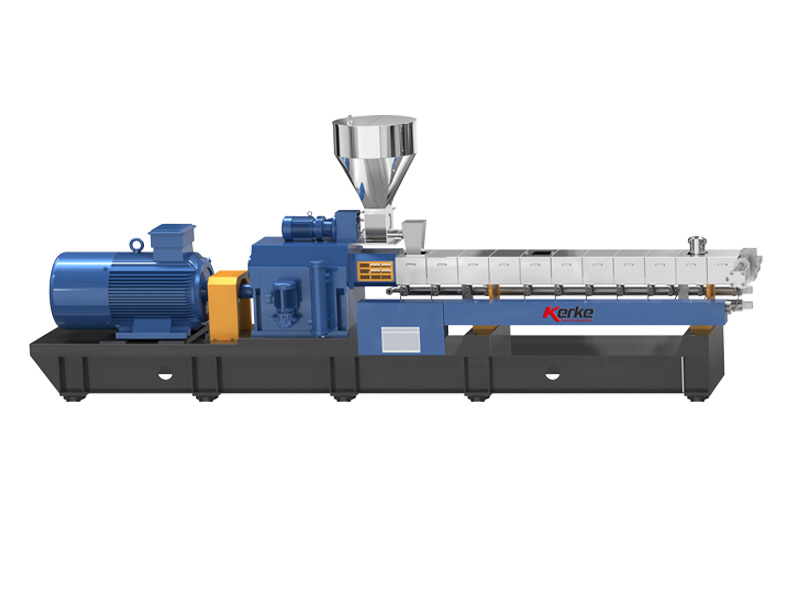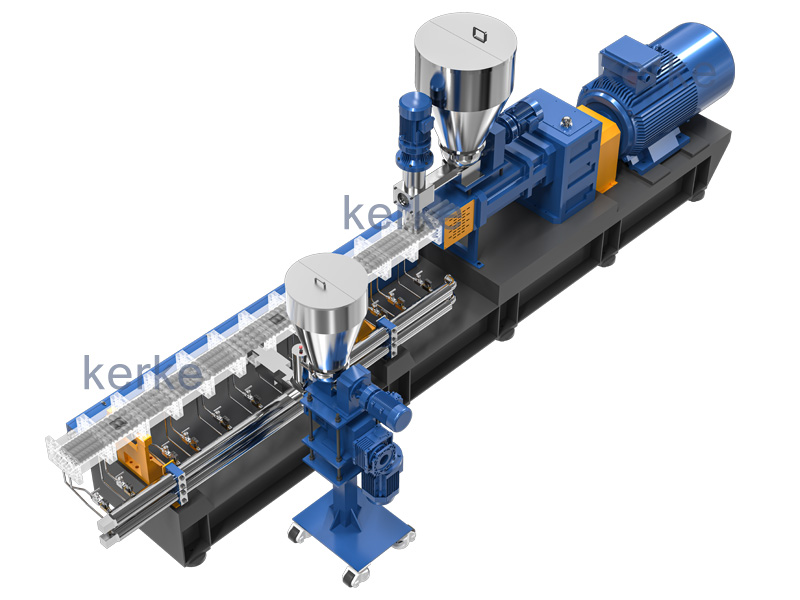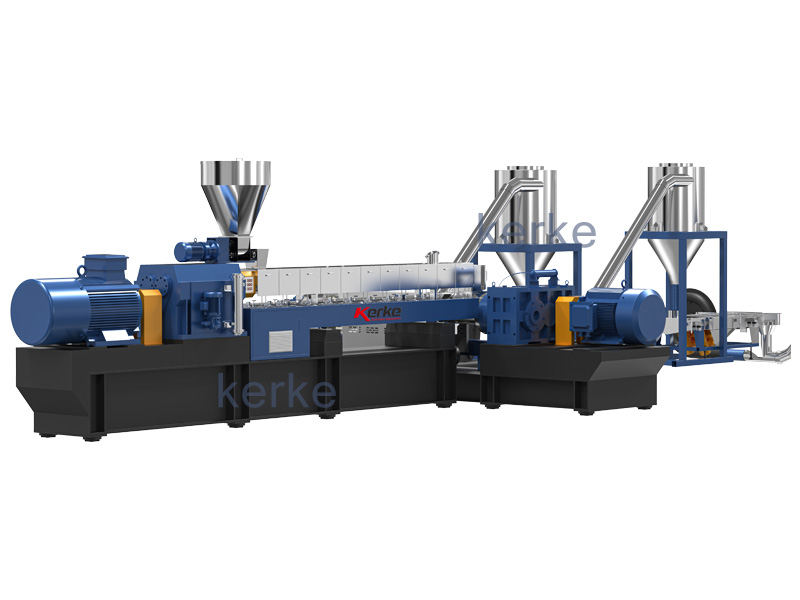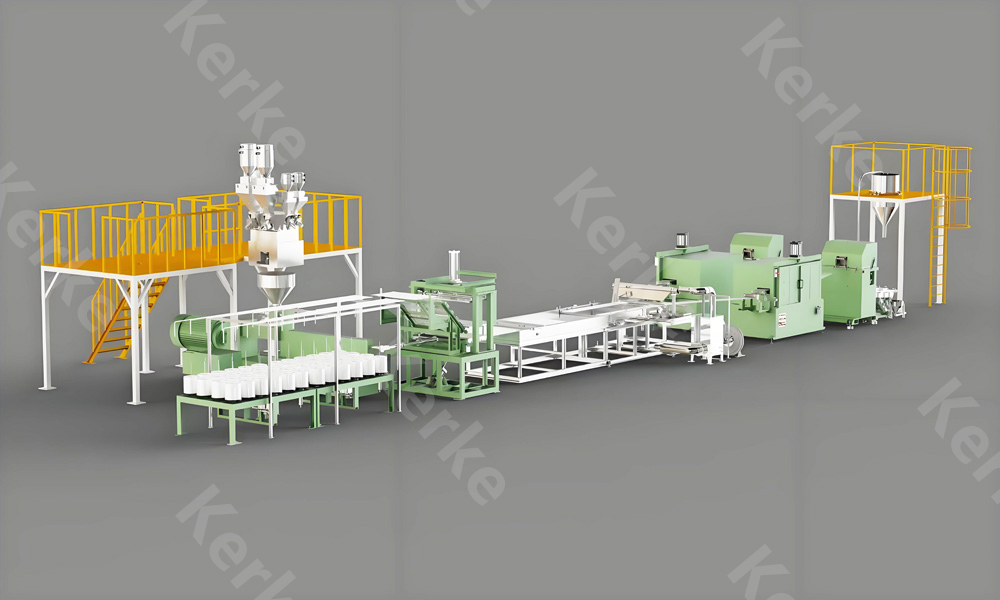
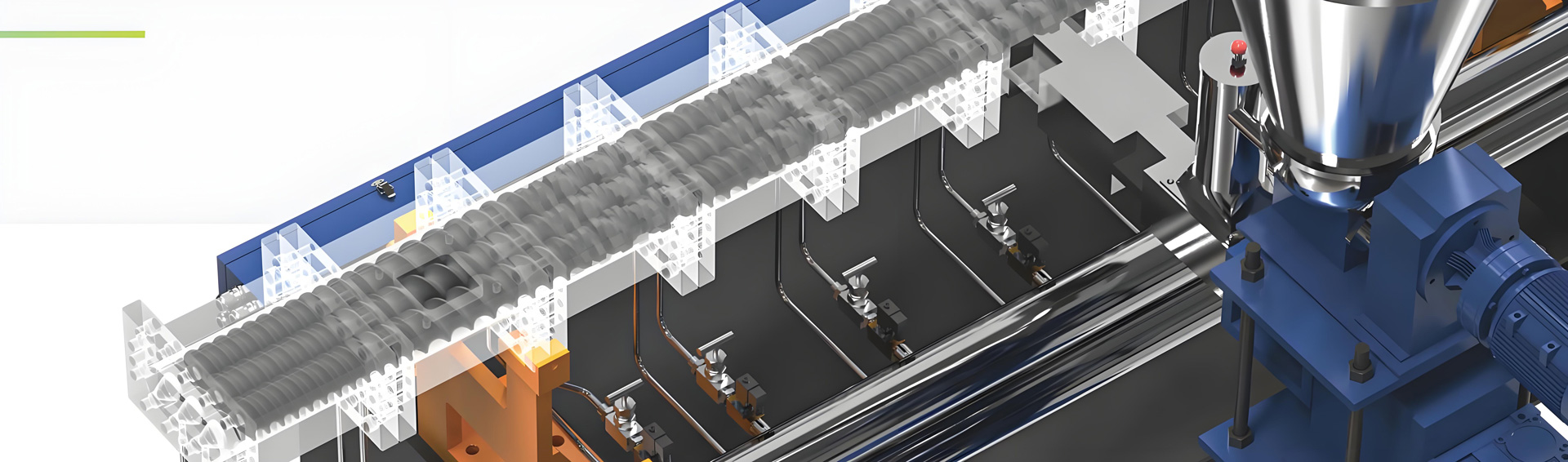
Processing efficiency in masterbatch production determines profitability, market competitiveness, and production capacity utilization. Advanced masterbatch extruders engineered for maximum efficiency enable manufacturers to reduce energy consumption, increase throughput, and improve product consistency while maintaining quality standards. This comprehensive analysis examines the factors affecting masterbatch processing efficiency, advanced technologies that enhance productivity, and operational strategies that optimize efficiency, with detailed focus on Kerke extruder solutions and economic implications.
Fundamental Efficiency Factors in Masterbatch Production
Throughput Optimization
Production throughput represents the primary efficiency metric in masterbatch manufacturing, directly affecting cost per unit and market competitiveness. Masterbatch extruders must achieve optimal balance between high throughput and quality maintenance, as excessive throughput can compromise dispersion quality and consistency. Kerke masterbatch extruders achieve throughput rates from 20-1000 kg/hour depending on model size and formulation complexity, maintaining consistent quality across the full production range.
Theoretical throughput capacity based on screw diameter and motor power provides baseline expectations, with actual throughput limited by heat removal capacity, residence time requirements, and quality constraints. Kerke KTE-20 laboratory extruders achieve 3-15 kg/hour throughput, while KTE-75D production models reach 500-1000 kg/hour capacity. These throughput rates enable efficient production from laboratory development to commercial manufacturing.
Throughput stability across production runs represents another critical efficiency factor. Variation in throughput requires manual adjustment and can cause quality inconsistencies. Kerke extruders maintain throughput stability within ±2% of setpoint, enabling consistent production without constant operator intervention. This stability reduces labor requirements and improves overall production efficiency.
Energy Efficiency Considerations
Specific energy consumption measured in kWh per kilogram of output directly affects production costs and environmental impact. Masterbatch extruders typically consume 0.4-0.8 kWh per kg depending on material, formulation, and processing conditions. Kerke masterbatch extruders achieve specific energy consumption of 0.4-0.6 kWh/kg for most applications, representing 20-30% improvement over conventional extruder designs.
Motor efficiency and drive systems significantly affect overall energy consumption. Kerke extruders feature high-efficiency motors with efficiency ratings above 94% and variable frequency drives that match motor output to processing requirements. These efficient drive systems reduce energy consumption by 15-25% compared to fixed-speed alternatives while providing better process control.
Heat recovery systems capture waste heat from cooling water and exhaust air, reducing heating requirements for barrel zones. Kerke offers heat recovery options that capture 30-50% of waste heat, reducing energy consumption by 0.1-0.2 kWh/kg. These savings accumulate to substantial cost reductions over time, particularly for high-throughput operations.
Material Utilization Efficiency
Material yield represents the percentage of input material converted to usable product, with losses representing direct cost increases. Masterbatch production yields typically range from 96-99.5% depending on material and processing conditions. Kerke masterbatch extruders achieve yields above 99% for most applications, minimizing material waste and reducing production costs.
Transition waste between color or formulation changes represents a significant efficiency consideration in masterbatch production. Standard changeover procedures generate 15-30 kg of transition material that must be discarded or reprocessed. Kerke advanced purging systems and optimized screw configurations reduce transition waste to 5-10 kg, saving substantial material costs for frequent changeover operations.
Scrap generation from quality problems and process upsets affects overall material efficiency. Kerke extruders minimize scrap through precise process control and quality monitoring that prevents out-of-spec production. Scrap rates below 0.5% represent typical performance, compared to 2-4% for less controlled operations.
Advanced Efficiency Technologies
High-Torque Screw Systems
Torque capacity determines the processing capability for high-viscosity materials and high-loading formulations. Kerke masterbatch extruders feature high-torque screw designs with specific torque ratings of 8-12 N-m/kW, enabling processing of difficult formulations without throughput limitations. This high torque capacity enables production of high-loading masterbatches (up to 60% pigment loading) at optimal throughput rates.
Screw geometry optimization for torque efficiency maximizes processing capability while minimizing energy consumption. Kerke screws feature optimized flight depths and profiles that provide necessary torque transmission while reducing slip and energy losses. This geometry optimization improves energy efficiency by 5-10% compared to standard screw designs.
Torque monitoring and control systems prevent overload conditions that can cause equipment damage and production interruptions. Kerke extruders include torque sensors and protective systems that adjust processing parameters to maintain safe operation, preventing downtime and maintenance costs. This predictive protection improves overall equipment reliability and availability.
Advanced Heating and Cooling
Rapid response heating systems enable quick startups and fast temperature adjustments during processing changes. Kerke electric heating elements with power densities of 50-100 W/inch² achieve heating rates of 5-10°C per minute, reducing startup times by 30-50% compared to conventional heating systems. This rapid response reduces downtime between production runs and improves scheduling flexibility.
Precise temperature control maintains consistent processing conditions, preventing quality problems and rework. Kerke multi-zone temperature controllers maintain barrel temperatures within ±1°C of setpoint, enabling consistent processing and reducing scrap generation from temperature excursions. This precision control improves yield and reduces quality-related costs.
Efficient cooling systems remove excess heat from shear heating and exothermic reactions, maintaining optimal processing temperatures. Kerke barrel cooling systems remove 1-3 kW of heat per zone, preventing thermal degradation while maintaining adequate processing temperatures. This heat removal capability enables higher throughput without quality problems.
Automated Feeding Systems
Gravimetric feeding provides accurate material metering for consistent formulation and quality. Kerke gravimetric feeders achieve accuracy within ±0.5% of setpoint for bulk materials and ±0.3% for additives. This accurate feeding ensures consistent product quality while reducing material waste from overfeeding or underfeeding.
Multi-component feeding systems enable simultaneous addition of multiple ingredients at precise ratios. Kerke feeding systems handle 4-8 separate components, maintaining accurate ratios across production runs. This capability enables complex masterbatch formulations without manual batching, reducing labor requirements and improving consistency.
Liquid injection systems provide precise addition of liquid additives and processing aids. Kerke liquid metering pumps achieve accuracy within ±1% of setpoint, enabling consistent incorporation of liquid components. This precise liquid addition improves formulation control while eliminating manual handling of liquid additives.
Kerke Masterbatch Extruder Models
Laboratory and Development Models
KTE-20 laboratory extruder provides small-scale production capability with full-scale performance characteristics. This model features 21.7mm screw diameter, 4kW motor power, and 3-15 kg/hour throughput capacity, enabling formulation development and small-batch production. The compact design requires minimal floor space while providing complete processing capabilities.
Laboratory models enable rapid formulation development with minimal material consumption. Small batch sizes of 2-5 kg enable efficient testing of new formulations while minimizing material waste. This capability accelerates development cycles while reducing development costs for new masterbatch products.
Scale-up reliability from laboratory to production ensures consistent product characteristics across different production scales. Kerke laboratory models use identical screw geometries and processing principles as production models, enabling direct scale-up without reformulation. This reliability reduces development time and ensures consistent product quality from development through production.
Mid-Range Production Models
KTE-36 model provides 20-100 kg/hour capacity for medium-volume masterbatch production. This model features 35.6mm screw diameter, 18.5-22kW motor power, and modular design for various masterbatch applications. The mid-range throughput enables efficient production for regional markets and specialized applications.
KTE-50 model increases capacity to 80-280 kg/hour with 50.5mm screw diameter and 55kW motor power. This model provides sufficient capacity for national distribution and larger contract manufacturing operations while maintaining the flexibility for various masterbatch types.
Mid-range models feature automation options including gravimetric feeding, automated pelletizing, and quality monitoring systems. These automation features reduce labor requirements to 0.5-1.0 operators per shift while improving consistency and quality. Reduced labor requirements decrease operating costs by $10-15 per hour compared to manual operations.
High-Capacity Production Models
KTE-75D model provides 500-1000 kg/hour capacity for large-scale masterbatch manufacturing. This model features 71mm screw diameter, 200-315kW motor power, and advanced automation systems. The high throughput enables cost-effective production for major markets and high-volume applications.
KTE-95 and KTE-135 models provide even higher capacity for the largest production requirements. KTE-95 achieves 800-1500 kg/hour with 93mm screw diameter, while KTE-135 reaches 1000-2000 kg/hour with 135mm screw diameter. These models support the highest production volumes while maintaining quality consistency.
High-capacity models include comprehensive automation including automatic start-up sequences, self-cleaning systems, and integrated quality control. This automation enables 24/7 operation with minimal operator intervention, maximizing asset utilization and production efficiency. Labor requirements drop to 0.25-0.5 operators per shift, reducing labor costs by $20-30 per hour.
Efficiency Enhancement Strategies
Process Optimization
Temperature profiling optimization balances melting, mixing, and residence time requirements for maximum efficiency. Kerke provides temperature profile optimization based on material characteristics and formulation requirements, typically achieving 5-15% throughput improvement compared to non-optimized profiles. This optimization reduces specific energy consumption while maintaining or improving product quality.
Screw configuration optimization for specific masterbatch types maximizes efficiency for each application. Kerke provides standard screw configurations for color masterbatch, filler masterbatch, additive masterbatch, and specialty applications. These optimized configurations provide 10-20% efficiency improvement compared to generic screw designs.
Throughput and screw speed optimization balances production rate with quality requirements. Kerke provides operating recommendations for optimal throughput for each formulation, maximizing production while maintaining quality standards. This optimization typically increases throughput by 15-30% compared to conservative operating conditions.
Operational Efficiency
Changeover optimization reduces downtime between different masterbatch colors or formulations. Kerke standardized changeover procedures achieve complete changeover in 15-30 minutes for most applications, compared to 45-90 minutes for non-optimized procedures. This reduction in changeover time increases available production time by 5-10% for operations with frequent changes.
Predictive maintenance prevents unplanned downtime that disrupts production schedules. Kerke monitoring systems track equipment condition and schedule maintenance before failure occurs, reducing unplanned downtime by 70-90% compared to reactive maintenance approaches. Reduced downtime increases asset availability and production efficiency.
Operator training and standardization improve consistency and reduce errors. Kerke provides comprehensive operator training and standardized operating procedures that reduce operator-caused problems by 80-90%. This standardization improves consistency and reduces quality problems that cause rework and scrap.
Material Handling Efficiency
Automated material handling systems reduce manual labor and improve consistency. Kerke provides bulk storage systems, pneumatic conveying, and automatic loading systems that eliminate manual material handling. This automation reduces labor requirements by 1-2 operators per shift while improving material consistency and quality.
In-line quality monitoring enables immediate detection of quality problems, preventing production of out-of-spec material. Kerke offers in-line densitometers, colorimeters, and rheometers that provide continuous quality assessment during production. Real-time monitoring prevents scrap generation by 80-90% compared to post-production inspection.
Centralized process control provides unified management of multiple extruders and support equipment. Kerke provides centralized control systems that coordinate feeding, extrusion, pelletizing, and quality monitoring, reducing operator requirements and improving coordination. This centralized control improves overall facility efficiency by 10-15%.
Cost Analysis and Economic Benefits
Equipment Investment Analysis
Masterbatch extruder investment costs vary based on production capacity and included features. Kerke laboratory-scale KTE-20 extruders cost $12,000-15,000, providing economical development capabilities. Mid-range production models such as KTE-50 cost $45,000-60,000, while high-capacity KTE-75D systems range from $150,000-250,000 depending on configuration and included automation.
Complete production lines including feeding, extrusion, pelletizing, and packaging systems cost $200,000-500,000 depending on capacity and automation level. These complete systems provide turnkey solutions for masterbatch manufacturing with all necessary equipment integrated for optimal efficiency.
Automation and control systems add $15,000-50,000 to equipment costs depending on complexity and level of integration. These automation systems provide substantial operating cost reductions through reduced labor requirements, improved quality, and enhanced production flexibility. The automation investment typically provides ROI within 18-36 months through operating cost savings.
Operating Cost Breakdown
Material costs represent the largest operating cost component, typically 70-80% of total costs. Kerke high-yield processes reduce material waste to below 1%, saving $0.02-0.10 per kg on typical $2-5 per kg materials. For high-value pigments and additives costing $20-50 per kg, this yield improvement saves $0.20-0.50 per kg.
Energy costs vary by material and processing conditions, typically $0.04-0.08 per kg of output at $0.10 per kWh energy rates. Kerke energy-efficient designs reduce energy consumption by 20-30% compared to conventional extruders, saving $0.01-0.02 per kg on energy costs.
Labor costs depend on automation level but typically range from $0.02-0.08 per kg for automated operations. Kerke automation reduces labor requirements to 0.25-1.0 operators per shift, representing labor costs of $2-8 per hour. At 500 kg/hour throughput, this translates to $0.004-0.016 per kg in labor costs.
Efficiency ROI Analysis
Production capacity increases from efficiency improvements directly increase revenue potential. Kerke high-throughput models achieve 30-50% higher throughput compared to conventional extruders of similar size, enabling additional revenue production without equipment expansion. This capacity increase provides substantial return on investment.
Quality improvements reduce scrap and rework costs, directly improving profitability. Kerke precise process control and quality monitoring reduce scrap rates from 2-4% to below 0.5%, saving $0.04-0.20 per kg on material costs. These savings accumulate to substantial annual savings for high-volume operations.
Energy savings from efficient designs provide ongoing cost reduction. Kerke energy-efficient designs reduce energy consumption by 0.1-0.2 kWh per kg, saving $0.01-0.02 per kg on energy costs. At 1000 kg/hour production and 6000 hours per year, this saves $60,000-120,000 annually.
Application-Specific Efficiency
Color Masterbatch Production
Color masterbatch production requires precise pigment dispersion while maintaining color consistency. Kerke extruders achieve pigment dispersion below 5 microns for organic pigments and below 10 microns for inorganic pigments, while maintaining color consistency within 0.5 delta E. This dispersion quality enables optimal color strength while minimizing pigment consumption.
High-opacity whites require exceptional titanium dioxide dispersion to achieve maximum hiding power. Kerke processes high-opacity whites achieving L* values above 94 with consistent opacity across production runs. This performance enables formulation optimization that reduces titanium dioxide consumption by 5-10%, providing substantial cost savings.
Color changeover efficiency significantly affects production efficiency in color masterbatch manufacturing. Kerke optimized purging systems and screw configurations reduce color changeover waste from 20-30 kg to 5-10 kg per change, saving material costs and reducing changeover time by 50-70%.
Filler Masterbatch Production
High filler loading up to 60% by weight requires specialized processing approaches to maintain efficiency. Kerke extruders process high-filler formulations at optimal throughput rates while maintaining quality, enabling cost-effective production of filled compounds. This capability reduces raw material costs by 30-50% compared to unfilled materials.
Calcium carbonate filler masterbatch requires efficient dispersion to maintain mechanical properties while reducing costs. Kerke processes CaCO3-filled masterbatches with 20-60% loading, achieving uniform dispersion while maintaining throughput within 85-95% of unfilled material rates. This efficiency enables substantial material cost savings.
Talc-filled masterbatch production requires different screw configurations compared to calcium carbonate due to different particle characteristics. Kerke provides optimized screw configurations for talc processing that achieve efficient dispersion while maintaining throughput rates, enabling cost-effective production of talc-filled materials.
Additive Masterbatch Production
Antioxidant and stabilizer masterbatches require precise additive distribution while preventing degradation during processing. Kerke extruders achieve uniform additive distribution within ±2% of target concentration while minimizing thermal exposure that could degrade sensitive additives. This precision ensures additive effectiveness while maximizing processing efficiency.
Flame retardant masterbatch production requires high loading levels while maintaining mechanical properties. Kerke extruders process flame retardant formulations with 20-50% loading, achieving uniform dispersion while maintaining throughput efficiency. This capability enables cost-effective production of flame retardant compounds.
UV stabilizer masterbatch requires protection from UV light during processing and storage. Kerke extruders include appropriate barrel designs and handling systems that prevent UV degradation, ensuring stabilizer effectiveness while maintaining processing efficiency. This protection maintains additive functionality throughout the masterbatch lifecycle.
Advanced Efficiency Technologies
Smart Process Control
Artificial intelligence algorithms optimize processing parameters in real-time for maximum efficiency. Kerke AI systems continuously adjust temperature profiles, screw speed, and throughput to optimize energy consumption and quality. These AI systems typically achieve 5-15% efficiency improvement compared to manual optimization.
Predictive quality systems forecast potential quality problems before they occur, enabling preventive action. Kerke predictive systems analyze processing data to identify trends indicating potential quality issues, allowing adjustment before material becomes out-of-spec. This proactive approach reduces scrap by 50-80% compared to reactive quality control.
Adaptive learning systems automatically adjust operating parameters based on historical performance. Kerke learning systems analyze production data to identify optimal operating conditions for each formulation, automatically implementing improvements as they are discovered. This continuous optimization improves efficiency by 2-5% annually as learning accumulates.
Energy Recovery Systems
Heat recovery from cooling water captures waste heat for use in barrel heating or facility heating. Kerke heat recovery systems capture 30-50% of waste heat, reducing energy consumption by 0.1-0.2 kWh/kg. This heat recovery provides annual energy savings of $60,000-120,000 for high-throughput operations.
Regenerative drive systems recover energy from motor deceleration and return it to the power system. Kerke regenerative drives recover 20-30% of motor braking energy, reducing net energy consumption by 5-10%. This energy recovery provides substantial savings for operations with frequent starts and stops.
Solar integration enables use of renewable energy for heating and operations. Kerke systems can integrate with solar thermal and photovoltaic systems, reducing grid energy consumption by 30-70% depending on solar capacity. This renewable integration reduces energy costs while improving sustainability credentials.
Industry 4.0 and Digital Efficiency
Digital Twin Technology
Digital twin simulation enables process optimization without material waste. Kerke digital twin systems simulate masterbatch processing before actual production, identifying optimal parameters and potential problems. This simulation reduces development scrap by 80-90% and accelerates new product introduction by 50-70%.
Virtual commissioning reduces installation and startup time. Kerke digital twin systems enable equipment commissioning in virtual environments before physical installation, identifying and resolving problems before equipment arrives. This virtual commissioning reduces installation time by 30-50% and eliminates startup problems.
Process optimization through digital twin testing identifies efficiency improvements without production disruption. Kerke systems enable testing of alternative screw configurations, temperature profiles, and throughput rates in virtual environments, identifying optimal conditions before implementation. This virtual testing accelerates improvement cycles by 3-5 times compared to physical testing.
IoT and Remote Monitoring
Remote monitoring enables 24/7 equipment monitoring from any location. Kerke IoT systems provide real-time equipment status, performance data, and alerts to mobile devices, enabling immediate response to problems. This remote monitoring reduces downtime by 20-30% compared to manual monitoring approaches.
Predictive maintenance through IoT data analytics identifies maintenance needs before failure. Kerke systems analyze equipment performance trends to predict maintenance requirements, scheduling maintenance during planned downtime. This predictive maintenance reduces unplanned downtime by 70-90% compared to reactive maintenance.
Performance benchmarking across multiple equipment units identifies optimization opportunities. Kerke IoT systems aggregate performance data from multiple extruders, identifying best practices and optimization opportunities. This benchmarking typically identifies efficiency improvements of 5-15% across equipment fleets.
Sustainability and Efficiency
Material Conservation
High yield processes minimize material waste and environmental impact. Kerke extruders achieve yields above 99% for most applications, reducing material waste to less than 1% of throughput. This material conservation reduces both costs and environmental impact, supporting sustainability goals while improving profitability.
Recycled material processing enables use of post-industrial and post-consumer recycled content. Kerke extruders process recycled materials with consistent quality, enabling incorporation of up to 100% recycled content in some applications. This capability reduces virgin material consumption while maintaining product quality.
Transition material reduction through optimized changeover procedures minimizes waste from production changes. Kerke advanced purging systems reduce transition waste by 70-80% compared to conventional procedures. This reduction saves material costs while reducing environmental impact from waste generation.
Energy Efficiency
Low-energy processing designs reduce power consumption while maintaining throughput. Kerke screw designs achieve equivalent processing with 20-30% less energy consumption compared to conventional extruders. This energy efficiency reduces both operating costs and carbon footprint of production.
Renewable energy integration reduces grid energy consumption and environmental impact. Kerke systems integrate with solar, wind, and other renewable energy sources, enabling substantial reduction in grid energy consumption. This renewable integration supports carbon reduction goals while reducing energy costs.
Energy recovery systems capture waste heat and kinetic energy for reuse. Kerke heat recovery and regenerative drive systems capture 40-60% of waste energy, reducing net energy consumption. This energy recovery provides substantial cost savings while improving overall energy efficiency.
Process Efficiency and Sustainability
Extended equipment life reduces environmental impact from equipment replacement. Kerke durable construction with nitrided steel barrels and high-quality components provides 15-20 year service life, reducing replacement frequency. This extended life reduces environmental impact from equipment manufacturing and disposal.
Maintenance optimization through predictive maintenance reduces parts consumption and waste. Kerke predictive maintenance systems identify maintenance needs before failure, extending component life and reducing parts replacement. This optimization reduces maintenance waste by 30-50% compared to reactive maintenance approaches.
Efficient production scheduling minimizes energy waste from startups and shutdowns. Kerke automated scheduling systems optimize production sequences to minimize equipment startups and shutdowns, reducing energy waste from these non-productive periods. This scheduling optimization typically saves 5-10% in energy consumption.
Future Efficiency Developments
Next-Generation Screw Technologies
Advanced screw geometries enable higher throughput with lower energy consumption. Kerke is developing next-generation screw designs that achieve 20-30% higher throughput with 15-20% lower energy consumption. These advanced designs will further improve efficiency and cost-effectiveness of masterbatch production.
Self-cleaning screw surfaces reduce material waste and maintenance requirements. Kerke is developing coatings and surface treatments that prevent material buildup and facilitate self-cleaning. These surfaces will reduce changeover waste by 50-70% and extend maintenance intervals by 2-3 times.
Modular screw systems enable rapid configuration changes for different masterbatch types. Kerke is developing quick-change screw systems that enable screw configuration changes in under 30 minutes, compared to 2-4 hours for conventional systems. This rapid changeover improves flexibility and reduces downtime.
Integrated Process Optimization
End-to-end process optimization integrates feeding, extrusion, pelletizing, and packaging for overall efficiency. Kerke is developing integrated systems that optimize the complete masterbatch production line, improving overall efficiency by 15-25% compared to individually optimized components.
Material tracking systems enable complete traceability throughout production. Kerke is developing RFID and barcode tracking systems that track materials from receipt through production to final packaging. This tracking improves material accountability and enables rapid response to quality issues.
Real-time cost optimization balances energy, material, and labor costs for minimum total cost. Kerke is developing cost optimization algorithms that continuously adjust processing parameters to minimize total cost per unit while maintaining quality. This optimization typically reduces total production costs by 5-15%.
Artificial Intelligence Applications
Autonomous operation systems enable fully automated masterbatch production with minimal human intervention. Kerke is developing AI systems that can operate masterbatch extruders autonomously, handling startups, production changes, and quality issues without operator assistance. This autonomy will reduce labor requirements by 80-90%.
Formulation optimization systems automatically develop optimal formulations for target properties. Kerke is developing AI formulation systems that recommend optimal pigment and additive loadings to achieve target properties at minimum cost. This optimization typically reduces material costs by 5-15% while maintaining quality.
Market demand forecasting systems align production with market requirements, reducing inventory and overproduction. Kerke is developing forecasting systems that analyze market data to predict demand, optimizing production schedules accordingly. This forecasting reduces inventory by 20-40% while maintaining customer service levels.
Case Studies and Performance Data
Color Masterbatch Efficiency Case Study
A leading color masterbatch producer achieved 40% throughput increase and 25% energy savings after implementing Kerke KTE-75D extruders. The installation replaced conventional extruders with Kerke high-torque systems, enabling processing of higher loading formulations at increased throughput rates. The improvement reduced specific energy consumption from 0.65 to 0.49 kWh/kg while maintaining quality.
The producer also reduced changeover time from 75 minutes to 25 minutes per color change, increasing available production time by 8% annually. Color changeover waste decreased from 25 kg to 7 kg per change, saving substantial material costs. The overall efficiency improvements provided ROI within 18 months while improving product quality and consistency.
Quality improvements included color consistency improvement from 1.5 delta E to 0.5 delta E and pigment dispersion improvement from 10 microns to 4 microns. These quality improvements enabled premium pricing of 8% while reducing customer complaints by 75%. The combined efficiency and quality improvements increased profitability by 35%.
Filler Masterbatch Efficiency Case Study
A plastics compounder specializing in filled materials achieved 50% increase in throughput for calcium carbonate masterbatch after upgrading to Kerke KTE-50 extruders. The new equipment enabled processing of 50% CaCO3 loading at 200 kg/hour, compared to 130 kg/hour on previous equipment. This throughput increase doubled production capacity without additional floor space.
Energy consumption decreased from 0.72 to 0.52 kWh/kg through improved screw geometry and optimized heating systems. The 28% energy reduction saved $85,000 annually in energy costs while maintaining product quality. Material yields improved from 97% to 99.3%, saving additional $40,000 annually in reduced material waste.
The improved efficiency enabled a 30% price reduction on filled masterbatches, increasing market share by 45% within two years. The combined efficiency improvements and market growth increased overall profitability by 60% while providing excellent return on the $75,000 equipment investment.
Additive Masterbatch Efficiency Case Study
A specialty masterbatch manufacturer for flame retardant materials achieved 35% reduction in scrap and 20% increase in throughput after implementing Kerke KTE-65 extruders with advanced process control. The improved process control maintained uniform additive distribution while preventing degradation, reducing scrap from 3.2% to 1.2%.
Throughput increase from 180 kg/hour to 216 kg/hour increased production capacity without additional equipment investment. The 20% throughput improvement enabled handling of increased demand without capital expansion, saving $500,000 in avoided equipment costs.
Quality improvements included additive distribution consistency improvement from ±5% to ±1.5% and reduced variability in final compound properties. These quality improvements enabled expansion into demanding applications requiring tight additive control, opening new market opportunities worth $2 million annually in revenue.
Conclusion
Masterbatch extruder efficiency represents a critical competitive advantage in the plastics industry, affecting production costs, market positioning, and profitability. Kerke masterbatch extruders provide comprehensive efficiency improvements through advanced technologies including high-torque screw systems, precise process control, automated material handling, and smart process optimization.
The investment in efficient masterbatch extruder technology delivers substantial returns through multiple pathways including increased throughput capacity, reduced energy consumption, improved material yields, and enhanced product quality. These improvements typically provide ROI within 18-36 months while positioning manufacturers for long-term competitive advantage.
As energy costs continue to rise and material efficiency becomes increasingly important, the economic and environmental benefits of efficient masterbatch extrusion will become even more significant. Kerke’s commitment to continuous innovation in efficiency technology ensures that customers benefit from the latest advances while maintaining reliable, cost-effective production.
Future developments including AI optimization, integrated process control, and next-generation screw designs will continue to push the boundaries of efficiency in masterbatch production. Manufacturers partnering with Kerke will benefit from these innovations while maintaining market leadership in the competitive masterbatch industry.