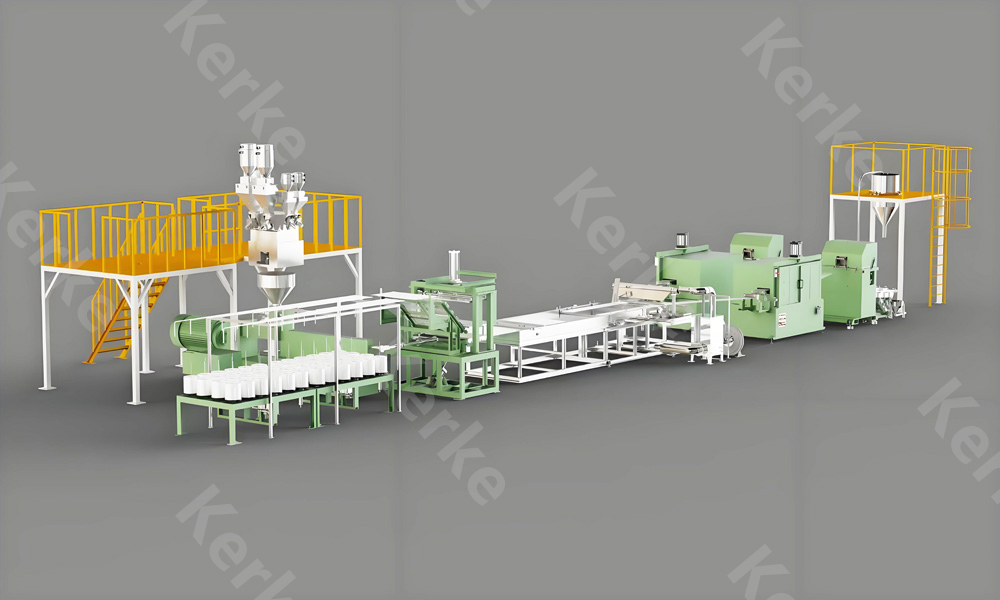
With the continuous segmentation of the global plastic processing market and the growing demand for customized color masterbatch and compounding products, small production workshops, start-up compounding enterprises and R&D pilot production lines have become an important force in the industry. Different from large factories with sufficient plant space and sufficient capital, small workshops usually face multiple constraints such as limited plant area, tight initial investment, multi-variety and small-batch production mode, and insufficient professional technical personnel. Choosing a suitable compact masterbatch extruder is the core decision for such enterprises to put into production smoothly, control costs and quickly gain market competitiveness. A properly selected compact twin screw extruder can not only meet the production demand with a small footprint and low investment, but also ensure the dispersion quality and production stability of color masterbatch and compound products, helping small enterprises quickly establish quality advantages in the segmented market.
At present, there are many models of compact extruders on the market, with great differences in configuration, performance and price. Many small workshop operators fall into misunderstandings when selecting models. Some blindly pursue large capacity and purchase oversized equipment, resulting in low equipment utilization and heavy capital pressure. Some only focus on low prices and ignore core indicators such as dispersion performance and operation stability, resulting in frequent product quality problems and high after-sales maintenance costs. For small enterprises with weak anti-risk ability, wrong model selection will not only waste valuable initial investment, but also delay the market entry opportunity of products, and even lead to operational difficulties. Therefore, mastering scientific selection methods and selecting equipment that matches their own production scale, product direction and plant conditions is the primary issue for every small workshop operator.
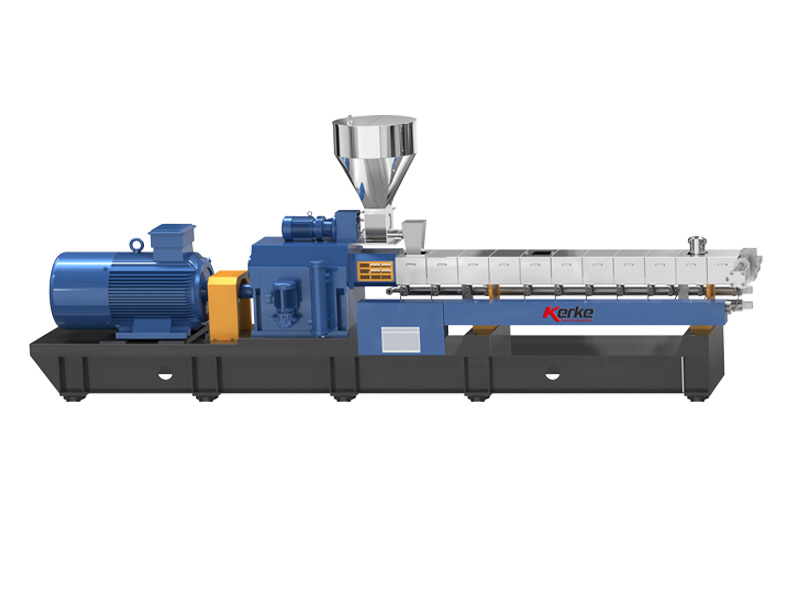
As a professional manufacturer focusing on R&D and manufacturing of twin screw extruders, masterbatch extruders and compounding extruders, Kerke has a complete compact product line for small workshops and pilot production scenarios. Relying on years of technical accumulation in the field of masterbatch and compounding extrusion, Kerke compact extruders have the characteristics of small floor area, high integration, simple operation, energy saving and high efficiency, and can provide targeted configuration schemes according to different product processes. This article will systematically sort out the core needs and constraints of small workshops, explain the key technical indicators and supporting system selection points of compact masterbatch extruders in detail, introduce the applicable scenarios and price reference of Kerke series compact equipment, conduct detailed investment cost and return on investment analysis, summarize common selection misunderstandings and operation and maintenance experience, and provide comprehensive and practical selection guidance for small workshop operators.
1. Production Characteristics and Core Demands of Small Masterbatch Workshops
1.1 Limited Plant Space and Flexible Layout Requirements
The most prominent feature of small workshops is the limited plant area. Most small masterbatch production workshops have a single plant area of less than 500 square meters, and some start-up enterprises even only have a production space of 100 to 200 square meters. In such a limited space, it is necessary to arrange production equipment, raw material storage area, finished product storage area and operation channel at the same time. Therefore, the floor area of the extruder is the primary consideration in model selection. The equipment should be as compact as possible in length, width and height, and try to adopt an integrated design to reduce the space occupied by split auxiliary machines.
In addition to the area, the plant conditions of small workshops are usually relatively simple. Most of them do not have special equipment foundation, and the floor bearing capacity and floor height are also limited. This requires that the compact extruder has light overall weight, low center of gravity, no need for complex foundation construction, and can be installed and used only on the ordinary cement ground. At the same time, the equipment should have certain mobility, which is convenient for position adjustment and layout reconstruction when the production line is adjusted later. For workshops that may expand or relocate in the future, the convenience of equipment disassembly and transportation is also an important reference indicator.
1.2 Multi-Variety Small-Batch Production Mode
Small masterbatch workshops usually take the differentiated market route, focusing on customized orders and multi-variety small-batch production, including special color masterbatch, functional masterbatch and small-batch modified materials. Different from the large-scale continuous production of large factories, small workshops need to frequently replace raw material formulas, colors and product types. The average production time of a single batch is short, and the number of material changes and color changes per month is large. This production mode puts forward high requirements for the material change and cleaning performance of the extruder.
First, the equipment should be easy to disassemble and clean, the screw and barrel can be quickly disassembled, and the material residue inside can be cleaned thoroughly, so as to avoid cross color and cross contamination when changing materials. Second, the time for material change and commissioning should be short, which can reduce the waste of raw materials in the commissioning stage and improve the effective production time. Third, the equipment has strong process flexibility. By adjusting screw elements and process parameters, it can adapt to the production of different types of products such as color masterbatch, filling modification and toughening modification. For small workshops, a multi-purpose equipment can greatly improve the utilization rate of equipment and expand the business scope.
1.3 Limited Initial Budget and High Requirements for Return on Investment
For small workshop operators, the initial budget is usually relatively tight, and they are very sensitive to the one-time procurement cost of equipment. Most small enterprises hope to recover the equipment investment in a relatively short time to ensure the safety of cash flow. Therefore, when selecting equipment, we should not only consider the purchase price, but also comprehensively evaluate the total cost of ownership in the whole life cycle, including energy consumption, labor, maintenance cost and failure loss.
Many operators fall into the misunderstanding of only looking at the price when selecting models. They choose low-cost equipment with shrinking configuration. As a result, the equipment has unstable performance, high failure rate and low product qualification rate after put into production. Instead, they pay higher later costs. Scientific selection should be based on their own production capacity and product positioning, choose the equipment with the best cost performance within the budget, and give priority to models with stable performance, low energy consumption and low maintenance cost. At the same time, we should properly consider the scalability of the equipment. We should not choose too small models that will soon be unable to keep up with the development speed, nor should we blindly pursue high configuration and cause waste of resources.
1.4 Simplified Operation and Low Maintenance Threshold
Small workshops are usually equipped with a small number of personnel, and most of them do not have full-time professional equipment maintenance technicians. Operators often take into account multiple responsibilities such as production, feeding and simple maintenance. Therefore, the operation and maintenance difficulty of the equipment is also a key factor that cannot be ignored. The control system should be simple and intuitive, with Chinese or English operation interface, clear parameter setting, and ordinary workers can get started quickly after simple training, without too high professional technical threshold.
In terms of maintenance, daily maintenance work should be as simple as possible, and vulnerable parts should be easy to replace, without complex special tools. The equipment supplier should provide clear maintenance guidelines and timely after-sales technical support, which can quickly solve problems in case of failure. For small workshops, stable and reliable equipment quality and simple daily maintenance can greatly reduce the dependence on professional technicians, reduce labor costs and avoid production interruption caused by equipment failure.
1.5 Environmental Protection and Safety Compliance Requirements
Even small production workshops must meet the corresponding environmental protection and production safety standards. The extrusion production process will produce a certain amount of dust and volatile waste gas. If the sealing performance of the equipment is poor and there is no effective waste gas collection interface, it will not only deteriorate the workshop environment, but also fail to meet the environmental protection assessment.
High quality compact masterbatch extruders should have good sealing performance at the feeding port and exhaust port, and be reserved with standard dust removal and waste gas connection interfaces, which can be easily connected with the workshop waste gas treatment system. At the same time, the equipment shall be equipped with complete safety protection devices, including safety shield, emergency stop button, overload protection, leakage protection, etc., to ensure the safety of operators. For small workshops, selecting equipment that meets safety and environmental protection standards in one step can avoid the transformation cost caused by subsequent rectification and reduce the operational risk of the enterprise.
2. Core Technical Indicators for Compact Masterbatch Extruder Selection
2.1 Screw Diameter and Production Capacity Matching
Screw diameter is the most core parameter to determine the production capacity of the extruder. The common screw diameters of compact masterbatch extruders are 20mm, 25mm, 35mm, 45mm and 50mm, and the corresponding hourly output ranges from more than ten kilograms to hundreds of kilograms. When selecting the diameter, it should be matched according to the actual production demand of the enterprise, and appropriate margin should be reserved to adapt to the future business growth.
For workshops mainly engaged in color matching, sample making and ultra-small batch customized orders, it is recommended to choose models with screw diameter of 20mm to 25mm, with an output of 10kg to 50kg per hour. This kind of equipment has small volume, less material consumption for single test production, low material waste when changing materials, and is very suitable for formula R & D and small batch production. For conventional small batch mass production workshops, the monthly output is between 50 tons and 200 tons, so the 35mm to 45mm model is more appropriate, with an hourly output of 100kg to 300kg, which can balance production efficiency and production flexibility. For workshops with stable orders and large single batch volume, the 50mm model can be selected, with an hourly output of 300kg to 500kg, which has higher production efficiency and lower unit product energy consumption.
It should be noted that the nominal output of the equipment is usually the maximum output under specific materials and processes. The actual output will vary according to the material type, formula composition and product quality requirements. When selecting the model, it should be calculated according to 60% to 70% of the nominal maximum output as the conventional stable output, so as to avoid the equipment running at full load for a long time, which will accelerate wear and reduce the service life. At the same time, appropriate capacity margin shall be reserved for the growth of orders in the next 2 to 3 years, so as to avoid the embarrassment that the equipment capacity will be insufficient soon after purchase.
2.2 Length to Diameter Ratio and Plasticizing Dispersion Performance
The length to diameter ratio, namely L/D ratio, refers to the ratio of the effective length of the screw to the diameter of the screw, which directly determines the plasticizing mixing time and dispersion effect of materials in the barrel. The larger the length to diameter ratio, the longer the material stays in the barrel, the more sufficient the mixing and plasticization, and the better the pigment dispersion effect. However, too large length to diameter ratio will increase the energy consumption of the equipment and the difficulty of temperature control, and also increase the floor area of the equipment.
For conventional polyolefin color masterbatch production, the length to diameter ratio of 28:1 to 32:1 can basically meet the demand. For high filler masterbatch, functional masterbatch and engineering plastic modification with high dispersion requirements, it is recommended to choose a model with a length to diameter ratio of 36:1 to 40:1. The longer screw has more space to arrange mixing elements, which can realize multi-stage mixing and dispersion, and the product quality is more stable. For products with particularly sensitive shear and easy degradation, a smaller length to diameter ratio can be selected to reduce the material residence time and avoid material degradation.
Kerke compact masterbatch extruders adopt modular barrel design. Different numbers of barrel sections can be combined according to actual process requirements to flexibly adjust the effective length to diameter ratio, which can not only meet the dispersion requirements of different products, but also avoid unnecessary energy waste. This flexible configuration is very suitable for small workshops with diversified products, and the same equipment can take into account the production of multiple different types of products.
2.3 Screw Element Configuration and Mixing Capacity
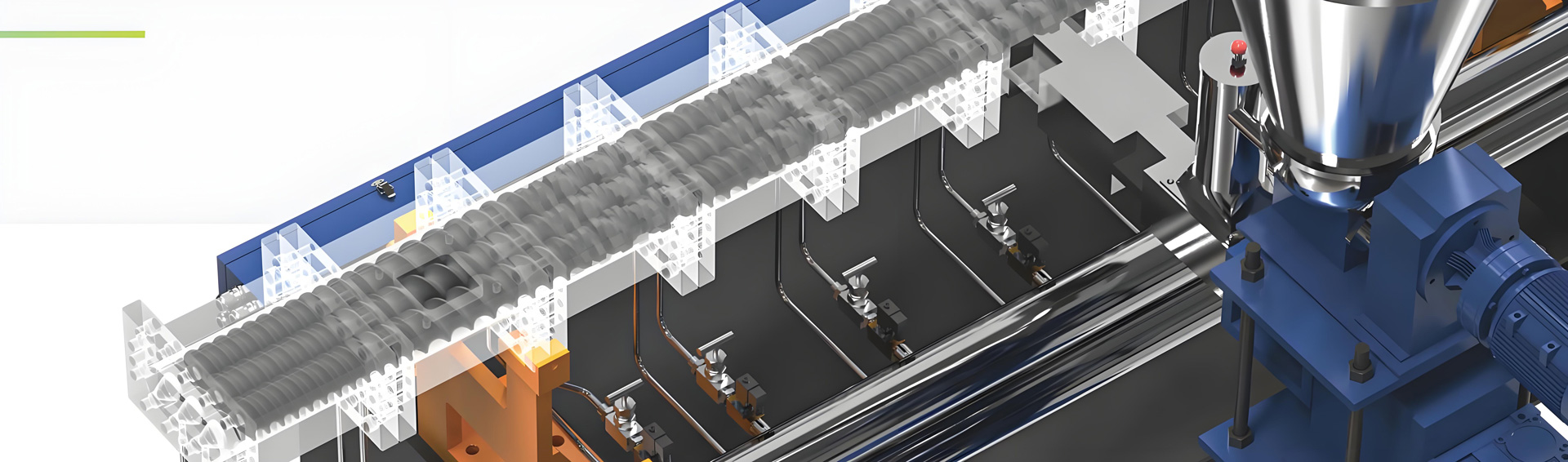
The mixing and dispersion capacity of twin screw extruder mainly depends on the type and arrangement of screw elements. High quality compact masterbatch extruders should adopt combined screw structure, which is composed of different types of conveying elements, kneading blocks, toothed mixing elements, etc. The combination can be adjusted according to different material formulas to achieve the best dispersion effect.
Conveying elements are mainly responsible for the forward conveying of materials. Kneading blocks are the core elements to realize shear dispersion. Different numbers of kneading discs and different staggering angles bring different shear strengths. For the production of color masterbatch, it is necessary to configure an appropriate number of kneading block combinations to provide sufficient shear force to open the pigment agglomerates and achieve nano-scale uniform dispersion. For filling and modifying systems with high filler content, it is necessary to increase distributive mixing elements to ensure uniform distribution of fillers in the matrix resin.
Kerke provides targeted screw configuration schemes for different product systems. For inorganic pigment masterbatch with high dispersion requirements, strengthen the shear dispersion section to ensure the opening of pigment agglomerates. For organic pigment and dye masterbatch sensitive to shear, the mild shear scheme is adopted to avoid pigment decomposition and color change. For small workshops producing multiple products, multiple sets of screw elements can be purchased at one time and replaced according to production needs, so as to maximize the process adaptability of the equipment.
2.4 Drive System and Energy Consumption Performance
The drive system is the power core of the extruder, which directly affects the operation stability, energy consumption level and service life of the equipment. The drive configuration of compact extruders on the market varies greatly. The low configuration adopts ordinary three-phase asynchronous motor with frequency conversion speed regulation, while the high configuration adopts servo motor drive system.
The ordinary frequency conversion drive scheme has low cost, but the speed control accuracy is general, the energy-saving effect is average, and the low-speed torque is insufficient. The servo drive system has high speed control accuracy, stable output torque, obvious energy-saving effect, and can save 15% to 30% of electric energy compared with the ordinary frequency conversion scheme under the same output. For small workshops that have been producing for a long time, the electricity cost saved every year is very considerable. At the same time, the servo system runs more stably with low noise, which can improve the workshop environment.
Kerke compact extruders are standard equipped with high-efficiency servo drive systems, with precise speed control and stable torque output. They can still provide sufficient torque at low speed to ensure stable extrusion under different process conditions. The optimized drive system greatly reduces the energy consumption per unit output, which is very friendly to small workshops sensitive to electricity costs, and can effectively reduce the unit production cost and improve product price competitiveness.
2.5 Temperature Control Accuracy and Material Adaptability
Accurate temperature control is the premise to ensure stable product quality. The temperature of each section of the barrel directly affects the melting state, viscosity and dispersion effect of materials. Poor temperature control accuracy will lead to large fluctuations in product quality between batches, and even lead to material degradation in serious cases.
High quality compact masterbatch extruders should adopt multi zone independent PID temperature control system, with independent heating and cooling control for each section of the barrel, and the temperature control accuracy should reach ±1℃. The heating element shall be made of high-quality cast aluminum or ceramic heater with uniform heating and long service life. The cooling system shall be sensitive in response, which can quickly reduce the temperature when the temperature is too high, so as to avoid material overheating degradation caused by temperature overshoot.
Kerke extruders are equipped with multi zone precise temperature control system. Each heating zone is independently controlled, with fast temperature rise and small temperature fluctuation, which can adapt to the processing temperature requirements of different materials such as PE, PP, ABS, PC and PET. The system supports temperature curve setting and real-time monitoring, which can visually see the temperature change of each section, facilitate process debugging and quality traceability, and ensure the stability of product quality in long-term continuous production.
2.6 Overall Dimensions and Site Adaptability
When selecting equipment, we must confirm the overall dimensions of the whole production line in advance and match them with the actual plant size. In addition to the length and width of the equipment itself, sufficient operation space, maintenance space and raw material and finished product stacking space shall be reserved on both sides and front and rear sides. Generally, at least 0.8 to 1 meter of operation and maintenance space shall be reserved on both sides of the equipment, and sufficient operation surface shall be reserved at the feeding end and discharging end.
At the same time, pay attention to the height of the equipment and the height of the feeding port. If the workshop has a crane or feeding equipment, confirm whether the height matches. If manual feeding is adopted, the feeding height should be appropriate to avoid too high increasing the labor intensity of workers. In terms of weight, compact extruders of 35mm and below can generally be directly placed on ordinary cement ground without special foundation. For models above 45mm, it is necessary to confirm the ground bearing capacity and do simple foundation treatment if necessary.
Kerke compact extruders adopt highly integrated design, and the length of the whole machine is about 20% shorter than that of ordinary models of the same specification, which effectively saves plant space. Before delivery, the equipment can be pre assembled and debugged as a whole. After arriving at the site, it can be put into production only by connecting water and electricity, which greatly reduces the installation difficulty and cycle, and is very suitable for small workshops with weak installation and commissioning capacity.
3. Selection of Key Supporting Systems for Compact Extruders
3.1 Feeding System: Volumetric vs Gravimetric Feeder
The feeding system is responsible for accurately sending raw materials into the extruder barrel, and its metering accuracy directly affects the stability of product formula and quality. There are two common feeding methods for compact masterbatch extruders: volumetric feeder and gravimetric feeder.
Volumetric feeder measures the volume of materials to control the feeding amount. It has the advantages of simple structure, low price and small space occupation. The disadvantage is that the measurement accuracy is easily affected by material bulk density, particle size and fluidity, and the error is relatively large. It is suitable for products with low formula accuracy requirements and single raw material state. For small workshops with limited budget and low precision requirements, volumetric feeder can be selected as the standard configuration to save initial investment.
Gravimetric feeder, namely weight loss feeder, controls the feeding amount by weighing in real time, with high metering accuracy and good stability. It is not affected by material state and can ensure the accurate proportion of each component in the formula. For color masterbatch production with strict color stability requirements and multi-component formula systems, weight loss feeder is a more reliable choice. Although the one-time investment is higher, it can reduce the formula error, improve the product qualification rate and reduce raw material waste.
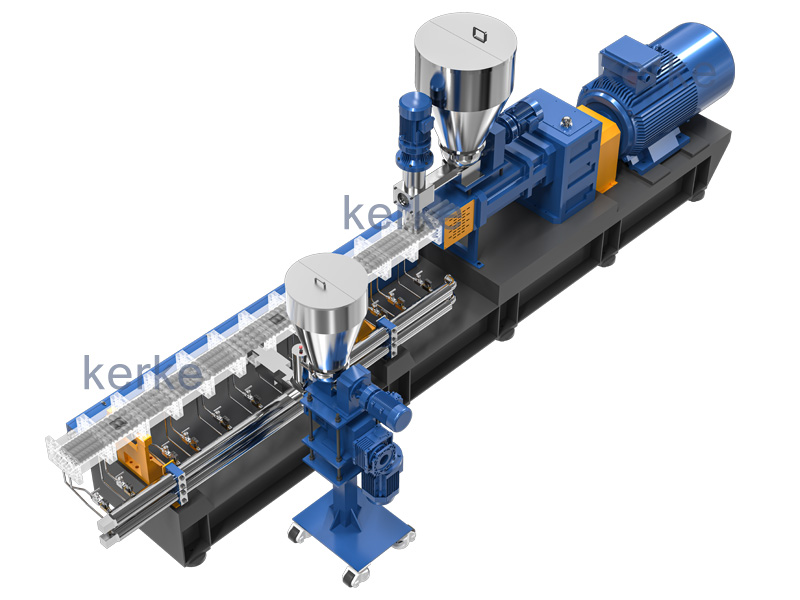
Kerke can provide matching feeding system schemes according to customers’ product accuracy requirements and budget. Both volumetric and gravimetric feeders can be perfectly connected with the main engine, with compact structure and no additional excessive space occupation. For customers with upgrade needs, they can also be equipped with ordinary feeding first and then upgraded to weight loss feeding later, which improves the flexibility of equipment configuration.
3.2 Exhaust Degassing System: Natural Vent vs Vacuum Exhaust
During the extrusion process, raw materials will bring in air, and the moisture and volatile low molecular substances in the materials will evaporate at high temperature. If these gases cannot be discharged in time, they will form bubbles inside the product, affecting the appearance and performance of the masterbatch particles. Therefore, the exhaust system is an indispensable part of the masterbatch extruder.
Basic compact extruders are usually equipped with natural exhaust port, which discharges gas through the exhaust chamber connected with the atmosphere. This structure is simple and low cost, and can meet the basic exhaust requirements. For products with high moisture and volatile content, the exhaust effect of natural exhaust is limited, and vacuum exhaust system is required. Vacuum exhaust uses vacuum pump to pump negative pressure in the exhaust chamber, which can more effectively extract water vapor and volatile gas in the melt, significantly improving the compactness and surface gloss of masterbatch particles.
For the production of high-gloss color masterbatch and engineering plastic modification, it is recommended to configure at least one-stage vacuum exhaust. For products with high volatile content, two-stage vacuum can be configured to ensure the exhaust effect. Kerke compact extruders reserve standard exhaust chamber positions, and natural exhaust or vacuum exhaust can be selected according to needs. The vacuum system is designed as an integrated machine, which occupies a small area and is easy to install and use.
3.3 Screen Changer and Melt Filtration System
The melt filtration system is used to filter impurities and unmelted particles in the melt, improve product quality and protect subsequent die head and granulation equipment. For masterbatch production, filtration is also helpful to improve the dispersion uniformity and surface gloss of the product.
The most commonly used is the plate type screen changer, which has simple structure and low cost. It needs to stop to replace the filter screen, which is suitable for small batch production with less impurities. If continuous production is required, a continuous screen changer without stopping can be selected, which can replace the filter screen during production without affecting the normal production, reducing the material waste and time loss caused by screen replacement. For production with more impurities and high requirements for product quality, non-stop screen changer is more cost-effective in the long run.
When selecting, it should be determined according to the raw material purity and production mode. For small workshops that mainly produce small batches and change materials frequently, ordinary plate screen changer is sufficient, with low cost and simple operation. For long-term continuous production of a single variety, non-stop screen changer can be selected to improve production efficiency. Kerke can provide different types of screen changer configurations, which are perfectly matched with the main engine to ensure the filtration effect and operation convenience.
3.4 Pelletizing System Selection
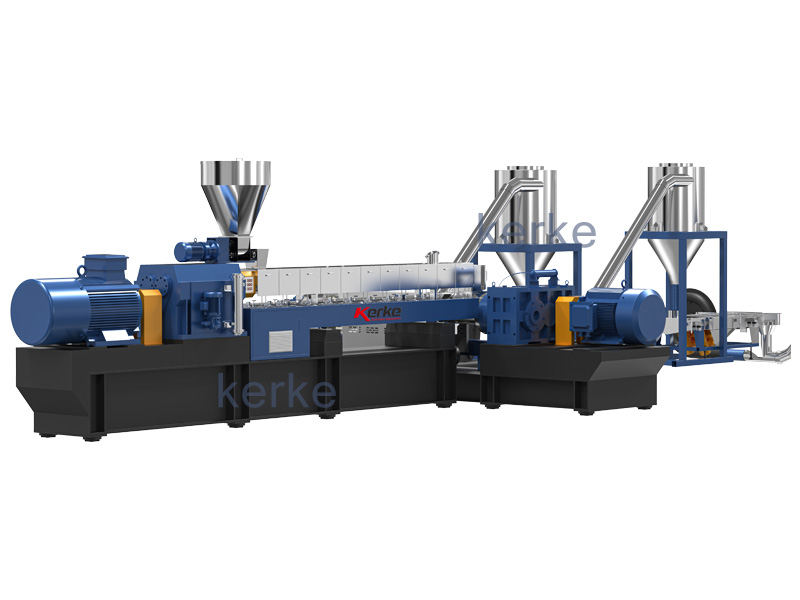
Pelletizing is the last process of masterbatch production. Different pelletizing methods have different effects on particle appearance, production efficiency and floor space. The common pelletizing methods for compact masterbatch extruders include strand pelletizing, water ring pelletizing and underwater pelletizing.
Strand pelletizing is the most traditional and common method. The melt is extruded into strips through the die head, cooled by water tank and then cut into particles by the granulator. This method has simple structure, low cost and convenient material change and cleaning. It is very suitable for multi variety and small batch production. The disadvantage is that it occupies a long space and has certain requirements for the length of the plant. Water ring pelletizing cuts particles directly at the die head and cools them with circulating water. It has compact structure and small floor area, and is suitable for materials with good fluidity. Underwater pelletizing has the best particle appearance and highest production efficiency, but the cost is also the highest and the operation is relatively complex. It is suitable for large batch production of a single variety.
For small workshops with multi variety and small batch production, strand pelletizing is the most cost-effective choice, with simple operation and convenient material change. If the plant length is limited, water ring pelletizing can be selected to save space. Kerke can provide all the above pelletizing methods, and the overall layout is optimized to minimize the floor area while ensuring the granulation effect.
3.5 Control System and Intelligent Function
The control system is the operation center of the whole equipment, and its simplicity and function directly affect the operation difficulty and production stability. The basic control system adopts PLC plus touch screen, which can set and display all process parameters, with formula storage function, and can save the process parameters of different products for direct call when changing materials.
High configuration control system can add more intelligent functions, such as production data recording, fault alarm and diagnosis, remote monitoring, etc. The data recording function can save all process parameters in the production process, which is convenient for quality traceability and process optimization. The remote diagnosis function allows after-sales engineers to check the equipment status online, quickly solve program and process problems, and reduce downtime losses.
Kerke compact extruders are standard equipped with industrial PLC control system and color touch screen. The interface is intuitive and easy to operate, and supports storage of hundreds of groups of production formulas. Operators can get started quickly after simple training. Optional remote monitoring module is available to meet the intelligent management needs of customers. The system has perfect fault alarm and protection functions, which can automatically alarm and take protective measures in case of abnormal parameters, reducing the operation risk of small workshops.
4. Kerke Compact Masterbatch Extruder Product Line and Application Scenarios
4.1 Lab & Small Batch Pilot Compact Extruder Line
This series is mainly aimed at R & D laboratories, color matching centers and small workshops that mainly produce ultra-small batch customized orders. The screw diameter ranges from 20mm to 25mm, and the hourly output ranges from 10kg to 50kg. The whole machine is highly integrated, small in volume and light in weight. It can be installed and used only on the flat ground, and can even be made into a movable model with casters, which is convenient for position transfer.
Although it is a small model, the configuration is complete. It still adopts co rotating twin screw structure and combined screw design, which has good dispersion performance and can be used for the production of various color masterbatches and modified materials. It can be matched with small volume feeder, natural exhaust or micro vacuum exhaust, and strand pelletizing system. The whole production line covers a small area and can be put into production only by connecting ordinary power supply and cooling water.
The price of this series of equipment ranges from 25,000 to 45,000 US dollars. The specific price varies according to the configuration. It has low initial investment and quick effect, and is very suitable for start-ups, enterprise R & D departments and workshops that produce high value-added customized color masterbatches. Although the output is small, the product added value is high, and the investment payback period is usually about 8 to 12 months.
4.2 Standard Production Compact Extruder Line
This series is the main model for small batch mass production workshops, with screw diameters of 35mm, 45mm and 50mm, and stable hourly output of 100kg to 500kg. It can meet the daily production needs of most small and medium-sized masterbatch and compounding workshops. The equipment balances performance, floor area and cost, and has the highest cost performance.
This series is standard equipped with high-efficiency servo drive system, multi zone precise temperature control, combined screw and modular barrel. It can be configured with weight loss feeder, one to two-stage vacuum exhaust, non-stop screen changer and different granulation methods according to needs. The overall structure is compact and reasonable. Compared with the same specification models on the market, the floor area is reduced by about 20%, which saves valuable plant space for small workshops.
The price of 35mm standard configuration production line is about 75,000 to 95,000 US dollars, and the price of 50mm high configuration production line is about 110,000 to 150,000 US dollars. This series of equipment has strong versatility and can produce most conventional color masterbatches, filling modified materials and engineering plastic modified materials. It is the first choice for most small masterbatch workshops. Calculated by conventional production, the investment payback period is about 10 to 16 months, and the economic benefit is very significant.
4.3 Unique Advantages of Kerke Compact Extruders for Small Workshops
Kerke compact extruders are specially optimized for the needs of small workshops, with many targeted designs. First, the highly integrated design saves plant space. The main engine, control cabinet and auxiliary machine are arranged compactly, which reduces the floor area and is convenient for overall hoisting and transportation.
Second, it is easy to clean and change materials, which is suitable for multi variety production. The quick opening structure of barrel and screw is adopted, which can be quickly disassembled for cleaning, reducing the material change time and waste. The screw combination can be flexibly adjusted to adapt to different product processes. Third, simple operation and low maintenance threshold. The humanized control interface reduces the technical requirements for operators. The modular design makes the replacement of vulnerable parts simple and fast, and there is no need for professional maintenance personnel on duty.
Fourth, energy saving and low consumption reduce operating costs. The servo drive system is energy-saving and efficient, which reduces the electricity cost per unit output. Fifth, reliable quality and perfect after-sales service. Strict quality control is implemented in the production process of the equipment, with low failure rate. The after-sales team can provide remote diagnosis and on-site service, so as to solve the worries of small workshops without professional technical team.
5. Investment Cost and Return on Investment Analysis
5.1 Detailed Breakdown of Initial Investment
Take the most common 35mm standard compact masterbatch extrusion production line as an example to calculate the detailed composition of the initial investment. The main engine part, including screw barrel, drive system, rack and control system, accounts for about 60% of the total investment, about 45,000 to 57,000 US dollars.
The auxiliary machine part includes feeding system, screen changer, cooling water tank, pelletizer, vibrating screen and finished product conveying device, accounting for about 25% of the total investment, about 19,000 to 24,000 US dollars. If vacuum exhaust system and weight loss feeder are added, the cost of auxiliary machines will increase accordingly. The installation and commissioning cost includes equipment transportation, on-site installation and commissioning and personnel training, accounting for about 10% of the total investment, about 7,500 to 9,500 US dollars. Spare parts and initial raw material reserve account for about 5%, about 3,500 to 4,500 US dollars.
Overall, the total initial investment of the standard configuration 35mm production line is about 75,000 to 95,000 US dollars. If you choose high configuration such as weight loss feeder, vacuum exhaust and non-stop screen changer, the total investment is about 90,000 to 110,000 US dollars. Compared with large production lines with an investment of hundreds of thousands of dollars, the investment threshold of compact production lines is very low, which is easy for small enterprises to bear.
5.2 Annual Operating Cost Calculation
Calculate the operating cost based on 300 working days per year, 20 hours per day and 6,000 hours of annual operation. Raw material cost is the main part. Calculated by average output of 200kg per hour, the annual output is about 1,200 tons. The raw material cost per ton is calculated as 1,200 US dollars, and the annual raw material cost is about 1,440,000 US dollars. This part fluctuates with the market price of raw materials.
Electricity cost: the total installed power of the 35mm production line is about 80kW. Due to the adoption of servo energy-saving system, the actual average operating power is about 50kW. Calculated at the industrial electricity price of 0.1 US dollars per kWh, the annual electricity cost is about 6,000 × 50 × 0.1 = 30,000 US dollars. Labor cost: the production line is equipped with 2 operators per shift, and 4 people are required for two shifts. The annual salary per person is calculated as 6,000 US dollars, and the annual labor cost is about 24,000 US dollars.
Maintenance and spare parts cost: under normal use, the annual maintenance and vulnerable parts replacement cost accounts for about 2% to 3% of the equipment price, about 1,500 to 2,850 US dollars. Plant rent and other management expenses are about 15,000 US dollars per year. Excluding raw material costs, the annual fixed operating cost is about 70,500 to 71,850 US dollars. Compared with large production lines, the fixed cost of compact production lines is much lower, and the pressure of low load operation is small.
5.3 Revenue and Profit Projection
In terms of product selling price, the ex factory price of ordinary color masterbatch is about 1,500 US dollars per ton, and the gross profit per ton is about 300 US dollars. For high value-added customized color masterbatch and functional masterbatch, the gross profit per ton can reach 500 to 800 US dollars. Calculated by the average gross profit of 350 US dollars per ton, the annual output of 1,200 tons can achieve an annual gross profit of about 420,000 US dollars.
After deducting the annual fixed operating cost of about 71,000 US dollars excluding raw materials, the annual net profit is about 349,000 US dollars. Even calculated on the basis of 70% capacity utilization, the annual net profit can reach about 223,000 US dollars. If the product is positioned as high-end customized masterbatch with higher profit margin, the profit level will be higher.
It can be seen that the compact masterbatch production line has the characteristics of small investment, quick effect and high profit margin. For small workshops, choosing appropriate equipment can achieve good returns. Kerke equipment has stable performance and low failure rate, which can ensure a high equipment startup rate, avoid production interruption caused by failure, and further ensure the realization of expected benefits.
5.4 Static Payback Period and Sensitivity Analysis
Calculated according to the total investment of 85,000 US dollars for the standard configuration production line and the annual net profit of 349,000 US dollars, the static investment payback period is about 85,000 ÷ 349,000 ≈ 0.24 years, that is, about 2.9 months. Even considering the factors of capacity climbing and market development in the initial stage, calculated on the basis of 50% capacity utilization in the first year, the investment can be recovered in about 6 months.
Even under the pessimistic expectation, if the product gross profit drops to 200 US dollars per ton and the capacity utilization rate is 60%, the annual net profit is about 144,000 × 0.6 − 71,000 = 14,400 × 6 − 71,000 = 86,400 − 71,000 = 15,400? No, recalculate: 1200 tons × 60% = 720 tons, gross profit 720 × 200 = 144,000 US dollars, minus fixed cost 71,000, net profit 73,000 US dollars, payback period about 14 months. It can be seen that even under pessimistic expectations, the investment can be recovered in about one year, and the investment risk is very low.
Compared with investing in large production lines, compact production lines have less investment, shorter payback period and stronger ability to resist market risks. It is very suitable for small workshops and start-ups to accumulate capital and expand steadily.
6. Installation, Operation and Daily Maintenance Guidelines
6.1 Site Preparation and Installation Requirements
Before the equipment arrives, the site shall be prepared according to the equipment dimensions and technical requirements provided by the supplier. First, level the ground and ensure sufficient bearing capacity. For models below 35mm, ordinary cement ground is sufficient. For models above 45mm, it is recommended to do simple foundation treatment to avoid ground settlement affecting equipment accuracy.
Reserve sufficient power capacity and connect three-phase power supply with stable voltage. Configure corresponding air switch and leakage protection to ensure electrical safety. Prepare cooling water circulation system, including cooling water tower or chiller, to ensure sufficient cooling water flow and stable water temperature. If vacuum exhaust and pneumatic components are configured, prepare corresponding compressed air source.
After the equipment arrives at the site, place it in place and level it, connect water, electricity and gas pipelines, and then the supplier’s engineers can commission it. Kerke equipment has been pre assembled and debugged before delivery. The on-site installation and commissioning cycle is short, usually 3 to 5 days, and then the trial production can be started. The engineer will provide on-site operation training to ensure that the operator can master basic operation and daily maintenance skills.
6.2 Material Change and Cleaning Operation Skills
For small workshops with frequent material changes, mastering efficient material change and cleaning methods can reduce waste and improve production efficiency. When changing materials of similar colors and properties, you can use new materials to clean the machine directly, and gradually replace the old materials until the product quality meets the standard. When changing colors with large color difference or different material types, special cleaning materials or screw cleaning agents can be used to improve the cleaning efficiency and reduce the consumption of cleaning materials.
When it is necessary to thoroughly clean the screw and barrel, the quick disassembly structure can be used to quickly draw out the screw for manual cleaning, which is more thorough and suitable for changing products with large differences. Pay attention to the temperature during cleaning to avoid material degradation and carbonization caused by long-time high-temperature stay. Establish standardized material change operation procedures to reduce the impact of human factors on cleaning effect and time.
6.3 Daily Maintenance and Wearing Parts Management
Doing a good job in daily maintenance can extend the service life of the equipment and maintain stable performance. Before starting the machine every day, check whether the equipment is abnormal, check whether the lubrication part is short of oil, and confirm that all safety devices are normal. During operation, pay attention to the changes of temperature, pressure and current, and deal with any abnormality in time.
Regularly clean the filter screen and replace it in time in case of blockage. Regularly check the wear of screw and barrel. For the production of high filler materials, the inspection frequency should be increased. The vulnerable parts such as heating ring and temperature sensor shall be stored with appropriate spare parts for timely replacement in case of failure. Establish equipment maintenance files, record maintenance time, replaced parts and operation status, and realize standardized management.
Kerke will provide customers with a detailed maintenance manual and a list of vulnerable parts, and can supply spare parts for a long time. Conventional vulnerable parts are in stock and can be delivered quickly, reducing the waiting time for spare parts.
7. Common Misunderstandings and Avoidance Strategies in Model Selection
7.1 Blindly Pursuing Excessive Production Capacity
One of the most common misunderstandings is that the bigger the equipment, the better. When selecting models, we blindly choose large-diameter equipment according to the possible maximum output in the future. As a result, after the equipment is put into production, the actual demand is far less than the equipment capacity, and the equipment runs at low load for a long time. On the one hand, it wastes initial investment and increases depreciation cost. On the other hand, low load operation of twin screw extruder will also affect the dispersion effect and product stability, and increase the unit energy consumption.
The correct approach is to select the model according to the actual stable demand, and reserve 20% to 30% of the capacity margin. If the future demand growth is uncertain, you can choose a slightly smaller model first, and then add equipment after the order is stable. This can not only reduce the initial investment risk, but also ensure the equipment operates in the best working condition and maintain good product quality and energy consumption level.
7.2 Only Paying Attention to Price and Ignoring Quality
Another common misunderstanding is to take price as the only selection standard and choose the cheapest equipment. In fact, the extrusion machine industry follows the principle of “you get what you pay for”. Low cost equipment usually shrinks in core configurations such as screw material, processing accuracy, drive system and electrical components. After purchase, there are many problems such as unstable operation, high failure rate and poor product quality.
Money saved on equipment purchase will be doubled in later maintenance, raw material waste and shutdown losses. When selecting equipment, we should focus on cost performance, not just price. We should comprehensively evaluate the equipment quality, configuration level, manufacturer’s technical strength and after-sales service, and choose products with reliable quality and guaranteed after-sales. For small enterprises, stable equipment operation is the basis of profit.
7.3 Ignoring Screw Configuration and Dispersion Performance
Many operators only pay attention to parameters such as output and price when selecting models, and ignore the screw configuration and dispersion performance. For masterbatch and compounding production, dispersion quality is the core competitiveness of products. If the dispersion effect is not good, the product quality cannot meet the customer’s requirements, and no matter how high the output is, it is meaningless.
When selecting equipment, we must communicate with the supplier in detail about our own product types and quality requirements, and let the supplier provide targeted screw configuration scheme. Conditional customers can bring raw materials to the manufacturer’s factory for on-site test, and intuitively understand the product dispersion effect and equipment performance. Investing in appropriate screw configuration can significantly improve product grade and selling price, and bring more profit growth than saving equipment costs.
7.4 Neglecting After-sales Service and Technical Support
Small workshops usually lack professional technical personnel, and rely heavily on the supplier’s after-sales service and technical support. If the after-sales service of the selected equipment supplier is not in place and problems cannot be solved in time, it will cause long-term shutdown and heavy losses.
When selecting suppliers, we should not only look at the product quality, but also investigate the supplier’s after-sales service capacity, including whether they can provide on-site installation and commissioning, technical training, how fast the spare parts supply is, and whether there is remote technical support. Choosing a supplier with rich experience and perfect after-sales service can avoid many detours in the production process and solve problems quickly. Kerke has a professional after-sales service team, which can provide customers with life-long technical support and spare parts supply, so that small workshop operators have no worries.