In the highly competitive global masterbatch and polymer compounding industry, production uptime directly determines the output capacity, unit cost and delivery reliability of manufacturing enterprises. For most small and medium-sized masterbatch producers operating multi-variety and small-batch production mode, frequent downtime caused by formula switching, equipment failure, process abnormality and improper maintenance has become one of the core factors restricting profit growth and customer satisfaction. Every hour of unplanned downtime not only means direct output loss and raw material waste, but also may lead to delivery delay, customer complaint and even order loss. For high value-added customized masterbatch products, the economic loss caused by downtime is far higher than that of ordinary bulk products.
Most of the downtime in masterbatch extrusion production is not inevitable. Through scientific equipment selection, optimized process flow, perfect preventive maintenance system and standardized personnel operation, most downtime can be effectively avoided or greatly shortened. As the core equipment of masterbatch production, the performance and reliability of twin screw extruder are the foundation of downtime control. Low quality extruders with unstable performance often have various failures during operation, which not only increases maintenance costs, but also seriously disrupts production plans. Choosing a high reliability masterbatch extruder with reasonable structural design and supporting optimized management scheme can fundamentally reduce the frequency and duration of downtime and release greater production potential under the same equipment investment scale.
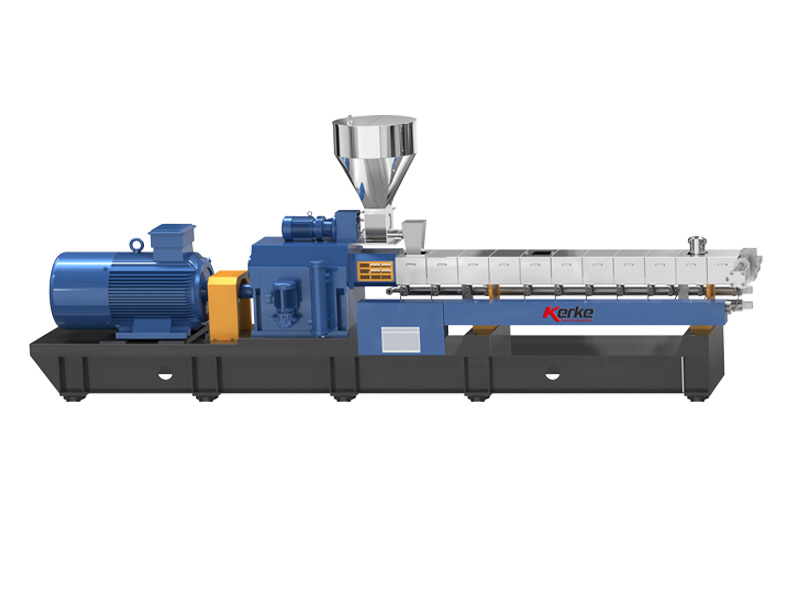
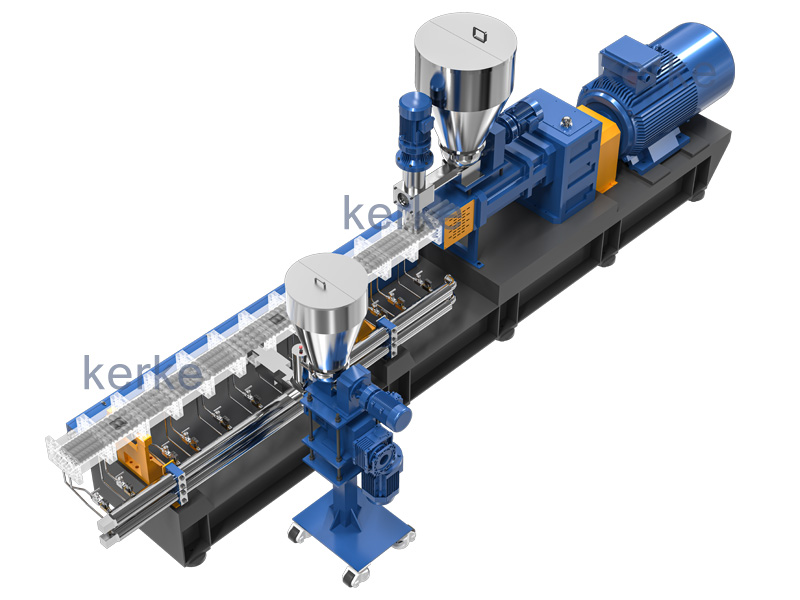
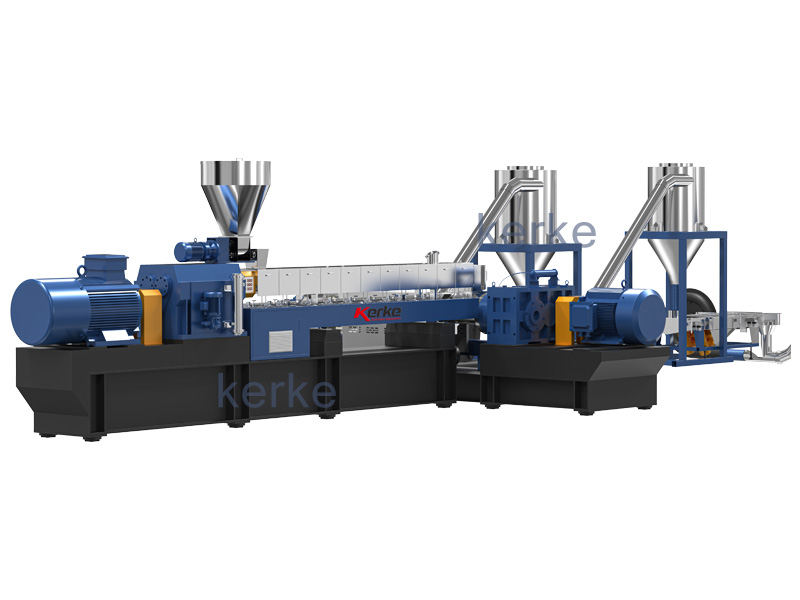
As a professional manufacturer focusing on R&D and manufacturing of twin screw extruders, masterbatch extruders and compounding extruders, Kerke has always taken improving equipment reliability and reducing production downtime as one of the core design objectives. Its full series of extrusion equipment are optimized from the dimensions of hardware structure, wear-resistant materials, intelligent control and quick disassembly design, and are matched with a perfect after-sales service and spare parts supply system to help customers maximize equipment uptime. This article will systematically sort out the classification and economic impact of downtime in masterbatch extrusion production, deeply analyze the root causes of frequent downtime, put forward targeted optimization strategies for planned and unplanned downtime respectively, introduce the design advantages of Kerke extruders in reducing downtime in detail, formulate a whole life cycle maintenance and spare parts management system, and carry out detailed cost-benefit analysis and investment return calculation, so as to provide comprehensive practical guidance for masterbatch production enterprises to improve operation efficiency and comprehensive benefits.
1. Classification and Economic Impact of Downtime in Masterbatch Extrusion
1.1 Two Major Categories of Production Downtime
Downtime in masterbatch extrusion production can be divided into two categories: planned downtime and unplanned downtime according to predictability and necessity. Planned downtime refers to the shutdown time arranged in advance according to production and maintenance needs, which is an indispensable part of normal production and operation. The main components include formula switching and color change cleaning, filter screen replacement, regular preventive maintenance, mold and die head replacement, and planned shutdown during holidays and off-season. Although this kind of downtime is necessary, its duration can be greatly shortened through process optimization and technical means, so as to improve the effective production time.
Unplanned downtime refers to the production interruption caused by sudden failures or unexpected events, which is the focus and difficulty of downtime control. Common causes of unplanned downtime include core component wear and failure such as screw and barrel, drive system failure, heating and temperature control system abnormality, electrical control system failure, melt blockage and material overflow caused by process fluctuation, raw material impurity blockage, safety accidents and human operation errors. This kind of downtime is sudden and often occurs in the peak production period, which is very easy to cause delivery delay. At the same time, the disposal process of unplanned failure is usually accompanied by a lot of uncertainty, and the shutdown duration is difficult to predict, which will bring great challenges to production scheduling. Reducing unplanned downtime is the core goal of production management of masterbatch enterprises.
1.2 Direct and Indirect Losses Caused by Unplanned Downtime
The economic losses caused by downtime cover multiple dimensions, and the actual losses are often much higher than the intuitive output losses. In terms of direct losses, shutdown means interruption of production. Taking a medium-sized 35mm masterbatch extrusion line as an example, the stable output is about 200kg per hour, and the gross profit per ton of conventional color masterbatch is about 350 US dollars. A single 8-hour shutdown will lead to a gross profit loss of about 560 US dollars. If it is a high value-added functional masterbatch, the gross profit per ton can reach 800 to 1200 US dollars, and the direct profit loss of a single shutdown will be higher. At the same time, the shutdown process will produce a large number of unqualified materials in the start-up and commissioning stage, resulting in waste of raw materials, and the disposal cost of waste materials also needs to be included in the loss.
In terms of indirect losses, frequent downtime will lead to extended delivery cycles and reduced delivery on-time rate, which is easy to cause customer complaints and order deductions. For long-term cooperative customers, long-term unstable delivery will also affect cooperative relations and even lead to customer churn. In addition, equipment failure shutdown is often accompanied by damage to core components, and high maintenance and parts replacement costs are required. Frequent start-up and shutdown will also accelerate the wear of screw, barrel and heating elements, shorten the service life of equipment and increase the depreciation cost of fixed assets. For enterprises with tight delivery plans, temporary overtime and rush work caused by shutdown will also increase labor costs and management costs. Comprehensive calculation shows that the total economic loss caused by one hour of unplanned downtime is usually 2 to 3 times of the normal production profit in the same period.
1.3 Why Downtime Control Is Critical for Small and Medium Masterbatch Manufacturers
Compared with large chemical enterprises with multiple production lines, small and medium-sized masterbatch workshops usually have only one or two production lines, and their ability to resist downtime risks is weaker. Large enterprises can allocate orders to other production lines when a single equipment fails, which will not affect the overall delivery plan. Small and medium-sized enterprises have no alternative production capacity. Once the core extruder fails and shuts down, the whole production will be completely paralyzed, and all orders will be delayed accordingly. At the same time, small and medium-sized enterprises usually have limited technical personnel and spare parts reserves, and the disposal cycle after failure is often longer, which is easy to form long-term shutdown.
On the other hand, small and medium-sized masterbatch enterprises mostly rely on customized orders and small batch production to survive in the market gap. This production mode determines that they need to frequently switch formulas and colors, and the proportion of planned downtime in the total time is higher. If the efficiency of material change and cleaning is low, a large amount of effective production time will be occupied, resulting in the actual annual output far lower than the theoretical capacity. Therefore, doing a good job in downtime control and improving equipment uptime is not only a problem of improving efficiency, but also related to the core competitiveness and survival status of small and medium-sized masterbatch enterprises. Through reasonable equipment upgrading and management optimization, even reducing the comprehensive downtime by 20% to 30% can bring significant output growth and profit improvement to small enterprises.
2. Root Causes of Frequent Downtime in Masterbatch Extrusion Lines
2.1 Equipment Failure and Component Wear
Equipment hardware failure is the primary cause of unplanned downtime. The twin screw extruder operates under high temperature, high pressure and high shear environment for a long time, and all core components have natural wear process. The screw and barrel are the most easily worn parts. When processing high filler masterbatch and inorganic pigment masterbatch, the material has strong abrasiveness, which will accelerate the wear of screw elements and barrel inner wall. After the wear exceeds a certain degree, it will lead to the decline of dispersion quality, unstable output, and even screw jamming in serious cases, resulting in forced shutdown for maintenance. Many enterprises do not pay attention to daily wear detection, and often do not find the problem until the equipment fails completely, which delays the best maintenance opportunity and prolongs the shutdown time.
The transmission system is also a high incidence area of failure. Gearbox bearing wear, gear damage, lubricating oil deterioration and other problems will cause abnormal operation of the equipment. If they are not handled in time, they may cause major faults such as gearbox damage and require long-term shutdown for maintenance. The heating system is also prone to problems. Aging and damage of the heating ring, failure of the temperature sensor and poor contact of the circuit will lead to temperature control out of control, which will affect the product quality at least, and cause material degradation and carbon deposition blockage at worst, resulting in shutdown for maintenance. In addition, electrical control system failures such as frequency converter damage, PLC program abnormalities and circuit short circuits are also common causes of sudden shutdown. Low quality extruders often cut corners on the selection of core components, with higher failure rate and shorter average time between failures, which will bring more unplanned downtime.
2.2 Frequent Formula Change and Color Switch Operations
For masterbatch enterprises producing multiple varieties and small batches, formula switching and color change cleaning account for the highest proportion of all planned downtime. Each time the color and material are changed, the old materials remaining in the screw, barrel and die head need to be cleaned with new materials or special cleaning materials. The whole process includes shutdown disassembly, cleaning, reassembly, commissioning and other links, which usually takes 1 to 4 hours. If the color difference between the front and rear products is large or the product accuracy requirements are high, the cleaning time will be longer, and a large amount of transitional waste will be generated.
Many factors will affect the duration of material change. From the equipment level, if the extruder is not designed with quick disassembly structure, it takes a lot of time to disassemble the screw and barrel. If there are material retention dead corners inside the flow channel, it is difficult to clean thoroughly, which will prolong the cleaning time and even cause cross color pollution of subsequent products. From the operation level, the lack of standardized material change process and skilled operators will also lead to long commissioning time and high waste rate. Many small workshops arrange production randomly according to the order receiving order, without overall planning of the production sequence, which leads to frequent switching between colors with large differences, increasing the number and time of material changes invisibly. For enterprises with more than 5 material changes per week, the cumulative shutdown time caused by material changes every month can reach dozens of hours, which is a huge waste of production capacity.
2.3 Process Instability and Raw Material Fluctuation
Unstable production process will lead to frequent product quality abnormalities, and enterprises have to stop to adjust parameters, which will also cause a lot of invisible downtime. If the feeding system has poor metering accuracy and large feeding fluctuation, it will lead to unstable melt pressure and product performance. Operators need to constantly adjust parameters, and even produce a large number of unqualified products, which need to be shut down for troubleshooting. Excessive moisture and volatile content in raw materials will lead to bubbles and material overflow at the exhaust port, which requires shutdown to clean the exhaust chamber and reprocess raw materials.
Impurities and foreign matters in raw materials are also important causes of sudden shutdown. Metal scraps, sand particles and other hard impurities mixed in raw materials will scratch the screw and barrel, and may also block the filter screen and die head in a short time, resulting in a sharp rise in melt pressure and forced shutdown. The fluctuation of raw material melt index and formula proportion between different batches will also lead to changes in processing characteristics. The original process parameters are no longer applicable, and repeated shutdown debugging is required. Many enterprises neglect the incoming inspection of raw materials and put them into production directly after arrival, which is easy to bury hidden dangers for production stability and lead to unexpected shutdown.
2.4 Inadequate Maintenance and Spare Parts Management
Lack of scientific preventive maintenance system is a common problem in many small and medium-sized masterbatch enterprises. Many enterprises adopt the extensive maintenance mode of repairing after failure, and do not carry out regular inspection and maintenance on the equipment. Under this mode, small hidden dangers of equipment cannot be found and eliminated in time, and will gradually develop into major faults, resulting in longer shutdown time and higher maintenance cost. For example, the lubricating oil of the gearbox is not replaced on time, which will accelerate gear wear and eventually lead to gearbox failure. The maintenance cost of this fault is high and the shutdown time is long, but it can be completely avoided through regular oil change maintenance.
At the same time, the unreasonable spare parts reserve will also greatly prolong the shutdown time. Many enterprises do not have spare parts for vulnerable parts such as heating rings, temperature sensors and sealing elements. When failures occur, they temporarily purchase them, and the waiting time for spare parts will be all downtime. For core components such as screw elements and gearbox bearings, there is no spare parts reserve. In case of damage, it takes a long time to customize and replace, which may lead to shutdown for half a month or even longer. In addition, the backward maintenance means and the lack of professional maintenance personnel also lead to low maintenance efficiency. A small fault that could have been solved in a few hours takes one or two days to deal with, which invisibly increases the shutdown loss.
2.5 Human Error and Operational Irregularities
Statistics show that a considerable part of production shutdowns are directly or indirectly related to human misoperation. Operators do not operate in strict accordance with the process procedures, such as starting the machine without reaching the set temperature, feeding too fast at one time, and not cleaning the filter screen on time, which may lead to equipment failure and shutdown. In the process of material change and cleaning, improper operation will lead to unclean cleaning, resulting in quality problems after re production, and secondary shutdown for re cleaning is required.
During daily patrol inspection, the operators are not careful enough to find the early signs of failure such as abnormal sound, temperature abnormality and pressure fluctuation in time. When the problem develops to a serious extent, they have to stop for treatment, which not only increases the maintenance difficulty, but also prolongs the shutdown time. In addition, the high turnover rate of operators in some enterprises leads to the frequent appearance of novice operators on duty. Novices are not familiar with the equipment performance and operation skills, which is more prone to operation errors and increases the probability of shutdown accidents. The lack of standardized operation training and perfect assessment mechanism is an important management reason for frequent downtime caused by human factors.
3. Proven Strategies to Reduce Planned Downtime
3.1 Optimize Production Scheduling to Minimize Formula Switch Frequency
Reducing the number of unnecessary formula switching is the most economical and effective way to shorten the planned downtime. Enterprises should optimize the production scheduling mode, change the mode of organizing production according to the order receiving sequence, and adopt the strategy of batch centralized production according to the color system and material type. When arranging the production plan, products of the same color system and similar formula shall be arranged for continuous production as far as possible. Gradually transition from light color to dark color, so as to minimize the difficulty of cleaning during material change and shorten the cleaning time. For example, arrange white masterbatch, light yellow masterbatch and orange masterbatch for continuous production, and the material change between adjacent products only needs simple cleaning, which takes a short time and produces less waste.
At the same time, properly extend the production batch of single products. Under the condition of meeting the delivery date, appropriately increase the single production quantity to reduce the number of material changes. For conventional conventional products, appropriate safety stock can be prepared to avoid frequent small batch production. Through scientific scheduling optimization, the number of material changes can be reduced by 20% to 40% without affecting delivery, and the planned downtime can be significantly reduced. In addition, establishing a standardized production scheduling process and a special dispatching post can continuously optimize the scheduling scheme and improve the overall operation efficiency of the production line.
3.2 High-Efficiency Cleaning Technology for Fast Color and Material Change
For the necessary material change and color change operations, the cleaning efficiency can be greatly improved by optimizing the cleaning process and selecting appropriate cleaning materials, so as to shorten the shutdown time. First, formulate standardized cleaning operation procedures, clarify the steps, material consumption and quality judgment standards of cleaning, so as to avoid repeated cleaning and debugging caused by unclear standards. Select special screw cleaning agent or cleaning material with good cleaning effect. Compared with cleaning with pure new material, special cleaning material can more effectively take away the residual old material and carbon deposition in the flow channel, shorten the cleaning time by more than 50%, and reduce the amount of cleaning waste.
From the equipment level, choosing an extruder with quick disassembly structure can greatly speed up the cleaning speed. When changing products with large color difference, the screw can be quickly drawn out for manual cleaning, which is more thorough and efficient than online cleaning. Kerke twin screw extruders are designed with quick opening barrel and quick screw extraction structure, which can complete the disassembly of screw and barrel in a very short time, greatly reducing the time required for thorough cleaning. For enterprises that need to change colors frequently, equipping two sets of screw components and replacing them as a whole during material change can further compress the shutdown time of material change to less than half an hour, and the removed screws can be cleaned during production, which does not occupy production time at all.
3.3 Continuous Screen Changer to Eliminate Screen Change Downtime
Filter screen replacement is another main item of planned downtime. Traditional plate type screen changer needs to stop the machine to replace the filter screen. Each replacement takes tens of minutes and will produce a certain amount of waste. Replacing with a continuous non-stop screen changer can completely eliminate the shutdown caused by screen replacement and realize screen replacement without affecting normal production.
The continuous screen changer adopts double station or multi station design. When one filter screen is blocked, it can be smoothly switched to another standby filter screen. The whole switching process is carried out slowly, with small pressure fluctuation, which will not affect the product quality, and there is no need to stop the machine for replacement. For masterbatch production with many raw material impurities and high filtration requirements, using continuous screen changer can save 2 to 4 hours of screen replacement shutdown time per week, and also reduce the waste generated during screen replacement. Although there is a certain amount of additional investment in the early stage of upgrading the screen changer, the comprehensive benefits brought by reducing downtime and improving output can recover the cost in a very short time. Kerke can provide matching continuous screen changer configurations for various types of masterbatch extruders, which can be selected during initial purchase or upgraded later.
3.4 Lean Preventive Maintenance Arrangement in Production Gaps
Planned maintenance does not necessarily need to occupy normal production time. Through lean arrangement, maintenance work can be placed in production gaps, rest time and holidays, so as to minimize the occupation of effective production time. For example, daily simple inspection and minor maintenance can be arranged before shift handover and during rest; weekly maintenance can be arranged on weekends; quarterly and annual major maintenance can be arranged in the production off-season or holidays, so as to avoid the peak order period and reduce the impact on production and delivery.
At the same time, modular maintenance mode is adopted to split the maintenance work into multiple small modules. Each time, only part of the maintenance work is completed by using the production gap, rather than centralized long-term shutdown for comprehensive maintenance. This decentralized maintenance method can greatly reduce the single shutdown time and avoid the impact of long-term centralized maintenance on the production plan. In addition, improving the standardization of maintenance, formulating detailed maintenance operation guidelines and preparing special maintenance tooling can improve maintenance efficiency and shorten the time required for each maintenance.
4. Systematic Solutions to Eliminate Unplanned Downtime
4.1 Improve Equipment Reliability from Hardware Design
Reducing unplanned downtime must start from the source and fundamentally reduce the probability of failure by improving the reliability of equipment hardware. When purchasing equipment, we should not only focus on the price, but pay attention to the quality of core components and the manufacturing process level. High quality equipment adopts high-quality brand components in terms of drive motor, frequency converter, bearing, electrical components, etc., with lower failure rate and longer service life. For core components such as screw and barrel, wear-resistant alloy materials and surface treatment processes are selected to improve wear resistance and corrosion resistance, greatly extend the service cycle and reduce shutdown maintenance caused by wear.
Optimizing the structural design can also reduce the probability of failure. For example, the optimized flow channel design avoids material retention dead corners, reduces the risk of material carbonization and blockage; the reasonable lubrication system ensures sufficient lubrication of transmission parts and reduces wear failure. The electrical system adopts modular design, which is convenient for rapid troubleshooting and component replacement, and shortens the disposal time after failure. Choosing equipment with reliable quality and reasonable design is the most fundamental measure to reduce unplanned downtime. Although the one-time investment is higher, it can bring long-term stable production benefits and is far more cost-effective than buying low-cost equipment and frequently stopping for maintenance.
4.2 Closed-Loop Process Control to Stabilize Production Status
Stable process parameters can reduce the probability of process abnormality and quality fluctuation, and avoid shutdown adjustment caused by unqualified products. The advanced closed-loop control system can automatically adjust according to the real-time changes of parameters such as melt pressure, temperature and torque, so as to maintain the stability of the production process and reduce the manual intervention frequency. For example, the feeding closed-loop control can automatically adjust the feeding speed according to the change of screw torque to keep the melt pressure stable; the temperature closed-loop control can accurately adjust the heating and cooling output to maintain the temperature fluctuation within a small range.
By optimizing the process formula, the production can run in the best parameter range, reducing the probability of blockage, degradation and other problems. For different raw material batches, timely fine tune the process parameters to adapt to the changes of raw material characteristics, so as to avoid quality fluctuation and equipment abnormality caused by raw material fluctuation. Stable process not only reduces the shutdown caused by quality problems, but also reduces the wear speed of equipment and prolongs the service life of vulnerable parts.
4.3 Raw Material Pre-Treatment and Quality Control
Controlling the quality of raw materials from the source can effectively avoid shutdown failures caused by raw material problems. Establish a perfect raw material incoming inspection system. Each batch of raw materials shall be inspected for appearance, moisture content, impurity content and melt index. Unqualified raw materials shall not be put into production. For raw materials with excessive moisture, they must be dried before use to avoid bubbles, exhaust overflow and other problems during processing.
Install magnetic separation and screening devices in the raw material conveying link to remove metal impurities and large particles in the raw materials, so as to prevent hard impurities from entering the barrel and causing scratch and blockage of screw and barrel. For recycled materials, they must be screened and purified before use to control the impurity content within the allowable range. Through the pre-treatment of raw materials, the risk of sudden blockage and equipment damage can be greatly reduced, and the unplanned shutdown caused by raw material problems can be basically eliminated.
4.4 Real-Time Monitoring and Early Warning of Abnormal Parameters
Most equipment failures have early signs before they occur. Through real-time monitoring and early warning system, abnormal signals can be found in advance, and hidden dangers can be eliminated in the bud before the failure completely breaks out, so as to avoid long-term shutdown caused by sudden major failures. Install sensors for key parameters such as temperature, pressure, current, vibration and lubricating oil temperature of each key part of the extruder, and transmit the data to the control system in real time.
The control system presets the normal range of each parameter. When the parameter exceeds the early warning value, it will automatically send out sound and light alarm to remind the operator to check and deal with it. The more advanced intelligent system can also analyze the operation trend through big data algorithm, predict the occurrence of faults, and arrange maintenance in advance during the production gap. For example, through the change trend of melt pressure, the blockage degree of the filter screen can be predicted, and the screen replacement can be arranged in advance before the screen is completely blocked, so as to avoid sudden pressure rise and forced shutdown. The parameter early warning system changes passive after-the-fact maintenance into active predictive maintenance, which can not only reduce the frequency of unplanned shutdown, but also arrange maintenance time more flexibly.
5. Kerke Twin Screw Extruder Design Advantages for Downtime Reduction
As a professional twin screw extruder manufacturer, Kerke integrates the concept of reducing downtime and improving equipment availability into every link of product design and manufacturing. Starting from hardware structure, material technology, intelligent control and after-sales support, Kerke builds a high-reliability extrusion production system to help customers maximize production uptime.
5.1 Quick-Disassembly Structure for Fast Cleaning and Maintenance
Kerke masterbatch extruders adopt modular barrel design and quick opening mechanism, which can quickly open the upper barrel and draw out the screw assembly. When changing materials and colors or carrying out internal maintenance, the disassembly work that originally took several hours can be completed in tens of minutes, greatly shortening the shutdown time. The internal flow channel is polished with high precision and has no dead angle for material retention, which is easier to clean, reduces the residue of old materials, and can shorten the cleaning time and reduce the amount of cleaning waste.
For customers with frequent color changes, Kerke also provides a scheme of configuring two sets of screw components. When changing materials, the whole screw assembly can be replaced directly, and the shutdown time of material change can be compressed to less than 30 minutes. The replaced screw can be cleaned slowly during production, which does not occupy production time at all. This design is very suitable for small batch and multi variety production mode, which can significantly improve the effective production time of equipment.
5.2 High-Wear Resistance Core Components for Longer Service Life
The screw and barrel are the core vulnerable parts of the extruder, and their service life directly determines the frequency of shutdown maintenance. Kerke adopts high-quality alloy steel as the base material of screw and barrel, and the surface is treated by special nitriding or bimetallic spraying process, with high hardness and excellent wear and corrosion resistance. Compared with ordinary heat treatment process, the service life of Kerke screw barrel can be increased by 50% to 100%, which greatly extends the maintenance cycle and reduces the shutdown time caused by wear replacement.
For high filler masterbatch production with serious wear, Kerke can also provide higher specification wear-resistant configuration, and key positions are made of high wear-resistant alloy materials to cope with strong abrasive working conditions. The transmission system adopts well-known brand reducers and bearings, with stable and reliable operation and low failure rate. Through the improvement of core component quality, the average time between failures of the equipment is greatly extended, and the unplanned shutdown caused by hardware failure is significantly reduced.
5.3 High-Stability Drive and Temperature Control System
Kerke compounding extruders are standard equipped with high-efficiency servo drive system or high-performance variable frequency drive system, with stable operation, accurate speed regulation and perfect overload protection function. The drive system can automatically adjust the output torque according to the load change, avoid equipment overload shutdown caused by instantaneous load fluctuation, and also protect the transmission mechanism from damage. The electrical control system adopts well-known brand PLC and electrical components, with stable performance and low failure rate.
The multi zone independent PID temperature control system has high temperature control accuracy and fast response speed, which can maintain the melt temperature stable within the set range, reduce the probability of material degradation and carbon deposition blockage caused by temperature out of control, and avoid process shutdown. All electrical systems have been strictly tested before delivery to ensure stable and reliable operation in long-term continuous production. High stability drive and temperature control system not only reduce the failure shutdown rate, but also reduce the parameter adjustment time in the production process and improve the effective operation time of the equipment.
5.4 Intelligent Control System with Fault Prediction Function
Kerke new generation extruders are equipped with intelligent control system, which integrates comprehensive parameter monitoring, fault early warning and production data recording functions. The system monitors all key operation parameters such as temperature, pressure, current, torque and lubrication status in real time, and has built-in multi-level alarm mechanism. When the parameters deviate from the normal range, it will give an early warning in time to remind the operator to check and deal with them before the fault occurs, so as to avoid the expansion of the problem.
The system supports remote diagnosis function. After customer authorization, after-sales engineers can remotely view the equipment operation status and fault information, quickly judge the cause of the fault, and guide the on-site personnel to solve the problem. For most program and process problems, they can be solved remotely, greatly shortening the fault handling time and avoiding long-term shutdown waiting for on-site service. The production data recording function can save all operation data, which is convenient for fault traceability and process optimization, and helps enterprises continuously improve production management level.
5.5 Full Range of Equipment Models Matching Different Production Scales
Kerke provides a full range of twin screw extruder models to meet the needs of different production scales and process scenarios. For small workshops and pilot production, 20mm to 25mm compact masterbatch extruders are available, with a price range of 25,000 to 45,000 US dollars. This series adopts highly integrated design, with reliable performance and simple maintenance, which can reduce the frequency of fault shutdown and help small enterprises achieve stable production.
For medium-sized mass production workshops, 35mm to 50mm standard production compounding extruders are the best choice, with a price range of 75,000 to 150,000 US dollars according to different configurations. This series can be equipped with continuous screen changer, vacuum exhaust system, weight loss feeding and intelligent monitoring system, which can minimize comprehensive downtime. For large-scale production enterprises, larger specification models can also be selected, with higher output and higher degree of automation, which can achieve long-term stable continuous production. No matter what scale of demand, Kerke can provide targeted configuration schemes to help customers achieve the best balance between investment cost and production efficiency.
6. Whole Lifecycle Maintenance and Spare Parts Management System
6.1 Graded Preventive Maintenance Plan
Establishing a scientific graded preventive maintenance system is the basis for reducing equipment failures and extending service life. The maintenance work is divided into daily inspection, weekly maintenance, monthly maintenance, quarterly maintenance and annual overhaul, with clear maintenance contents and standards for each level. Daily inspection is the responsibility of the operator. Before starting up and during the operation of the equipment, check the temperature, pressure, sound, lubrication and other conditions of the equipment, and deal with any abnormality in time. The daily inspection takes a short time, but it can find the early signs of failure in time and avoid small problems developing into major faults.
Weekly maintenance focuses on cleaning and fastening. Clean the dust and material debris on the surface of the equipment, check the fastening of all connecting bolts and pipeline joints, and tighten them in time if they are loose. Monthly maintenance focuses on electrical system and transmission system inspection, check the operation of electrical components, check the lubricating oil level and oil quality, and supplement or replace them in time. Quarterly maintenance requires in-depth inspection of core components, checking the wear of screw and barrel, calibrating temperature and pressure sensors, and maintaining the feeding system. Annual overhaul is the most comprehensive maintenance. The equipment shall be disassembled and inspected as a whole, all worn parts shall be replaced, the lubricating oil shall be replaced as a whole, and the accuracy of the equipment shall be restored to the state close to that of the new machine. Through layered and gradual maintenance, most faults can be eliminated in the bud, and the unplanned shutdown rate can be greatly reduced.
6.2 Predictive Maintenance Technology for Advanced Fault Detection
On the basis of regular preventive maintenance, introducing predictive maintenance technology can further improve the accuracy of maintenance and avoid excessive maintenance or insufficient maintenance. By installing vibration sensors, temperature sensors and oil online monitoring sensors on key parts such as gearbox and bearing, the operation status of equipment can be monitored continuously. Through the analysis of monitoring data, the wear degree and development trend of components can be judged, and the optimal maintenance time can be accurately predicted.
Predictive maintenance changes the traditional mode of regular maintenance to maintenance on demand, which not only avoids premature replacement of parts and waste of costs, but also avoids equipment failure caused by untimely maintenance. For example, the bearing wear can be judged through the vibration data, and the replacement time can be arranged accurately before the bearing is damaged, so as to make full use of the service life of the parts and avoid sudden failure shutdown. Kerke high configuration extruders can be equipped with predictive maintenance modules to help customers realize intelligent equipment management and further reduce the total maintenance cost and shutdown loss.
6.3 Scientific Spare Parts Reserve Strategy
Reasonable spare parts reserve is the key to shorten the downtime after failure. According to the service life and failure probability of parts, spare parts can be divided into three categories for classified management. The first category is quick-wear parts with short service life and high consumption, including heating ring, temperature sensor, sealing ring, filter screen, etc. Such parts have low value and high failure frequency, so sufficient inventory shall be reserved to ensure that they can be replaced immediately in case of failure. It is generally recommended to reserve 2 to 3 sets of such spare parts for each equipment.
The second category is medium-term wearing parts with service life of 1 to 3 years, including screw elements, gearbox bearings, frequency converters, etc. Such parts have high value and low failure probability. They can be properly reserved according to the number of equipment and use intensity. For enterprises with multiple same models of equipment, they can be reserved in a unified manner to reduce the capital occupation. The third category is long-life core components with service life of more than 5 years, such as gearbox body, barrel body, etc. Such parts have low failure probability and high price, so there is generally no need for stock reserve. However, the supply channel and delivery cycle should be confirmed with the supplier in advance, so that they can be purchased quickly when needed. Establish a standardized spare parts warehouse management system, record the inbound and outbound of spare parts in detail, and replenish them in time when the inventory is lower than the safety stock, so as to avoid delaying maintenance due to lack of spare parts.
6.4 Kerke Global After-Sales and Spare Parts Supply Support
Kerke has a perfect after-sales service system and spare parts warehouse to provide customers with long-term stable spare parts supply and technical support. Conventional vulnerable parts are in stock all year round and can be shipped quickly after receiving customer demand, which greatly shortens the waiting time for spare parts. For core components, Kerke has a fast response customization channel, which can greatly shorten the delivery cycle compared with ordinary suppliers.
In terms of technical support, Kerke provides 7 times 24-hour remote technical support. In case of equipment failure, customers can contact the after-sales team at any time. Engineers can quickly judge the cause of the fault through remote diagnosis and guide customers to solve the problem on site. For problems that cannot be solved remotely, on-site service engineers can be arranged to arrive at the site as soon as possible for disposal. Perfect after-sales service and spare parts supply can minimize the shutdown time after failure and help customers quickly resume production.
7. Personnel Training and Emergency Response Mechanism
7.1 Standardized Operation Training to Reduce Human Error
Reducing human misoperation is an important part of reducing downtime. Enterprises shall establish a perfect staff training system. All operators must receive systematic training before taking up their posts, master the correct operation methods of equipment, process parameter setting standards and daily inspection requirements, and can only take up their posts after passing the assessment. The training content should not only include normal operation, but also focus on the treatment methods of common abnormal conditions, so that operators can make correct responses in time when encountering abnormalities, so as to avoid expanding the situation.
Regular re training and skill assessment shall be carried out for on-the-job operators to continuously strengthen the operation standard awareness. Compile clear and visual operation instructions and post them at the eye-catching position beside the equipment for operators to check at any time. Implement the post responsibility system, link the equipment operation status with the performance of operators, improve the sense of responsibility of employees, and reduce illegal operations and careless operations. Through systematic training and standardized management, most shutdown accidents caused by human errors can be avoided.
7.2 Common Fault Rapid Troubleshooting Training
Mastering the ability of rapid troubleshooting can greatly shorten the fault handling time. Enterprises shall sort out the list of common faults and corresponding solutions, and carry out special training for operators and maintenance personnel, so that they can quickly judge the cause of the fault and take targeted treatment measures when the equipment fails. For example, for common faults such as temperature out of control, pressure rise and abnormal sound, the troubleshooting steps and solutions shall be clarified to avoid blind disassembly and inspection and waste of time.
Conduct regular emergency drill to simulate the handling process of different fault scenarios, and improve the emergency response speed and handling capacity of the team. Establish a fault handling manual, which records in detail the fault phenomena, possible causes, troubleshooting steps and solutions, so that on-site personnel can check at any time. For complex faults that cannot be solved on site, contact the equipment supplier for technical support in time to avoid prolonged downtime due to blind trial and error.
7.3 Fast Response After-Sales Service System
A fast and reliable after-sales service system is the backing for enterprises to deal with sudden failures. When selecting equipment suppliers, we should not only look at product quality and price, but also investigate the supplier’s after-sales service capacity and response speed. Suppliers with perfect after-sales system can provide rapid remote diagnosis and on-site maintenance services, which can greatly shorten the fault handling cycle.
Kerke attaches great importance to after-sales service and has a professional after-sales technical team. After the equipment is delivered, it will provide systematic operation and maintenance training for the customer’s team to improve the on-site personnel’s ability to deal with faults. In case of failure, the after-sales team will respond within 24 hours, give priority to remote diagnosis to solve the problem, and arrange on-site service if necessary. Sufficient spare parts reserve ensures that spare parts can be delivered quickly, which greatly reduces the shutdown waiting time of customers.