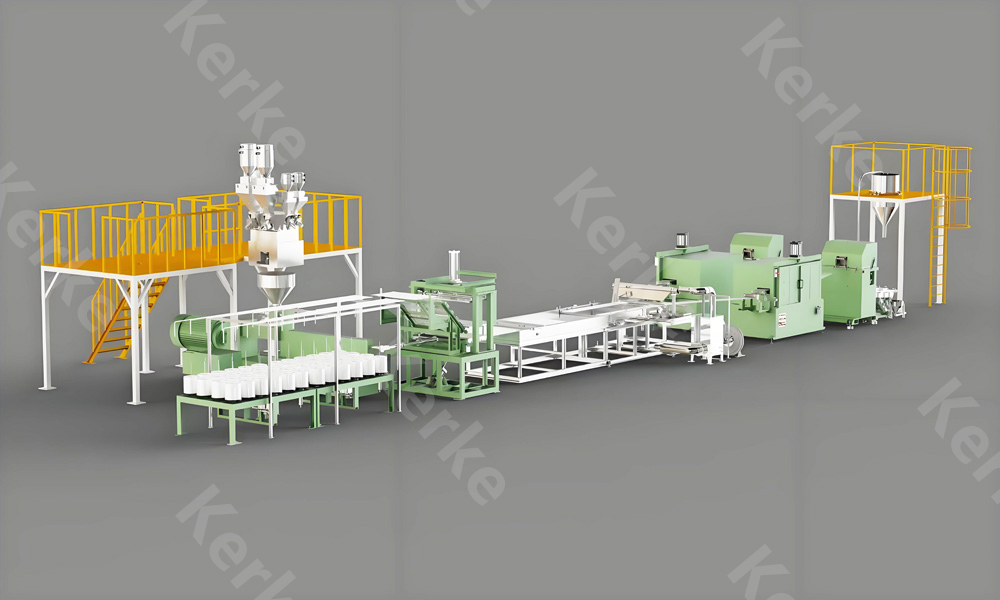
The global twin screw extruder market is projected to reach $1.27 billion in 2026, growing at a compound annual growth rate (CAGR) of 4.99% through 2035. This steady growth reflects the fundamental shift in the plastics processing industry, where twin screw extrusion technology has become the undisputed standard for modern compounding operations. Today, over 58% of all compounding lines worldwide are built around twin screw extruders, and this percentage continues to rise as manufacturers increasingly require advanced materials with precisely engineered properties.
Modern compounding lines are no longer simple production facilities—they are sophisticated manufacturing systems that transform basic polymer resins into high-value, customized materials for automotive, electronics, packaging, medical, and renewable energy applications. At the heart of every modern compounding line lies the twin screw extruder, which integrates multiple processing steps into a single continuous operation and provides the precise control required to produce complex formulations with consistent quality.
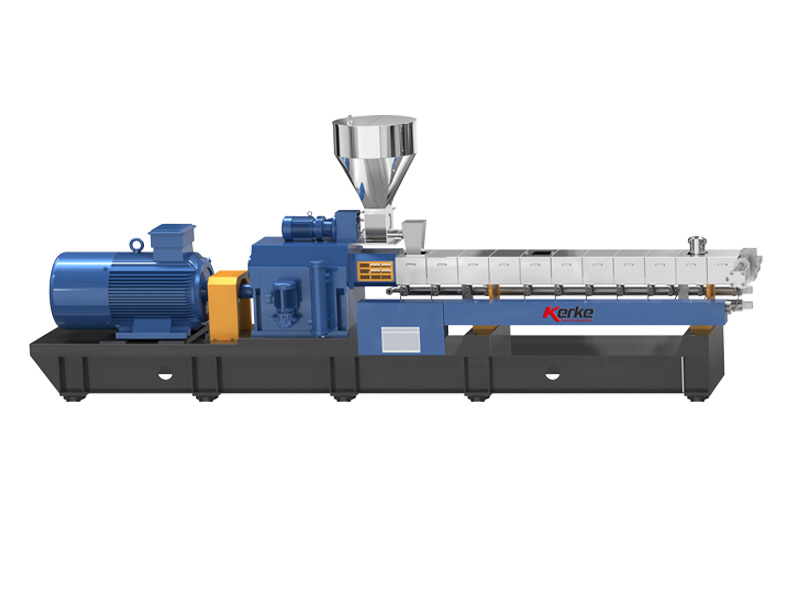
As a leading global manufacturer of advanced twin screw extruders with over 20 years of experience, KERKE has been instrumental in driving this technological transformation. KERKE’s KTE series co-rotating twin screw extruders, compounding extruders, and masterbatch extruders are specifically designed to serve as the core of modern compounding lines. With over 3,000 machines installed in more than 70 countries, KERKE has helped manufacturers worldwide build efficient, flexible, and profitable compounding operations that meet the demands of the 21st century.
This comprehensive guide explores how the twin screw extruder has become the core equipment of modern compounding lines. It examines the limitations of traditional compounding technologies, details the unique technical advantages that have made twin screw extruders indispensable, explains the configuration of modern compounding lines with the twin screw extruder at their center, highlights KERKE’s specialized solutions, provides a detailed cost analysis and return on investment calculation, and features real-world case studies of successful compounding operations built around KERKE technology.
1. The Evolution of Compounding Technology
Plastic compounding has evolved dramatically over the past 50 years, from simple batch mixing operations to highly sophisticated continuous processing systems. This evolution has been driven by increasing demand for higher quality materials, more complex formulations, and greater production efficiency.
1.1 Early Compounding Methods
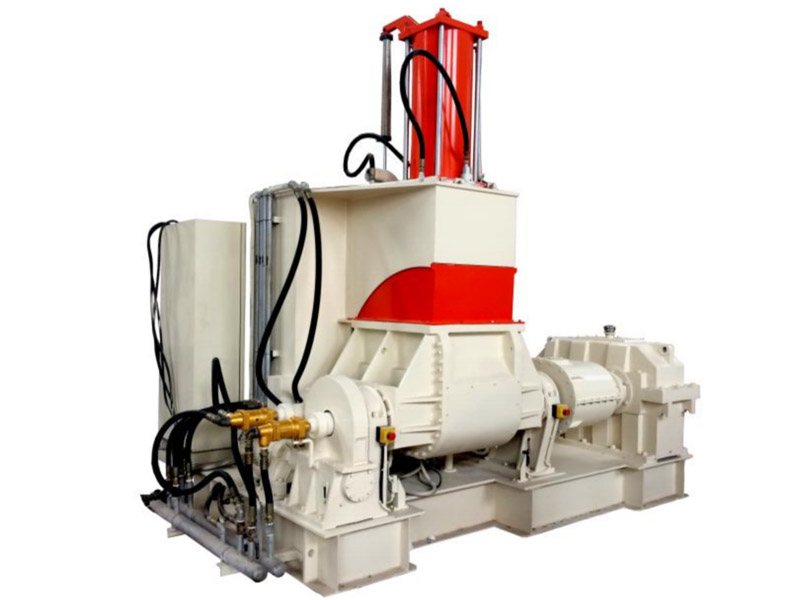
The earliest compounding operations relied on batch mixing equipment such as internal mixers and two-roll mills. These batch processes were labor-intensive, time-consuming, and produced inconsistent results. Each batch could vary significantly in quality, and production rates were limited by the batch size and cycle time.
In the 1950s and 1960s, single screw extruders began to be used for compounding applications. While single screw extruders provided continuous production and higher throughput rates, they had significant limitations in terms of mixing capability and process flexibility. Single screw extruders rely primarily on drag flow for conveying and melting material, providing minimal shear and mixing action. This made them unsuitable for processing complex formulations requiring uniform dispersion of additives, fillers, and reinforcements.
1.2 The Emergence of Twin Screw Extrusion
The development of the co-rotating intermeshing twin screw extruder in the 1960s and 1970s revolutionized the compounding industry. The Erdmenger profile, developed in Germany, introduced the self-wiping screw geometry that remains the basis for essentially all modern twin screw compounding systems today.
This innovative design provided several key advantages over previous technologies:
- Positive conveying of material regardless of viscosity
- Intense mixing and dispersion capabilities
- Self-cleaning action that prevents material buildup and degradation
- Modular design that allows for easy reconfiguration
- Multiple feeding and venting points along the barrel
These advantages made twin screw extruders ideal for processing the increasingly complex formulations being developed for advanced applications. As material science advanced and demand for high-performance plastics grew, twin screw extrusion technology became the industry standard for compounding operations.
1.3 Modern Compounding Requirements
Today’s compounding operations face unprecedented challenges and requirements that only twin screw extrusion technology can meet:
- Complex formulations with multiple additives, fillers, and reinforcements
- Precise control over material properties and consistency
- High production throughput and efficiency
- Flexibility to produce a wide range of products on a single line
- Energy efficiency and environmental sustainability
- Ability to process recycled and bio-based materials
- Integration with digital manufacturing and Industry 4.0 systems
These requirements have solidified the twin screw extruder’s position as the core equipment of modern compounding lines. No other technology can provide the combination of mixing capability, process flexibility, production efficiency, and quality consistency required for today’s advanced compounding operations.
2. Limitations of Traditional Compounding Technologies
To understand why twin screw extruders have become the core of modern compounding lines, it is essential to examine the limitations of traditional compounding technologies that they have replaced.
2.1 Batch Mixing Limitations
Batch mixing systems such as internal mixers and two-roll mills have several fundamental limitations that make them unsuitable for modern compounding operations:
- Low production rates and long cycle times
- Inconsistent product quality between batches
- High labor requirements
- High energy consumption per kilogram of product
- Limited ability to process heat-sensitive materials
- Difficult to automate and integrate into continuous production lines
- High material waste during cleaning and changeovers
While batch mixing is still used for some specialty applications with very small production volumes, it cannot compete with continuous twin screw extrusion for most commercial compounding operations.
2.2 Single Screw Extruder Limitations
Single screw extruders were a significant improvement over batch mixing systems, but they still have several critical limitations for compounding applications:
- Poor mixing and dispersion capabilities
- Limited ability to process high-viscosity materials and high-load formulations
- No self-cleaning action, leading to material buildup and degradation
- Limited process flexibility and difficult to reconfigure
- Only one feeding point at the hopper
- Limited venting capabilities
- Long residence times and broad residence time distribution
These limitations make single screw extruders suitable only for simple compounding applications with minimal mixing requirements. For complex formulations requiring uniform dispersion of additives, fillers, and reinforcements, single screw extruders simply cannot provide the necessary performance.
2.3 The Cost of Outdated Technology
Manufacturers still using traditional compounding technologies face significant competitive disadvantages:
- Higher production costs due to lower efficiency and higher labor requirements
- Inconsistent product quality leading to higher scrap rates and customer complaints
- Limited ability to develop and produce high-value advanced materials
- Longer changeover times reducing equipment utilization
- Higher energy consumption and environmental impact
- Difficulty meeting regulatory requirements for traceability and quality control
These disadvantages have driven the widespread adoption of twin screw extrusion technology in the compounding industry. Manufacturers that have not upgraded to modern twin screw compounding lines are finding it increasingly difficult to compete in today’s global market.
3. Key Technical Advantages of Twin Screw Extruders
The twin screw extruder’s rise to become the core equipment of modern compounding lines is based on several key technical advantages that no other compounding technology can match.
3.1 Superior Mixing and Dispersion Capabilities
The most significant advantage of twin screw extruders is their superior mixing and dispersion capabilities. Co-rotating intermeshing twin screws create a complex flow pattern that subjects the material to intense shear and elongational forces, breaking down agglomerates and uniformly distributing additives, fillers, and reinforcements throughout the polymer matrix.
Twin screw extruders provide precise control over both dispersive and distributive mixing:
- Dispersive mixing breaks down agglomerates into individual particles
- Distributive mixing uniformly distributes these particles throughout the polymer matrix
This level of control is achieved through the use of specialized screw elements such as kneading blocks, mixing discs, and reverse flight elements. The geometry, number, and arrangement of these elements can be customized to achieve the exact mixing intensity required for specific formulations. This allows material scientists to create complex composite systems with precisely tailored properties that were previously impossible to achieve with traditional technologies.
3.2 Positive Conveying and Self-Cleaning Action
Unlike single screw extruders, which rely on friction between the material and the barrel wall for conveying, twin screw extruders provide positive conveying action. The intermeshing screws form closed C-shaped chambers that move material forward regardless of its viscosity. This allows twin screw extruders to process a wide range of materials, from low-viscosity liquids to high-viscosity melts and highly filled compounds.
The intermeshing screw design also provides excellent self-cleaning action. As the screws rotate, they continuously wipe each other clean, preventing material from adhering to the screw surfaces and degrading over time. This eliminates dead zones where material can accumulate and degrade, ensuring consistent product quality and reducing the risk of contamination.
The self-cleaning action also significantly reduces cleaning time and material waste during product changeovers. This is particularly important for color masterbatch production and other applications where frequent product changes are required.
3.3 Modular Design and Maximum Flexibility
Modern twin screw extruders feature a fully modular design that allows for quick and easy reconfiguration to accommodate different formulations and processing requirements. Both the screw and barrel are composed of individual segments that can be easily replaced or rearranged to change the processing characteristics of the extruder.
This modular design provides several key benefits for modern compounding operations:
- Quick reconfiguration between different material classes
- Easy optimization of screw profiles for specific formulations
- Ability to add or remove processing zones as needed
- Simplified maintenance and reduced downtime
- Scalability from laboratory to production scale
- Extended equipment life through component replacement rather than full machine replacement
The modular design allows a single twin screw extruder to produce a wide range of products, from color masterbatches and filler masterbatches to engineering plastics and recycled materials. This flexibility is essential for modern compounding operations, which must be able to respond quickly to changing market demands and customer requirements.
3.4 Multi-Point Feeding and Process Integration
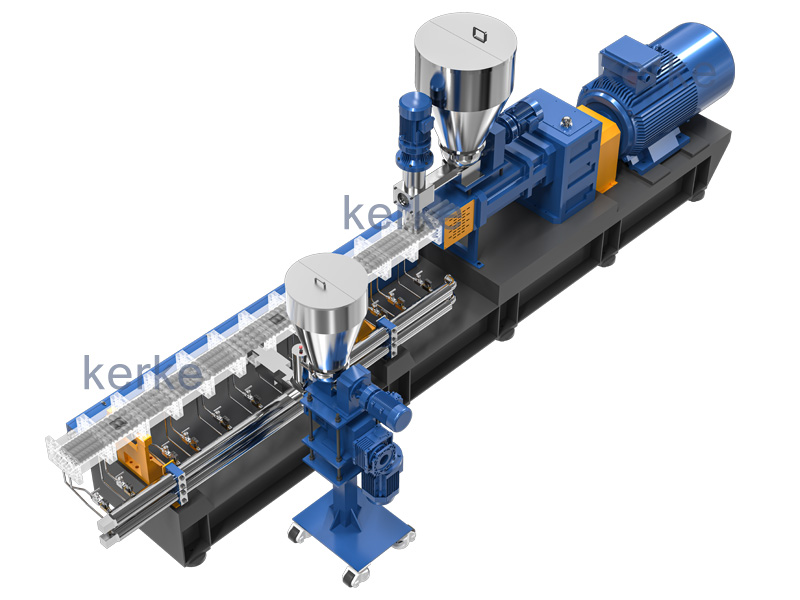
Twin screw extruders support multiple feeding points along the length of the barrel, allowing different components to be added at optimal points in the process. This is particularly important for developing advanced materials that contain heat-sensitive components, shear-sensitive reinforcements, or reactive additives.
For example:
- Polymer resins are typically added at the main feed throat
- Glass fibers and other reinforcing agents are added downstream after the polymer has melted, minimizing fiber breakage
- Liquid additives such as plasticizers, coupling agents, and reactive monomers are injected directly into the melt using precision metering pumps
- Heat-sensitive additives are added later in the process to minimize exposure to high temperatures
KERKE twin screw extruders can be equipped with up to 12 different feeding systems, including gravimetric loss-in-weight feeders for solid materials, precision liquid feeders, and side feeders for fillers and reinforcements. This allows compounders to develop complex multi-component formulations with precise control over composition and processing conditions.
3.5 Advanced Devolatilization Capabilities
Modern twin screw extruders provide excellent devolatilization capabilities, allowing for the removal of moisture, residual monomers, solvents, and other volatile components from the polymer melt. This is essential for producing high-quality materials with good mechanical properties and surface finish.
Multiple vent ports along the length of the barrel allow for staged devolatilization at different points in the process. Vacuum systems can achieve vacuum levels down to 1 mbar for efficient removal of even low-volatility components. The vent ports are designed with special geometry to prevent material from being drawn out of the extruder while still allowing volatile components to escape.
The devolatilization capabilities of twin screw extruders are particularly important for processing recycled materials, which often contain high levels of moisture and volatile contaminants. They are also essential for reaction extrusion processes, where volatile byproducts must be removed to drive the reaction to completion.
3.6 Precise Process Control and Monitoring
Modern twin screw extruders are equipped with advanced process control and monitoring systems that provide precise control over all processing parameters. These systems allow operators to precisely control temperature, pressure, torque, screw speed, feed rates, and vacuum level, ensuring consistent processing conditions batch after batch.
Comprehensive data logging capabilities record all process parameters throughout the production process, creating a detailed record of how processing conditions affect material properties. This allows compounders to establish clear relationships between process parameters and material performance, enabling faster formulation optimization and more reliable scale-up to production.
Advanced control systems also include features such as recipe management, automatic changeover, and predictive maintenance, further improving production efficiency and reducing downtime.
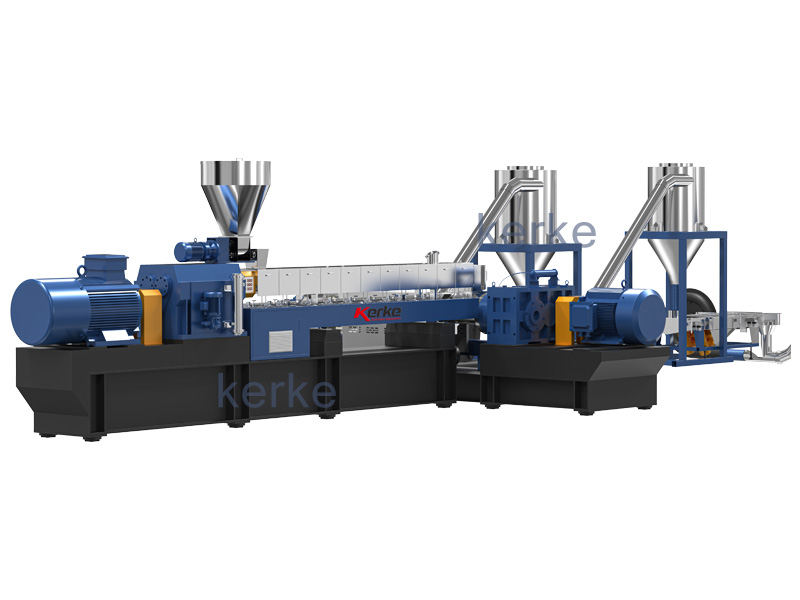
4. Modern Compounding Line Configuration with Twin Screw Extruder at the Core
A modern compounding line is an integrated system of equipment designed to transform raw materials into finished compound pellets efficiently and consistently. At the center of every modern compounding line lies the twin screw extruder, which coordinates and integrates all other equipment into a seamless production process.
4.1 Raw Material Handling and Feeding System
The raw material handling and feeding system is the first stage of the compounding line, responsible for accurately delivering the correct amounts of each component to the twin screw extruder. Modern compounding lines use gravimetric loss-in-weight feeders that provide accurate and consistent feeding of all components with an accuracy of ±0.5%.
The feeding system typically includes:
- Main feeder for polymer resin
- Multiple additive feeders for pigments, fillers, and additives
- Side feeders for glass fibers and other reinforcements
- Liquid feeders for plasticizers, coupling agents, and other liquid components
- Material storage and conveying systems
All feeders are integrated with the twin screw extruder’s control system, allowing for automatic adjustment of feed rates based on screw speed and process conditions. This ensures that the formulation remains consistent even during production rate changes, resulting in uniform product quality.
4.2 Twin Screw Extruder Processing Section
The twin screw extruder processing section is the heart of the compounding line, where the raw materials are melted, mixed, homogenized, and processed into a uniform melt. The processing section consists of the following main components:
- Gearbox and drive system
- Modular barrel segments with heating and cooling systems
- Modular screw elements mounted on splined shafts
- Multiple feeding ports
- Multiple vent ports for devolatilization
- Die head for forming the extrudate
The twin screw extruder performs several critical functions in sequence:
- Solid conveying: The raw materials are conveyed from the feed throat to the melting zone
- Melting and plasticization: The solid materials are melted and converted into a homogeneous melt
- Mixing and dispersion: The additives, fillers, and reinforcements are uniformly dispersed throughout the polymer matrix
- Devolatilization: Volatile components are removed from the melt
- Pressurization: The melt is pressurized for extrusion through the die head
The modular design of the twin screw extruder allows the processing section to be customized for specific applications and formulations. This ensures optimal processing conditions for each product, resulting in consistent quality and maximum production efficiency.
4.3 Melt Filtration System
The melt filtration system is located between the twin screw extruder and the pelletizing system, responsible for removing contaminants such as metal particles, unmelted material, and other impurities from the polymer melt. Effective filtration protects downstream equipment and ensures high product quality, especially in applications such as film extrusion and injection molding where even small contaminants can cause defects.
Modern compounding lines typically use continuous screen changers that automatically replace the filter screen without interrupting production. These continuous screen changers use a rotating or sliding mechanism to introduce a clean screen into the melt stream while removing the contaminated screen, ensuring uninterrupted production and consistent filtration quality.
For applications requiring very high filtration levels, such as medical-grade compounds and optical materials, high-efficiency melt filters with filtration ratings down to 50 microns or finer are used.
4.4 Pelletizing System
The pelletizing system converts the molten polymer extrudate into uniform pellets that are easy to handle, transport, and use in downstream manufacturing processes. There are three main types of pelletizing systems used in modern compounding lines:
- Strand pelletizing: The extrudate is formed into strands, cooled in a water bath, and cut into pellets
- Water ring pelletizing: The extrudate is cut into pellets as it exits the die head and is immediately cooled by a ring of water
- Underwater pelletizing: The extrudate is cut into pellets underwater, providing rapid cooling and spherical pellets
The choice of pelletizing system depends on the material being processed and the desired pellet characteristics. KERKE offers all three types of pelletizing systems integrated with our twin screw extruders, ensuring optimal performance for each application.
4.5 Post-Processing and Packaging System
After pelletizing, the pellets go through several post-processing steps before packaging:
- Drying: Removes moisture from the pellets
- Cooling: Further cools the pellets to room temperature
- Sieving: Removes oversized and undersized pellets
- Classification: Separates pellets by size if required
The finished pellets are then packaged into bags, boxes, or bulk containers for shipment to customers. Modern compounding lines use automated packaging systems that weigh, fill, seal, and label the packages automatically, reducing labor requirements and improving accuracy.
4.6 Integrated Control and Automation System
The entire compounding line is controlled by an integrated control and automation system that coordinates the operation of all equipment from raw material feeding to finished product packaging. The control system provides real-time monitoring and control of all process parameters, ensuring consistent product quality and maximum production efficiency.
Modern control systems include features such as:
- Recipe management for storing and recalling product parameters
- Automatic changeover between products
- Comprehensive data logging and reporting
- Alarm and safety systems
- Remote monitoring and control capabilities
- Integration with ERP and MES systems
The integrated control system makes the twin screw extruder the central nervous system of the entire compounding line, coordinating all operations and ensuring seamless production.
5. KERKE Twin Screw Extruder Technology Advantages
KERKE twin screw extruders are specifically designed to serve as the core of modern compounding lines, incorporating numerous advanced technologies and design features that provide superior performance, reliability, and value.
5.1 High Torque Density Gearbox Design
Torque density is one of the most important specifications for a twin screw extruder, as it determines the machine’s ability to process high-viscosity materials and high-load formulations. Higher torque density allows for higher throughput rates and better processing of difficult materials at lower screw speeds, reducing wear and extending equipment life.
KERKE KTE series twin screw extruders are available with torque densities ranging from 8 Nm/cm³ to 16 Nm/cm³, depending on the model and application. Our high-torque D series extruders feature torque densities up to 16 Nm/cm³, which is among the highest in the industry. This high torque density is achieved through advanced gearbox design, high-quality materials, and precision manufacturing techniques.
KERKE gearboxes are designed and manufactured to the highest German standards. They feature high-precision helical gears that are case-hardened and ground to ensure smooth, quiet operation and maximum power transfer. The gears are supported by oversized, high-capacity bearings from SKF and FAG that are rated for a minimum service life of 100,000 hours under normal operating conditions. KERKE gearboxes are backed by a 3-year warranty, demonstrating our confidence in their durability and reliability.
5.2 Modular Design and Customization
KERKE twin screw extruders feature a fully modular design that allows for maximum flexibility and customization. Both the screw and barrel are composed of individual segments that can be easily replaced or rearranged to optimize the extruder for different applications and formulations.
We offer an extensive library of over 50 different screw elements designed for specific mixing requirements, including conveying elements, kneading blocks, mixing discs, and reverse flight elements. Our engineers work closely with customers to develop customized screw profiles that optimize mixing while minimizing thermal degradation and fiber breakage.
The barrel is also composed of individual segments, each equipped with its own heating and cooling system. This allows for precise temperature control along the length of the extruder, with up to 12 independent temperature zones available on larger models. The barrel segments can be easily removed for cleaning, maintenance, or replacement, and additional segments can be added to increase the length-to-diameter (L/D) ratio if required.
5.3 Advanced Wear and Corrosion Protection
KERKE addresses the issue of wear and corrosion in compounding operations through the use of advanced materials and surface treatment technologies that provide exceptional protection and extend equipment life.
Our standard barrels are manufactured from high-quality alloy steel and lined with a bimetallic alloy that combines excellent wear resistance with good thermal conductivity. The bimetallic lining is centrifugally cast to ensure uniform thickness and perfect bonding to the base steel, providing a wear-resistant surface that is 3-5 times more durable than standard nitrided steel.
Our standard screw elements are made from high-speed tool steel and nitrided for improved wear resistance. For more abrasive applications, we offer screw elements coated with tungsten carbide using a high-velocity oxygen fuel (HVOF) process. This coating provides up to 10 times the wear resistance of standard nitrided elements, making it ideal for processing highly filled compounds and abrasive materials. For corrosive applications, we offer special corrosion-resistant alloys and coatings that protect against chemical attack.
5.4 Energy-Efficient Design Features
KERKE twin screw extruders are designed with energy efficiency as a top priority, incorporating numerous features that reduce energy consumption and minimize environmental impact.
One of the most significant energy-saving features of KERKE extruders is our advanced electromagnetic heating system. Unlike traditional resistance heating elements, which heat the barrel from the outside through conduction, electromagnetic heating generates heat directly within the barrel wall. This results in faster heating, more uniform temperature distribution, and 30-50% higher energy efficiency than traditional heating systems.
KERKE extruders also feature high-efficiency IE4-rated motors and variable frequency drives that adjust motor speed based on actual load requirements, reducing energy consumption during partial load operation. Our heat recovery systems capture waste heat from the extruder barrel and gearbox, which can be used to preheat raw materials, heat the facility, or generate hot water for other processes. This can reduce overall energy consumption by an additional 20-30%.
5.5 Intelligent Control and Automation
KERKE twin screw extruders are equipped with an advanced intelligent control system that provides precise process control, comprehensive monitoring, and advanced automation capabilities.
The control system features a user-friendly touchscreen interface that provides real-time monitoring of all key process parameters, including temperature, pressure, torque, screw speed, feed rates, and vacuum level. It includes comprehensive alarm and safety features that automatically shut down the extruder in the event of abnormal conditions, preventing equipment damage and ensuring operator safety.
The system includes built-in recipe management capabilities that allow operators to store and recall hundreds of different product recipes. This ensures that all process parameters are set correctly for each product, eliminating human error and reducing changeover time. When changing from one product to another, the system automatically adjusts all process parameters, allowing for quick and seamless changeovers.
For advanced process optimization, KERKE offers optional online quality monitoring systems that use near-infrared (NIR) spectroscopy to measure the composition and properties of the melt in real-time. These systems can detect variations in additive concentration, polymer composition, and melt properties, allowing the control system to automatically adjust process parameters to maintain consistent product quality.
5.6 Scalable Platform from Lab to Production
One of the biggest challenges in compounding is scaling from laboratory to production scale without changing material properties. KERKE addresses this challenge with a scalable platform of extruders that maintain identical processing characteristics across all sizes, from laboratory-scale machines to large production-scale extruders.
KERKE offers a complete range of extruder sizes with screw diameters ranging from 20 mm to 135 mm. All KERKE extruders use the same screw geometry, L/D ratios, and control system, ensuring that processing conditions developed on a laboratory-scale machine can be directly scaled to production. This eliminates the need for extensive re-optimization during scale-up, significantly reducing development time and costs.
The KTE-20 laboratory extruder has a screw diameter of 20 mm and a throughput capacity of 5-20 kg/h, making it ideal for formulation development and small-scale testing. The KTE-35 pilot-scale extruder has a throughput capacity of 50-150 kg/h, bridging the gap between laboratory and production. Production-scale extruders range from the KTE-50 with a throughput of 200-500 kg/h to the KTE-135 with a throughput of up to 10,000 kg/h.
6. Cost Analysis and Return on Investment
Investing in a modern compounding line built around a KERKE twin screw extruder provides a rapid return on investment through higher production efficiency, lower operating costs, and the ability to produce high-value materials with higher profit margins.
6.1 Initial Investment Comparison
The following comparison shows the initial investment for a traditional single screw compounding line versus a modern twin screw compounding line with a KERKE KTE-65 extruder, both with a production capacity of 500 kg/h:
Traditional single screw compounding line:
- Single screw extruder: $80,000 – $120,000
- Pre-mixer: $30,000 – $50,000
- Cooling and pelletizing system: $20,000 – $40,000
- Material handling equipment: $15,000 – $30,000
- Control system: $10,000 – $20,000
- Installation and commissioning: $15,000 – $25,000
- Training and documentation: $5,000 – $10,000
Total initial investment: $175,000 – $295,000
KERKE KTE-65 twin screw compounding line:
- Twin screw extruder main unit: $100,000 – $150,000
- Gravimetric feeding system: $25,000 – $40,000
- Filtration system: $10,000 – $20,000
- Pelletizing system: $20,000 – $40,000
- Control system: $15,000 – $25,000
- Installation and commissioning: $20,000 – $35,000
- Training and documentation: $5,000 – $10,000
Total initial investment: $195,000 – $320,000
As this comparison shows, the initial investment for a modern twin screw compounding line is slightly higher than that of a traditional single screw line. However, the twin screw line eliminates the need for a separate pre-mixer and provides significantly higher performance and cost savings over the long term.
6.2 Annual Operating Cost Comparison
The following comparison is based on 24 hours per day, 300 days per year operation producing polypropylene compounds with 30% glass fiber reinforcement:
Traditional single screw compounding line:
- Raw material costs: $12,600,000 per year ($1.75/kg × 7,200,000 kg)
- Energy costs: $297,000 per year (0.275 kWh/kg × 7,200,000 kg × $0.15/kWh)
- Labor costs: $630,000 per year (3.5 operators × 24 hours/day × 300 days/year × $25/hour)
- Maintenance costs: $18,000 per year (6% of initial investment)
- Waste costs: $945,000 per year (7.5% × 7,200,000 kg × $1.75/kg)
- Overhead costs: $360,000 per year
Total annual operating costs: $14,850,000
KERKE KTE-65 twin screw compounding line:
- Raw material costs: $11,340,000 per year (20% additive reduction × $1.75/kg × 7,200,000 kg)
- Energy costs: $140,400 per year (0.13 kWh/kg × 7,200,000 kg × $0.15/kWh)
- Labor costs: $270,000 per year (1.5 operators × 24 hours/day × 300 days/year × $25/hour)
- Maintenance costs: $10,300 per year (3.5% of initial investment)
- Waste costs: $252,000 per year (2% × 7,200,000 kg × $1.75/kg)
- Overhead costs: $240,000 per year
Total annual operating costs: $12,252,700
Annual cost savings with KERKE twin screw compounding line: $14,850,000 – $12,252,700 = $2,597,300
This comparison clearly demonstrates the significant operating cost savings provided by a modern twin screw compounding line built around a KERKE extruder. The largest savings come from reduced raw material costs due to improved dispersion, followed by reduced waste costs and labor costs.
6.3 Production Capacity and Revenue Comparison
In addition to lower operating costs, a modern twin screw compounding line also provides higher production capacity and improved product quality, resulting in higher revenue and profit margins:
Traditional single screw compounding line:
- Annual production capacity: 7,200 tons per year
- Average selling price: $2.25 per kg
- Annual revenue: $16,200,000 per year
- Annual operating costs: $14,850,000 per year
- Annual gross profit: $1,350,000 per year
KERKE KTE-65 twin screw compounding line:
- Annual production capacity: 7,200 tons per year
- Average selling price: $2.35 per kg (5% premium for higher quality)
- Annual revenue: $16,920,000 per year
- Annual operating costs: $12,252,700 per year
- Annual gross profit: $4,667,300 per year
Additional annual profit with KERKE twin screw compounding line: $4,667,300 – $1,350,000 = $3,317,300
The KERKE twin screw line provides a 246% increase in annual gross profit compared to the traditional single screw line. This is due to both lower operating costs and higher revenue from improved product quality and higher selling prices.
6.4 Return on Investment Calculation
Using the figures from the previous sections, we can calculate the return on investment (ROI) for the KERKE KTE-65 twin screw compounding line. The total initial investment is approximately $257,500 (midpoint of the range), and the annual cost savings are $2,597,300.
Payback period based on cost savings alone = Total initial investment ÷ Annual cost savings = $257,500 ÷ $2,597,300 = 0.10 years (approximately 36 days)
When considering the additional profit from higher revenue and improved product quality, the payback period is even shorter:
Total annual benefit = Annual cost savings + Additional annual profit = $2,597,300 + $3,317,300 = $5,914,600
Payback period including additional revenue = $257,500 ÷ $5,914,600 = 0.04 years (approximately 15 days)
Over the 20-year service life of the KERKE extruder, the total profit would be:
Total profit over 20 years = ($4,667,300 × 20) – $257,500 = $93,088,500
This represents a return on investment of over 36,000% over the life of the equipment, making a modern compounding line built around a KERKE twin screw extruder one of the most profitable investments a compounding manufacturer can make.
7. Real-World Case Studies
The following case studies demonstrate how KERKE twin screw extruders have become the core equipment of modern compounding lines for manufacturers around the world, helping them improve efficiency, reduce costs, and increase profitability.
7.1 Case Study 1: Automotive Compound Manufacturer in Germany
A leading automotive compound manufacturer in Germany was operating three older single screw extruders with separate pre-mixing equipment. The company was struggling to meet the growing demand for high-quality automotive compounds with consistent properties. Their existing equipment had limited mixing capabilities, resulting in inconsistent product quality and high scrap rates. They were also experiencing long changeover times between different products, limiting their ability to respond quickly to customer orders.
The company decided to replace the three older single screw extruders with two KERKE KTE-75 twin screw extruders specifically designed for automotive compound production. The new extruders featured high-torque gearboxes, wear-resistant screw and barrel components, and advanced control systems with recipe management capabilities.
Results after implementation:
- Total production capacity increased by 40% from 2,000 kg/h to 2,800 kg/h
- Product quality consistency improved significantly
- Scrap rate reduced from 6% to 1.2%
- Changeover time reduced from 8-12 hours to 1-2 hours
- Energy consumption reduced by 35%
- Labor requirements reduced by 60% from 9 operators to 3-4 operators per shift
- Total annual cost savings: $1.2 million
- Payback period: 1.8 months
The KERKE extruders have been operating reliably for over 7 years with no major issues. The company estimates that the extruders will provide at least 15-20 years of service, resulting in total savings of over $20 million over their life cycle. The improved product quality and production flexibility have also allowed the company to secure several large contracts with major European automakers, significantly increasing their market share.
7.2 Case Study 2: Masterbatch Producer in India
A masterbatch producer in India was experiencing rapid growth in demand for their color and additive masterbatches. Their existing single screw extruders were unable to keep up with demand, and they were struggling to maintain consistent color quality. They were also limited in their ability to produce high-concentration masterbatches due to the poor mixing capabilities of their single screw extruders.
The company invested in three KERKE KTE-65 twin screw extruders for their new production facility. The extruders were equipped with advanced gravimetric feeding systems, continuous screen changers, and underwater pelletizing systems to ensure high-quality production.
Results after implementation:
- Total production capacity increased by 150% from 1,200 kg/h to 3,000 kg/h
- Pigment requirements reduced by 25% due to improved dispersion
- Raw material costs reduced by $850,000 per year
- Color consistency improved significantly
- Scrap rate reduced from 7% to 1.5%
- Changeover time reduced from 6-8 hours to 1-2 hours
- Energy consumption reduced by 40%
- Total annual cost savings: $1.5 million
- Payback period: 2.1 months
The success of this project has allowed the company to become one of the leading masterbatch producers in India. They have since expanded their production facility and added three more KERKE extruders to meet the growing demand for their products.
7.3 Case Study 3: Recycled Plastic Compounder in Brazil
A recycled plastic compounder in Brazil wanted to upgrade their production facility to produce higher-quality recycled compounds for use in packaging and consumer goods applications. Their existing equipment was unable to remove contaminants and volatile components effectively, resulting in poor product quality and limited market opportunities.
The company invested in a KERKE KTE-95 twin screw extruder with advanced filtration and devolatilization systems. The extruder was equipped with multiple vent ports for efficient devolatilization and a continuous screen changer for removing contaminants without interrupting production.
Results after implementation:
- Successfully produced high-quality recycled compounds suitable for packaging applications
- Production capacity increased by 70% from 800 kg/h to 1,360 kg/h
- Removed over 99% of contaminants from the recycled material
- Product quality improved significantly, allowing the company to sell their compounds at a 25% premium
- Scrap rate reduced from 10% to 2%
- Energy consumption reduced by 32%
- Total annual cost savings: $950,000
- Payback period: 2.4 months
The success of this project has allowed the company to expand their recycled plastic operations and become a leading supplier of high-quality recycled compounds in Brazil. They have since ordered two additional KERKE extruders to meet the growing demand for sustainable plastic materials.
8. Future Trends in Compounding Technology
The compounding industry is continuously evolving, driven by technological advancements, changing market demands, and environmental regulations. The twin screw extruder will remain at the core of modern compounding lines, with several key trends shaping the future of the industry.
8.1 Digitalization and Industry 4.0 Integration
Digitalization and Industry 4.0 are transforming manufacturing operations around the world, and the compounding industry is no exception. Future twin screw extruders will be fully integrated into digital manufacturing ecosystems, featuring advanced sensors, artificial intelligence, and machine learning capabilities that enable autonomous operation and continuous process optimization.
KERKE is at the forefront of this digital transformation, developing intelligent extruder systems that can self-optimize process parameters in real-time based on raw material properties and product requirements. Our digital twin technology creates a virtual replica of the extruder and production process, allowing for virtual testing of new formulations and process parameters before implementation on the actual machine. This reduces development time and costs while minimizing the risk of production issues.
Advanced data analytics and machine learning algorithms will also enable predictive maintenance, where the system can detect early signs of component wear or failure and schedule maintenance before a breakdown occurs. This will further reduce downtime and extend the service life of the equipment, improving overall production efficiency and profitability.
8.2 Sustainable and Circular Economy Solutions
Sustainability and the circular economy are becoming increasingly important drivers of innovation in the compounding industry. Manufacturers are under growing pressure to reduce their environmental impact and increase the use of recycled materials in their products. Twin screw extrusion technology is ideally suited for processing recycled plastics and producing sustainable compounds, enabling the transition to a circular economy.
KERKE is committed to developing sustainable compounding solutions, including advanced extruders for processing post-consumer and post-industrial plastic waste, biodegradable polymers, and bio-based materials. Our extruders are designed to handle highly contaminated recycled materials, producing high-quality compounds that can replace virgin plastics in a wide range of applications. We are also developing energy-efficient and carbon-neutral production processes to help our customers reduce their carbon footprint and meet their sustainability goals.
In the future, we will see increased integration of chemical recycling technologies with twin screw extrusion, enabling the production of high-quality recycled plastics from even the most contaminated waste streams. This will further expand the range of applications for recycled plastics and accelerate the transition to a circular economy.
8.3 Advanced Material Development
The demand for advanced plastic materials with precisely engineered properties will continue to grow, driven by applications in electric vehicles, renewable energy, medical devices, and aerospace. Twin screw extrusion technology will play a central role in developing these advanced materials, enabling the production of complex composite systems with tailored properties.
Future developments will include advanced mixing technologies for processing nanocomposites, graphene-reinforced materials, and other advanced filler systems. Twin screw extruders will also be increasingly used for reaction extrusion processes, enabling the production of chemically modified polymers with unique properties.
KERKE is continuously developing new technologies and design features to support the development of advanced materials. Our high-torque extruders, specialized screw profiles, and precise process control systems enable material scientists to develop innovative materials that were previously impossible to produce at commercial scale.
8.4 Integrated Manufacturing Solutions
The plastics industry will continue to move toward integrated manufacturing solutions, with compounding extruders integrated directly into downstream manufacturing operations such as injection molding, film extrusion, and thermoforming. This will eliminate intermediate steps, reducing costs, energy consumption, and material waste.
KERKE is developing integrated manufacturing solutions that combine compounding extrusion with downstream processing, enabling the production of finished parts directly from raw materials in a single continuous process. This will significantly improve production efficiency and reduce the environmental impact of plastic manufacturing.
9. Conclusion
The twin screw extruder has firmly established itself as the core equipment of modern compounding lines, replacing traditional batch mixing and single screw extrusion technologies. Its superior mixing capabilities, process flexibility, production efficiency, and quality consistency make it the only technology capable of meeting the demanding requirements of today’s advanced compounding operations.
Modern compounding lines built around twin screw extruders provide significant advantages over traditional systems, including lower operating costs, higher production capacity, improved product quality, and greater flexibility. These advantages translate into higher profitability and competitive advantage for compounding manufacturers.
KERKE twin screw extruders incorporate advanced German engineering, modular design, high torque density, and intelligent control systems that provide superior performance and reliability. Our scalable platform from laboratory to production scale ensures that materials developed in the lab can be directly scaled to commercial production without changes in properties, significantly reducing development time and costs.
The detailed cost analysis and case studies presented in this guide demonstrate that investing in a modern compounding line built around a KERKE twin screw extruder provides one of the highest returns on investment in the manufacturing industry. With payback periods as short as 15 days and total returns exceeding 36,000% over the 20-year service life of the equipment, a KERKE twin screw extruder is a strategic investment that will drive growth and profitability for decades to come.
As the compounding industry continues to evolve, twin screw extrusion technology will remain at the forefront of innovation, enabling the development of sustainable, high-performance materials that meet the challenges of the 21st century. With KERKE as your partner, you can be confident that you have the most advanced, reliable, and cost-effective compounding solution available to build a successful modern compounding operation.
If you are looking to build a modern compounding line or upgrade your existing equipment with advanced twin screw extrusion technology, contact KERKE today to schedule a free consultation. Our experienced team will work with you to develop a customized solution that meets your specific requirements and helps you achieve your production and business goals.