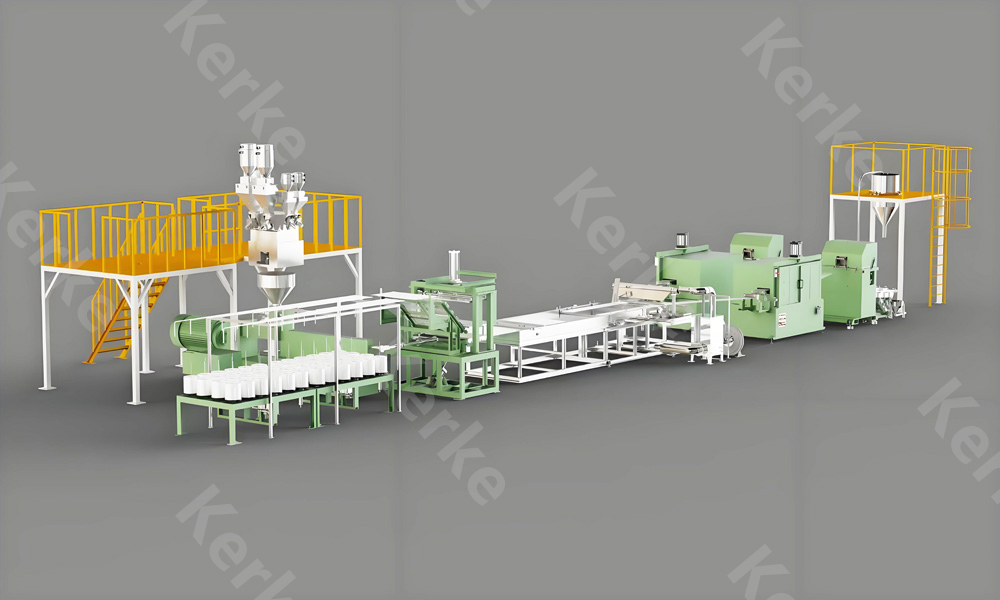
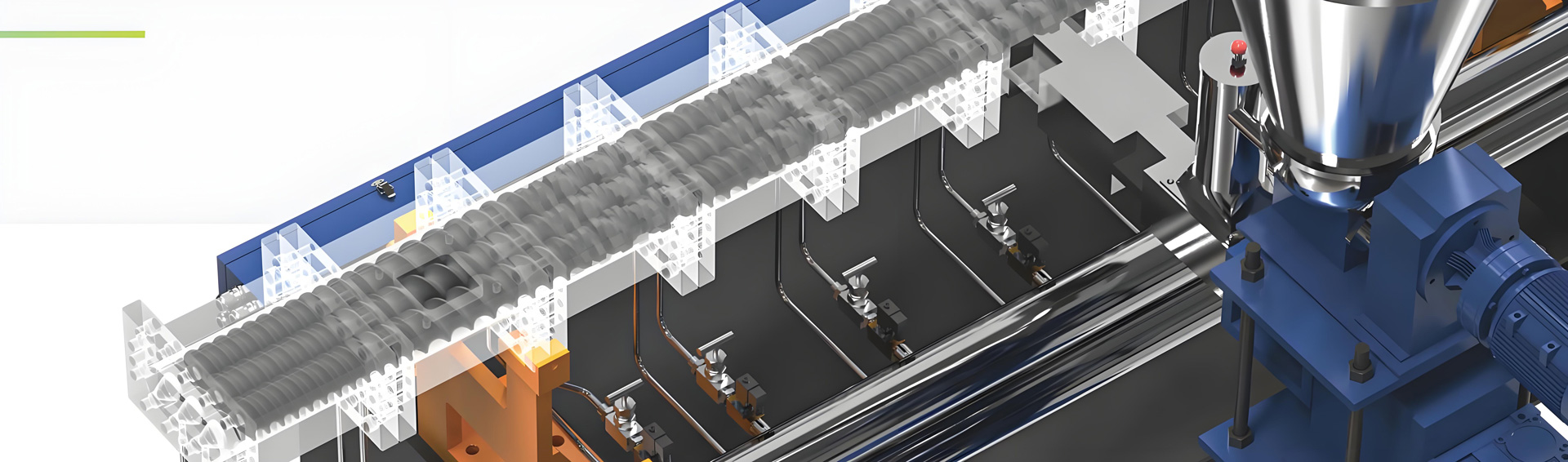
As one of the most widely used inorganic filling materials in plastic processing, calcium carbonate filler masterbatch is widely used in the production of various plastic products such as polyethylene and polypropylene due to its advantages of low cost and significant modification effect. It can effectively reduce raw material costs and improve the rigidity and heat resistance of products. However, its production process involves multiple links such as raw material pretreatment, mixing, melt extrusion, and granulation. Affected by various factors such as raw material properties, equipment parameters, and process control, various quality and production efficiency problems are likely to occur. Combined with practical production experience, this paper systematically analyzes the core problems and proposes targeted solutions to help enterprises achieve stable production and improve product quality.
I. Common Problems and Solutions in Raw Material Pretreatment Link
Raw material pretreatment is the foundation to ensure the quality of calcium carbonate filler masterbatch. The core raw materials include calcium carbonate powder (heavy, light or nano-grade), carrier resin (PE, PP, etc.), and additives (coupling agents, dispersants, lubricants, etc.). The problems in this link are mainly concentrated in three categories: calcium carbonate agglomeration, improper additive compatibility, and excessive raw material impurities.
(I) Core Problem 1: Calcium Carbonate Powder Agglomeration
Problem Performance
Due to its strong surface polarity and large specific surface area, calcium carbonate powder (especially light calcium carbonate and nano-calcium carbonate) is prone to absorb moisture and agglomerate, forming hard agglomerated particles with large particle sizes. If the pretreatment is not thorough, it is difficult to disperse in the subsequent mixing and extrusion processes, resulting in hard lumps inside the masterbatch, and easily causing surface defects and decreased mechanical properties when processing products. For film-grade masterbatch, agglomerated particles may also cause quality accidents such as film breakage and poor light transmittance, especially when the particle size of agglomerated particles exceeds the film thickness (usually less than 10μm), the impact is more significant.
Cause Analysis
1. Intrinsic properties of calcium carbonate powder: Light calcium carbonate and nano-calcium carbonate have high surface hydroxyl content and strong intermolecular forces, which are prone to agglomeration; if the grinding fineness of heavy calcium carbonate is insufficient (such as less than 800 mesh) or impurities are mixed during the grinding process, local agglomeration may also occur.
2. Improper storage environment: Calcium carbonate powder is highly hygroscopic. If the humidity of the storage environment exceeds 60%, the powder is prone to absorb moisture and agglomerate, exacerbating the agglomeration phenomenon.
3. Lack of effective surface activation: Failure to modify the surface of calcium carbonate with coupling agents or dispersants, the hydrophilicity of the powder surface is not converted to lipophilicity, resulting in poor compatibility with the carrier resin and easy re-agglomeration during the mixing process. In addition, if the calcium carbonate has been treated with stearic acid, subsequent treatment with titanate coupling agents will reduce the coupling effect and may also lead to agglomeration problems.
Solutions
1. Optimize storage conditions: Store calcium carbonate powder in a dry and ventilated warehouse, control the environmental humidity ≤ 50%, and the stacking height of the powder shall not exceed 2 meters to avoid extrusion and agglomeration; seal the opened powder in time to prevent moisture absorption.
2. Powder pretreatment: For severely agglomerated powder, first use a high-speed mixer for pre-dispersion at a rotating speed of 800-1200r/min for 5-10min to break up loose surface agglomerates; if the powder is severely moisture-absorbing, 0.5%-1% desiccant (such as anhydrous calcium chloride) can be added during pre-dispersion, or dried in an oven at 80-100℃ for 2-3h in advance to remove moisture.
3. Surface activation treatment: Select a suitable coupling agent according to the type of calcium carbonate. Preferentially use aluminate coupling agent (powder form, dosage is about 1% of the powder), which has excellent effect and no peculiar smell; if compatibility needs to be improved, it can be used in combination with titanate coupling agent, but attention should be paid to avoiding conflict with stearic acid-treated powder. During activation treatment, dilute the coupling agent (diluted 1:1 with absolute ethanol), evenly spray it into the high-speed stirring calcium carbonate powder, control the stirring temperature at 80-100℃ for 10-15min, ensure that the coupling agent uniformly coats the powder surface and converts its surface polarity. For calcium carbonate with high oil absorption value (such as oil absorption value increased from 40ml/100mg to 50ml/100mg), the dosage of coupling agent needs to be increased by 30% to ensure the activation effect.
4. Reasonably select powder specifications: For film-grade masterbatch, 1250-mesh heavy calcium carbonate is preferred, whose maximum particle size does not exceed 10μm, which can balance performance, cost and processing difficulty; for ordinary plastic product masterbatch, 800-1000-mesh heavy calcium carbonate can be selected to reduce production cost and reduce agglomeration risk. Nano-calcium carbonate needs to be matched with high-efficiency dispersants, and its dosage should not be too high (no more than 30% of the total mass) to avoid aggravated agglomeration.
(II) Core Problem 2: Improper Additive Compatibility
Problem Performance
Unreasonable selection or dosage of additives (coupling agents, dispersants, lubricants, etc.) leads to problems such as uneven dispersion of masterbatch, poor melt fluidity, rough surface, and decreased subsequent processing performance. For example, excessive lubricant will cause screw slippage, reduced output, and also affect the printability and heat-sealing performance of film products; insufficient lubricant will cause excessive friction between materials and equipment, leading to difficult extrusion and scratches on the masterbatch surface.
Cause Analysis
1. Mismatch between additive type and carrier resin: Different carrier resins correspond to different types of additives. For example, PE-based carriers need to use PE wax or PP wax, PP-based carriers prefer PP wax, and medium-polarity resins (such as PS, ABS) need to use oxidized polyethylene wax. Choosing the wrong type will lead to additive failure.
2. Imbalanced additive dosage: Insufficient coupling agent dosage results in insufficient activation of calcium carbonate; excessive dosage leads to sticky masterbatch and decreased mechanical properties. Insufficient dispersant dosage causes uneven powder dispersion; excessive dosage affects the compatibility between masterbatch and matrix resin. Improper matching of internal and external lubricants will lead to processing difficulties or surface defects of products.
3. Substandard additive quality: Using low-quality coupling agents (such as insufficient purity) results in poor activation effect; dispersant wax with low molecular weight (less than 3000) and melting point lower than 110℃ will lead to poor dispersion effect, and it is easy to volatilize at the machine head, producing smoke.
Solutions
1. Precisely match additives with carrier resin: For PE carrier masterbatch, use PE wax (molecular weight about 5000, melting point 110-120℃) as dispersant, zinc stearate as internal lubricant, and paraffin as external lubricant; for PP carrier masterbatch, use PP wax as dispersant and EBS as lubricant. For polar resins (such as PC, PET), use EVA wax as dispersant.
2. Control the additive dosage range (based on total mass): Coupling agent 0.8%-1.5% (about 1% of the powder dosage), dispersant 1%-3%, lubricant 0.5%-2% (ratio of internal to external lubricant is about 1:1.5). The dosage of lubricant for heavy calcium carbonate can be appropriately reduced, while for light calcium carbonate, due to its high oil absorption value and poor fluidity, the dosage of internal and external lubricants needs to be increased. If it is necessary to improve the surface brightness of the masterbatch, 1 part of white oil or 1-2 parts of paraffin can be added.
3. Select high-quality additives: Choose aluminate or titanate coupling agents with purity ≥ 98%; select dispersant wax with molecular weight about 5000 and melting point 110-120℃, and avoid inferior products mixed with low-molecular-weight paraffin.
4. Optimize the additive addition sequence: In the high-speed mixer, first add calcium carbonate powder, stir and preheat to 80℃ at high speed, add coupling agent for activation for 10-15min, then add dispersant and lubricant, and finally add carrier resin to ensure uniform dispersion of additives and avoid local excessive concentration.
(III) Core Problem 3: Excessive Raw Material Impurities
Problem Performance
Mixing of metal impurities (such as iron filings), sediment, plastic impurities, etc. in raw materials leads to black spots and hard lumps on the masterbatch surface, wears equipment (such as screws and barrels) during extrusion, and even clogs the die head, affecting production continuity and product quality.
Cause Analysis
1. Sediment and metal impurities are mixed during the production of calcium carbonate powder without filtration and purification.
2. Impurities and metal fragments are mixed in the recycled carrier resin.
3. During the storage and transportation of raw materials, iron filings are generated due to friction with metal equipment, or impurities from the environment are mixed in.
Solutions
1. Raw material screening: Before warehousing, screen calcium carbonate powder with a vibrating screen (screen mesh 120-150 mesh) to remove large-particle impurities; use a magnetic separator to remove metal impurities from carrier resin (especially recycled materials), and then screen to remove plastic impurities.
2. Equipment protection: Install magnetic separation devices at the raw material conveying pipeline and the feed inlet of the high-speed mixer to adsorb metal impurities; regularly clean raw material storage tanks and conveying equipment to avoid impurity accumulation.
3. Strengthen raw material inspection: Establish a raw material warehousing inspection system, conduct random inspections on each batch of raw materials, and prohibit warehousing and use of raw materials with excessive impurity content (> 0.1%).
II. Common Problems and Solutions in Mixing Link
The mixing link is the process of uniformly mixing the pretreated calcium carbonate, carrier resin and additives to form a uniform mixture. The core equipment is a high-speed mixer. Common problems include uneven mixing, mixture agglomeration, and excessively high or low mixing temperature.
(I) Core Problem 1: Uneven Mixing
Problem Performance
The uneven distribution of calcium carbonate, carrier resin and additives in the mixture, with excessive calcium carbonate concentration in some areas and additive accumulation in other areas, leads to uneven color and luster, large density fluctuation of the subsequently extruded masterbatch, and easy occurrence of surface color difference and unstable mechanical properties when processing products. For high-filling masterbatch, uneven mixing will also lead to feeding difficulties and extrusion pressure fluctuation.
Cause Analysis
1. Unreasonable mixing parameters: Too low stirring speed (< 800r/min) results in insufficient force on materials and difficulty in uniform dispersion; too short mixing time (< 15min) results in insufficient mixing of materials; improper mixing sequence leads to insufficient contact between additives and powder.
2. Imbalanced material ratio: Excessively high calcium carbonate filling amount (such as more than 85%) makes it impossible for the carrier resin to fully coat the powder, leading to powder agglomeration and difficulty in dispersion; insufficient carrier resin dosage results in poor fluidity of the mixture and increased mixing difficulty.
3. High-speed mixer equipment problems: Severe wear of the mixer blades leads to insufficient stirring force; unreasonable blade angle results in poor material circulation and mixing dead angles; material accumulation on the inner wall of the equipment, if not cleaned in time, affects the mixing effect.
Solutions
1. Optimize mixing parameters: Control the stirring speed at 1000-1500r/min, mixing time at 20-30min, and mixing temperature at 80-100℃ (to ensure sufficient activation of coupling agents and uniform dispersion of additives). For high-filling masterbatch (calcium carbonate 75%-85%), the mixing time can be appropriately extended to 30-40min to improve the dispersion effect.
2. Reasonably control the ratio: According to the coating capacity of the carrier resin, control the calcium carbonate filling amount. The weight ratio of calcium carbonate in film-grade masterbatch should not exceed 80%, and the weight ratio of carrier resin should not be less than 13%; the calcium carbonate filling amount in ordinary masterbatch is controlled at 50%-70% to ensure that the carrier resin can fully coat the powder.
3. Optimize the mixing sequence: Add materials in the order of “calcium carbonate powder → coupling agent (activation) → dispersant → lubricant → carrier resin”. After adding each material, stir for 5-10min before adding the next one to avoid additive accumulation.
4. Equipment maintenance and adjustment: Regularly check the mixer blades and replace them in time if they are severely worn; adjust the blade angle to ensure smooth material circulation and eliminate mixing dead angles; clean the material accumulation on the inner wall of the equipment in time after each mixing to avoid cross-contamination.
(II) Core Problem 2: Mixture Agglomeration
Problem Performance
The mixture forms large agglomerates (diameter > 10mm), which are difficult to enter the extruder feed inlet, or cannot be fully melted and dispersed after entering, leading to difficult extrusion and hard lumps inside the masterbatch.
Cause Analysis
1. Excessively high mixing temperature: The mixing temperature exceeds the melting point of the carrier resin (such as PE carrier temperature > 130℃), the carrier resin melts in advance and adheres to the calcium carbonate powder, forming agglomerates.
2. Insufficient lubricant dosage: Excessive friction between materials and the inner wall of equipment, and between materials leads to material adhesion and agglomeration; especially light calcium carbonate, due to its poor fluidity, is more prone to agglomeration.
3. Excessively high material moisture content: Calcium carbonate or carrier resin absorbs moisture, and moisture causes material adhesion and agglomeration during the mixing process; in high-filling systems, the powder has high air content and poor air exhaust, which also leads to material agglomeration.
Solutions
1. Control the mixing temperature: Control the mixing temperature according to the type of carrier resin. The mixing temperature of PE carrier is 80-100℃, and that of PP carrier is 90-110℃, avoiding exceeding the melting point of the carrier resin.
2. Adjust the lubricant dosage: Appropriately increase the lubricant dosage (no more than 2.5%), preferentially use internal and external lubricants in combination to reduce material friction; for light calcium carbonate, 0.5% white oil can be additionally added to improve fluidity and reduce agglomeration.
3. Reduce material moisture content: Dry calcium carbonate and carrier resin in advance to ensure that the moisture content of calcium carbonate ≤ 0.3% and the moisture content of carrier resin ≤ 0.2%; during the mixing process, the exhaust port of the mixer can be opened to timely discharge moisture and air in the materials to avoid adhesion caused by moisture. For high-filling powder, a side feeder with degassing function can be used to discharge air in the powder.
4. Agglomeration treatment: For small agglomerates that have been formed, screen them with a sieve (80 mesh) after mixing to break up the agglomerates; large agglomerates can be crushed and remixed, or directly discarded to avoid affecting subsequent production.
(III) Core Problem 3: Excessively High or Low Mixing Temperature
Problem Performance
Excessively high mixing temperature: The carrier resin melts and agglomerates in advance, the mixture has poor fluidity, which makes subsequent extrusion difficult, and additives are easy to volatilize, reducing the additive effect; excessively low mixing temperature: The coupling agent cannot be fully activated, additives are unevenly dispersed, the compatibility between calcium carbonate and carrier resin is poor, and the masterbatch dispersion performance is poor.
Cause Analysis
1. Failure of the mixer heating device: Damage to the heating tube or malfunction of the temperature controller leads to excessively high or low temperature;
2. Improper adjustment of stirring speed: Too high rotating speed leads to excessive heat generation due to material friction, resulting in temperature rise; too low rotating speed leads to insufficient frictional heat generation, making it impossible to reach the required temperature;
3. Influence of ambient temperature: In winter, the ambient temperature is too low, the preheating of the mixer is insufficient, and it is difficult to reach the set temperature; in summer, the ambient temperature is too high, and the frictional heat generation of materials is superimposed with the ambient temperature, leading to excessive temperature.
Solutions
1. Equipment inspection and maintenance: Regularly check the mixer heating tube and temperature controller to ensure normal operation of the equipment; preheat the mixer in advance (preheating time 10-15min) before each startup, and add materials only after the temperature reaches the set value.
2. Adjust the stirring speed: Adjust the rotating speed in real time according to the mixing temperature. When the temperature is too high, appropriately reduce the rotating speed (such as from 1500r/min to 1200r/min); when the temperature is too low, appropriately increase the rotating speed to increase frictional heat generation.
3. Ambient temperature regulation: Install thermal insulation devices around the mixer in winter to reduce heat loss; strengthen workshop ventilation in summer to reduce ambient temperature and avoid excessive material temperature.
4. Real-time temperature monitoring: During the mixing process, observe the temperature control instrument in real time. If the temperature deviates from the set value (±5℃), adjust the rotating speed or heating power in time to ensure that the mixing temperature is stably within the set range.
III. Common Problems and Solutions in Melt Extrusion Link
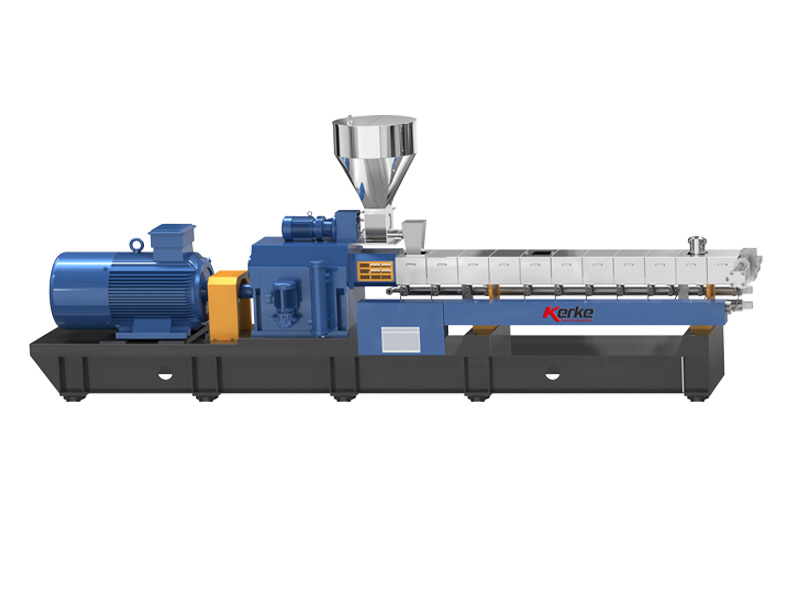
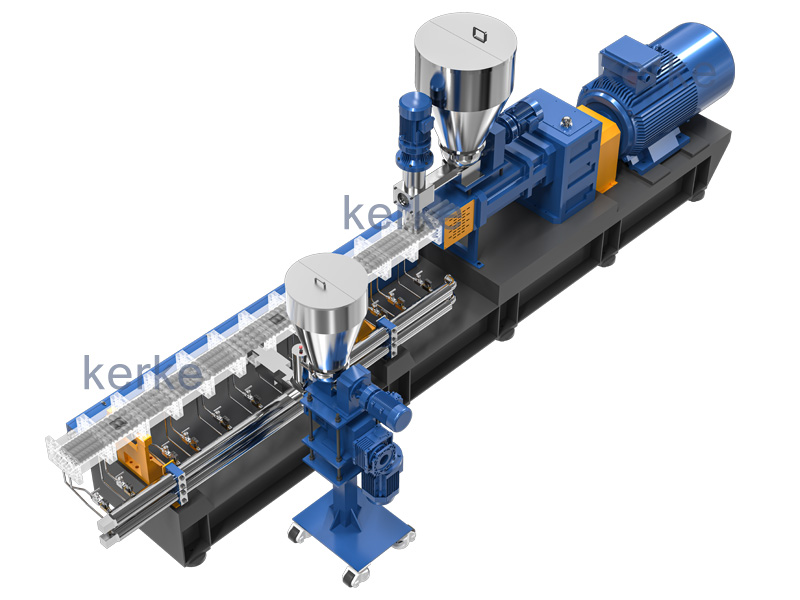
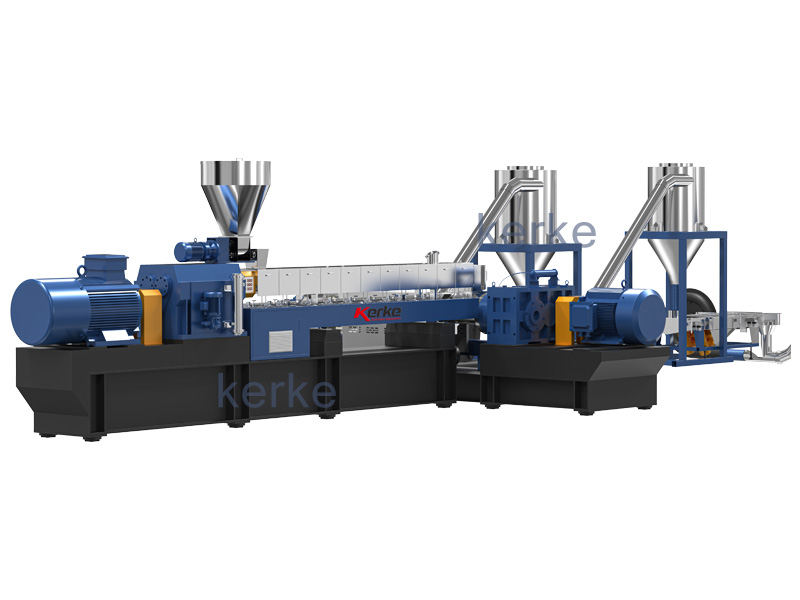
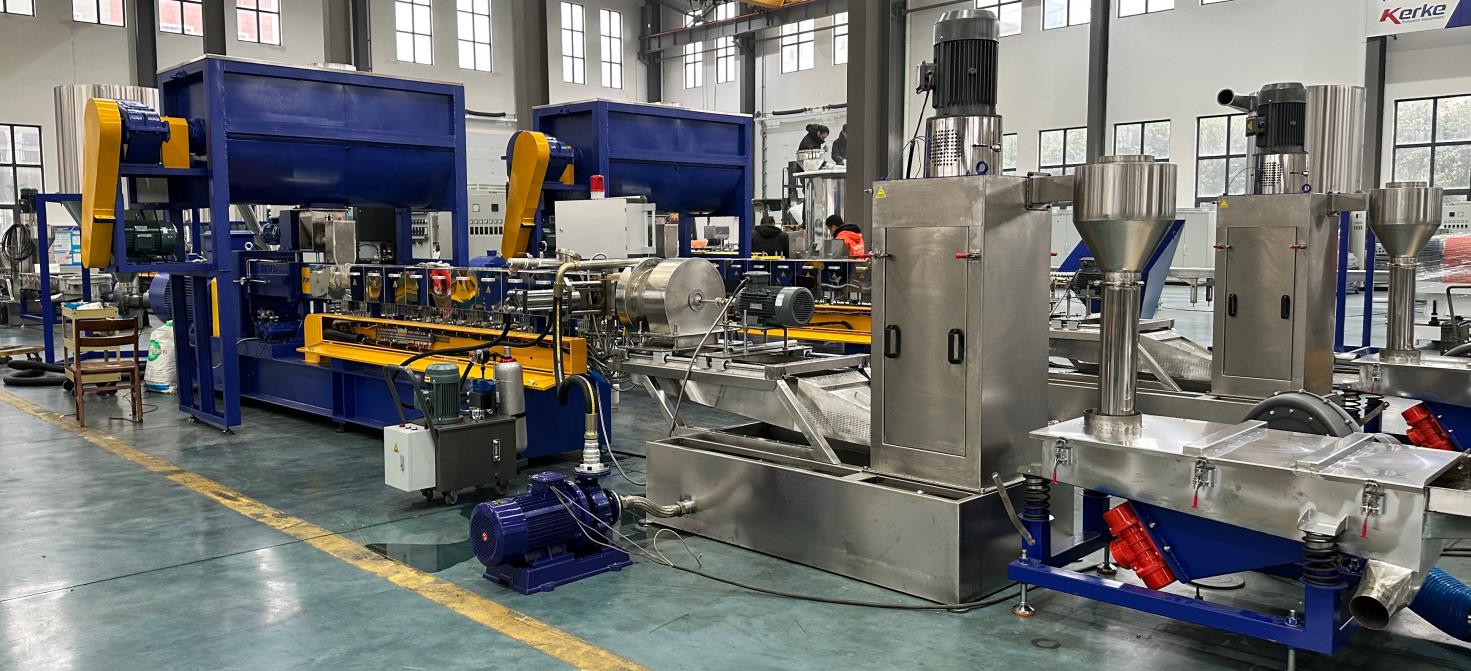
Melt extrusion is the core link in the production of calcium carbonate filler masterbatch. The core equipment is a twin-screw extruder (preferably a co-rotating parallel twin-screw extruder, which has better performance than a single-screw extruder). Its function is to melt, plasticize, shear and disperse the mixture to form a uniform melt, which is then extruded through the die head. Common problems in this link include unstable extrusion, melt fracture, excessive screw and barrel wear, die head clogging, and low output.
(I) Core Problem 1: Unstable Extrusion
Problem Performance
The extruder current fluctuates greatly (fluctuation value > 10A), and the melt flow rate extruded from the die head is uneven, leading to uneven particle size and large density fluctuation of the subsequently granulated particles, and even strand breakage. For high-filling masterbatch, “material overflow” or “no feeding” at the feed inlet may also occur.
Cause Analysis
1. Unstable feeding: Agglomeration and poor fluidity of the mixture lead to uneven feeding at the feed inlet; fluctuation of the feeder rotating speed results in uneven feeding amount; high air content and poor air exhaust of high-filling powder lead to feeding backflow, resulting in “material overflow” or “no feeding”.
2. Unreasonable extrusion parameters: Fluctuation of the temperature of each section of the barrel and unstable screw rotating speed lead to uneven melt plasticization and pressure fluctuation; high-melt-index carrier resin is prone to cause extrusion pressure fluctuation, affecting extrusion stability.
3. Screw and barrel wear: Severe wear of screws and barrels leads to uneven plasticization and shearing of materials, resulting in extrusion pressure fluctuation; calcium carbonate has high hardness, and long-term production is easy to wear screws and barrels, exacerbating extrusion instability.
4. Uneven melt viscosity: Uneven mixing of the mixture and poor dispersion of calcium carbonate lead to melt viscosity fluctuation and uneven extrusion flow rate.
Solutions
1. Stable feeding: Ensure that the mixture has no agglomeration and good fluidity, and screen it through a sieve before feeding; adjust the feeder rotating speed to keep the feeding amount stable (fluctuation value ≤ 5%); for high-filling powder, use CWS twin-screw side feeder for forced air exhaust and pressing, and use the reverse exhaust groove of the side feeder to extrude air in the powder to avoid feeding backflow. For powder with extremely low bulk density (such as talcum powder, ultra-fine calcium carbonate), configure a special forced feeder.
2. Optimize extrusion parameters: Set the temperature of each section of the barrel according to the type of carrier resin (PE carrier: feeding section 120-140℃, melting section 150-170℃, head section 160-180℃; PP carrier: feeding section 130-150℃, melting section 160-180℃, head section 170-190℃), and the temperature fluctuation is controlled within ±3℃; the screw rotating speed is controlled at 300-500r/min, kept stable, and avoided frequent adjustment. Optimize the distribution of screw shear blocks to ensure stable conveying under low back pressure and alleviate the pressure fluctuation caused by high-melt-index carrier resin.
3. Equipment maintenance: Regularly check the wear of screws and barrels, and replace them in time if they are severely worn; select wear-resistant equipment components. The barrel of the core section adopts Cr26MoV integral alloy sleeve (hardness HRC60+), and the thread element adopts W6Mo5Cr4V2 high-speed tool steel, which can extend the service life of the core components to 2-3 times that of ordinary bimetallic barrels. Regularly clean the material accumulation in the screw and barrel to avoid the influence of aged material accumulation on the plasticization effect.
4. Improve the uniformity of the mixture: Optimize the mixing process to ensure uniform dispersion of calcium carbonate and additives, and reduce melt viscosity fluctuation; for high-filling masterbatch, a two-step mixing method can be adopted: first activate and mix calcium carbonate with dispersant and coupling agent, then fully mix with carrier resin to improve the uniformity of the mixture.
(II) Core Problem 2: Melt Fracture
Problem Performance
The melt extruded from the die head has a rough surface, wrinkles, cracks, or “shark skin” defects, leading to uneven surface and color of the masterbatch, seriously affecting the product appearance quality, and easily causing surface defects when processing subsequent products.
Cause Analysis
1. Excessively high melt viscosity: Excessively high calcium carbonate filling amount and insufficient lubricant dosage lead to excessively high melt viscosity, and the melt is subjected to excessive shear force during extrusion, causing melt fracture;
2. Excessively low barrel temperature: Insufficient melt plasticization, and incompletely melted materials are forced to be extruded, leading to surface defects of the melt;
3. Excessively low die head temperature or insufficient die orifice smoothness: Excessively low die head temperature leads to rapid cooling of the melt when exiting, resulting in uneven surface shrinkage; scratches and material accumulation on the die orifice cause friction on the melt during extrusion, leading to rough surface.
4. Excessively high screw rotating speed: The shear rate is too fast, exceeding the bearing range of the melt, causing melt fracture.
Solutions
1. Reduce melt viscosity: Appropriately reduce the calcium carbonate filling amount (no more than 70%), or increase the lubricant dosage (no more than 2.5%) to improve melt fluidity; select low-viscosity carrier resin (melt index 10-20g/10min) to reduce melt viscosity.
2. Optimize temperature parameters: Appropriately increase the temperature of the barrel melting section and the head section (increase by 5-10℃) to ensure sufficient melt plasticization; increase the die head temperature to 5-10℃ higher than the head section temperature to avoid rapid cooling of the melt when exiting. For EVA foaming masterbatch, the temperature of the melt extrusion processing area is controlled at 160-180℃, and the die head temperature is 170-190℃ to ensure sufficient plasticization.
3. Maintain the die head: Regularly clean the material accumulation in the die head to avoid aging and adhesion of material accumulation; polish the die orifice to ensure that the die orifice is smooth and free of scratches, and the die orifice size is uniform; if the die head is severely worn, replace the die orifice components in time.
4. Adjust the screw rotating speed: Appropriately reduce the screw rotating speed (to 300-400r/min) to reduce the shear rate and avoid excessive shear force on the melt; at the same time, adjust the die orifice pressure to keep the melt extruded stably.
(III) Core Problem 3: Excessive Screw and Barrel Wear
Problem Performance
After long-term production, the gap between the screw and the barrel increases, the plasticization and shearing effect of materials decreases, the extrusion efficiency decreases, the masterbatch quality deteriorates (such as uneven dispersion and density fluctuation), and even material leakage occurs; the frequency of equipment maintenance increases, and the production cost rises. Ordinary bimetallic barrels usually need to be replaced in about half a year, affecting production continuity.
Cause Analysis
1. High hardness of calcium carbonate: Calcium carbonate (Mohs hardness 3-4) is a hard powder, which rubs against screws and barrels for a long time, leading to component wear; especially for high-filling masterbatch (calcium carbonate content more than 75%), the wear is more serious.
2. Excessive raw material impurities: Mixing of metal impurities, sediment and other hard particles in raw materials exacerbates the wear of screws and barrels;
3. Unreasonable extrusion parameters: Excessively low barrel temperature leads to insufficient melt plasticization, and hard calcium carbonate particles exacerbate friction with screws and barrels; excessively high screw rotating speed and excessive shear force also exacerbate wear.
4. Poor material quality of equipment components: The material hardness of screws and barrels is insufficient (such as ordinary alloy steel), and the wear resistance is poor; ordinary bimetallic barrels only have a thin alloy layer (1-2mm), which is scrapped once worn through.
Solutions
1. Optimize raw material quality: Strictly control the impurity content of raw materials, remove metal impurities, sediment and other hard particles through screening and magnetic separation; select calcium carbonate powder with uniform fineness and smooth surface to reduce friction and wear.
2. Optimize extrusion parameters: Ensure stable barrel temperature and sufficient melt plasticization to reduce friction between hard particles and screws and barrels; reasonably control the screw rotating speed, avoid excessive rotating speed (no more than 500r/min), and reduce shear force.
3. Select wear-resistant equipment components: The screw is made of 38CrMoAlA alloy steel, which is nitrided (surface hardness ≥ HRC65) to improve wear resistance; the barrel adopts Cr26MoV integral alloy sleeve (thickness > 10mm, hardness HRC60+) instead of ordinary bimetallic barrel, which can extend the service life of components to 2-3 times that of ordinary bimetallic barrels. For high-filling masterbatch production, SAT-T triple-screw equipment can be selected, which can increase the output by 30%-50% compared with traditional twin-screw under the same energy consumption, and reduce wear at the same time.
4. Strengthen equipment maintenance: Regularly check the gap between the screw and the barrel, and adjust or replace them in time if the gap is too large; after each production, clean the screw and barrel with pure carrier resin (such as PE, PP) to avoid calcium carbonate particle residue and reduce wear; regularly add lubricating oil to the equipment to reduce component friction.
(IV) Core Problem 4: Die Head Clogging
Problem Performance
The die head channel is blocked by unplasticized materials, impurities or aged material accumulation, leading to unsmooth melt extrusion, strand breakage, or even inability to extrude, forcing shutdown for cleaning and affecting production efficiency.
Cause Analysis
1. Excessive raw material impurities: Metal impurities, sediment, plastic impurities, etc. in raw materials are carried to the die head by the melt during extrusion, blocking the die head channel;
2. Insufficient material plasticization: Excessively low barrel temperature and too slow screw rotating speed result in incomplete melting of the mixture, and unplasticized carrier resin or calcium carbonate agglomerates block the die head;
3. Failure to clean in time after production interruption: When production is interrupted or shut down, the melt in the die head is not cleaned in time, and the melt solidifies after cooling, blocking the die head channel;
4. Residue of additive volatiles: Lubricants, coupling agents and other additives volatilize at high temperatures, and the residual substances accumulate in the die head, which are not cleaned for a long time, forming material accumulation and blocking the channel.
Solutions
1. Strictly control raw material quality: Strengthen raw material screening and magnetic separation to remove impurities and avoid impurities entering the extruder;
2. Ensure sufficient material plasticization: Optimize barrel temperature and screw rotating speed to ensure sufficient melt plasticization and no unplasticized materials; prohibit the mixture with uneven mixing from entering the extruder to avoid agglomerates blocking the die head.
3. Standardize shutdown operation: When production is interrupted or shut down, first turn off the heating device, continue to run the screw for 5-10min to extrude all the melt in the barrel and die head, then shut down; after shutdown, clean the die head with high-temperature cleaning agent or pure carrier resin in time to remove residual melt.
4. Regularly clean the die head: After each day’s production, disassemble the die head, clean the material accumulation and residual additives in the die head channel with a copper brush (to avoid scratching the die orifice); conduct a thorough cleaning once a week to remove aged material accumulation in the die head.
IV. Common Problems and Solutions in Granulation Link
The granulation link is the process of cooling, cutting and drying the melt extruded from the extruder die head to make uniform granular masterbatch. Common problems include uneven particle size, particle adhesion, rough particle surface, and incomplete drying.
(I) Core Problem 1: Uneven Particle Size
Problem Performance
The diameter and length of masterbatch particles fluctuate greatly (deviation > 0.5mm), and some particles are too large, too small or long strip-shaped, which affects the fluidity and subsequent processing performance of the masterbatch, and is also prone to stratification during packaging.
Cause Analysis
1. Unstable extrusion: Uneven melt flow rate and pressure fluctuation lead to uneven thickness of the melt strand extruded from the die head, resulting in uneven particle size after granulation;
2. Unreasonable granulation parameters: The rotating speed of the cutter does not match the melt extrusion speed (too fast cutter rotating speed leads to too short particles; too slow rotating speed leads to too long particles); too large cutter gap leads to extrusion deformation of the melt strand during granulation, resulting in uneven particle size.
3. Uneven cooling: The cooling speed of the melt strand is inconsistent, and some melt strands are cut before being fully cooled, which are easy to deform, leading to uneven particle size;
4. Uneven die head channel size: Excessively large deviation of the die head channel diameter leads to uneven thickness of the extruded melt strand, resulting in uneven particle size after granulation.
Solutions
1. Stable extrusion: Optimize extrusion parameters to ensure stable melt flow rate and pressure, and uniform thickness of the extruded melt strand;
2. Optimize granulation parameters: Adjust the cutter rotating speed according to the melt extrusion speed to ensure that the cutter rotating speed matches the extrusion speed (such as melt extrusion speed 10-15m/min, cutter rotating speed 500-800r/min); adjust the cutter gap to 0.1-0.3mm to avoid particle deformation caused by too large gap.
3. Uniform cooling: Ensure uniform water temperature of the cooling water tank (controlled at 20-30℃) and stable water flow speed, so that the melt strand is uniformly cooled after entering the water tank; for high-yield scenarios (> 300kg/h, extruder diameter ≥ Φ72mm), adopt conveyor belt cooling instead of air-cooled die-face hot cutting to avoid particle deformation caused by insufficient cooling.
4. Maintain the die head: Regularly check the size of the die head channel, repair or replace the die head for channels with excessive size deviation, and ensure uniform die head channel size (deviation ≤ 0.1mm).
(II) Core Problem 2: Particle Adhesion
Problem Performance
The granulated masterbatch particles adhere to each other to form large blocks, which are difficult to disperse, affecting packaging and subsequent processing and use; in severe cases, the adhered masterbatch needs to be manually crushed, increasing production costs.
Cause Analysis
1. Incomplete cooling: The melt strand enters the granulation link before being fully cooled (temperature > 40℃), and the particle temperature is too high after granulation, leading to mutual adhesion; excessively high water temperature of the cooling water tank (> 35℃) results in poor cooling effect and also leads to adhesion.
2. Excessive lubricant dosage: Excessive lubricant dosage exceeds 2.5%, making the masterbatch surface sticky and prone to mutual adhesion; especially low-molecular-weight lubricants are easy to migrate to the particle surface, exacerbating adhesion.
3. Insufficient drying: The granulated masterbatch is not dried in time, and residual moisture on the surface leads to particle adhesion; excessively low drying temperature and insufficient drying time result in incomplete moisture removal, which also causes adhesion.
4. Excessively high particle temperature: The granulated masterbatch is packaged before being cooled to room temperature, and the residual heat of the particles leads to surface softening and mutual adhesion.
Solutions
1. Strengthen cooling: Reduce the water temperature of the cooling water tank (controlled at 20-30℃), extend the cooling time of the melt strand in the water tank (≥ 10s), ensure that the melt strand is fully cooled (temperature ≤ 35℃) before granulation; for easily adherent masterbatch, a small amount of anti-adhesive agent (such as talcum powder, dosage ≤ 0.5%) can be added to the cooling water tank to reduce adhesion.
2. Adjust the lubricant dosage: Control the lubricant dosage at 0.5%-2% to avoid excessive dosage; select high-molecular-weight lubricants (such as PE wax, PP wax) to reduce lubricant migration and avoid sticky particle surface.
3. Timely drying: Immediately send the granulated masterbatch into the dryer, control the drying temperature at 80-100℃, and the drying time at 10-15min to ensure that the masterbatch moisture content ≤ 0.2%; cool the dried masterbatch to room temperature before packaging.
4. Optimize packaging: Use breathable packaging materials, control the masterbatch temperature ≤ 30℃ during packaging to avoid residual heat accumulation of particles after packaging leading to adhesion; add a small amount of desiccant during packaging to prevent masterbatch moisture absorption and adhesion.
(III) Core Problem 3: Incomplete Drying
Problem Performance
The masterbatch surface is damp and agglomerated, with a moisture content exceeding 0.3%, which is prone to mold and agglomeration after packaging. During subsequent processing, it is easy to produce bubbles and surface defects, and affect the compatibility between the masterbatch and the matrix resin.
Cause Analysis
1. Unreasonable drying parameters: Excessively low drying temperature (< 80℃) and too short drying time (< 10min) make it impossible to completely remove the moisture on the masterbatch surface; insufficient air volume of the dryer and poor hot air circulation lead to poor drying effect.
2. Moisture absorption after cooling: The dried masterbatch contacts air before being cooled to room temperature, and the moisture in the air is adsorbed by the masterbatch, leading to damp surface;
3. Dryer equipment problems: Damage to the dryer heating tube and malfunction of the hot air circulation system lead to uneven drying temperature and insufficient air volume; material accumulation inside the dryer affects the drying effect.
Solutions
1. Optimize drying parameters: Control the drying temperature at 80-100℃, and the drying time at 10-15min, adjust according to the masterbatch moisture content (extend the drying time appropriately when the moisture content is high); adjust the dryer air volume to ensure smooth hot air circulation and full contact between the masterbatch and hot air.
2. Avoid moisture absorption after cooling: Cool the dried masterbatch to room temperature (≤ 30℃) in the dryer first, then discharge it from the dryer; seal and package it immediately after discharge to avoid contact with humid air.
3. Maintain the dryer: Regularly check the dryer heating tube and hot air circulation system to ensure normal operation of the equipment; clean the material accumulation inside the dryer after each production to avoid affecting the drying effect; regularly replace the desiccant in the dryer (if any) to improve drying capacity.
V. Common Problems and Solutions in Finished Product Post-treatment and Storage Link
The finished product post-treatment and storage link mainly involves masterbatch screening, packaging and storage. Common problems include excessive impurities in finished products, damaged packaging, and storage agglomeration, which directly affect the final quality and use effect of the masterbatch.
(I) Core Problem 1: Excessive Impurities in Finished Products
Problem Performance
Mixing of hard lumps, metal impurities, plastic impurities, etc. in the finished masterbatch leads to surface black spots and defects when processing subsequent products, and even wears processing equipment.
Cause Analysis
1. No screening in the granulation link: The granulated masterbatch is not screened, and uncut long strips, adhered blocks and other impurities are mixed in;
2. Packaging link pollution: The packaging materials (such as woven bags) themselves contain impurities, or the packaging environment is not clean, and dust and impurities are mixed in;
3. Residual impurities in equipment: Material accumulation and impurities in the dryer and conveying equipment are mixed into the finished masterbatch.
Solutions
1. Finished product screening: Screen the granulated and dried masterbatch with a vibrating screen (screen mesh 80-100 mesh) to remove hard lumps, long strips, adhered blocks and other impurities; pass the screened masterbatch through a magnetic separator again to remove metal impurities.
2. Standardize the packaging link: Select clean and impurity-free packaging materials (such as food-grade woven bags), and check the cleanliness of the packaging materials before packaging; keep the packaging environment clean to avoid mixing of dust and impurities; operators wear clean gloves and masks during packaging to avoid artificial pollution.
3. Equipment cleaning: After each production, thoroughly clean the residual masterbatch and impurities in the dryer, conveying equipment and screening equipment to avoid cross-contamination.
(II) Core Problem 2: Storage Agglomeration
Problem Performance
After the finished masterbatch is stored for a period of time, it adheres to each other to form large blocks, which are difficult to disperse, affecting subsequent processing and use; in severe cases, the agglomerated masterbatch cannot be fed normally, leading to processing interruption.
Cause Analysis
1. Excessively high masterbatch moisture content: Incomplete drying, masterbatch moisture content > 0.3%, leading to moisture absorption and agglomeration during storage;
2. Humid storage environment: The humidity of the storage warehouse > 60%, the masterbatch absorbs moisture, the surface softens and adheres, forming agglomeration;
3. Excessively high stacking height: The stacking height of the masterbatch exceeds 2.5 meters, and the masterbatch at the bottom is squeezed, leading to mutual adhesion and agglomeration;
4. Poor packaging sealing: The packaging materials are not tightly sealed, and moisture in the air enters the packaging, leading to moisture absorption and agglomeration of the masterbatch.
Solutions
1. Ensure masterbatch drying: Strictly control the moisture content of the finished masterbatch ≤ 0.2%, and prohibit warehousing and storage of incompletely dried masterbatch;
2. Optimize storage environment: Store the masterbatch in a dry, ventilated and cool warehouse, control the environmental humidity ≤ 50%, and the temperature at 15-30℃, avoiding direct sunlight and rain;
3. Standardize stacking: The stacking height of the masterbatch shall not exceed 2 meters, and pallets shall be used for stacking to avoid extrusion of the masterbatch at the bottom; masterbatches of different batches and specifications shall be stacked separately to avoid confusion and extrusion.
4. Sealed packaging: Use packaging materials with good sealing performance, and seal them in time after packaging to avoid moisture in the air entering; for masterbatches stored for a long time, a small amount of desiccant can be added to the packaging to further prevent moisture absorption.
VI. Summary
In the production process of calcium carbonate filler masterbatch, the occurrence of various problems is mainly related to four factors: raw material properties, equipment parameters, process control and environmental conditions, and the problems in each link are interrelated (such as uneven raw material mixing will lead to unstable extrusion and uneven granulation particles). To achieve stable production and improve product quality, it is necessary to control raw material quality from the source, optimize process parameters of each link, strengthen equipment maintenance and management, and standardize the finished product post-treatment and storage processes.
In actual production, it is necessary to adjust process parameters and raw material ratio according to its own production scale, equipment conditions and product use (such as film grade, injection grade), establish a perfect quality inspection and equipment maintenance system, and timely find and solve various problems in the production process. At the same time, pay attention to industrial technology upgrading, select high-efficiency wear-resistant equipment, high-quality additives and suitable powder specifications, which can effectively reduce the incidence of production failures and improve product competitiveness. For high-filling, film-grade and other high-end masterbatches, the two-step mixing and high-efficiency dispersion technology should be adopted to further improve the dispersion uniformity and processing performance of the masterbatch, so as to meet the higher quality requirements of downstream products.