Introduction
Plastic products exposed to outdoor environments face relentless assault from ultraviolet radiation that degrades polymer chains, destroys colorants, and compromises mechanical properties over time. Without effective UV protection, even the highest quality plastic formulations will chalk, crack, discolor, and lose structural integrity within months of exposure. UV stabilizer masterbatch has emerged as the primary solution for protecting plastic products from these degradation mechanisms, enabling extended service life in demanding outdoor applications. Compounding extruder technology provides the essential manufacturing capability for producing concentrated UV stabilizer masterbatch formulations with consistent performance.
The science of UV stabilization has advanced significantly over recent decades, developing increasingly sophisticated additive systems that address specific degradation pathways and application requirements. Modern UV stabilizer masterbatches combine multiple protective mechanisms including UV absorption, radical scavenging, and light screening to provide comprehensive protection against photodegradation. A twin screw extruder enables the production quality that demanding UV stabilizer applications require. Understanding these mechanisms and their interaction with polymer chemistry enables formulation optimization for specific applications and exposure conditions.
This comprehensive guide explores the technical foundations of UV stabilization technology, providing detailed information about additive types, formulation approaches, and production methodologies. Whether you are a plastics formulator, manufacturer, or specification engineer, the insights presented here will enhance your ability to develop and produce effective UV-stabilized plastic products. The guide emphasizes practical implementation considerations and equipment selection guidance that support successful product development and production. A masterbatch extruder from Kerke provides the capabilities necessary for consistent UV stabilizer masterbatch quality.
What is UV Stabilizer Masterbatch
UV stabilizer masterbatch is a concentrated formulation containing ultraviolet light stabilizers and related protective additives dispersed within a polymer carrier system. These masterbatches are designed for addition to plastic formulations at specified loading levels to provide long-term protection against ultraviolet radiation damage. The primary additives include UV absorbers that convert harmful UV radiation to harmless heat energy, hindered amine light stabilizers that scavenge radicals formed during photodegradation, and quenchers that dissipate excitation energy before degradation can occur. A twin screw extruder system is essential for achieving the dispersion quality that UV stabilizer masterbatch requires for consistent protection.
The mechanism of UV damage in plastics involves absorption of ultraviolet photons by chromophoric groups within the polymer structure or attached additives. This absorption initiates free radical formation that propagates through chain scission and crosslinking reactions, ultimately degrading molecular weight and mechanical properties. Visible changes including yellowing, chalking, and gloss loss accompany these structural changes. UV stabilizer additives interrupt these degradation mechanisms through various protective actions that extend product service life when properly dispersed using a masterbatch extruder system.
UV absorber compounds such as benzotriazoles, triazines, and oxalanilides function by absorbing UV radiation in the 300 to 400 nanometer range and converting this energy to harmless heat through rapid molecular relaxation. These additives preferentially absorb UV radiation that would otherwise attack the polymer, essentially acting as sunscreen for plastic materials. The effectiveness of UV absorbers depends on their absorption spectra, concentration, and permanence within the polymer matrix under service conditions. Compounding extruder technology ensures proper dispersion of these additives throughout the polymer matrix.
Hindered amine light stabilizers represent the most widely used class of UV stabilizers, functioning through a regenerative mechanism that continuously neutralizes free radicals formed during photodegradation. HALS compounds form nitroxyl radicals that terminate propagating radical chains, preventing the chain reactions that lead to polymer degradation. The regenerative nature of HALS mechanism provides extended protection that outperforms non-regenerative UV absorbers in many applications.
Why Use UV Stabilizer Masterbatch
Service life extension represents the primary benefit of UV stabilizer masterbatch incorporation in plastic formulations. Properly stabilized plastic products can maintain functional properties and acceptable appearance for 10 to 20 years of outdoor exposure, compared to months or a few years for unstabilized materials. This extended service life translates directly to reduced replacement costs, improved product value, and enhanced customer satisfaction. A twin screw extruder enables the production quality that maximizes these service life benefits. The cost of UV stabilization is invariably less than the cost of premature product failure and replacement.
Appearance preservation maintains the aesthetic qualities that differentiate premium products from commodity alternatives. UV stabilizers prevent the yellowing, chalking, gloss reduction, and color fade that degrade the appearance of plastic products during outdoor exposure. A compounding extruder system provides the production capabilities necessary for consistent UV stabilizer masterbatch quality. This appearance preservation proves particularly valuable for applications where visual appeal influences purchasing decisions or brand perception. Consumer products, architectural components, and automotive trim all benefit from UV stabilization that maintains initial appearance quality.
Mechanical property retention ensures that plastic products continue to function structurally throughout their intended service life. Photodegradation progressively embrittles plastics through chain scission reactions that reduce molecular weight and increase modulus while decreasing impact strength and elongation. UV stabilizers slow this degradation process, maintaining the toughness and ductility that enable plastic products to withstand service loads and environmental stresses. Structural applications particularly benefit from UV stabilization that prevents catastrophic failure from embrittlement.
Regulatory compliance increasingly requires UV stabilization for plastic products used in sensitive applications. Building codes, automotive regulations, and consumer product safety standards specify minimum weathering performance requirements that can only be met through effective UV stabilization. Masterbatch technology provides a convenient and consistent method for incorporating the stabilizer systems necessary to satisfy these regulatory requirements.
Types and Classifications
UV absorber categories include several chemical classes that offer different absorption spectra, performance characteristics, and polymer compatibility profiles. Benzotriazole UV absorbers represent the most widely used class, offering strong absorption in the UV-A and UV-B regions along with good compatibility with many polymer systems. These additives are particularly effective in polyurethane, polycarbonate, and ABS formulations where they provide excellent protection against yellowing and property degradation.
Triazine UV absorbers provide superior UV-B absorption and excellent photostability, making them ideal for applications requiring maximum UV protection. These high-performance additives command premium pricing but deliver corresponding performance improvements for demanding applications. Triazine UV absorbers demonstrate good compatibility with polyolefins and are increasingly specified for agricultural films and other high-exposure applications.
Hindered amine light stabilizers encompass a broad range of molecular weights and functionalities that address various application requirements. Low molecular weight HALS offer rapid migration and surface protection, while high molecular weight grades provide long-term bulk stabilization with reduced volatility and extractability. Oligomeric and polymeric HALS represent the highest performance options for applications requiring decades of service life without maintenance or replacement.
Specialized UV stabilizer systems address particular application requirements or polymer types. Nickel-based quenchers provide effective stabilization for polyolefins exposed to agricultural conditions. Antioxidant combinations with HALS create synergistic protection systems that address both processing and weathering degradation. Pigmented formulations may incorporate UV stabilizers that protect both the polymer matrix and the colorants from UV damage.
Key Properties and Specifications
UV absorber concentration in masterbatch formulations typically ranges from 10 to 25 percent by weight, depending on the specific additives and target application requirements. Higher concentrations enable lower masterbatch addition rates while achieving target stabilizer loadings in the final compound. However, excessive concentrations can cause plateout, migration, or compatibility issues that compromise product quality. Formulation optimization balances stabilizer effectiveness against practical processing and property considerations.
Absorption spectra specifications describe the wavelength range and intensity of UV absorption for each UV absorber type. Effective protection requires UV absorbers that absorb in the wavelength regions where the polymer and any colorants are most susceptible to photodegradation. UV-visible spectroscopy provides quantitative measurement of absorption characteristics that enables formulation matching to specific application exposure conditions and degradation susceptibility.
Molecular weight and molecular weight distribution influence HALS performance through effects on migration rate, volatility, and extractability. Low molecular weight HALS with molecular weights below 1000 daltons migrate rapidly through the polymer matrix, providing quick establishment of effective stabilization. However, these low molecular weight species also exhibit higher volatility during processing and greater extractability during service. High molecular weight HALS above 2000 daltons provide more permanent stabilization but require higher loading or longer exposure time to achieve effective concentration at the surface.
Thermal stability specifications address the processing requirements of UV stabilizer masterbatch production and end-use processing. UV absorbers must withstand the temperatures and shear conditions of extrusion processing without decomposition or reaction. Accelerated oven aging tests at elevated temperatures predict long-term thermal stability that ensures stabilizer effectiveness throughout product service life. Specifications typically require 1 percent weight loss temperatures above 280 degrees Celsius for standard processing applications.
Applications and Use Cases
Agricultural films represent one of the largest application areas for UV stabilizer masterbatch, with greenhouse covers, mulching films, and silage wraps requiring multi-year outdoor exposure under demanding conditions. UV-stabilized polyethylene films maintain mechanical integrity and light transmission properties throughout growing seasons that may span 3 to 5 years for greenhouse covers or the entire growing season for mulching films. HALS-based stabilization systems dominate this application due to their effectiveness and favorable cost-performance balance.
Automotive exterior components require UV stabilization to maintain appearance and functionality throughout vehicle service life. Front grilles, mirror housings, bumper trim, and interior dashboard components all incorporate UV stabilizers that prevent the degradation that would otherwise occur during years of sunlight exposure. Automotive specifications typically require 5 to 10 years of outdoor Florida exposure without significant property or appearance degradation, requirements that demand high-performance UV stabilizer systems.
Building and construction applications including window profiles, fencing, decking, and roofing materials represent demanding outdoor exposure environments where UV stabilization is essential. PVC window profiles incorporating UV stabilizer masterbatch maintain color and surface appearance throughout building service life that may exceed 30 years. Wood-plastic composite decking materials require UV stabilization to prevent both polymer matrix degradation and colorant fade that would diminish the aesthetic appeal of these products.
Consumer products including outdoor furniture, garden equipment, and sporting goods require UV stabilization to maintain appearance and functionality during consumer use. Patio furniture, pool equipment, and ATV components all face years of outdoor storage and use that demands effective UV protection. Masterbatch technology enables manufacturers to incorporate appropriate stabilizer systems efficiently while maintaining production flexibility across diverse product lines.
Cost and Price Analysis
UV stabilizer masterbatch pricing reflects the cost of specialized additives that command premium prices compared to commodity plastic additives. UV absorber costs typically range from $20 to $80 per kilogram depending on performance level and chemical class. A twin screw extruder enables cost-effective production of these formulations. HALS costs range from $15 to $60 per kilogram, with high-performance oligomeric grades commanding premium pricing. These additive costs translate to masterbatch formulations with typical pricing of $8 to $35 per kilogram depending on stabilizer loading and complexity. A compounding extruder system provides the production capabilities necessary for efficient UV stabilizer masterbatch manufacturing.
Value analysis demonstrates the compelling economics of UV stabilization when considering total cost of ownership rather than additive expense alone. A UV-stabilized product costing 5 percent more in material cost but lasting three times longer delivers dramatically lower lifecycle cost. For building products with 30-year service expectations, the cost of frequent replacement without UV stabilization vastly exceeds the investment in effective stabilization systems.
Equipment investment for UV stabilizer masterbatch production follows the same patterns as other masterbatch types, with twin screw extruders providing the necessary mixing and processing capabilities. Laboratory-scale production using equipment like the Kerke KTE-16B or KTE-27 systems represents investments of $30,000 to $80,000. Small-scale commercial production with KTE-35 or KTE-50 extruders requires $80,000 to $150,000 investments. Large-scale production facilities utilizing KTE-95 or larger equipment typically represent total investments of $300,000 to $600,000.
Production cost breakdowns for UV stabilizer masterbatch typically show additive raw materials representing 60 to 80 percent of total production cost. Manufacturing costs including energy, labor, and overhead contribute 15 to 30 percent of total cost. Quality control and packaging expenses account for the remaining 5 to 15 percent. These cost structures emphasize the importance of formulation optimization and production efficiency in maintaining competitive positioning.
Production Process with Twin Screw Extruder
UV stabilizer masterbatch production requires processing conditions that preserve the chemical integrity of heat-sensitive UV absorber compounds. Thermal decomposition of UV absorbers during extrusion reduces effective stabilizer concentration and can create reactive decomposition products that accelerate rather than inhibit degradation. Temperature control throughout the extrusion process must maintain conditions below decomposition thresholds while achieving adequate mixing and dispersion.
Screw configuration for UV stabilizer masterbatch production emphasizes gentle handling of heat-sensitive additives rather than intensive mixing that could cause thermal degradation. Screw designs featuring moderate compression ratios and limited high-shear mixing elements reduce residence time at elevated temperatures while still achieving adequate dispersion. Barrier screw elements can separate unmelted polymer from fully melted compound, reducing local overheating in compression zones.
Temperature profile optimization for UV stabilizer masterbatch production requires careful balancing of melting requirements against thermal degradation risk. Feed zone temperatures should be set to achieve rapid polymer melting without creating localized hot spots. Barrel zone temperatures should provide sufficient heat input to melt the polymer carrier while minimizing temperature differential between barrel zones and material melt. Reduced die head temperatures compared to standard masterbatch production limit thermal exposure during extrusion.
Residence time distribution significantly influences UV stabilizer masterbatch quality, with narrower distributions providing more consistent thermal exposure. Processing conditions that minimize dead zones and flow stagnation points reduce the proportion of material subjected to excessive thermal exposure. Throughput rate optimization balances production efficiency against processing severity, with slower throughput rates generally providing improved thermal management at the cost of reduced productivity.
Quality Control and Testing
Quality assurance for UV stabilizer masterbatch production incorporates analytical methods that verify additive identity, concentration, and dispersion quality. High-performance liquid chromatography enables quantitative measurement of UV absorber and HALS concentrations, ensuring that formulations meet target loading specifications. Chromatographic methods can also detect degradation products that would indicate processing conditions exceeded thermal stability limits.
UV-visible spectroscopy provides rapid verification of UV absorber presence and absorption characteristics. This technique confirms not only concentration but also that the UV absorber retains its original chemical structure and absorption properties. Changes in absorption spectra can indicate chemical modification or degradation that would compromise stabilization effectiveness.
Accelerated weathering testing using xenon arc or UV fluorescent exposures provides the most relevant quality verification for UV stabilizer masterbatch. Test specimens incorporating the masterbatch are exposed to controlled weathering cycles that simulate outdoor exposure conditions. Property measurements before and after exposure quantify the stabilization effectiveness that the masterbatch provides. Correlation between accelerated weathering and actual outdoor exposure enables prediction of field performance from laboratory test results.
Thermal analysis methods including differential scanning calorimetry and thermogravimetric analysis verify processing stability and identify potential degradation issues. These methods can detect exothermic reactions that might indicate chemical incompatibility or thermal decomposition. Onset temperatures for degradation provide specifications that guide processing condition development and quality verification.
Maintenance and Operation Guidelines
Equipment maintenance for UV stabilizer masterbatch production emphasizes contamination control and thermal management that preserve additive effectiveness. Residual material in extrusion equipment from previous production runs can contaminate UV stabilizer formulations, potentially causing color issues or chemical interactions that compromise stability. Complete purging between production runs eliminates this contamination risk, though purge material recycling requires careful consideration of contamination limits.
Screw and barrel wear monitoring proves particularly important for UV stabilizer masterbatch production, as worn equipment can create localized overheating zones that cause additive degradation. Regular inspection using borescopes and measurement of clearances enables predictive maintenance that prevents quality issues from equipment wear. Kerke KTE Series extruders feature wear-resistant component options that extend maintenance intervals for demanding UV stabilizer applications.
Operating procedures should minimize thermal exposure throughout the production process. Material charging procedures should avoid cold material accumulation that extends overall residence time. Throughput rates should be optimized for thermal management rather than maximum productivity when processing heat-sensitive UV absorber formulations. Temperature monitoring throughout the barrel enables early detection of hot spots that might cause degradation.
Changeover procedures between UV stabilizer formulations require the same attention to contamination control as other masterbatch types. Formulation changes can create customer complaints if residual material from previous formulations appears in subsequent production. Documentation of purge procedures and verification of purge effectiveness provides quality assurance evidence for regulatory compliance and customer requirements.
Kerke’s Solutions
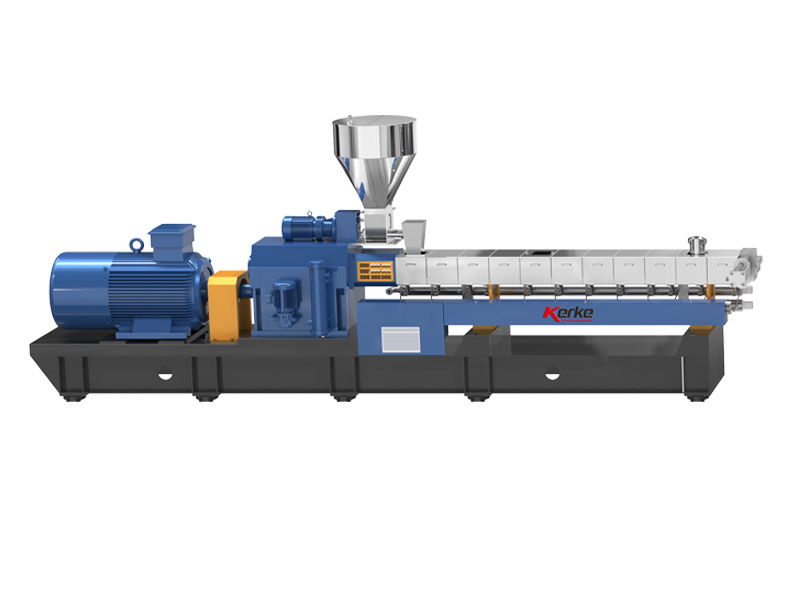
Kerke, under Nanjing Kerke Extrusion Equipment Co., Ltd. and the WANPLAS Group umbrella, delivers comprehensive equipment and technical solutions for UV stabilizer masterbatch production. With over 12 years of industry leadership and more than 2,000 extrusion systems serving customers in 70 countries, Kerke has developed particular expertise in processing temperature-sensitive formulations that characterize UV stabilizer masterbatch production. The company manufacturing campus spanning nearly 20,000 square meters supports production of the complete KTE Series lineup. Every Kerke twin screw extruder delivers the temperature control precision that UV stabilizer masterbatch production requires.
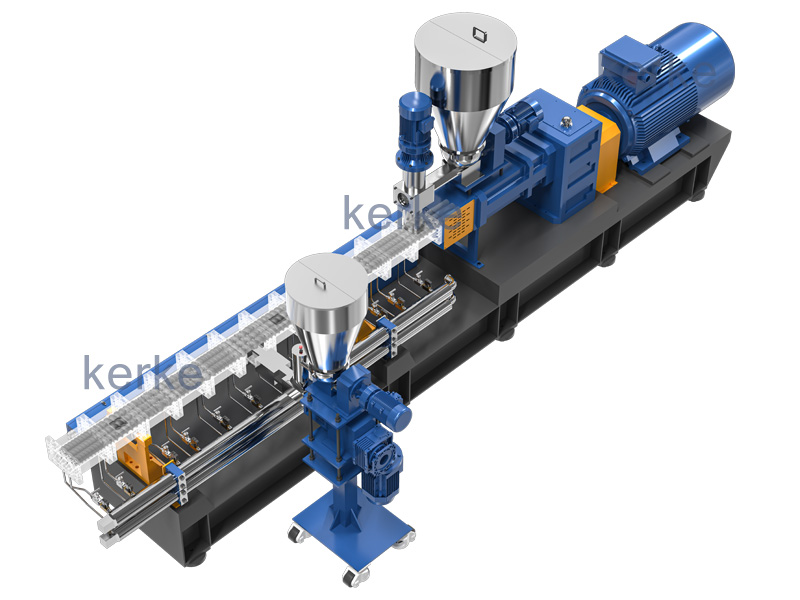
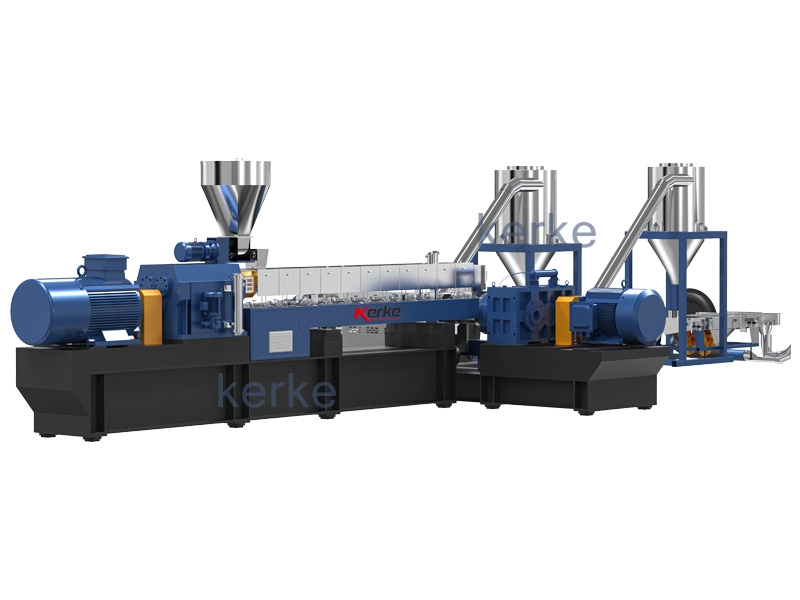
The Kerke KTE Series offers models specifically configured for heat-sensitive masterbatch production, with temperature control systems that enable precise management of processing conditions. The KTE-35 and KTE-50 models provide excellent capabilities for mid-scale production of UV stabilizer masterbatches, with barrel temperature control that maintains stable conditions despite formulation variations. Larger models including the KTE-95, KTE-110, and KTE-135D serve high-volume production requirements with throughput capabilities exceeding 1,000 kilograms per hour. Kerke’s masterbatch extruder systems provide the processing capabilities necessary for consistent UV stabilizer masterbatch quality.
Kerke extruders feature advanced control systems with recipe management capabilities that store optimized processing parameters for different UV stabilizer formulations. This capability enables consistent reproduction of production conditions across campaigns, reducing variability and quality issues. Temperature profiling with multiple zones enables fine-tuning of thermal conditions throughout the extrusion process to match specific formulation requirements.
Technical support services from Kerke extend beyond equipment supply to encompass formulation consultation, process optimization, and troubleshooting assistance. Kerke application engineers draw on extensive experience with UV stabilizer masterbatch production to help customers resolve processing challenges and optimize their operations. This comprehensive support approach distinguishes Kerke as a true partnership provider rather than merely an equipment supplier.
Frequently Asked Questions
What loading level of UV stabilizer masterbatch is required for outdoor applications?
Required loading depends on exposure severity, service life requirements, and polymer type. General outdoor applications typically require 1 to 3 percent UV stabilizer masterbatch addition, providing HALS concentrations of 0.3 to 1.0 percent. Severe exposure or long service life requirements may demand 3 to 5 percent addition rates.
Can UV absorber and HALS be used together in the same formulation?
Yes, combining UV absorbers and HALS creates synergistic stabilization systems that address multiple degradation mechanisms. UV absorbers provide surface protection while HALS provides bulk stabilization through radical scavenging. This combination is particularly effective for demanding applications requiring maximum protection.
How do I select the appropriate HALS molecular weight for my application?
Molecular weight selection depends on service life requirements and processing conditions. Long service life applications benefit from high molecular weight HALS that resist extraction and volatilization. Applications requiring rapid stabilization establishment may benefit from lower molecular weight grades that migrate quickly to the surface.
Do UV stabilizers affect the color of plastic formulations?
Most UV absorbers and HALS are colorless or pale yellow and do not significantly affect formulation color. Some UV absorbers with strong visible absorption may cause slight yellowing in transparent applications. Colorant interactions are generally minimal, though some pigments may affect UV stabilizer effectiveness.
How does pigment selection interact with UV stabilization requirements?
Organic pigments generally require higher UV stabilizer loading than inorganic pigments due to their greater photosensitivity. Carbon black provides excellent UV protection at low loadings and can reduce UV stabilizer requirements. Inorganic pigments typically have minimal interaction with UV stabilizer systems.
What processing temperatures are safe for UV absorber containing masterbatches?
Safe processing temperatures depend on the specific UV absorber types in the formulation. Most commercial UV absorbers tolerate processing temperatures up to 280 to 300 degrees Celsius. Processing above these temperatures requires careful evaluation of thermal stability and may require alternative UV absorber selections.
How do I verify UV stabilizer effectiveness in my formulations?
Accelerated weathering testing using xenon arc or UV fluorescent chambers provides the most relevant effectiveness verification. Testing should include mechanical property measurements and appearance evaluation before and after exposure. Natural outdoor exposure testing in Florida or Arizona provides additional verification but requires years rather than months.
What extruder features are important for UV stabilizer masterbatch production?
Precise temperature control, moderate shear screw designs, and efficient melt mixing are important features for UV stabilizer production. Equipment with multiple temperature zones enables fine-tuning of processing conditions. Short residence time designs minimize thermal exposure of sensitive additives.
Conclusion
UV stabilizer masterbatch provides essential protection for plastic products exposed to outdoor environments, enabling extended service life while maintaining appearance and mechanical properties. The sophisticated additive systems incorporated in these masterbatches address multiple degradation mechanisms through complementary protective actions that provide comprehensive stabilization. Understanding the characteristics and interactions of UV absorbers and HALS enables formulation optimization for specific application requirements.
Production of high-quality UV stabilizer masterbatch requires attention to thermal management and processing conditions that preserve additive effectiveness. Twin screw extruders designed for temperature-sensitive formulations, such as those in the Kerke KTE Series, provide the processing capabilities necessary to produce consistent, effective UV stabilizer masterbatches. A compounding extruder from Kerke enables manufacturers to produce UV stabilizer masterbatch that meets demanding specifications. Equipment selection should consider not only current requirements but also anticipated formulation evolution as stabilization technology continues to advance.
The growing importance of sustainability considerations amplifies the value of UV stabilization technology, as extended product service life directly reduces environmental impact through reduced replacement frequency and resource consumption. Investment in effective UV stabilization represents investment in product quality, customer satisfaction, and environmental responsibility. With proper formulation, equipment, and quality systems, manufacturers can successfully produce UV stabilizer masterbatch that meets demanding application requirements.