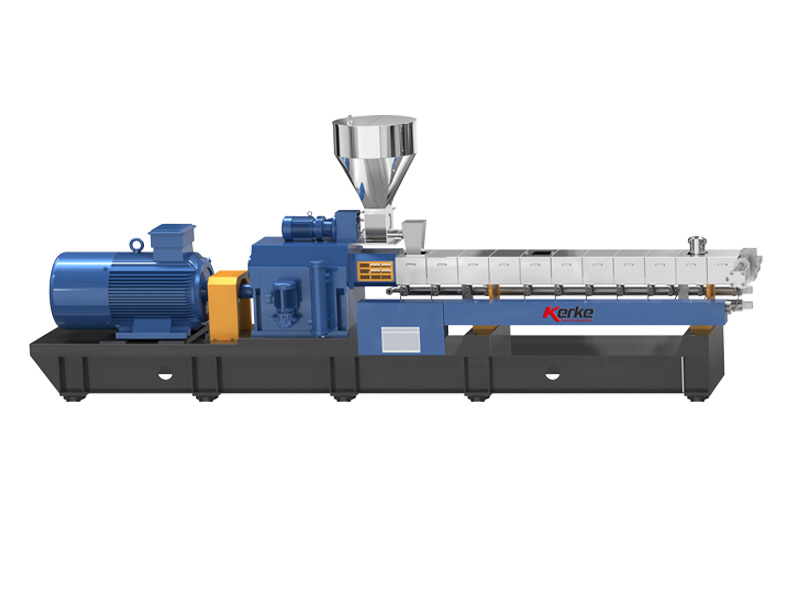
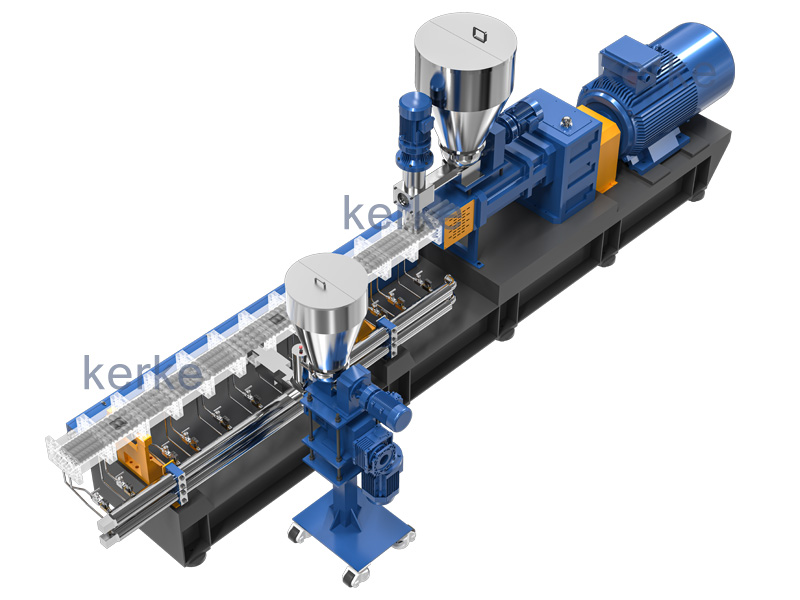
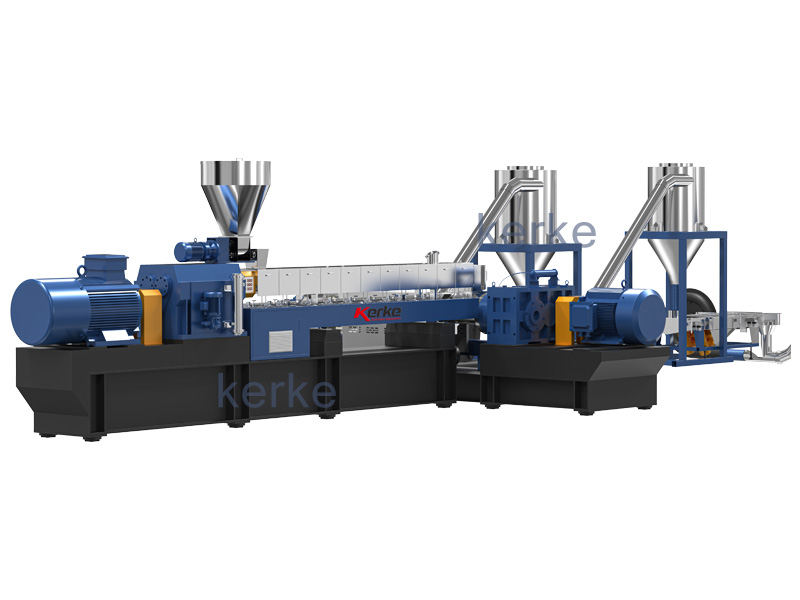
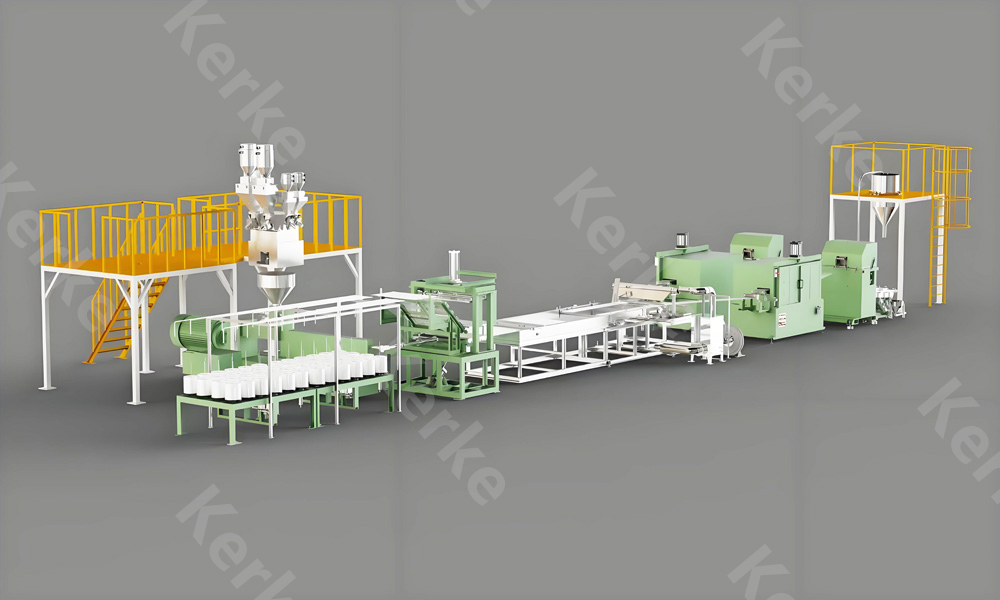
Selecting twin screw extruders with low maintenance requirements represents critical decision affecting operational costs, production efficiency, and equipment lifecycle value. Maintenance costs typically represent 10-20% of total ownership costs over equipment life, making maintenance considerations essential for optimizing return on investment. Kerke twin screw extruders incorporate numerous design features specifically engineered to minimize maintenance requirements while maintaining processing performance. Understanding maintenance factors enables selection of equipment delivering optimal value through reduced downtime, lower repair costs, and extended service life.
Maintenance requirements vary significantly between extruder designs, manufacturers, and application conditions. Industry studies indicate that maintenance costs range from $8,000 to $25,000 annually for mid-sized twin screw extruders, depending on design quality, application severity, and maintenance practices. Kerke’s 13+ years of experience in twin screw extruder manufacturing provides deep understanding of maintenance optimization strategies, enabling delivery of equipment achieving maintenance costs 30-50% below industry average.
Understanding Maintenance Cost Components
Comprehensive understanding of maintenance cost components enables informed equipment selection and lifecycle cost optimization. Twin screw extruder maintenance costs encompass multiple categories including routine maintenance, preventive maintenance, corrective maintenance, and overhauls. Each category contributes to total maintenance costs, requiring systematic evaluation during equipment selection. Proper cost analysis must consider both direct costs for parts and labor and indirect costs for downtime and lost production.
Routine maintenance includes scheduled activities performed at regular intervals including lubrication, cleaning, inspection, and minor adjustments. These activities typically require 2-8 hours monthly depending on extruder size and operating conditions. Routine maintenance costs represent 20-30% of total maintenance costs, ranging from $2,000 to $8,000 annually for mid-sized extruders. Kerke twin screw extruders feature simplified maintenance access and extended lubrication intervals, reducing routine maintenance time by 30-40% compared to typical designs.
Preventive Maintenance
Preventive maintenance includes scheduled component replacements and inspections aimed at preventing failures before they occur. Common preventive maintenance items include screw element replacements, barrel liner replacements, seal replacements, and bearing replacements. Preventive maintenance costs represent 40-50% of total maintenance costs, ranging from $4,000 to $15,000 annually for mid-sized extruders. Kerke extruders feature extended component service life through optimized materials and designs, reducing preventive maintenance frequency by 25-35%.
Preventive maintenance scheduling requires careful consideration of component life, application severity, and production schedules. Over-maintaining increases costs without providing commensurate benefits. Under-maintaining increases failure risk and associated downtime costs. Kerke provides maintenance guidelines specifying recommended intervals based on application conditions, enabling optimized maintenance balancing cost and reliability. Proper preventive maintenance scheduling reduces total maintenance costs by 15-25% compared to arbitrary scheduling approaches.
Corrective Maintenance
Corrective maintenance includes unscheduled repairs required to address equipment failures. Corrective maintenance costs represent 20-30% of total maintenance costs, ranging from $2,000 to $8,000 annually for mid-sized extruders operating under normal conditions. However, corrective maintenance costs can increase significantly for extruders operating under severe conditions or experiencing poor reliability. Kerke extruders feature robust designs and high-quality components reducing failure rates by 40-60% compared to typical alternatives.
Downtime costs associated with corrective maintenance often exceed direct repair costs. Industry studies indicate that downtime costs range from $500 to $2,000 per hour depending on facility size, product value, and market conditions. Reducing corrective maintenance frequency provides substantial economic benefits through reduced downtime. Kerke extruders achieving 40% fewer failures reduce downtime costs by $8,000 to $30,000 annually for typical facilities.
Key Design Features Affecting Maintenance Requirements
Twin screw extruder maintenance requirements significantly influenced by design features including screw configuration, barrel design, drive systems, and cooling systems. Understanding these features enables selection of equipment optimized for minimal maintenance requirements. Kerke twin screw extruders incorporate numerous design features specifically engineered to reduce maintenance requirements while maintaining processing performance.
Screw configuration significantly impacts maintenance requirements through effects on component wear and replacement frequency. Kerke offers modular screw systems enabling selective replacement of worn elements rather than complete screw replacement. Modular design reduces screw replacement costs by 40-60% compared to solid screw designs. Additionally, optimized element geometry and material selection extend service life by 50-100% compared to standard designs. Kerke screw elements typically achieve service life of 8,000-12,000 hours for moderate applications, significantly exceeding industry average of 5,000-7,000 hours.
Barrel Design and Materials
Barrel design and materials significantly affect maintenance requirements through wear resistance and replacement frequency. Kerke offers multiple barrel options including standard barrels, bimetallic barrels, and ceramic-coated barrels, each providing different service life characteristics. Standard barrels feature hardened steel construction with service life of 10,000-15,000 hours for moderate applications. Bimetallic barrels feature wear-resistant inner layer with service life of 20,000-30,000 hours, 2-3 times longer than standard barrels.
Barrel replacement represents significant maintenance cost typically ranging from $15,000 to $40,000 depending on extruder size and barrel type. Selecting extended-service-life barrels reduces replacement frequency and lifecycle costs. While bimetallic barrels cost 50-100% more than standard barrels, longer service life provides net savings of 30-50% on barrel lifecycle costs over equipment life. For facilities processing abrasive materials, ceramic-coated barrels provide service life exceeding 50,000 hours, with 2-3 times higher initial cost but 4-6 times longer service life compared to standard barrels.
Drive System Reliability
Drive system reliability significantly impacts maintenance requirements through effects on component life and failure frequency. Kerke twin screw extruders feature robust drive systems including high-quality gearboxes, bearings, couplings, and motors designed for continuous operation under demanding conditions. Kerke utilizes premium gearboxes from leading manufacturers including Rexnord, Flender, and SEW, providing proven reliability and extended service life.
Gearbox replacement represents major maintenance cost typically ranging from $20,000 to $50,000 depending on size and rating. Kerke gearboxes achieve service life of 15,000-25,000 hours with proper maintenance, significantly exceeding industry average of 10,000-15,000 hours. Extended gearbox life reduces replacement frequency by 30-50%, providing lifecycle cost savings of $10,000-$20,000 over equipment life. Kerke provides comprehensive gearbox maintenance recommendations including lubrication specifications, alignment requirements, and inspection schedules.
Kerke Low Maintenance Design Innovations
Kerke implements numerous design innovations specifically aimed at reducing maintenance requirements while enhancing reliability and performance. These innovations result from continuous R&D investment and 13+ years of field experience understanding maintenance pain points and optimization opportunities. Kerke low maintenance designs provide significant competitive advantages through reduced total ownership costs.
Kerke Quick-Change barrel system enables barrel replacement within 4-6 hours compared to 12-24 hours for conventional barrel replacement systems. Reduced barrel replacement time decreases downtime costs by 60-75% and associated production losses. Quick-Change system adds 10-15% to barrel cost but provides substantial returns through reduced downtime. For facilities replacing barrels every 3-5 years, downtime savings of $10,000-$25,000 per replacement easily justify initial investment.
Wear-Resistant Component Technologies
Kerke utilizes advanced wear-resistant technologies extending component service life and reducing replacement frequency. These technologies include specialized surface treatments, advanced material selections, and optimized component geometries. Wear-resistant components typically cost 20-40% more than standard components but provide 2-4 times longer service life, delivering net savings of 30-60% on lifecycle component costs.
Screw element surface treatments include nitriding, carburizing, and tungsten carbide hardfacing, each providing different wear resistance characteristics. Nitriding provides good general wear resistance at reasonable cost, extending service life by 50-100%. Tungsten carbide hardfacing provides superior wear resistance for severe applications, extending service life by 200-300%. Treatment selection depends on application severity and cost considerations, with Kerke application engineers providing recommendations based on specific requirements.
Sealing System Optimization
Sealing systems represent frequent maintenance points requiring regular replacement. Kerke optimizes sealing systems through advanced seal materials, improved seal geometries, and optimized operating conditions. These improvements extend seal service life by 50-100% compared to conventional designs, reducing replacement frequency from 3-6 months to 9-12 months for typical applications.
Kerke utilizes specialized seal materials including PTFE, PEEK, and high-performance elastomers selected for compatibility with processing materials and operating temperatures. Advanced seal materials cost 2-3 times more than standard materials but provide 2-4 times longer service life. For facilities replacing seals monthly at cost of $500-$1,000 per replacement, extended seal life saves $4,000-$8,000 annually on seal replacement costs.
Material Selection and Component Quality
Material selection and component quality significantly impact maintenance requirements and equipment reliability. Kerke maintains stringent quality standards for component materials, utilizing premium materials from qualified suppliers with traceable documentation. Premium materials typically cost 20-40% more than standard materials but provide 50-100% longer service life, delivering net savings on lifecycle costs.
Gearbox components including gears, shafts, and bearings represent critical elements affecting reliability. Kerke utilizes premium alloy steels with controlled chemical composition and heat treatment processes ensuring consistent quality and performance. Premium materials enable gearbox service life exceeding 20,000 hours compared to 12,000-15,000 hours for standard materials. Extended service life reduces gearbox replacement costs by $10,000-$20,000 over equipment life.
Bearing Selection and Installation
Bearings represent high-wear components requiring periodic replacement. Kerke utilizes premium bearings from leading manufacturers including SKF, NSK, and FAG, providing proven reliability and extended service life. Premium bearings cost 30-50% more than standard bearings but provide 2-3 times longer service life, reducing replacement frequency and maintenance costs.
Proper bearing installation significantly affects service life and reliability. Kerke implements precise installation procedures including controlled interference fits, proper lubrication, and accurate alignment. These practices prevent premature failures and ensure rated service life. Improper installation can reduce bearing life by 50-80%, causing unexpected downtime and increased maintenance costs. Kerke provides detailed installation guidelines and training to ensure proper bearing installation and maximum service life.
Thermal Management Systems
Thermal management systems significantly affect component life and maintenance requirements. Kerke twin screw extruders feature optimized cooling systems maintaining precise temperature control while extending component life. Efficient cooling reduces thermal stress on components, extending service life and reducing failure frequency. Kerke cooling systems achieve temperature control accuracy within ±1°C, reducing thermal cycling by 40-60% compared to systems with ±3°C accuracy.
Advanced thermal management features include optimized barrel heating/cooling zone configuration, high-efficiency cooling systems, and thermal insulation. These features reduce energy consumption by 15-25% while extending component service life by 20-30%. Energy savings of $5,000-$15,000 annually combined with reduced maintenance costs of $3,000-$8,000 annually provide substantial economic benefits.
Evaluation Criteria for Low Maintenance Extruders
Systematic evaluation of maintenance-related factors enables selection of extruders minimizing total ownership costs. Key evaluation criteria include component service life, maintenance access, spare parts availability, and manufacturer support. Kerke twin screw extruders excel across these criteria, providing low maintenance characteristics and reliable long-term operation.
Component service life data provides critical insight into expected maintenance requirements. Kerke provides comprehensive service life data for major components including screws, barrels, gearboxes, and seals. This data enables accurate maintenance planning and cost projection. Typical service life for Kerke components under moderate conditions includes: screw elements 8,000-12,000 hours, barrels 15,000-25,000 hours (bimetallic), gearboxes 20,000-25,000 hours, and seals 8,000-12,000 hours.
Maintenance Access and Design
Maintenance access significantly impacts maintenance time and associated costs. Kerke twin screw extruders feature optimized maintenance access including removable access panels, split barrel designs, and easy-access component locations. These features reduce maintenance time by 30-50% compared to designs with poor access. For typical maintenance requiring 8 hours on difficult-access designs, improved access reduces time to 4-6 hours, saving $400-$800 in labor costs per maintenance event.
Split barrel designs facilitate screw removal and barrel inspection without complete disassembly. Kerke split barrel designs enable screw removal within 1-2 hours compared to 4-8 hours for integral barrel designs. Reduced screw removal time decreases downtime costs by 50-75%, saving $2,000-$10,000 per screw replacement depending on production value and operating conditions.
Spare Parts Availability and Cost
Spare parts availability and cost significantly affect maintenance downtime and costs. Kerke maintains comprehensive spare parts inventory with 95%+ fill rate for common components, ensuring rapid availability when needed. Fast spare parts availability reduces downtime from weeks to days, saving $5,000-$25,000 per failure depending on production value. Kerke also provides spare parts pricing typically 20-30% below competitor prices, reducing maintenance costs.
Kerke spare parts inventory includes components for all extruder models regardless of age, supporting long equipment life. Unlike some manufacturers discontinuing parts for older models, Kerke maintains parts availability for equipment throughout service life, extending operational lifetime and maximizing return on investment. This policy provides significant advantages for facilities operating equipment 15-20 years or longer.
Manufacturer Support and Service
Manufacturer support and service capabilities significantly affect maintenance outcomes and equipment reliability. Kerke provides comprehensive support including installation assistance, training, preventive maintenance programs, and emergency service. Kerke service network includes 50+ trained service technicians across multiple countries, providing rapid response for maintenance needs.
Kerke preventive maintenance programs include scheduled inspections, component life monitoring, and replacement recommendations based on actual operating conditions. These programs prevent unexpected failures and optimize maintenance intervals, reducing total maintenance costs by 15-25%. Program costs range from $2,000-$5,000 annually but provide returns of 200-400% through prevented failures and optimized maintenance scheduling.
Cost Analysis and Lifecycle Considerations
Comprehensive cost analysis considering total lifecycle costs provides accurate basis for equipment selection decisions. Maintenance costs represent significant portion of lifecycle costs, requiring careful evaluation during selection. Kerke twin screw extruders deliver superior lifecycle value through low maintenance requirements, extended service life, and reliable performance.
Initial equipment cost varies significantly between designs and manufacturers. Kerke KTE-75D twin screw extruder with pricing of $180,000-$220,000 represents premium compared to lower-cost alternatives priced at $120,000-$150,000. However, premium pricing provides substantial returns through lower maintenance costs, longer service life, and higher reliability. Over 10-year equipment life, total ownership costs including maintenance, energy, and downtime often favor Kerke despite higher initial investment.
Five-Year Cost Comparison
Five-year cost comparison demonstrates lifecycle advantages of low-maintenance designs. Assuming typical operation of 6,000 hours annually, five-year lifecycle cost comparison for Kerke KTE-75D versus standard alternative includes: Initial cost $200,000 versus $140,000, maintenance costs $60,000 versus $120,000, energy costs $180,000 versus $210,000, and downtime costs $20,000 versus $60,000. Total five-year costs for Kerke: $460,000 versus $530,000 for standard alternative, providing $70,000 savings over five years despite $60,000 higher initial cost.
Ten-year cost comparison shows even greater advantages as differences accumulate. Assuming equipment replacement at year 10, ten-year lifecycle costs include: Initial costs (with replacement) $400,000 versus $280,000, maintenance costs $120,000 versus $240,000, energy costs $360,000 versus $420,000, and downtime costs $40,000 versus $120,000. Total ten-year costs for Kerke: $920,000 versus $1,060,000 for standard alternative, providing $140,000 savings over ten years.
Return on Investment Analysis
Return on investment analysis for premium low-maintenance extruders demonstrates attractive economics. Kerke KTE-75D requires additional $60,000 investment compared to standard alternative but delivers annual savings of $14,000 through reduced maintenance costs ($12,000), reduced energy costs ($6,000), and reduced downtime costs ($4,000) net of additional investment. Simple payback period of 4.3 years provides attractive ROI of 23% over 10-year equipment life.
ROI improves further when considering extended service life benefits. Kerke extruders achieving 15-year service life compared to 10-year life for standard alternatives provide additional years of production without replacement costs. Assuming annual profit contribution of $50,000 from extruder operation, 5 additional years provides $250,000 additional profit, significantly improving overall ROI. Combined ROI including extended service life exceeds 40% over equipment lifetime.
Kerke Twin Screw Extruder Models for Low Maintenance
Kerke offers comprehensive range of twin screw extruder models optimized for low maintenance operation across different scales and applications. Model selection depends on throughput requirements, application severity, and budget considerations. Kerke application engineers assist customers in selecting optimal models balancing performance, reliability, and maintenance requirements.
Kerke KTE-36B laboratory extruder provides small-scale platform with low maintenance requirements for testing and development. With screw diameter of 36mm and simplified design, this model achieves minimal maintenance requirements while providing processing capabilities for small-scale trials. Pricing for KTE-36B ranges from $35,000-$45,000 depending on configuration. Annual maintenance costs for KTE-36B typically range from $2,000-$3,000, representing low maintenance burden for laboratory operation.
Mid-Range Production Models
Kerke KTE-65B and KTE-75D models provide mid-range production capacity with excellent low maintenance characteristics. These models feature robust construction, premium components, and optimized designs achieving maintenance costs 30-40% below industry average. Pricing for KTE-65B ranges from $120,000-$150,000 depending on configuration. Pricing for KTE-75D ranges from $180,000-$220,000 depending on configuration.
Kerke KTE-75D particularly optimized for demanding production applications requiring reliable low-maintenance operation. This model features heavy-duty construction, premium gearbox, and wear-resistant components providing excellent durability. Annual maintenance costs for KTE-75D typically range from $10,000-$15,000, significantly below industry average of $18,000-$25,000 for comparable extruders. Throughput ranges from 500 to 1500 kg/h depending on application, suitable for medium to large production facilities.
High-Capacity Production Models
Kerke KTE-95D and KTE-135D models provide high-capacity production with advanced low maintenance features. These models incorporate heavy-duty components, robust drive systems, and optimized cooling systems achieving excellent reliability under demanding conditions. Pricing for KTE-95D ranges from $280,000-$350,000 depending on configuration. Pricing for KTE-135D ranges from $450,000-$600,000 depending on configuration.
Kerke KTE-135D particularly suited for high-volume production requiring maximum reliability and minimum maintenance. This model features redundant drive systems, comprehensive monitoring capabilities, and extended service components providing exceptional reliability. Annual maintenance costs for KTE-135D typically range from $18,000-$25,000, significantly below industry average of $30,000-$40,000 for comparable high-capacity extruders. Throughput ranges from 2,000 to 5,000 kg/h depending on application.
Maintenance Best Practices
Implementing proper maintenance practices maximizes equipment reliability and minimizes maintenance costs regardless of extruder design. Kerke provides comprehensive maintenance guidelines and training programs ensuring customers achieve optimal maintenance outcomes. Following best practices reduces maintenance costs by 20-30% compared to reactive or poorly planned maintenance approaches.
Preventive maintenance scheduling based on actual operating conditions provides superior results compared to fixed-interval schedules. Kerke recommends monitoring component condition through vibration analysis, temperature monitoring, and performance measurements to determine optimal replacement timing. Condition-based maintenance prevents premature replacements while preventing catastrophic failures. Condition-based maintenance typically reduces maintenance costs by 15-25% compared to fixed-interval approaches.
Lubrication Management
Proper lubrication represents critical maintenance activity significantly affecting component life and reliability. Kerke specifies lubrication requirements including lubricant types, intervals, and application methods for each lubrication point. Following lubrication guidelines extends bearing life by 50-100% and gearbox life by 30-50%, reducing replacement costs by $15,000-$30,000 over equipment life.
Kerke recommends using premium synthetic lubricants for critical applications including gearboxes and high-speed bearings. Synthetic lubricants cost 2-3 times more than mineral lubricants but provide 2-3 times longer service life and superior protection under severe conditions. For gearboxes requiring lubrication changes at 4,000-6,000 hours with mineral oils, synthetic lubricants extend intervals to 10,000-15,000 hours, reducing lubrication labor and disposal costs by 50-70%.
Cleaning and Inspection
Regular cleaning and inspection activities prevent issues and enable early detection of developing problems. Kerke recommends daily cleaning of critical areas including vent ports and cooling surfaces to prevent buildup that causes operational issues. Weekly inspections of seals, bearings, and drive components detect developing problems before failures occur. Preventing failures through early detection saves $5,000-$15,000 per prevented failure.
Kerke provides inspection checklists and procedures ensuring comprehensive coverage of critical components. Training operators to recognize early warning signs including unusual sounds, vibrations, or temperature changes enables proactive maintenance preventing costly failures. Early detection typically enables repairs at 30-50% of costs compared to failure repairs requiring component replacement.
Monitoring and Predictive Maintenance
Advanced monitoring and predictive maintenance capabilities significantly reduce maintenance costs by preventing failures and optimizing maintenance intervals. Kerke twin screw extruders feature optional monitoring systems including vibration sensors, temperature sensors, and performance monitoring enabling predictive maintenance strategies. Predictive maintenance reduces unscheduled downtime by 50-70% and total maintenance costs by 15-25%.
Vibration monitoring provides early detection of bearing and gearbox problems before failures occur. Kerke offers vibration monitoring systems with sensors on critical bearings and gearboxes, detecting developing problems months before failure. Vibration monitoring systems cost $8,000-$15,000 depending on configuration but prevent failures costing $20,000-$50,000 each. Preventing just one gearbox failure covers vibration monitoring investment multiple times over.
Temperature Monitoring
Temperature monitoring of bearings, gearboxes, and motor windings provides early warning of developing problems. Kerke incorporates temperature sensors in critical components, enabling continuous monitoring and alarm activation for abnormal conditions. Temperature monitoring prevents catastrophic failures and enables maintenance planning during scheduled shutdowns, reducing downtime costs by 30-50%.
Infrared thermography provides additional capability for detecting temperature anomalies not covered by embedded sensors. Periodic infrared scanning of electrical components, bearings, and drive systems detects developing problems including electrical connection heating, bearing overheating, and insulation degradation. Annual infrared inspection costs $1,000-$2,000 but prevents failures costing $10,000-$30,000, providing ROI of 500-1500%.
Performance Trend Analysis
Performance trend analysis monitors key operating parameters including power consumption, throughput, and quality metrics to detect equipment degradation. Kerke control systems with data logging capabilities enable performance tracking over time, identifying trends indicating developing problems. Performance monitoring enables maintenance planning before failures cause quality issues or production interruptions.
Kerke offers optional performance monitoring software analyzing trends and predicting maintenance requirements. Software costs $5,000-$10,000 but provides substantial benefits through optimized maintenance scheduling and prevented failures. Performance monitoring typically reduces maintenance costs by 10-15% and improves reliability by 20-30%.
Training and Knowledge Transfer
Comprehensive training ensures proper operation and maintenance practices, maximizing equipment reliability and minimizing maintenance costs. Kerke provides extensive training programs including installation training, operator training, and maintenance training. Proper training reduces operator errors causing equipment damage and enables early problem detection, reducing maintenance costs by 15-25%.
Operator training covers proper startup and shutdown procedures, operating parameter adjustment, and basic troubleshooting. Well-trained operators prevent operational errors causing equipment damage and detect developing problems early. Kerke operator training typically requires 2-3 days and costs $2,000-$4,000 including instructor time and materials. Training investment prevents errors costing $5,000-$20,000 per incident, providing substantial returns.
Maintenance Personnel Training
Maintenance personnel training ensures proper maintenance techniques and procedures, maximizing component life and preventing maintenance-induced failures. Kerke provides maintenance training covering lubrication, component replacement, alignment, and troubleshooting. Training covers both preventive maintenance procedures and corrective maintenance techniques.
Kerke maintenance training typically requires 3-5 days and costs $3,000-$6,000 depending on depth and scope. Well-trained maintenance personnel perform maintenance more efficiently and effectively, reducing maintenance time by 20-30% and preventing maintenance errors. Maintenance errors represent 10-15% of all equipment failures, with typical repair costs of $5,000-$20,000 per error. Training preventing just one maintenance error covers training investment multiple times over.
Environmental and Operating Condition Considerations
Environmental and operating conditions significantly affect maintenance requirements and equipment reliability. Kerke provides recommendations for optimal operating conditions and guidance for operating under challenging conditions. Understanding environmental effects enables proper equipment selection and maintenance planning to minimize maintenance costs.
Ambient temperature affects cooling system performance and component life. Kerke extruders designed for operation in ambient temperatures from 5°C to 40°C with standard cooling systems. Operation outside this range may require enhanced cooling or special components, increasing costs but ensuring reliable operation. Operating in high ambient temperatures above 40°C increases maintenance requirements by 20-40% due to increased thermal stress on components.
Ambient Humidity and Corrosion
High ambient humidity accelerates corrosion on electrical components and steel parts. Kerke offers enhanced corrosion protection options for operation in humid or corrosive environments including stainless steel components, corrosion-resistant coatings, and sealed electrical enclosures. Enhanced corrosion protection adds 10-20% to equipment cost but extends component life by 50-100% in corrosive environments.
For operation in coastal areas with salt air or chemical environments with corrosive atmospheres, Kerke recommends additional protection including epoxy coating of steel components, stainless steel hardware, and enhanced electrical enclosure protection. These additions increase equipment cost by 15-25% but prevent corrosion-related failures, saving $20,000-$50,000 over equipment life.
Material Characteristics
Material characteristics significantly affect wear rates and maintenance requirements. Abrasive materials including filled polymers, glass-filled compounds, and minerals cause accelerated wear on screws and barrels. Kerke provides wear-resistant options including tungsten carbide coatings and bimetallic barrels for abrasive materials. Wear-resistant options add 30-50% to component costs but extend service life by 200-300% for abrasive applications.
Corrosive materials including PVC with stabilizers and certain fluoropolymers cause corrosion on steel components. Kerke provides corrosion-resistant materials including stainless steel screws and barrels for corrosive applications. Stainless steel components cost 2-3 times more than standard steel components but provide 3-5 times longer service life in corrosive applications, providing net savings on lifecycle costs.
Case Studies: Maintenance Cost Reduction
Kerke’s extensive experience includes numerous successful case studies demonstrating maintenance cost reduction achievements. These case studies provide quantified evidence of maintenance optimization results across diverse applications and operating conditions.
Polymer Compound Production
European polymer compound producer upgrading from competitor extruder to Kerke KTE-75D achieved 45% reduction in maintenance costs over 5 years. Annual maintenance costs decreased from $22,000 to $12,000, providing $50,000 cumulative savings over 5-year period. Additionally, reduced downtime increased production availability by 4%, generating $80,000 additional revenue. Total economic benefits exceeded $130,000 over 5 years, paying for equipment premium within 3 years.
Key improvements included extended screw element life from 6,000 to 11,000 hours, extended barrel life from 12,000 to 22,000 hours, and reduced gearbox maintenance from annual to every 18 months. Preventive maintenance optimization reduced unnecessary replacements while preventing failures, contributing 30% of maintenance cost reduction.
Masterbatch Production
Asian masterbatch producer implementing Kerke KTE-65D achieved 38% reduction in maintenance costs over 4 years. Annual maintenance costs decreased from $18,000 to $11,200, providing $27,200 cumulative savings. Improved reliability reduced unscheduled downtime by 60%, saving $15,000 annually in production losses. Combined benefits totaled $87,200 over 4 years, providing ROI of 85% on equipment premium.
Key improvements included optimized screw configuration reducing wear by 30%, upgraded bearing materials extending service life by 50%, and improved sealing system eliminating seal failures. Operator training program reduced operational errors by 70%, preventing $8,000 annually in damage repairs.
PVC Pipe Profile Extrusion
North American PVC pipe producer implementing Kerke KTE-95D achieved 35% reduction in maintenance costs over 6 years. Annual maintenance costs decreased from $28,000 to $18,200, providing $58,800 cumulative savings. Extended component service life reduced replacement frequency, decreasing replacement parts costs by 40%. Total economic benefits exceeded $80,000 over 6 years, providing excellent return on investment.
Key improvements included stainless steel corrosion-resistant components eliminating corrosion-related failures, optimized cooling system reducing thermal stress, and enhanced sealing system preventing material leakage. Preventive maintenance program optimized maintenance intervals, reducing unnecessary maintenance by 25%.
Future Trends in Low Maintenance Design
Low maintenance extruder technology continues evolving with advances in materials, monitoring technologies, and predictive maintenance capabilities. Future trends include increased use of advanced materials, enhanced monitoring systems, greater automation of maintenance tasks, and improved predictive capabilities. Kerke invests continuously in research and development to incorporate emerging technologies into product offerings.
Advanced materials including ceramic coatings, diamond-like carbon coatings, and advanced composites will further extend component service life. Kerke development efforts focus on materials providing 5-10 times longer service life than current materials for severe applications. While advanced materials may increase initial costs by 30-50%, extended service life provides net savings of 40-60% on lifecycle component costs.
Smart Monitoring and AI
Smart monitoring systems incorporating artificial intelligence will enable predictive maintenance with unprecedented accuracy. Kerke development efforts focus on systems analyzing multiple parameters including vibration, temperature, current, and performance data to predict failures months in advance. AI-based predictive maintenance will reduce unscheduled downtime by 70-80% and total maintenance costs by 20-30% compared to current practices.
Cloud-based monitoring will enable remote diagnostics and predictive maintenance support from Kerke experts worldwide. Remote monitoring capabilities reduce service response times from days to hours, preventing extended downtime. Cloud-based systems typically cost $5,000-$10,000 annually but save $15,000-$30,000 annually through reduced downtime and optimized maintenance.
Automated Maintenance
Automated maintenance systems will perform routine maintenance tasks automatically, reducing labor requirements and ensuring consistency. Kerke development projects include automatic lubrication systems, self-cleaning vent ports, and automatic filter changing systems. Automated maintenance typically adds 5-10% to equipment cost but reduces maintenance labor by 30-50% and improves reliability by 20-30%.
Automatic lubrication systems deliver precise lubricant quantities at optimal intervals, extending component life by 30-50% compared to manual lubrication. Systems cost $3,000-$6,000 but save $2,000-$4,000 annually in lubrication labor and extend component life providing additional savings of $5,000-$10,000 annually. ROI for automatic lubrication typically exceeds 200% over equipment life.
Conclusion
Selecting twin screw extruders with low maintenance requirements requires systematic evaluation of design features, component quality, manufacturer support, and lifecycle costs. Kerke twin screw extruders excel across these criteria, providing superior reliability, reduced maintenance costs, and excellent lifecycle value. Investment in low-maintenance designs delivers substantial returns through reduced downtime, lower repair costs, and extended service life.
Kerke’s 13+ years of experience and continuous innovation ensure delivery of extruders optimized for low maintenance operation while maintaining processing performance. By partnering with Kerke and implementing proper maintenance practices, facilities achieve minimum maintenance costs, maximum uptime, and optimal return on investment. As maintenance technologies continue advancing, Kerke remains positioned to deliver cutting-edge solutions providing even greater reliability and lower maintenance costs in future.