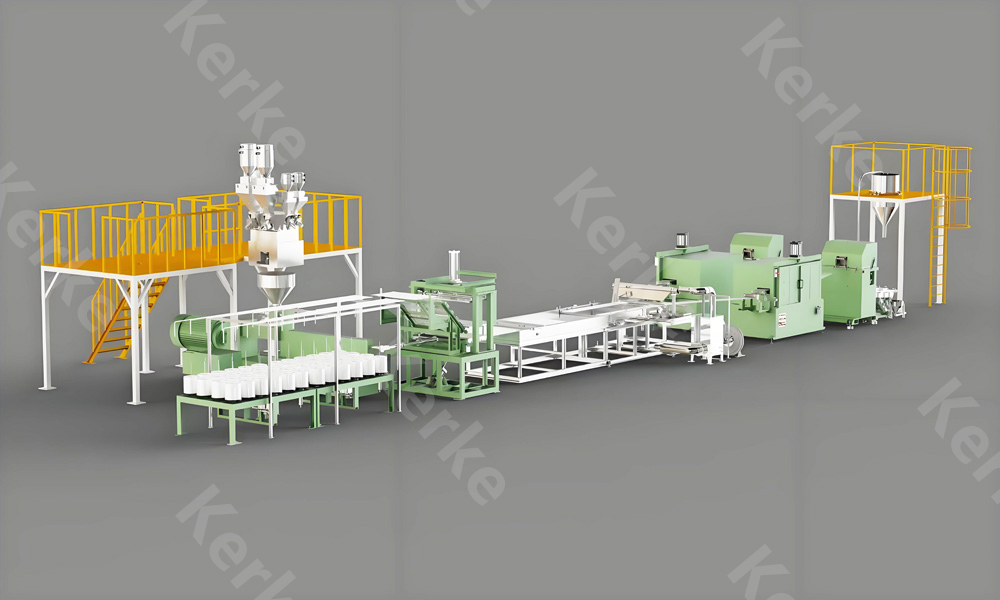
In the polymer processing, material research, and small-batch compounding industries, the laboratory twin-screw extruder stands as an indispensable core equipment, bridging theoretical formula research and industrial mass production. As a precision-driven experimental tool, it delivers consistent, controllable, and scalable processing data, making it the first choice for R&D teams, academic institutions, and material manufacturers worldwide.
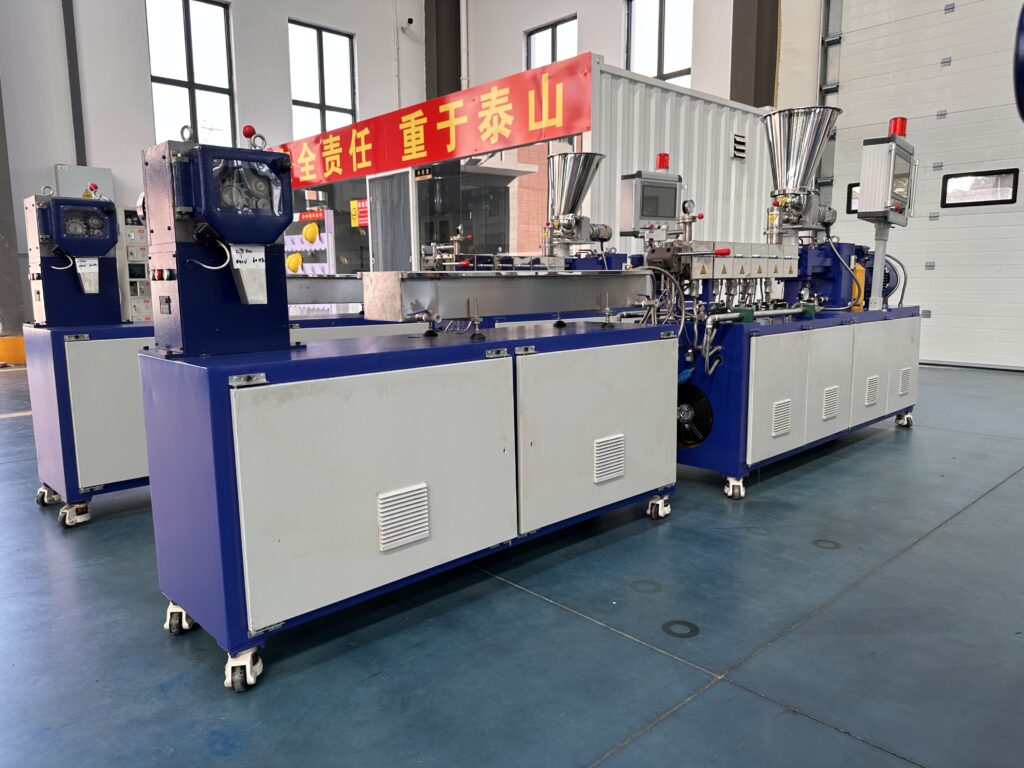
I. Definition of Laboratory Twin-Screw Extruder
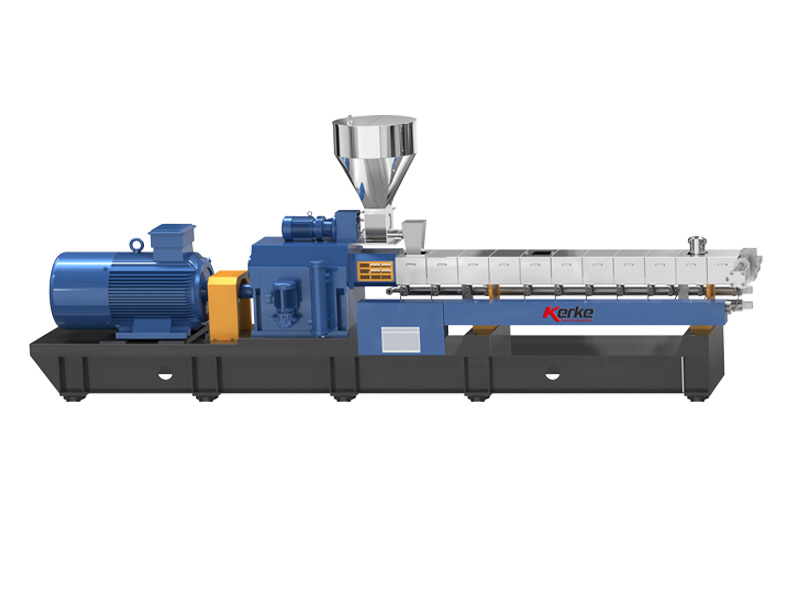
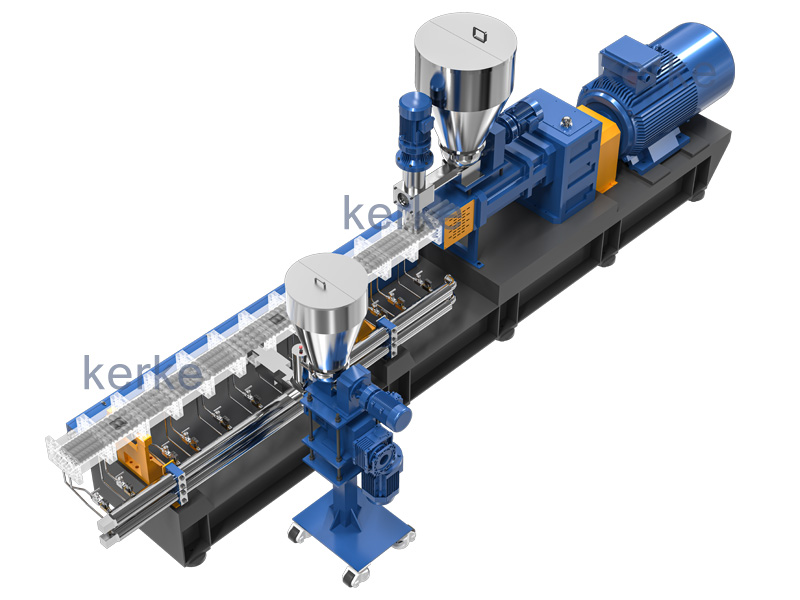
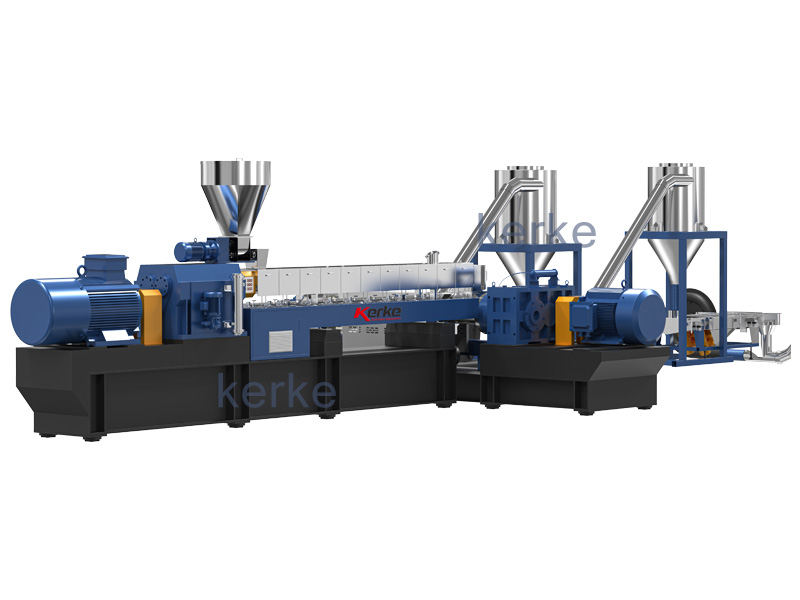
A laboratory twin-screw extruder is a small-scale, high-precision polymer processing device designed for experimental research, formula development, small-batch trial production, and performance testing of polymer materials. Unlike large-scale industrial twin-screw extruders, it features a compact structure, precise parameter control, low material consumption, and strong flexibility, making it ideal for simulating industrial production processes with minimal raw material waste. Typically equipped with co-rotating parallel twin screws (the most mainstream configuration), it completes continuous processes including feeding, plasticizing, shearing, mixing, dispersing, exhausting, and molding, catering to the R&D needs of thermoplastics, masterbatches, biodegradable materials, composites, and modified polymers.
II. Working Principle of Laboratory Twin-Screw Extruder
The core operating mechanism of a laboratory twin-screw extruder relies on the synchronous rotation of a pair of precisely meshed co-rotating parallel screws inside a segmented barrel. This mechanical motion drives material transportation and continuous physical-chemical reactions, with the entire process divided into five key stages:
1. Feeding & Conveying Stage
Raw materials (polymer resins, fillers, additives, reinforcements, etc.) are fed into the barrel’s feeding zone via a precision metering feeder (gravimetric or volumetric). The rotating screw’s conveying thread pushes materials forward steadily, preventing material bridging and ensuring uniform feeding. This stage maintains low temperature and shear force to avoid premature material melting.
2. Plasticizing & Melting Stage
As materials move to the compression zone, the screw thread depth gradually decreases, increasing material compression. Barrel heating modules and shear heat from screw rotation raise the temperature to the polymer’s melting point, turning solid resin into a viscous melt. This stage ensures thorough melting of base resins and preliminary mixing with additives.
3. Mixing & Dispersing Stage
The melt enters the mixing zone equipped with shear blocks, kneading blocks, and toothed mixing elements. High-intensity shear and extrusion from the meshing screws break down agglomerates (fillers, pigments, additives), achieving uniform dispersion and distribution. This is the core stage for formula performance optimization, directly impacting material uniformity and mechanical properties.
4. Exhausting & Degassing Stage
Most lab twin-screw extruders feature a vacuum exhaust port to remove volatile components (moisture, residual solvents, low-molecular-weight gases) from the melt. This eliminates air bubbles, improves product compactness, and enhances surface smoothness and mechanical strength, critical for high-performance material research.
5. Molding & Discharging Stage
The purified melt is pushed to the die head via the screw’s metering zone, where it is extruded into strips, sheets, or other custom shapes. The extruded melt is cooled, dried, and pelletized to obtain final experimental samples for performance testing (tensile strength, impact resistance, heat resistance, etc.) and industrial production verification.
III. Core Features of Laboratory Twin-Screw Extruder
Laboratory twin-screw extruders are engineered to meet R&D precision and flexibility needs, with distinct advantages over single-screw extruders and large industrial models. Key features include:
1. Ultra-High Precision Control
Equipped with PLC touchscreen control systems and digital parameter adjustment, it enables precise control of temperature (±1℃ accuracy), screw speed, feeding rate, vacuum pressure, and torque. Real-time data monitoring and storage ensure reproducible experimental results, eliminating data deviations caused by manual operation.
2. Compact Structure & Small Footprint
Designed for laboratory and R&D workshop environments, it has a small footprint, modular layout, and easy installation. It requires no large-scale infrastructure, making it suitable for universities, research institutes, and enterprise R&D centers with limited space.
3. Low Material Consumption & High Cost-Efficiency
Unlike industrial extruders that require hundreds of kilograms of raw materials per batch, lab models only need 500g to 5kg of materials for valid experiments, drastically reducing R&D costs for high-value polymers, special additives, and small-batch formulas.
4. Modular & Flexible Design
Screw elements, barrel segments, and die heads are modular and interchangeable. Users can customize screw combinations, barrel lengths, and exhaust ports to adapt to different materials (plastics, rubber, biodegradable polymers, nanocomposites) and processes (compounding, filling modification, reactive extrusion).
5. Easy Cleaning & Quick Switching
The barrel features a quick-open hydraulic or manual structure, and screw elements are detachable, simplifying cleaning and material switching. This reduces downtime between formula trials and improves R&D efficiency.
6. Wide Material Adaptability
Compatible with nearly all thermoplastic polymers, including PP, PE, ABS, PC, PA, PET, PLA, PHA, and high-performance engineering plastics. It supports filled modification (glass fiber, carbon fiber, talc powder), masterbatch production (color masterbatch, functional masterbatch), and reactive extrusion (grafting, crosslinking).
IV. Configuration & Components of Laboratory Twin-Screw Extruder
A high-performance laboratory twin-screw extruder consists of several core systems, each optimized for precision and stability. The standard configuration includes:
1. Screw & Barrel System
The core component: screws are made of high-speed tool steel or alloy steel with nitriding/carbide coating for wear and corrosion resistance; barrels are segmented alloy barrels with bimetallic inner liners for extended service life. Screw diameters typically range from 16mm to 25mm (standard laboratory-grade models), with length-diameter ratios (L/D) of 32:1, 40:1, or 48:1 to meet different mixing and compounding requirements for R&D trials.
2. Transmission System
Includes a high-torque gearbox, motor, and bearing assembly, providing stable speed regulation and sufficient torque for high-viscosity material mixing. Overload protection prevents equipment damage from sudden load spikes.
3. Feeding System
Precision gravimetric metering feeders (dual-differential design, standard for high-precision laboratory models) ensure stable and accurate feeding of powder raw materials, granular resins, and viscous additives, with independent speed regulation to eliminate feeding fluctuations and ensure uniform material delivery.
4. Temperature Control System
Multi-stage independent temperature control (electric heating + air/water cooling) for each barrel zone and die head, with rapid heating and cooling responses to maintain stable process temperatures.
5. Vacuum Exhaust System
Includes a vacuum pump, exhaust port, and sealing assembly, with adjustable vacuum degree to effectively remove volatiles and improve melt quality.
6. Control & Data Acquisition System
Industrial PLC touchscreen with intuitive human-machine interface (HMI), supporting parameter presetting, real-time monitoring, data recording, curve analysis, and fault alarms. Some models support remote monitoring for smart R&D management.
7. Auxiliary Equipment
Matching accessories include cooling water tanks, air dryers, pelletizers, traction machines, and melt pumps, forming a complete experimental line to streamline sample preparation.
V. Detailed Application Scenarios of Laboratory Twin-Screw Extruder
The versatility of laboratory twin-screw extruders makes them widely used across polymer, chemical, material science, and manufacturing industries. Core application scenarios are detailed below:
1. Polymer Formula Development & Optimization
The most core scenario: R&D teams test different resin ratios, filler dosages, additive types, and processing parameters to develop new materials with targeted performance (high strength, high temperature resistance, flame retardancy, biodegradability). Used for modified plastics, polymer alloys, and special functional materials.
2. Masterbatch Production & Performance Testing
Small-batch trial production of color masterbatches, filler masterbatches, flame retardant masterbatches, and antistatic masterbatches. It verifies color uniformity, dispersion effect, and masterbatch compatibility with base resins, guiding industrial masterbatch production.
3. Filling & Reinforcement Modification
Tests glass fiber, carbon fiber, talc powder, calcium carbonate, and nanomaterial filling modification to improve material rigidity, toughness, and heat resistance. Widely used in automotive, electronics, and construction material R&D.
4. Biodegradable & Bio-Based Material Research
Processes PLA, PHA, starch-based composites, and other eco-friendly materials, optimizing processing parameters to solve issues like poor thermal stability and low mechanical strength, supporting sustainable material innovation.
5. Reactive Extrusion Experiments
Conducts in-situ chemical reactions (grafting, crosslinking, polycondensation) during extrusion to prepare functional polymers, reducing reaction steps and improving production efficiency compared to traditional reactors.
6. Academic Research & Teaching
Used in university polymer science, material engineering labs and vocational colleges for student teaching, scientific experiments, and thesis research, helping learners master polymer processing principles.
7. Small-Batch Trial Production & Market Verification
Produces small batches of new material samples (10-100kg) for customer testing, market verification, and certification, avoiding mass production risks and shortening product launch cycles.
8. Recycling & Regenerated Material Research
Tests recycled plastic modification, removing impurities and improving performance of recycled materials to support circular economy and waste plastic recycling projects.
VI. Detailed Scenario Interpretation: Why Choose a Laboratory Twin-Screw Extruder
Many enterprises and research institutions prioritize laboratory twin-screw extruders over industrial models or single-screw extruders for R&D, driven by irreplaceable practical advantages:
1. Minimize R&D Cost & Material Waste
Industrial extruders require large material volumes, while lab models only need grams to kilograms of raw materials, critical for high-value resins, rare additives, and small-batch formula trials. This drastically cuts R&D input and shortens the formula iteration cycle.
2. Ensure Experimental Data Reproducibility
Precise parameter control eliminates human error, generating stable, repeatable experimental data. This data is scalable to industrial production, ensuring lab results translate to mass production consistency and reducing trial production risks.
3. Maximize R&D Flexibility & Efficiency
Modular design supports quick parameter and structure adjustments, adapting to multiple material types and processes. Fast cleaning and switching reduce downtime, enabling R&D teams to complete more trials in less time.
4. Simulate Industrial Production Processes Authentically
Lab models retain the core structure and processing principles of industrial twin-screw extruders, fully replicating industrial mixing, shearing, and exhausting effects. Lab-verified formulas can be directly scaled up, eliminating process deviations between lab and factory.
5. Compact & Lab-Friendly Design
Small size, low noise, and easy operation fit laboratory environments without dedicated large workshops. It supports multi-station parallel R&D, making it ideal for small R&D teams and academic institutions.
6. Comprehensive Performance Testing Support
It can be paired with various testing equipment to analyze melt index, viscosity, mechanical properties, and thermal stability, providing full-chain data support for material performance optimization and new product certification.
VII. Recommended Laboratory Twin-Screw Extruder Models
For high-precision, stable, and cost-effective lab twin-screw extruders, Nanjing Kerke Extrusion Equipment Co., Ltd. offers three mainstream laboratory-grade models tailored to R&D and small-batch trial needs, with professional customization available for special process requirements. Other auxiliary extrusion equipment follows universal industry standards without brand specifications.
1. Kerke KTE-16 Lab Twin-Screw Extruder
Entry-level high-precision model, screw diameter 16mm, L/D 32:1/40:1 optional. Ultra-low material consumption (500g minimum batch), compact design, suitable for university labs, small R&D teams, and preliminary formula screening. Supports basic compounding, filling modification, and masterbatch trials.
2. Kerke KTE-20 Lab Twin-Screw Extruder
Best-selling universal model, screw diameter 20mm, L/D 40:1/48:1 optional. Balanced torque and mixing performance, compatible with nearly all thermoplastics, biodegradable materials, and high-viscosity polymers. Equipped with dual gravimetric metering feeders and full vacuum exhaust, ideal for enterprise R&D centers and medium-scale formula trials.
3. Kerke KTE-25D Lab Twin-Screw Extruder
High-performance laboratory model with expanded output, screw diameter 26mm, L/D 40:1/48:1 optional. Higher torque rating and stronger mixing capacity, suitable for continuous small-batch R&D and pilot-scale trials, supporting high-filler modification and reactive extrusion processes with stable output and consistent sample quality.
Universal Auxiliary Equipment Recommendations
Matching standard accessories include precision gravimetric feeders, water circulation cooling systems, air-cooling pelletizers, vacuum pumps, and PLC control cabinets. These are universally compatible with all lab twin-screw extruders and can be customized based on material and process needs.
VIII. Laboratory Twin-Screw Extruder Price (USD)
Pricing for Kerke laboratory-grade twin-screw extruders is based on model, configuration, and customization, with transparent, cost-effective quotes for global customers. All prices are in USD (FOB Nanjing), excluding shipping and taxes:
1. Kerke KTE-16 Lab Twin-Screw Extruder
Standard configuration price: $12,800 – $15,200. Custom upgrades (bimetallic barrels, high-torque gearboxes, remote monitoring, data logging software) add $2,000 – $3,500.
2. Kerke KTE-20 Lab Twin-Screw Extruder
Standard configuration price: $16,500 – $19,200. Custom upgrades (multi-stage vacuum exhaust, specialized mixing elements, advanced data export, touchscreen HMI enhancement) add $2,500 – $4,000.
3. Kerke KTE-25D Lab Twin-Screw Extruder
Standard configuration price: $23,000 – $25,800. Custom upgrades (high-output conveying systems, automatic pelletizing units, online melt monitoring interfaces, bimetallic screw-barrel assembly) add $2,800 – $4,500.
Universal Auxiliary Equipment Price Range
Standard auxiliary sets (precision gravimetric metering feeder + water circulation cooling system + air-cooling pelletizer): $2,800 – $5,200, varying by control precision, conveying capacity and customization degree. Custom auxiliary components are priced separately based on specific technical requirements.
IX. Common Problems, Solutions, Avoidance Methods & Misconceptions
During operation, laboratory twin-screw extruders may face issues caused by improper operation, parameter mismatch, or material issues. Below is a detailed breakdown of common problems, root causes, targeted solutions, and avoidance methods, with Kerke’s professional technical support to resolve failures efficiently.
1. Common Problem: Poor Melt Uniformity / Uneven Dispersion
Cause Analysis
Incorrect screw combination (insufficient mixing elements), low screw speed, uneven feeding, insufficient temperature, or high filler content leading to agglomeration.
Solutions
Optimize screw configuration by adding kneading/mixing elements; increase screw speed appropriately to enhance shear force; calibrate feeders for uniform feeding; raise barrel temperature in the mixing zone to improve melt fluidity; pre-dry fillers to reduce agglomeration.
Avoidance Methods
Select matching screw combinations based on material characteristics; pre-test feeding accuracy; pre-dry hygroscopic materials; Kerke provides free screw configuration guidance for all customers to avoid dispersion issues from the start.
2. Common Problem: Melt Bubble Defects / Porous Products
Cause Analysis
Insufficient vacuum exhaust, material moisture, volatile additives, blocked exhaust ports, or low melt pressure leading to gas retention.
Solutions
Check and clean exhaust ports; increase vacuum degree and exhaust time; pre-dry materials at 80-120℃ for 2-4 hours; replace low-volatility additives; adjust screw speed to stabilize melt pressure.
Avoidance Methods
Implement mandatory pre-drying for hygroscopic materials (PLA, PET); regularly maintain vacuum pumps and exhaust lines; monitor vacuum data in real time. Kerke extruders feature anti-blocking exhaust ports and visual vacuum monitoring to reduce bubble risks.
3. Common Problem: Screw Slipping / Material Bridging
Cause Analysis
Low feeding zone temperature, excessive lubricant, smooth resin surface, inconsistent particle size, or worn screw elements leading to poor conveying.
Solutions
Raise feeding zone temperature appropriately; reduce lubricant dosage; screen materials for uniform particle size; replace worn screw/conveying elements; use forced feeding devices.
Avoidance Methods
Standardize feeding zone temperature settings; control additive ratios; regularly inspect screw wear; Kerke’s high-friction conveying screw design effectively prevents slipping and bridging.
4. Common Problem: Overload / Motor Tripping
Cause Analysis
Excessive feeding rate, high melt viscosity, excessive filler content, blocked die head, or insufficient torque matching.
Solutions
Reduce feeding rate; increase barrel temperature to lower viscosity; adjust filler dosage; clean die head; check gearbox lubrication. Avoid forced operation to prevent equipment damage.
Avoidance Methods
Set reasonable feeding parameters based on material viscosity; conduct pre-experiments for high-filler formulas; clean die heads before operation. Kerke extruders have intelligent overload protection and real-time torque alarms to prevent tripping and damage.
5. Common Misconceptions in Operation
Misconception 1: Higher screw speed = better mixing. Excessively high speed causes shear degradation, poor dispersion, and equipment wear; optimal speed is material-specific.
Misconception 2: Higher temperature = faster melting. Excessively high temperature causes thermal degradation, discoloration, and performance loss; temperature should match the material’s melting point.
Misconception 3: Skipping pre-drying saves time. Moisture directly causes bubbles, poor performance, and equipment corrosion; pre-drying is mandatory for hygroscopic materials.
Misconception 4: Delaying cleaning saves effort. Residual material carbonization affects subsequent trials and damages screw/barrel surfaces; immediate cleaning after use is required.
X. Development Trends of Laboratory Twin-Screw Extruder
1. Intelligent & Digital Upgrading
Future lab extruders will integrate AI parameter optimization, remote monitoring, big data analysis, and automatic formula iteration. Smart HMI systems will recommend parameters based on material types, reducing manual operation dependence and improving R&D efficiency.
2. High-Precision & Micro-Scale Development
Micro-scale lab extruders (screw diameter <16mm) will grow in demand, supporting milligram-level experiments for high-value materials and reducing R&D costs further. Higher precision temperature and torque control will enhance experimental accuracy.
3. Green & Sustainable Adaptation
Equipment will be optimized for biodegradable polymers, recycled materials, and bio-based composites, with low-shear, low-temperature processing designs to protect material performance and support circular economy R&D.
4. Modular & Customized Integration
Modular components will be more interchangeable, supporting multi-process integration (extrusion + injection, extrusion + coating). Customized solutions for specific industries (medical, automotive, electronics) will become mainstream.
5. Energy-Saving & Environmentally Friendly Design
Energy-efficient motors, rapid temperature control systems, and low-noise designs will reduce power consumption and environmental impact, aligning with global low-carbon R&D standards.
6. Cross-Field Application Expansion
Applications will expand beyond polymers to food, pharmaceuticals, and composite materials, with specialized designs for new material systems, broadening the equipment’s application scope.
+86 15251813688 (Click here to contact us directly)