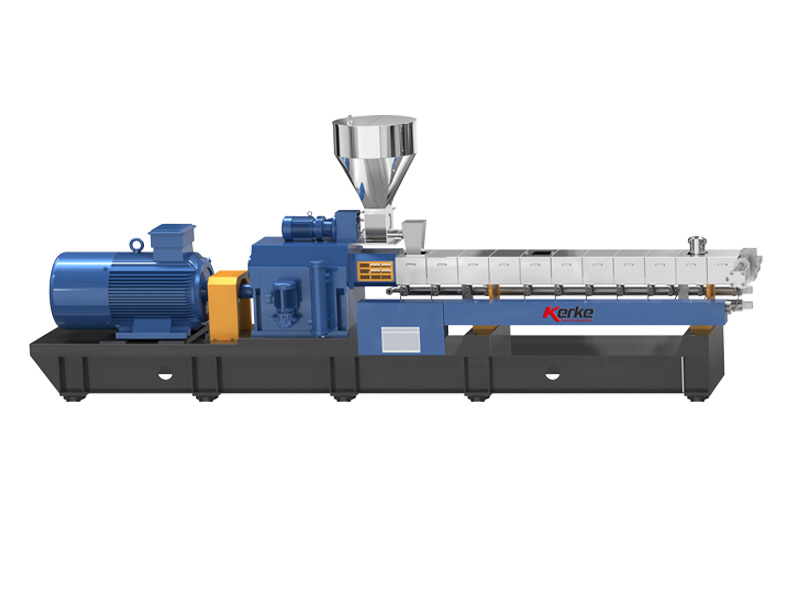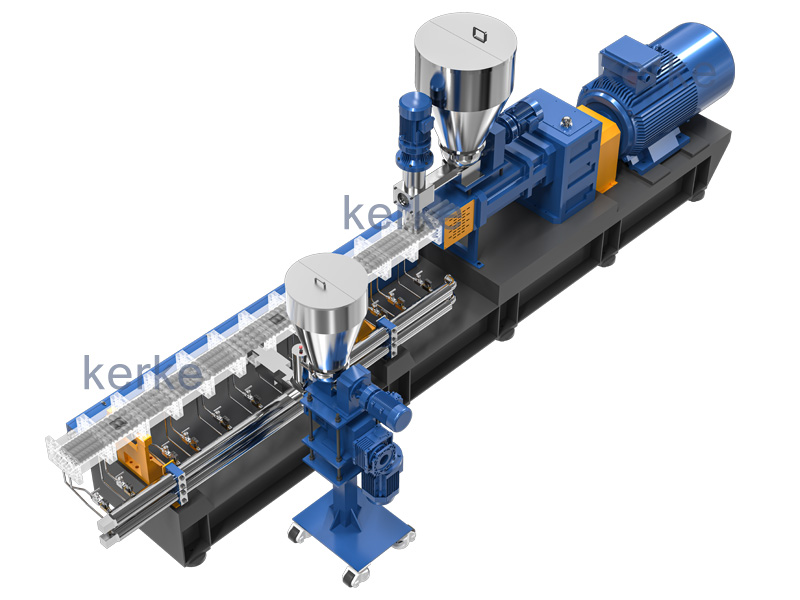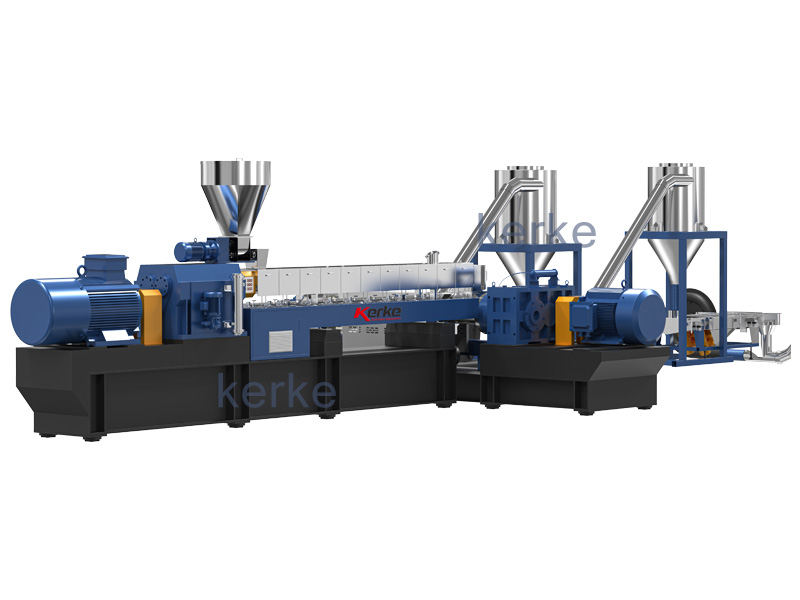
The global masterbatch industry continues to diversify as downstream sectors including packaging, automotive, electronics, and agriculture demand more customized material properties. As the core processing equipment for masterbatch production, the co-rotating twin screw extruder determines product quality, production efficiency, and operational cost through precise parameter control. Different masterbatch formulations — such as filler masterbatch, color masterbatch, flame retardant masterbatch, and engineering plastic compound — have vastly different processing characteristics due to variations in base resin, filler type, additive content, and performance requirements. Improper parameter setting often leads to issues like insufficient pigment dispersion, thermal degradation of materials, uneven product performance, high scrap rate, and even accelerated equipment wear. For masterbatch manufacturers, mastering scientific parameter adjustment methods for different formulations is essential to maintain stable product quality, improve production efficiency, and gain competitive advantage in the market.
As a professional manufacturer specializing in twin screw compounding extruders, Kerke has accumulated rich process experience in serving hundreds of masterbatch enterprises worldwide. The SHJ series masterbatch extruders are designed with high-precision control systems and modular screw structures, which can flexibly adapt to the processing needs of various formulations through scientific parameter matching. This article will systematically explain the core process parameters of masterbatch extruders and their impacts, provide targeted parameter adjustment strategies for mainstream masterbatch formulations, introduce standardized adjustment procedures and common problem troubleshooting methods, and combine the technical advantages of Kerke equipment to analyze the cost and benefit of parameter optimization, providing a comprehensive practical guide for masterbatch production enterprises.
1. Core Process Parameters of Twin Screw Masterbatch Extruder and Their Impacts
Before adjusting parameters for specific formulations, it is necessary to fully understand the role of each core process parameter and its impact on material plasticization, dispersion effect, product performance and production stability. Each parameter is not independent, but interacts and restricts each other. Only by clarifying the internal logic can we carry out targeted adjustment.
1.1 Temperature Profile: The Foundation of Material Plasticization
The temperature profile refers to the temperature setting of each heating zone along the barrel from the feeding port to the die head, which is the most basic and critical parameter in the extrusion process. The barrel is usually divided into 8 to 12 independent heating zones, each equipped with a heating element and a temperature sensor, which can realize independent precise temperature control. The temperature setting directly determines the melting state of the polymer resin: too low temperature will lead to insufficient plasticization, incomplete melting of solid materials, and poor dispersion of fillers and additives; too high temperature will cause thermal degradation of polymers and heat-sensitive additives, leading to product discoloration, performance decline, and even carbonization to form black spot impurities.
From the feeding zone to the die head, the temperature usually shows a trend of gradually rising first and then stabilizing or slightly decreasing. The feeding zone maintains a relatively low temperature to prevent materials from melting prematurely and bridging at the feeding port; the plasticization and mixing zone raises the temperature to promote resin melting and filler wetting; the exhaust zone properly controls temperature to facilitate the escape of volatile matter; the die head zone maintains stable temperature to ensure uniform melt discharge and stable parison shape. For different resin systems, the processing temperature range varies greatly. For example, PE-based masterbatch usually has a processing temperature of 160℃ to 200℃, while PA-based engineering masterbatch needs 220℃ to 260℃. The temperature setting must be adjusted according to the melting point and thermal stability of the base resin.
1.2 Screw Rotation Speed: Shear Intensity and Residence Time Control
Screw rotation speed directly determines the shear strength experienced by the material in the barrel and the residence time of the material in the extruder. Higher screw speed brings stronger shear and mixing effect, which helps to break filler agglomerates and improve dispersion uniformity. However, excessively high speed will generate a large amount of shear heat, leading to a sharp rise in melt temperature, which may cause thermal degradation of heat-sensitive materials. At the same time, high speed will shorten the residence time of materials, and materials that are difficult to plasticize may not be fully melted.
On the contrary, lower screw speed provides longer residence time, which is conducive to sufficient plasticization of materials and full devolatilization, but the shear strength is correspondingly reduced, which may lead to poor dispersion of fillers and pigments. The screw speed must be matched with the feeding rate to maintain a reasonable screw fill degree. Under the same feeding rate, too high speed will lead to low fill degree and weak shear effect; too low speed will lead to too high fill degree, increased motor load, and even torque overload. In actual production, the screw speed should be set according to the difficulty of material dispersion, thermal sensitivity and target output, and the optimal balance between dispersion effect, production efficiency and degradation risk should be found.
1.3 Feeding Rate: Output Balance and Screw Fill Degree
Feeding rate refers to the mass or volume of raw materials entering the extruder per unit time, which directly determines the production output of the equipment. For masterbatch production with multi-component formulas, accurate and stable feeding of each component is the premise to ensure the accuracy of formula ratio and stable product performance. At present, high-precision masterbatch production lines mostly use loss-in-weight feeders, which control the feeding speed in real time through weight feedback, with an accuracy of up to ±0.2%, ensuring the stability of each component ratio in long-term continuous production.
The feeding rate is closely matched with the screw speed. When the feeding rate increases and the screw speed remains unchanged, the fill degree of materials in the screw channel increases, the residence time becomes longer, and the shear effect per unit volume of material decreases. If the feeding rate exceeds the plasticizing capacity of the extruder, it will lead to insufficient plasticization, increased melt pressure fluctuation, and even overload shutdown. When adjusting the formula, the feeding rate should be adjusted synchronously according to the plasticizing difficulty and melt viscosity of the material. For high-filling and high-viscosity formulas, the feeding rate should be appropriately reduced to ensure sufficient plasticization and dispersion; for low-viscosity and easy-to-plasticize formulas, the feeding rate can be appropriately increased to improve production efficiency.
1.4 Vacuum Degassing: Volatile and Moisture Removal
Vacuum degassing is an essential process link for most masterbatch production. There will be a certain amount of moisture in raw materials, especially fillers such as calcium carbonate and talc, which are easy to absorb moisture. At the same time, low molecular oligomers, residual monomers and volatile additives in the resin will also be released under high temperature processing. If these gases cannot be discharged in time, they will form bubbles and pores inside the masterbatch pellets, resulting in defects such as silver streaks and voids on the product surface, and will also affect the mechanical properties of the final product. In severe cases, the moisture will cause hydrolysis degradation of polymers such as PET and PA at high temperature, greatly reducing product performance.
The vacuum degree of the degassing system and the opening position of the exhaust port directly affect the devolatilization effect. The higher the vacuum degree, the stronger the ability to remove volatile matter, but too high vacuum degree may easily cause the melt to be pumped out and block the exhaust pipeline. The number of exhaust stages should be set according to the moisture and volatile content of the material. For materials with high moisture content such as filler masterbatch, two-stage exhaust of natural exhaust plus vacuum exhaust is usually adopted; for materials with more volatile components such as flame retardant masterbatch, three-stage exhaust can be set. The screw element configuration of the exhaust section should also be matched. Usually, large-lead conveying elements are used to reduce the material fill degree, increase the free surface area of the melt, and improve the devolatilization efficiency.
1.5 Die Head Pressure and Pelletizing Parameters: Final Product Quality Assurance
Die head melt pressure is an intuitive reflection of the melt viscosity and flow state, and its stability directly affects the uniformity of discharge and the consistency of pellet size. The pressure is affected by many factors such as melt temperature, screw speed, feeding rate, filter screen blockage and die gap. Normal production should maintain stable die pressure, and the fluctuation range should be controlled within ±1bar. Excessive pressure fluctuation will lead to uneven pellet size and unstable product performance. When the pressure rises abnormally, it usually indicates that the filter screen is blocked and needs to be replaced in time.
Pelletizing parameters include cutting speed, cooling water temperature, drying air volume, etc., which directly affect the appearance quality and dimensional accuracy of masterbatch pellets. For strand pelletizing, the traction speed of the strand must match the extrusion speed to avoid too fast traction leading to fine and brittle pellets, or too slow traction leading to coarse and uneven pellets. For underwater pelletizing, the cutting speed and water temperature need to be adjusted according to the melt viscosity and discharge volume to ensure that the pellets have smooth surface, regular shape and no adhesion. The pelletizing parameters should be adjusted synchronously when switching formulations with different melt flow rates to ensure stable pellet quality.
2. Parameter Adjustment Strategies for Typical Masterbatch Formulations
Different types of masterbatch have great differences in formula composition, performance requirements and processing characteristics. The following will analyze the most common masterbatch formulations in the market one by one, and put forward targeted parameter adjustment schemes combined with practical production experience.
2.1 Calcium Carbonate Filler Masterbatch: High Filling Dispersion Balance
Calcium carbonate filler masterbatch is the most widely used and largest output masterbatch product, usually composed of 70% to 85% heavy calcium carbonate powder, PE or PP carrier resin, and a small amount of lubricant and coupling agent. Its core quality requirements are high dispersion uniformity, no white spots, good processing fluidity and high cost performance. The biggest processing difficulty lies in how to achieve sufficient dispersion of calcium carbonate powder under high filling conditions, while avoiding excessive shear heat leading to lubricant failure and resin degradation.
In terms of temperature profile setting, the temperature of the feeding zone should be controlled at 140℃ to 160℃ to ensure that the carrier resin begins to soften gradually after entering the barrel, so as to wrap the calcium carbonate powder. The temperature of the plasticizing mixing zone is increased to 170℃ to 190℃ to promote complete melting of the resin and full wetting of the filler surface. The temperature of the exhaust zone and the die head zone is maintained at 180℃ to 195℃. It should not be too high to avoid volatilization loss of low molecular lubricants. For PP carrier masterbatch, the overall temperature can be 10℃ to 15℃ higher than PE carrier.
In terms of screw speed and feeding rate, medium and high speed configuration is usually adopted to ensure sufficient shear strength to break calcium carbonate agglomerates. Taking Kerke SHJ-65 extruder as an example, the screw speed is set at 300rpm to 450rpm, and the feeding rate is matched at 250kg/h to 400kg/h according to the filling amount. The higher the calcium carbonate content, the higher the melt viscosity, and the feeding rate should be appropriately reduced to avoid torque overload. The vacuum degree of the exhaust system should be maintained above -0.08MPa to fully remove the moisture brought in by calcium carbonate powder and avoid bubbles in pellets. Since calcium carbonate has strong abrasiveness to screw and barrel, it is recommended to configure bimetallic wear-resistant screw barrel for long-term production. The price of SHJ-65 standard configuration with bimetallic screw is about 95,000 to 120,000 US dollars FOB Shanghai. Although the initial investment is 15% higher than that of ordinary nitriding screw, the service life is extended by 3 to 5 times, and the long-term operation cost is lower.
2.2 Color Masterbatch: Pigment Dispersion and Color Stability Control
Color masterbatch is composed of pigment, carrier resin, dispersant and other additives. According to the type of pigment, it can be divided into inorganic pigment masterbatch (such as titanium dioxide, carbon black, iron oxide) and organic pigment masterbatch. The core quality requirements are high pigment dispersion grade, uniform coloring, small color difference between batches, and no pigment agglomeration particles. The processing difficulty lies in that the particle size of pigment is very small, the surface energy is high, and it is very easy to agglomerate. It requires strong shear force to open the agglomerates, but organic pigments are usually poor in heat resistance, and excessive temperature will cause decomposition and discoloration.
For inorganic pigment masterbatch such as titanium white and carbon black, because the pigment has good heat resistance, the temperature can be appropriately increased to improve the fluidity of the carrier resin and enhance the wetting effect on the pigment. The temperature of the mixing zone is set at 180℃ to 210℃, and the screw speed can be appropriately increased to strengthen the shear dispersion. Taking PE-based carbon black masterbatch as an example, the screw speed of SHJ-65 extruder can be set at 350rpm to 500rpm, with strong shear kneading block configuration, which can achieve nano-scale dispersion of carbon black and ensure high coloring power and surface gloss of the product.
For organic pigment masterbatch, especially bright-colored organic pigments such as phthalocyanine red and azo yellow, temperature control must be strictly controlled to avoid pigment decomposition and discoloration. The overall processing temperature should be 10℃ to 20℃ lower than that of inorganic pigment masterbatch, and the temperature of the high shear zone should not exceed 200℃. The screw speed should be appropriately reduced to control the shear heat generation, and the residence time of materials in the high temperature zone should be shortened. At the same time, distributive mixing elements should be used as much as possible instead of too many strong shear kneading blocks to ensure uniform dispersion while avoiding local overheating. The feeding rate should be kept stable to avoid large fluctuations in melt temperature caused by changes in fill degree. For color masterbatch production, the loss-in-weight feeding system is essential to ensure the accurate proportion of pigment and carrier, avoid color difference between batches, and improve product consistency.
2.3 Functional Masterbatch: Thermal Sensitive Additive Protection
Functional masterbatch includes flame retardant masterbatch, antioxidant masterbatch, light stabilizer masterbatch, antistatic masterbatch, slipping agent masterbatch, etc. Its characteristic is that the content of functional additives is high, and most additives have certain thermal sensitivity. If the processing temperature is too high or the residence time is too long, the additives will decompose and fail, and even produce toxic and harmful gases. The core of parameter adjustment is to ensure the uniform dispersion of additives, while protecting the effective components from decomposition and maintaining the functional activity to the greatest extent.
Taking brominated flame retardant masterbatch as an example, most brominated flame retardants begin to decompose at about 220℃, releasing corrosive hydrogen bromide gas. Therefore, the processing temperature must be strictly controlled below 210℃, and the residence time of materials in the barrel should be shortened as much as possible. In terms of screw configuration, medium strength shear elements should be selected to avoid too many strong shear kneading blocks causing excessive temperature rise. The screw speed should be controlled at medium level, usually 250rpm to 350rpm for SHJ-65, to ensure both dispersion effect and no excessive shear heat. The vacuum system must be fully opened to remove the small molecular gas generated by trace decomposition in time, so as to avoid bubbles in the product and corrosion to the equipment. After production, the equipment must be cleaned with PE cleaning material in time to avoid residual flame retardant staying in the barrel for a long time and causing corrosion.
For masterbatches with low melting point additives such as slipping agent and antistatic agent, the temperature of the feeding zone should not be too high to avoid the additive melting prematurely and adhering to the screw, resulting in uneven feeding. The temperature of the mixing zone should be controlled above the melting point of the additive but below the decomposition temperature to ensure uniform mixing of the additive and the resin. The die head temperature can be appropriately reduced to facilitate pelletizing and avoid particle adhesion.
2.4 Engineering Plastic Compounding Masterbatch: High Performance Maintenance
Engineering plastic compounding masterbatch mainly takes PA, PC, PBT, ABS and other engineering plastics as carriers, and adds glass fiber, carbon fiber, toughening agent, flame retardant and other modification components. Its core requirement is to maintain the excellent mechanical properties of materials while achieving modification effects. The processing difficulty lies in the high melting point of engineering plastics, which requires higher processing temperature; glass fiber and other reinforcing fillers are highly abrasive, and the shear strength should be controlled to avoid excessive fracture of fiber length, which reduces the reinforcing effect.
In terms of temperature setting, it must be determined according to the melting point of the base resin. For PA6, the temperature of each zone is set at 220℃ to 260℃; for PC, it is 240℃ to 280℃. The temperature of the feeding zone should be appropriately high to ensure that the resin can be melted quickly after entering the barrel, so as to wrap the glass fiber added later and reduce the friction and wear of the glass fiber on the screw barrel. Glass fiber is usually added through the side feeder, and the position of the side feeding port should be after the resin is completely melted, so as to avoid the glass fiber staying in the barrel for too long and being sheared and broken too short. The screw speed should be controlled at medium level. Too high speed will lead to serious fiber breakage and reduce the mechanical strength of the product; too low speed will lead to poor dispersion of glass fiber and uneven performance.
Since engineering plastics are easy to absorb moisture and cause hydrolysis degradation at high temperature, the drying treatment before processing is essential. At the same time, high vacuum degassing must be adopted, with vacuum degree above -0.09MPa, to fully remove moisture and residual monomers. For glass fiber reinforced products, bimetallic screw barrel is a necessary configuration to resist the strong abrasion of glass fiber and ensure the long-term stability of equipment performance. The price of Kerke SHJ-65 extruder configured for engineering plastic modification is about 110,000 to 150,000 US dollars, including side feeder, high vacuum system and bimetallic screw barrel. Compared with ordinary configuration, the production of glass fiber reinforced masterbatch can bring 30% to 50% higher product added value, and the investment payback period is about 8 to 12 months.
2.5 Biodegradable Masterbatch: Degradation Risk Prevention
With the global demand for environmental protection, biodegradable masterbatch based on PLA, PBAT, PBS and other resins has developed rapidly in recent years. Such materials are very sensitive to heat and moisture, and are very prone to thermal degradation and hydrolysis during processing, resulting in decreased molecular weight and poor mechanical properties. Therefore, the parameter adjustment of biodegradable masterbatch must take anti-degradation as the core principle.
First of all, raw materials must be fully dried before processing. The moisture content should be controlled below 0.02%, otherwise hydrolysis will occur rapidly at high temperature. The drying temperature of PLA is usually 70℃ to 80℃, and the drying time is 4 to 6 hours. In terms of temperature setting, the principle of “low temperature as much as possible on the premise of ensuring full plasticization” should be followed. The processing temperature of PLA-based masterbatch is usually controlled at 170℃ to 195℃, and the maximum temperature of the mixing zone should not exceed 200℃. The screw speed should not be too high to avoid excessive shear heat leading to temperature rise and degradation. Medium and low speed is appropriate, and the residence time of materials in the barrel is controlled within 1 to 2 minutes.
The vacuum degassing system must maintain high vacuum to remove moisture and oligomers generated by trace degradation. The die head temperature should be appropriately reduced to ensure smooth discharge while avoiding material staying at high temperature for a long time. During production shutdown, the material in the barrel must be cleaned with clean PE or special cleaning material to avoid long-term high-temperature degradation of residual biodegradable materials, which will affect the next production. Due to the high added value of biodegradable masterbatch products, the gross profit per ton can reach 300 to 600 US dollars. Choosing a high-precision extruder with good temperature control stability can effectively reduce the scrap rate and ensure product performance, and the economic benefit is very significant.
3. Standardized Parameter Adjustment Steps and Principles
Parameter adjustment is not blind trial and error, but a scientific process based on material characteristics and following certain principles and steps. Standardized operation can not only find the optimal process parameters quickly, but also avoid equipment failure and quality accidents caused by improper adjustment.
3.1 Pre-Production Preparation: Material Drying and Formula Verification
Before starting the machine and adjusting parameters, sufficient preparation must be done. First of all, check whether all raw materials meet the quality requirements, including the melt index of the base resin, the moisture content of the filler, the purity of the additive, etc. Raw materials that need to be dried must be dried according to the specified process, and the moisture content shall be tested to confirm that it meets the standard before use. For new formulas that have not been produced before, small batch pre-mixing can be carried out first to preliminarily verify the rationality of the formula and avoid large losses in formal production.
Before heating up, check whether the equipment is in normal condition, including whether the heating ring is fastened, whether the temperature sensor is in good contact, whether the lubricating oil level of the gearbox is normal, and whether the cooling water system is unobstructed. After confirming that there is no problem, set the temperature of each zone according to the preset temperature curve, and start heating up. After the temperature reaches the set value, keep it warm for 30 to 60 minutes to ensure that the temperature inside and outside the barrel is uniform and the material can be fully plasticized. Do not start the screw in a hurry when the temperature just reaches the set value, otherwise it is easy to cause overload damage due to incomplete melting of the material.
3.2 Step-by-Step Adjustment Methodology: Single Variable Principle
When adjusting process parameters, the single variable principle must be followed, that is, only one parameter can be adjusted at a time, and the next parameter can be adjusted after the effect of this adjustment is stable. If multiple parameters are changed at the same time, it is impossible to judge which parameter causes the change of product quality, which will lead to more and more chaotic adjustment and even serious quality problems.
The usual adjustment sequence is to first determine the temperature curve, then adjust the screw speed, then match the appropriate feeding rate, then adjust the vacuum degree and pelletizing parameters, and finally fine-tune each parameter according to the product test results. When adjusting each parameter, it should be changed gradually in small steps. For example, the temperature adjustment should be 3℃ to 5℃ each time, and the screw speed adjustment should be 20rpm to 30rpm each time. After each adjustment, wait for 5 to 10 minutes until the process parameters are stable and the product quality is sampled and tested, then decide whether to continue the adjustment. In this way, the optimal parameter combination can be found step by step. During the adjustment process, the melt temperature, melt pressure and motor torque must be monitored in real time. These three parameters are the most direct reflection of the material state in the barrel. Any abnormal change indicates that the process state has changed, and attention should be paid to it.
3.3 Process Stability Verification: Key Monitoring Indicators
After initially determining the parameter combination, it is necessary to carry out continuous production verification for a period of time to investigate the stability of the process. The key indicators to be investigated include melt temperature fluctuation, melt pressure fluctuation, torque fluctuation and product performance consistency. For high-quality masterbatch production, the melt temperature fluctuation should be controlled within ±3℃, the melt pressure fluctuation should be within ±1bar, and the torque fluctuation should be within ±5%. Only when these parameters remain stable for a long time can it be shown that the process parameters are reasonably matched and the product quality can be guaranteed to be stable.
At the same time, the product quality should be sampled and tested regularly. For filler masterbatch, the dispersion grade, particle size distribution and melt flow rate should be tested; for color masterbatch, the color difference value should be tested to ensure that the color difference ΔE between different batches is less than 1.0; for functional masterbatch, the corresponding functional indicators should be tested. If the test results do not meet the requirements, the parameters should be adjusted pertinently according to the specific problems. After the optimal parameters are determined, they should be recorded and saved in the control system as a fixed formula for direct call in subsequent production. Kerke SHJ series extruders are equipped with intelligent control system, which can store more than 200 sets of formula parameters. When switching products, one click call can be realized, which greatly shortens the commissioning time and avoids the error of manual parameter setting.
3.4 Formula Switching: Transition and Cleaning Procedures
When switching from one formula to another, reasonable transition and cleaning must be done to avoid cross contamination between different formulas, especially when switching between different colors and different material systems. First of all, after the production of the previous formula is completed, stop feeding and let the screw run for a period of time to discharge the residual materials in the barrel as much as possible. Then add cleaning material or transition material for cleaning. The amount of cleaning material depends on the difference between the two formulas. For color switching from dark to light, more cleaning materials are needed, and cleaning agent can be added appropriately to improve the cleaning effect.
During the cleaning process, the screw speed can be appropriately increased to enhance the self-cleaning effect of the screw. At the same time, the temperature can be appropriately increased to reduce the melt viscosity and improve the fluidity, which is conducive to taking away the residual materials. Observe the color and state of the extruded material. After the material is completely clean and free of impurities, gradually reduce the temperature to the processing temperature of the new formula, then add the new formula material, and start formal production after the discharge is stable. The whole switching process should be recorded, including the amount of cleaning material used, cleaning time and parameter settings, so as to optimize the switching process and reduce material waste.
For formula switching with large differences, such as switching from PE system to PA system, it is necessary to use transition materials for intermediate transition to avoid incompatibility between different materials leading to lumps and blockages. After switching to the new formula, the first batch of products must be strictly tested, and formal mass production can be carried out only after the quality is confirmed to be qualified.
4. Kerke Masterbatch Extruder: Built-in Advantages for Precision Parameter Control
High quality parameter adjustment must be based on high performance equipment. Kerke SHJ series co-rotating twin screw extruders are designed with multiple advanced technologies to provide reliable hardware support for precise parameter control of different formulations.
4.1 High-Precision PID Temperature Control System: ±0.5℃ Accuracy
Kerke extruders adopt imported high-precision PID temperature control modules, with independent temperature control for each zone. The temperature control accuracy can reach ±0.5℃, which is far higher than the ±2℃ to ±3℃ accuracy of ordinary low-cost extruders. The system has fast response speed and strong anti-interference ability. It can quickly adjust the heating and cooling output when the external environment or material state changes, so as to maintain the temperature stability. The heating ring adopts high-efficiency ceramic heating element, which has uniform heating, high thermal efficiency and long service life. The cooling system adopts forced air cooling or water cooling, which can be selected according to customer needs.
High-precision temperature control is particularly important for heat-sensitive formulas such as organic pigment masterbatch and biodegradable masterbatch. It can accurately control the melt temperature within the optimal processing range, avoid material degradation caused by local overheating, and ensure stable product color and performance. According to customer feedback, after using Kerke extruder to produce color masterbatch, the batch color difference is reduced by more than 60% compared with the original equipment, and the product qualification rate is increased from 92% to 98.5%, which greatly reduces the quality cost.
4.2 Modular Screw Design: Match Shear Requirements for Different Formulas
Kerke adopts fully modular screw element design, including conveying elements of different leads, kneading blocks of different stagger angles and widths, and various toothed mixing elements. Customers can freely combine screw configurations according to the shear and mixing requirements of different formulas. For formulas that need strong dispersion, more 45° and 60° kneading blocks can be configured; for heat-sensitive formulas that need gentle mixing, more 30° kneading blocks and distributive mixing elements can be used. The screw elements are made of high-quality alloy steel, which is nitrided as standard, and bimetallic spray welding treatment can be selected for high wear conditions.
The barrel also adopts modular design, and the number of sections can be increased or decreased according to needs. Functional modules such as side feeding port, exhaust port and liquid injection port can be flexibly configured to adapt to different process requirements. This modular design makes the equipment have high flexibility. One production line can produce multiple different types of masterbatch products by changing the screw configuration and adjusting process parameters, which improves the utilization rate of equipment and reduces the repeated investment cost of enterprises. Kerke technical team will provide professional screw configuration scheme according to the customer’s main product types to ensure the best mixing effect and production efficiency.
4.3 Loss-in-Weight Feeding System: Stable Ratio for Complex Formulas
Kerke is equipped with high-precision loss-in-weight feeding system for masterbatch production lines, which adopts high-precision weight sensor and advanced control algorithm. The feeding accuracy can reach ±0.2%, ensuring the accurate proportion of each component in complex formulas. For multi-component formulas, multiple feeders can be configured for main material, filler, pigment, additive, etc., and each feeder is independently controlled and synchronously linked with the host speed. When the host speed changes, the feeding amount of each feeder will be adjusted proportionally to ensure the constant formula ratio.
The feeding system also has material level alarm and automatic replenishment functions. When the material in the hopper is lower than the set value, it will automatically remind to replenish the material, so as to avoid production interruption caused by material cutoff. The system can record the actual feeding amount of each component in real time, generate production reports, and facilitate production management and quality traceability. For powder materials such as calcium carbonate and talc that are easy to bridge, Kerke can also provide a forced feeding device with stirring function to ensure uniform and stable blanking of powder materials and avoid the problem of discontinuous feeding.
4.4 Intelligent Control System: Formula Storage and One-Click Call
Kerke SHJ series extruders are equipped with industrial-grade PLC control system and 10-inch or larger color touch screen human-machine interface. The interface is intuitive and friendly, and easy to operate. All process parameters can be set and monitored on the touch screen, including temperature of each zone, screw speed, feeding speed, melt pressure, melt temperature, vacuum degree, etc. The system has perfect fault diagnosis and alarm functions. When there are abnormal conditions such as over-temperature, over-pressure, overload and oil temperature over-high, the system will automatically send out sound and light alarm, and display the cause of the fault and treatment suggestions on the screen, so that operators can deal with it in time.
The most practical function is formula storage. The system can store more than 200 sets of production formula parameters. After each product is debugged to the optimal parameters, it can be saved as a formula with one click. When producing the same product next time, you only need to call the corresponding formula, and the system will automatically set all parameters to the optimal values, without repeated debugging. This function greatly shortens the product switching time, reduces the dependence on experienced operators, and ensures the consistency of product quality between different batches. The system also supports remote diagnosis function. Kerke after-sales engineers can remotely connect to the equipment control system through the network to check the operation status, troubleshoot and even adjust parameters, which greatly improves the after-sales response speed and reduces the downtime loss of customers.
4.5 Customized Parameter Optimization Service by Kerke Technical Team
In addition to providing high-quality hardware equipment, Kerke also provides customers with professional process technical services. Kerke has a technical team composed of senior polymer processing engineers with rich practical experience in masterbatch production process. After the equipment is delivered and installed, engineers will conduct on-site process commissioning according to the customer’s main product formulas, help customers adjust to the optimal process parameters, and train operators on operation and maintenance skills.
For customers who develop new products, Kerke can also provide formula debugging and process optimization services. Customers can send raw materials to Kerke laboratory for trial production on experimental extruders. The technical team will help customers optimize screw configuration and process parameters, determine the best production plan, and then transfer it to formal mass production equipment, which greatly reduces the risk of new product development. Kerke laboratory is equipped with SHJ-20 and SHJ-35 experimental extruders, which can complete various masterbatch formulation experiments from small batch trial production to pilot scale-up. The experimental data have good amplification effect and can be directly applied to industrial production lines.
5. Common Quality Issues Related to Parameter Misalignment and Troubleshooting
In the actual production process, various quality problems often occur due to improper parameter setting. The following summarizes the most common quality problems and their corresponding parameter adjustment solutions to help production personnel quickly locate and solve problems.
5.1 Bubbles and Voids in Pellets: Degassing and Moisture Problems
Bubbles and voids inside or on the surface of masterbatch pellets are one of the most common quality problems. The main causes are excessive moisture in raw materials or poor vacuum degassing effect. When this problem occurs, first check whether the raw material drying process is in place. If the moisture content exceeds the standard, extend the drying time or increase the drying temperature. For hygroscopic materials such as PA and PET, dehumidification dryer must be used instead of ordinary hot air dryer.
Secondly, check whether the vacuum system works normally, whether the vacuum degree meets the requirements, and whether the vacuum pipeline is blocked. If the vacuum degree is insufficient, check whether there is air leakage at each sealing position, and clean the blocked pipeline in time. Appropriately increasing the vacuum degree can usually solve most bubble problems. In addition, too high processing temperature leading to material decomposition and gas production will also cause bubbles. At this time, the temperature of each zone should be appropriately reduced, especially the temperature of the mixing zone, to avoid thermal degradation of materials. If the material stays in the barrel for too long, appropriately increasing the feeding rate or increasing the screw speed to shorten the residence time can also improve the bubble problem.
5.2 Color Deviation and Unevenness: Dispersion and Thermal Degradation
Color deviation and uneven coloring are common problems in color masterbatch production, which are mainly caused by two reasons: poor pigment dispersion or pigment thermal degradation. If there are obvious color spots and pigment agglomerates in the masterbatch section, it indicates that the dispersion is insufficient. At this time, the screw speed should be appropriately increased to enhance the shear effect; or appropriately increase the processing temperature to reduce the melt viscosity and improve the dispersion effect; if the problem is serious, it is necessary to adjust the screw configuration and increase the number of kneading blocks. If the color becomes lighter or yellower as a whole, and there is no obvious agglomerate, it is usually caused by pigment thermal degradation. At this time, the processing temperature must be reduced, especially the temperature of the high shear zone and the die head; at the same time, reduce the screw speed appropriately to reduce shear heat generation; shorten the material residence time.
In addition, unstable feeding ratio will also lead to color deviation. Check whether the feeder works normally and whether there is material bridging or blockage, resulting in uneven blanking. For color masterbatch production with strict color difference requirements, it is necessary to ensure the stability of feeding system and process parameters, and avoid frequent parameter adjustment during production.
5.3 Black Spots and Carbonized Particles: Overheating and Dead Zones
Black spots in masterbatch products are usually caused by carbonization of materials due to long-term high-temperature retention. There are dead corners in the flow channel of screw barrel or die head, where materials stay for a long time and are carbonized by heat. When the carbonized particles fall off and are taken out by the melt, black spots are formed. When black spot problems occur, first check whether the processing temperature is too high, especially the die head temperature. If the temperature is too high, reduce it appropriately; at the same time, check whether there is overheating in a certain zone caused by temperature control failure.
Secondly, check whether the equipment has material retention dead corners. For example, whether the screw element has wear gap, whether the die head flow channel has dead corners, and whether the filter screen changer has material accumulation. If there is carbon deposition, the equipment should be disassembled and cleaned thoroughly. For production that requires long-term continuous operation, the temperature should not be set too high, and the material should be kept flowing to avoid long-term retention. When the machine is shut down for a long time, the material in the barrel must be cleaned to avoid carbonization of residual material at high temperature. Regular shutdown and thorough cleaning of screw and die head is an effective way to prevent black spot problems. The specific cleaning cycle should be determined according to the formula characteristics and product quality requirements.
5.4 Poor Mechanical Performance: Inadequate Plasticization or Over-Shearing
If the mechanical properties of the masterbatch product such as tensile strength and impact strength fail to meet the standard, it is also necessary to analyze the reasons from the process parameters. If the strength is low and the brittleness is high, it may be due to insufficient plasticization of the material, poor interface bonding between the filler and the resin, or serious degradation of the resin molecular chain due to excessive shearing.
When insufficient plasticization is suspected, appropriately increase the processing temperature or reduce the screw speed to extend the residence time, so that the resin can be fully melted and mixed with the filler. If the effect is not good, it may be necessary to adjust the screw configuration and increase the mixing elements. If material degradation is suspected, first reduce the processing temperature, reduce the screw speed, reduce the shear strength, and check whether the vacuum degassing is sufficient. For filled products, the dispersion state of the filler should also be checked. If the filler agglomerates seriously, it will also become a stress concentration point, leading to a decline in mechanical properties. At this time, the shear dispersion should be strengthened.
5.5 Low Production Efficiency: Parameter Mismatch and Output Bottlenecks
Many enterprises have the problem that the actual output of the equipment is far lower than the theoretical output, which is usually caused by unreasonable parameter matching. The most common reason is that the feeding rate does not match the screw speed. If the screw speed is very high but the feeding rate is low, the material fill degree in the screw is too low, the conveying efficiency is low, and the natural output is not high. At this time, appropriately increasing the feeding rate can significantly improve the output. However, if the feeding rate exceeds the plasticizing capacity of the extruder, it will lead to problems such as insufficient plasticization and increased torque. Therefore, the optimal matching point must be found through debugging.
In addition, too low temperature setting leads to high melt viscosity and large extrusion resistance, which will also limit the output. Appropriately increasing the processing temperature can reduce the melt viscosity, improve the fluidity, and thus increase the output. Of course, the premise is to ensure the product quality. For equipment equipped with screen changer, if the screen is blocked and the pressure is too high, it will also lead to reduced output and even unstable discharge. At this time, the filter screen must be replaced in time. Through systematic parameter optimization, the production capacity of the equipment can usually be increased by 15% to 30% without reducing the product quality, which is equivalent to increasing the output of one production line out of thin air, and the economic benefit is very considerable.
6. Cost-Benefit Analysis of Scientific Parameter Optimization
Many enterprises only pay attention to equipment purchase and ignore process parameter optimization. In fact, scientific parameter optimization can bring huge economic benefits to enterprises with very low cost. The following will conduct a detailed cost-benefit analysis of parameter optimization combined with actual cases.
The most direct benefit of parameter optimization is the reduction of scrap rate. Taking a medium-sized masterbatch enterprise with an annual output of 3,000 tons as an example, if the scrap rate is 8% before optimization, the annual waste of raw materials is 240 tons. Calculated by the average raw material price of 1,200 US dollars per ton, the annual raw material loss is 288,000 US dollars. After scientific parameter optimization and process improvement, the scrap rate can be reduced to about 2%, and the annual raw material loss is reduced to 72,000 US dollars, saving 216,000 US dollars in raw material costs every year.