The global masterbatch market continues to expand steadily, driven by growing demand from downstream industries including packaging, automotive, consumer electronics, agriculture, and medical devices. As a critical material for plastic coloring and modification, masterbatch directly determines the appearance, mechanical properties, and functional performance of final plastic products. The mixing process is the core of masterbatch production, and mixing quality directly affects product dispersion uniformity, color consistency, and performance stability. Traditional mixing equipment such as single screw extruders and internal mixers often fail to meet the requirements of high-end masterbatch production due to insufficient shear strength, uneven material distribution, and large batch-to-batch fluctuations. Poor mixing quality can lead to various defects such as pigment agglomeration, color spots, uneven filler distribution, and degraded mechanical properties, resulting in high scrap rates, raw material waste, and customer complaint risks for production enterprises.
As an efficient continuous compounding equipment, the co-rotating parallel twin screw extruder has become the industry standard for masterbatch production, relying on its excellent dispersive and distributive mixing capabilities. As a professional manufacturer focusing on R&D and manufacturing of twin screw extruders, Kerke has launched the KTE series of co-rotating twin screw extruders with multiple optimizations for masterbatch compounding processes, based on years of technical accumulation and global application experience. This series of equipment can effectively solve various mixing problems in masterbatch production, helping customers improve product quality, increase production efficiency, and reduce comprehensive operating costs. This article will systematically analyze the common mixing challenges in masterbatch production, explain in detail how twin screw extruders solve these problems from technical principles, introduce the structural advantages of Kerke equipment, provide detailed cost-benefit analysis and investment reference, and share practical operation and maintenance best practices, providing comprehensive decision-making guidance for masterbatch production enterprises.
1. Core Mixing Challenges in Modern Masterbatch Production
1.1 Pigment Agglomeration and Insufficient Dispersion Grade
Pigment dispersion is the most core quality indicator of color masterbatch. Pigments, especially organic pigments and carbon black, have high surface energy and are extremely prone to form hard agglomerates of micron or even millimeter scale during production and storage. If these agglomerates cannot be fully broken and uniformly dispersed in the resin matrix during processing, the final masterbatch product will have quality defects such as color spots, pigment particles, and uneven coloring. For high-end application scenarios such as film-grade masterbatch and fiber-grade masterbatch, the requirements for dispersion grade are extremely strict, and even tiny agglomerates can cause film breakage or fiber spinneret blockage, leading to huge losses for downstream customers.
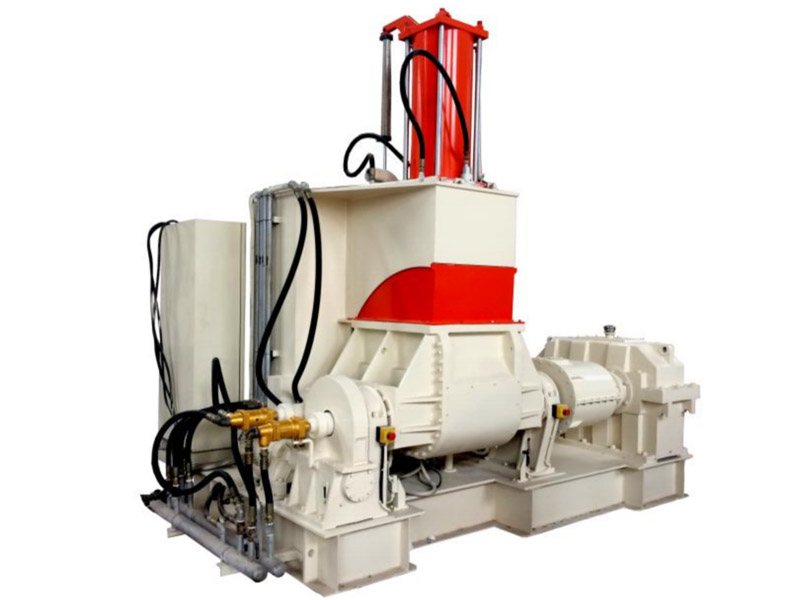
Traditional single screw extruders rely on the shear between the screw and the barrel for mixing, with low shear strength and poor dispersion effect, which can only achieve primary mixing and cannot fully break hard pigment agglomerates. Internal mixers can provide strong shear, but they are intermittent production equipment with low efficiency, and the batch-to-batch consistency is difficult to guarantee. Many small and medium-sized masterbatch enterprises have been troubled by the problem of insufficient dispersion, unable to enter the high-end market, and can only compete in the low-end market with meager profits.
1.2 Batch-to-batch Color Difference and Unstable Formula Accuracy
Color consistency is another key quality indicator of color masterbatch, and inter-batch color difference is a common pain point in the industry. For brand customers, even tiny color differences can lead to product returns and complaints, seriously affecting the brand reputation of manufacturers. The main causes of color difference include inaccurate feeding ratio of each component, fluctuations in extrusion process parameters, and differences in dispersion degree caused by unstable equipment operation. For enterprises with multiple product varieties and frequent material changes, color difference problems are more prominent, and each changeover requires a long period of debugging, producing a large amount of transitional waste materials.
At present, international high-end customers usually require the color difference Delta E between batches to be controlled within 1.0, and some premium brands even require it to be below 0.5. However, ordinary domestic equipment can only control the color difference at around 2.0 under normal production conditions, which is difficult to meet the requirements of high-end customers. To reduce color difference, many enterprises have to increase the frequency of sampling and testing, which increases labor costs and quality control costs, but still cannot fundamentally solve the problem.
1.3 Difficulty in Dispersion of High-filler Masterbatch Systems
Filler masterbatch represented by calcium carbonate, talc, and barium sulfate is an important category of masterbatch products, with a filler ratio usually as high as 70% to 85%. High filler content brings great challenges to extrusion mixing: on the one hand, a large amount of filler is difficult to be uniformly wetted and dispersed by the resin matrix, and it is easy to form filler agglomerates, resulting in white spots, decreased mechanical properties and other defects in the product; on the other hand, high filler systems have high melt viscosity, which requires the extruder to have sufficient torque and conveying capacity, otherwise it is prone to problems such as host overload, unstable discharge, and even material overflow at the feed port.
In addition, fillers such as calcium carbonate have strong abrasiveness to the screw and barrel. Ordinary nitrided screw barrels wear quickly when producing high-filler masterbatch, and the gap between screw and barrel increases after 1-2 years of use, resulting in decreased conveying capacity, poorer dispersion effect, and further decline in product quality. Enterprises need to frequently replace screw and barrel components, which not only increases spare parts costs, but also causes production losses due to shutdown maintenance.
1.4 Thermal Degradation of Heat-sensitive Materials and Additives
Many masterbatch formulations contain heat-sensitive components, such as PVC resin, organic pigments, partial flame retardants, antioxidants, and light stabilizers. These components are prone to thermal degradation under high temperature and strong shear conditions, resulting in color change, performance reduction, and even production of small molecule volatile substances, which form bubbles and pores in the product, affecting appearance and performance. For food contact grade and medical grade masterbatch, degradation products may also migrate into food or drugs, bringing safety risks.
Traditional mixing equipment often has the problem of uneven temperature distribution and wide residence time distribution. Some materials stay in the high temperature zone for too long, leading to local overheating and degradation. For example, when producing PVC masterbatch with ordinary single screw extruder, local carbonization is easy to occur, resulting in black spots in the product, and even corrosion of the screw and barrel. To avoid degradation, some enterprises have to reduce processing temperature or production speed, which leads to insufficient plasticization and dispersion, and reduces production efficiency, forming a dilemma.
1.5 Low Changeover Efficiency and High Material Waste
The masterbatch industry has the characteristics of many product varieties and frequent color and material changes. Each changeover requires cleaning the equipment to remove residual materials of the previous formula, until the product color and purity meet the requirements of the new formula. For ordinary extruders, due to the lack of self-cleaning ability, there are many material retention dead corners in the flow channel, so the cleaning process requires a lot of cleaning materials and takes a long time. According to industry statistics, ordinary single screw extruders need 2-3 hours to change a color, consuming tens to hundreds of kilograms of cleaning materials, and the waste generated by cleaning accounts for about 3% to 5% of the total output.
For enterprises that produce multiple varieties and small batches, they may need to change materials several times a day, and the cumulative waste of time and raw materials is very considerable. At the same time, if the cleaning is not thorough, there will be residual impurities in the subsequent products, leading to quality problems such as color spots and variegation, which affects the product qualification rate. Improving the cleaning efficiency of equipment and reducing the waste of changeover is an important way for masterbatch enterprises to reduce costs and increase efficiency.
2. Why Co-rotating Twin Screw Extruder Is the Gold Standard for Masterbatch Compounding
2.1 Basic Working Principle of Co-rotating Parallel Twin Screw Extruder
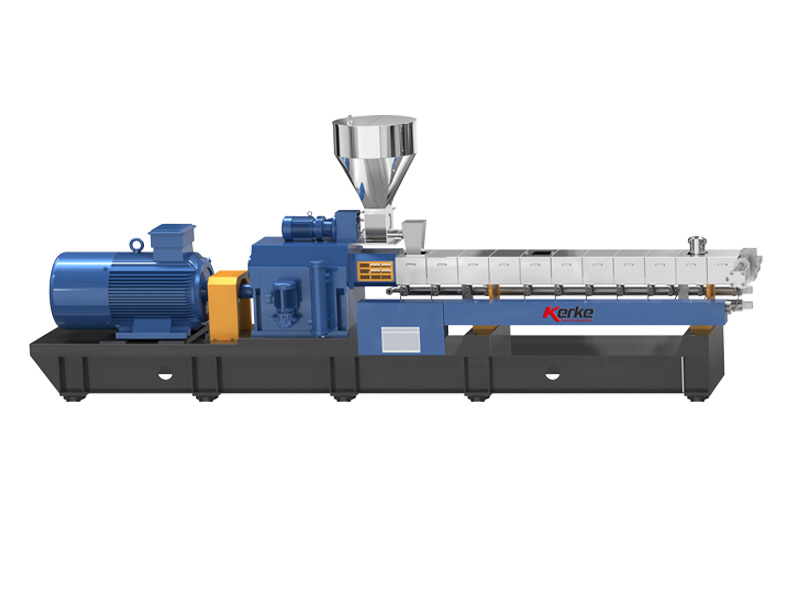
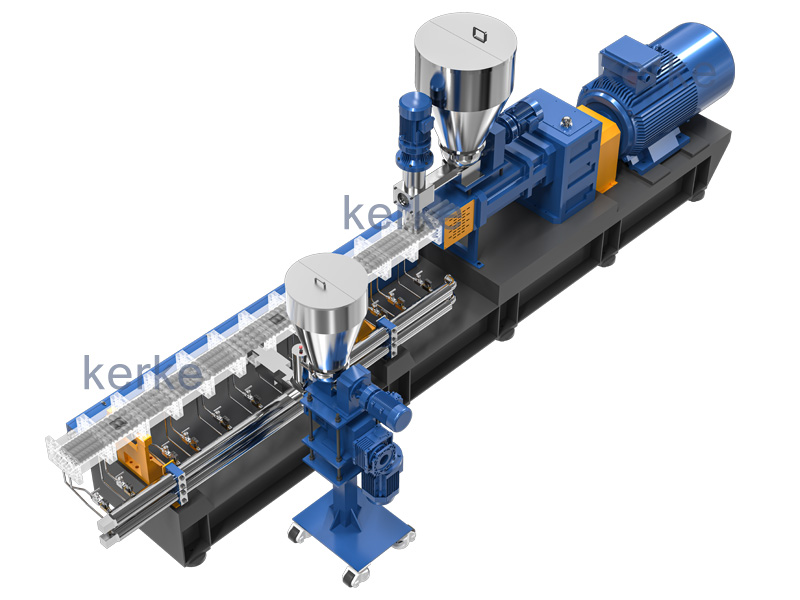
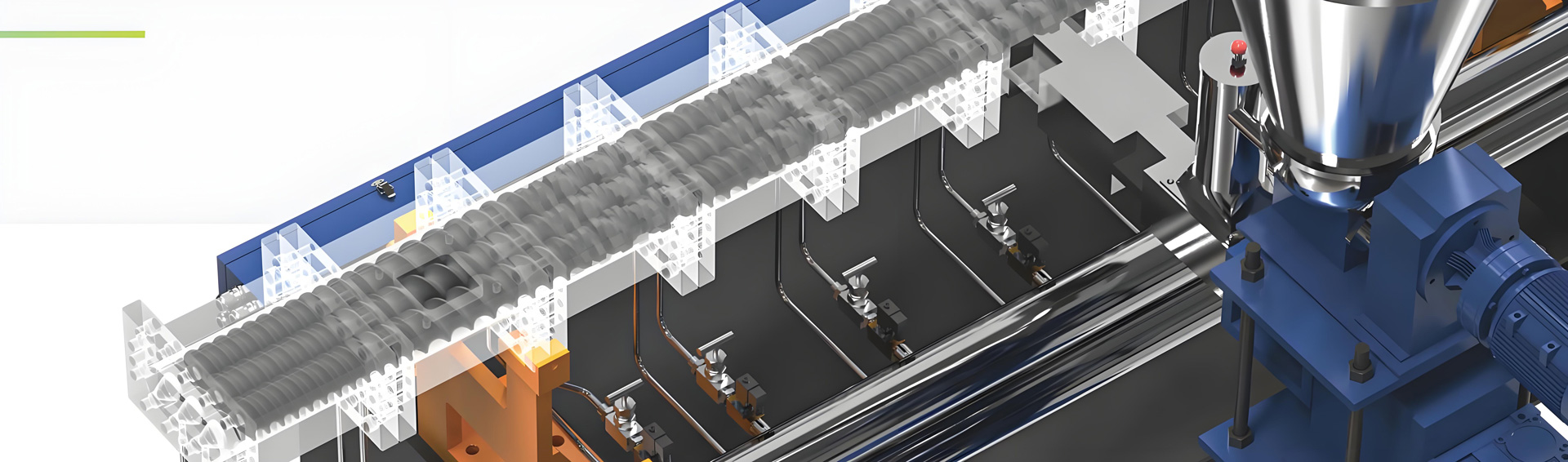
The co-rotating parallel twin screw extruder is mainly composed of transmission system, extrusion system, heating and cooling system, control system and auxiliary equipment. Its core is two mutually meshing parallel screws rotating in the same direction in the barrel. Raw materials enter the barrel from the feed port, and go through the processes of conveying, compaction, melting, mixing, shearing, degassing and homogenization under the push of the screw, and finally are extruded from the die head in a uniform molten state, and then become finished masterbatch particles after pelletizing.
Different from the single screw extruder which relies on friction between material and barrel to convey materials, the twin screw extruder realizes positive displacement conveying through the meshing between screws. The material is pushed forward by the volume change of the screw groove, and the conveying is more stable, which will not cause material backflow or retention due to viscosity changes. The most critical is the meshing zone between the two screws. When the material passes through the meshing zone, it is subjected to strong shear, stretching and folding effects, which can achieve efficient mixing effect in a very short time. This unique mixing mechanism is the fundamental reason why twin screw extruders are far superior to other mixing equipment in compounding performance.
2.2 Dual Mixing Mechanism: Dispersive Mixing and Distributive Mixing
Masterbatch production requires both dispersive mixing to break agglomerates and reduce particle size, and distributive mixing to uniformly distribute each component in the whole matrix. The co-rotating twin screw extruder can perfectly realize these two mixing mechanisms at the same time through the combination of different screw elements.
Dispersive mixing mainly relies on kneading block elements. The staggered arrangement of kneading discs forms narrow gaps. When the material passes through these gaps, it is subjected to strong shear stress, which can break hard agglomerates such as pigments and fillers into tiny primary particles, achieving high dispersion grade. By adjusting the stagger angle and thickness of kneading blocks, the shear strength can be flexibly controlled to adapt to different material systems.
Distributive mixing mainly relies on conveying elements with different lead lengths and toothed mixing elements. Through the splitting and repositioning of the material flow, each component is repeatedly redistributed in the spatial position, and finally achieves uniform distribution in the whole matrix. Good distributive mixing can ensure the consistency of product performance at every position, and avoid local concentration or deficiency of components.
The dual mixing mechanism enables the twin screw extruder to achieve both high dispersion and high uniformity mixing effects, which is unmatched by traditional single screw extruders and internal mixers. Whether it is high-concentration color masterbatch, high-filler filling masterbatch or functional masterbatch with complex components, it can achieve ideal mixing quality.
2.3 Comprehensive Advantages Over Traditional Mixing Equipment
Compared with traditional single screw extruders and internal mixers, co-rotating twin screw extruders have comprehensive advantages in multiple dimensions. First, high production efficiency. The twin screw extruder realizes continuous production, with large processing capacity per unit time. For products of the same specification, the output of a twin screw extruder is 2-3 times that of a single screw extruder of the same specification, and the labor productivity is higher.
Second, stable product quality. The twin screw extruder has narrow residence time distribution, uniform shear, and stable process parameters, so the product quality consistency between batches is high, and the performance fluctuation is small, which is conducive to quality control in mass production.
Third, wide process adaptability. By changing the screw combination and adjusting process parameters, the same equipment can process different formulas and different types of masterbatch products, realizing multi-purpose of one machine and reducing repeated investment of enterprises. From general-purpose polyolefin masterbatch to engineering plastic modified masterbatch, from low-concentration toner to high-concentration color masterbatch, it can be compatible.
Fourth, low energy consumption per unit output. High-efficiency plasticizing and mixing system and energy-saving drive configuration make the energy consumption per ton of product of twin screw extruder 15% – 30% lower than that of traditional equipment, and the long-term operation cost advantage is obvious. In addition, the twin screw extruder also has the advantages of good self-cleaning performance, convenient material change, and high degree of automation, which can well meet the production needs of modern masterbatch enterprises.
3. How Twin Screw Extruder Addresses Common Masterbatch Mixing Problems
3.1 Eliminating Pigment Agglomeration Through Precision Shear Control
For the problem of pigment agglomeration, the twin screw extruder achieves efficient dispersion through multi-stage shear and optimized screw configuration. First, the kneading block elements in the screw provide strong and uniform shear force. When the pigment agglomerates pass through the gap between the kneading discs and the inner wall of the barrel, they are subjected to continuous shear action, and the hard agglomerates are gradually broken into fine primary particles. By configuring multiple groups of kneading blocks with different stagger angles, the material can receive shear action multiple times during the conveying process, ensuring that all agglomerates are fully broken.
Kerke’s technical team will customize the optimal screw combination scheme according to different pigment types and concentration requirements. For carbon black masterbatch with high dispersion requirements, increase the number of kneading blocks, use 45-degree and 60-degree stagger angle elements to enhance shear strength, and cooperate with toothed mixing elements to improve distribution effect, ensuring that the dispersion grade reaches level 5 or above, which can meet the requirements of film-grade and fiber-grade applications. For heat-sensitive organic pigments, appropriately reduce the shear strength, use 30-degree kneading blocks with milder shear, and control the melt temperature within a safe range while ensuring dispersion effect, to avoid pigment degradation and discoloration.
In actual production, the shear strength can also be flexibly adjusted by changing the screw speed and feed rate to adapt to different product formulas. The closed-loop control system ensures the stability of process parameters, avoids fluctuation of shear strength caused by speed and pressure changes, and ensures the consistency of dispersion effect between different batches.
3.2 Ensuring Batch-to-batch Color Consistency With High-precision Control
The twin screw extruder solves the problem of color difference from two aspects: accurate ingredient ratio and stable process conditions. First, it is equipped with a high-precision loss-in-weight feeding system. Each component, including main resin, pigment, dispersant, lubricant and other additives, is independently metered by a dedicated loss-in-weight feeder. The feeding accuracy can reach ±0.2%, ensuring that the proportion of each component strictly follows the formula requirements, and will not cause color fluctuation due to ratio deviation. The feeding system and the host speed are linked. When the host speed is adjusted, the feeding amount of each feeder will automatically adjust proportionally, always maintaining the stability of the formula ratio.
Second, the whole extrusion process adopts closed-loop precision control. The temperature of each zone of the barrel is independently controlled by PID, with a control accuracy of ±0.5℃, ensuring that the melting state and viscosity of the material at each stage are stable. The melt pressure and melt temperature at the die head are monitored in real time. When pressure fluctuation occurs, the system will automatically fine-tune the screw speed and feed rate to keep the extrusion state stable. Stable process conditions ensure consistent shear and heat history of materials per unit time, so the dispersion degree of pigment and the final color performance remain stable.
Kerke’s control system has a powerful formula storage function, which can store more than 100 sets of production formulas. Each formula records all process parameters including temperature of each zone, screw speed, feed rate, vacuum degree, etc. When producing the same product again, you only need to call the corresponding formula with one click, and the system will automatically set all parameters, avoiding errors caused by manual setting. This design greatly shortens the commissioning time during product changeover, and more importantly, ensures that the process conditions of each batch are completely consistent, controlling the inter-batch color difference Delta E within 0.5, far exceeding the industry average level.
3.3 Achieving Uniform Dispersion of High-filler Systems With Optimized Process Design
For high-filler masterbatch systems, twin screw extruders solve the dispersion problem through targeted structural and process design. First, the high-torque gearbox design provides sufficient power output, which can ensure stable operation under high-fill and high-viscosity working conditions, and will not have overload tripping or unstable discharge. Kerke’s KTE series extruders adopt hard-tooth surface gearboxes with high torque density, and the torque level reaches the international advanced level, which can easily handle various high-fill formulas.
Second, the side feeding technology is adopted. The filler is added from the side feed port after the main resin is completely melted, instead of being added together with the resin from the main feed port. This design can avoid the problem of material bridging and slippage caused by a large amount of powder entering the feed section at the same time, and ensure stable conveying of materials. More importantly, the molten resin can fully wrap the filler particles after entering, which is more conducive to the wetting and dispersion of the filler, and avoids the problem of poor dispersion caused by dry powder agglomeration. For ultra-high-fill masterbatch with filler content exceeding 80%, multi-stage side feeding can also be configured to add fillers in batches to ensure uniform dispersion.
In terms of wear protection, Kerke provides bimetallic screw and barrel options. The inner wall of the barrel and the surface of the screw flight are sprayed with nickel-based tungsten carbide alloy, with a surface hardness of HRC 62-66, which greatly improves the wear resistance. The service life is 3-5 times that of ordinary nitrided screw barrels, which is very suitable for producing high-filler masterbatch. Although the initial investment of bimetallic configuration is slightly higher, it can greatly reduce the frequency of spare parts replacement and shutdown maintenance, and the long-term use cost is lower.
3.4 Minimizing Thermal Degradation Through Narrow Residence Time Distribution
The twin screw extruder can effectively reduce the thermal degradation of heat-sensitive materials, mainly due to its narrow residence time distribution and precise temperature control. The positive displacement conveying mode makes the residence time of most materials in the barrel very concentrated, usually between 30 seconds and 2 minutes, which can be adjusted according to the process requirements. There will be no situation where some materials stay in the high temperature zone for a long time like single screw extruders, which greatly reduces the probability of thermal degradation of materials.
At the same time, through reasonable screw combination design, the shear heat generation can be accurately controlled. For heat-sensitive materials, reduce the number of strong shear elements, appropriately increase the screw lead, shorten the material residence time, and control the melt temperature within the safe processing range. The multi-stage independent temperature control system can accurately set the temperature of each functional section. In the mixing section, the temperature is appropriately increased to reduce the melt viscosity and improve the dispersion effect; in the homogenization and exhaust section, the temperature is appropriately reduced to avoid material degradation; the die head section maintains a stable temperature to ensure uniform discharge.
The efficient vacuum degassing system can timely extract the small molecule volatile substances and residual monomers generated by degradation, avoid them remaining in the product to form bubbles and pores, and also reduce the risk of product discoloration. For food contact grade masterbatch, efficient degassing can also ensure that the product meets relevant safety standards and reduces the migration of harmful substances. Kerke’s equipment can be configured with 2-3 stages of vacuum exhaust ports, which are respectively set in the middle and rear sections of the barrel to achieve step-by-step degassing and ensure sufficient removal of volatile substances.
3.5 Reducing Changeover Waste With Excellent Self-cleaning Performance
The closely meshed twin screw structure has excellent self-cleaning ability. During the rotation of the two screws, the flight of one screw can scrape off the material attached to the surface of the other screw and the inner wall of the barrel, so there is almost no dead angle of material retention in the entire flow channel. When changing materials and colors, only a small amount of cleaning material is needed to quickly take away the residual materials in the equipment, and the cleaning efficiency is much higher than that of single screw extruders.
According to the actual use feedback of customers, Kerke’s twin screw extruder takes about 30-60 minutes to change a conventional color, and consumes 10-30 kg of cleaning material, which reduces the cleaning time by more than 60% and the cleaning material consumption by more than 70% compared with ordinary equipment. For enterprises that frequently change products, they can save thousands of dollars in raw material waste costs every year, and at the same time greatly improve production efficiency and increase effective production time.
For scenarios that require frequent color changes and strict anti-pollution requirements, Kerke also provides a quick-opening barrel design. The upper half of the barrel can be quickly opened, which is convenient for manual thorough cleaning of the screw and the inner wall of the barrel. When changing products with large color differences such as from black to white, thorough cleaning can be completed in a short time to avoid cross-color pollution. The modular screw design also facilitates quick replacement of screw elements when changing product types with large differences, further shortening the changeover time.
4. Kerke KTE Series Twin Screw Extruder: Built for Masterbatch Production Excellence
4.1 Modular Screw and Barrel Design for Maximum Flexibility
Kerke KTE series co-rotating twin screw extruders adopt a fully modular design, which can flexibly adjust the screw configuration and barrel structure according to different product formulas and process requirements. The screw is assembled by multiple functional elements on the core shaft, including conveying elements, kneading elements, toothed mixing elements, reverse conveying elements, etc. Each element has different specifications and can be freely combined. For example, conveying elements with different leads can adjust the material conveying speed and residence time; kneading blocks with different stagger angles can provide different shear strengths.
The barrel also adopts a segmented modular structure, and the number of sections can be increased or decreased according to the process requirements. Feed ports, side feed ports, exhaust ports, vacuum ports, etc. can be set at different positions of the barrel to meet different process needs. This highly modular design enables one device to adapt to the production of multiple different types of masterbatch products. For example, when producing color masterbatch, a screw combination focusing on dispersion is adopted; when producing filling masterbatch, a side feed port and a wear-resistant screw barrel are configured; when producing functional masterbatch, multi-stage exhaust and mild shear configuration are adopted. Enterprises do not need to purchase multiple different equipment, which greatly improves equipment utilization and reduces repeated investment costs.
In terms of material selection, the standard configuration screw and barrel are made of high-quality 38CrMoAlA alloy structural steel, which is treated by overall nitriding. The nitriding depth reaches 0.5-0.8mm, and the surface hardness reaches HV800-1000, which has good wear resistance and corrosion resistance, and can meet the production needs of conventional formulas. For high-wear working conditions such as high-filler masterbatch and glass fiber reinforced materials, bimetallic screw and barrel options are provided. The inner wall of the barrel and the surface of the screw are spray-welded with wear-resistant alloy, which has stronger wear resistance and 3-5 times longer service life than the nitriding configuration.
4.2 High-precision Control System for Stable Mass Production
KTE series extruders are equipped with industrial-grade PLC control system and large-size color touch screen human-machine interface, with intuitive and easy-to-operate interface. All process parameters can be set and monitored on the screen, including temperature of each zone, screw speed, feed rate, melt pressure, melt temperature, torque, vacuum degree, etc. The system has perfect fault self-diagnosis function, which can monitor the operation status of the equipment in real time. When abnormal conditions such as over-temperature, over-pressure, overload and oil temperature over-high occur, it will automatically send out sound and light alarm, and display the cause of the fault and treatment suggestions on the screen, helping operators quickly troubleshoot and reduce downtime.
The control system supports rich function expansion. It can be connected with the loss-in-weight feeding system, underwater pelletizing system, automatic packaging system and other auxiliary equipment to realize the linkage control of the whole production line. For large-scale production bases, it supports networking functions, can be connected with the enterprise MES system, and uploads production data in real time to realize centralized management and quality traceability of multiple production lines. All production data can be stored and exported, which is convenient for enterprises to carry out production statistics and quality analysis.
For customers who need remote technical support, the equipment can be equipped with a remote diagnosis module. With the authorization of the customer, Kerke’s after-sales engineers can remotely connect to the equipment control system, view the operation parameters and fault information, and solve most operation and process problems online, greatly improving the after-sales response speed and reducing the customer’s downtime loss. Especially for overseas customers, remote diagnosis can save the time cost of on-site service and quickly solve production problems.
3.3 Complete Auxiliary Equipment Matching for Turnkey Solutions
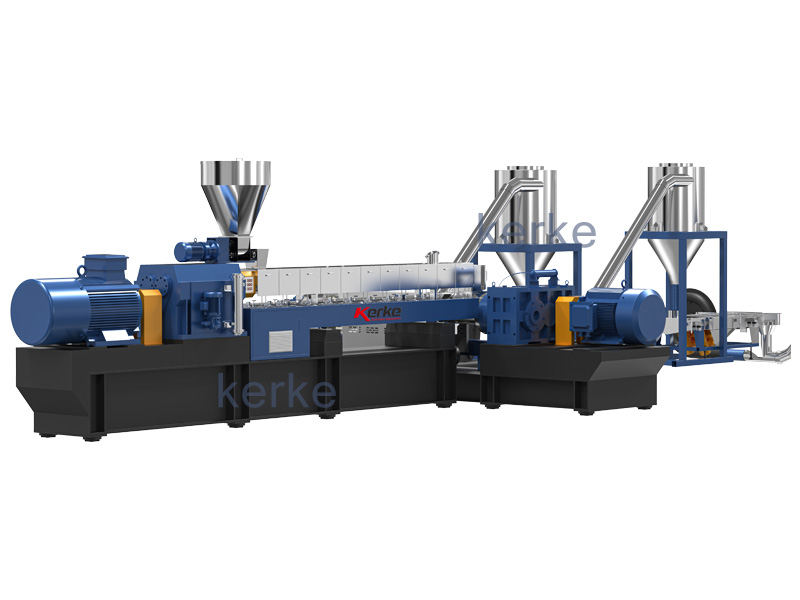
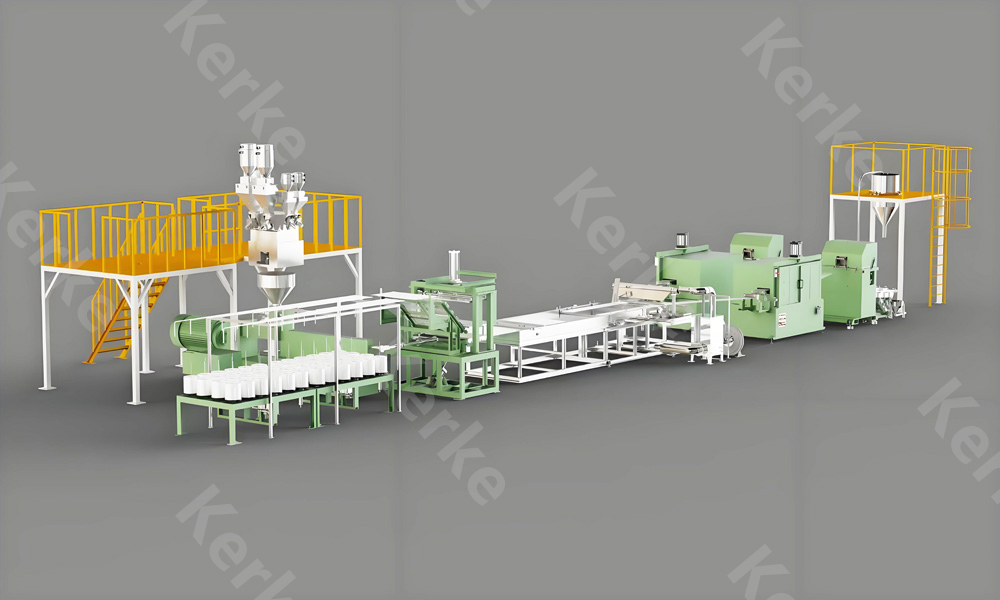
Kerke can provide a complete set of masterbatch production line solutions, including all necessary auxiliary equipment besides the main extruder, to achieve turnkey delivery. Customers do not need to purchase equipment from multiple suppliers separately, avoiding the problem of mismatching between equipment of different manufacturers, and the later after-sales service is more guaranteed.
The feeding system can be configured with automatic vacuum feeder, metering feeder, loss-in-weight feeder, etc. according to needs. For multi-component formulas, multiple feeders can be configured for simultaneous feeding to ensure accurate proportioning. The pelletizing system provides a variety of options: strand pelletizing system is the most commonly used, with simple structure and convenient operation, suitable for most conventional masterbatch products; air-cooled die-face pelletizing is suitable for materials with low viscosity and easy adhesion; underwater pelletizing system is suitable for high-end products with high requirements for particle appearance, producing spherical particles with beautiful appearance and good fluidity.
Other auxiliary equipment includes cooling water tank, air dryer, vibrating screen, storage silo, automatic packaging machine, etc. All auxiliary equipment and the host are speed-linked, and the operation speed automatically matches the host output to ensure the stability of the whole production line. For production lines with high automation requirements, centralized control can be realized. All equipment operations are completed on the main control screen, reducing the number of operators and improving production efficiency.
4.4 Global After-sales Service and Technical Support System
Kerke has always adhered to the service concept of customer first, and has established a comprehensive global after-sales service system to provide customers with full-cycle technical support. After the equipment is delivered, professional engineers will be arranged to guide the installation and commissioning on site, be responsible for the equipment to reach the designed production capacity and quality indicators, and conduct systematic operation and maintenance training for the customer’s operators and maintenance personnel. The training content includes equipment operation specifications, process parameter adjustment, daily maintenance methods, common fault judgment and treatment, etc., to ensure that customers can independently and normatively use the equipment for production after the engineers leave.
The whole machine of Kerke equipment enjoys a one-year free warranty, and core components such as gearbox enjoy a longer warranty period. During the warranty period, if there is a quality problem, free repair and replacement of parts are provided. After the warranty period, lifetime technical support and preferential supply of spare parts are provided. The company has a large spare parts warehouse, and common wearing parts such as heating rings, seals, sensors, and cutter blades can be delivered quickly, shortening the waiting time for customers.
In addition to equipment maintenance services, Kerke also provides process technical support. When customers develop new products or adjust formulas, they can get professional guidance from Kerke’s technical team, including screw combination optimization suggestions, process parameter setting guidance, etc. Customers can also send raw materials to Kerke’s laboratory for trial production experiments. The laboratory is equipped with small and medium-sized test extruders, which can simulate mass production conditions, help customers determine the optimal process plan, reduce trial and error costs, and shorten the new product launch cycle.
5. Cost and ROI Analysis of Investing in Kerke Masterbatch Extruder
5.1 Initial Investment Breakdown by Model
Kerke KTE series twin screw extruders have a variety of models to choose from, corresponding to different output ranges and application scenarios. The following is the price range of standard configuration for reference, and the specific quotation will be adjusted according to the actual configuration requirements.
KTE-35 model has a screw diameter of 35mm and a length-diameter ratio of 40:1. The output ranges from 30kg/h to 80kg/h. It is suitable for laboratory R&D, small-batch multi-variety production, and start-up enterprises. The FOB Shanghai price of the standard mainframe is between 35,000 US dollars and 55,000 US dollars. The total investment of the complete production line including feeding system, strand pelletizing system, cooling water tank, vibrating screen and other auxiliary equipment is about 45,000 US dollars to 70,000 US dollars.
KTE-65 model has a screw diameter of 65mm and a length-diameter ratio of 40:1. The output ranges from 100kg/h to 300kg/h. It is the most mainstream mass production model, suitable for small and medium-sized masterbatch production enterprises. The FOB Shanghai price of the standard mainframe is between 80,000 US dollars and 120,000 US dollars. The total investment of the complete production line is about 100,000 US dollars to 150,000 US dollars. If configured with side feeder, bimetallic screw barrel, underwater pelletizing system and other high-end configurations, the price will increase accordingly.
KTE-75 model has a screw diameter of 75mm and a length-diameter ratio of 40:1. The output ranges from 300kg/h to 600kg/h. It is suitable for large-scale mass production enterprises with single variety and large order volume. The FOB Shanghai price of the standard mainframe is between 130,000 US dollars and 180,000 US dollars. The total investment of the complete production line is about 160,000 US dollars to 220,000 US dollars. For larger-scale production needs, there are KTE-95 and KTE-110 models to choose from, with higher output and corresponding price increases.
In addition to the equipment itself, customers also need to reserve 3% to 5% of the equipment price as the initial spare parts reserve, and prepare the plant, power supply, cooling water and other supporting facilities. Kerke’s quotation includes standard installation, commissioning and training services, and customers do not need to pay additional service fees.
5.2 Annual Operating Cost Calculation
Taking the most widely used KTE-65 standard configuration production line as an example, the annual operating cost is calculated based on 7200 hours of annual operation (300 days, 24 hours a day) to produce ordinary PE black masterbatch with 30% carbon black content.
Raw material cost is the largest part of the total cost. Calculated based on an average output of 200kg/h, the annual output is 1440 tons. The average price of raw materials is calculated at 1200 US dollars per ton, and the annual raw material cost is about 1,728,000 US dollars. Kerke’s equipment has a high product qualification rate, which can reach more than 99%, far higher than the industry average of 95% to 97%. Only reducing scrap can save tens of thousands of dollars in raw material costs every year.
Electricity cost is the main energy expenditure. The total installed power of the complete production line is about 180kW, and the actual average operating power is about 110kW. Calculated at an industrial electricity price of 0.1 US dollars per kWh, the annual electricity cost is about 79,200 US dollars. Thanks to the servo energy-saving drive system and high-efficiency ceramic heating ring, Kerke’s equipment saves 25% to 30% energy compared with traditional extruders of the same specification, and can save about 20,000 to 30,000 US dollars in electricity bills every year.
Labor cost: A production line only needs 2 operators per shift, and a total of 6 operators for three shifts. Calculated based on an average annual salary of 6,000 US dollars per person, the annual labor cost is 36,000 US dollars. If it is a highly automated production line, the number of operators can be further reduced.
Maintenance and spare parts cost: Under standard use and standardized maintenance, the annual maintenance cost is about 4% of the host price, that is, about 4,000 to 5,000 US dollars, mainly for the replacement of wearing parts such as heating rings, seals and cutter blades. If bimetallic screw barrel is selected, the service life of core components can reach more than 5 years, and the average annual depreciation cost is lower.
Plant and other miscellaneous expenses: A production line plus raw material and finished product storage area requires about 300 square meters of plant. Calculated at a rent of 5 US dollars per square meter per month, the annual rent is 18,000 US dollars. Plus water fees, compressed air fees, management fees and other expenses, about 5,000 US dollars per year.
In summary, excluding raw material costs, the annual operating cost is about 142,200 US dollars. Including raw material costs, the total annual operating cost is about 1,870,200 US dollars.
5.3 Revenue Projection and Investment Payback Period
Calculated based on the production of ordinary PE black masterbatch, the ex-factory price of the product is about 1450 US dollars per ton, and the gross profit per ton (excluding raw material costs) is about 250 US dollars. With an annual output of 1440 tons, the annual gross profit is about 360,000 US dollars. After deducting operating costs other than raw materials (electricity, labor, maintenance, rent, etc.), the annual net profit before tax is about 217,800 US dollars.
Calculated based on the total investment of 120,000 US dollars in the complete production line, the static investment payback period is about 0.55 years, that is, about 6.6 months. Even considering factors such as insufficient capacity utilization and raw material price fluctuations, calculated based on 70% capacity utilization, the annual net profit is about 130,000 US dollars, and the investment payback period is less than 12 months.
If producing high value-added products such as organic pigment color masterbatch, flame retardant masterbatch, biodegradable masterbatch, etc., the profit per ton will be higher. Taking functional masterbatch as an example, the gross profit per ton can reach 500 to 800 US dollars, and the investment payback period will be shorter, usually 3 to 5 months. It can be seen that investing in twin screw extruder production of masterbatch is a project with high return on investment and short payback period.