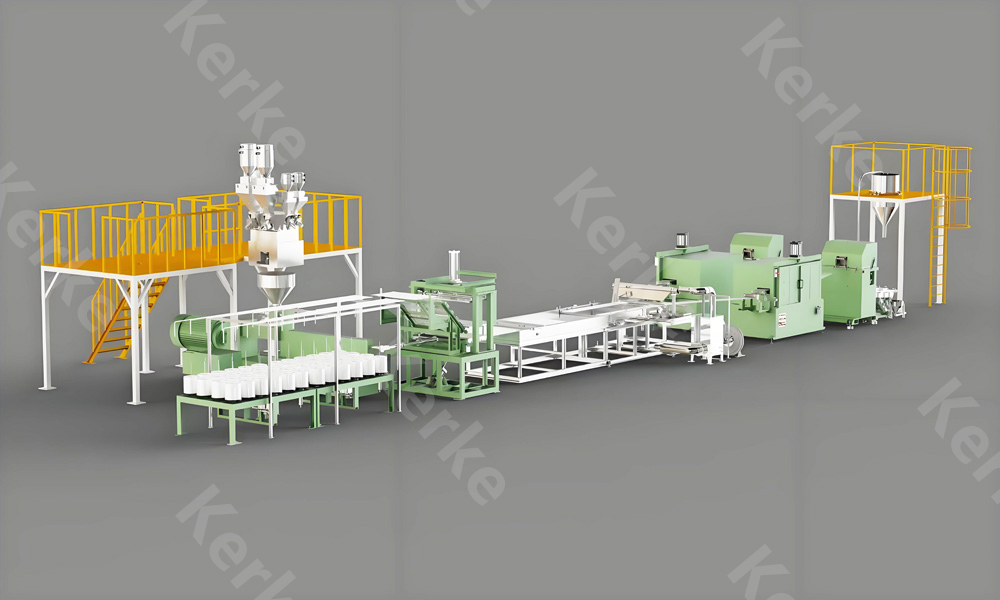
In the global plastic processing industry, color masterbatch serves as a core functional additive for plastic coloring, and its quality directly determines the appearance grade and market competitiveness of final plastic products. Among all quality indicators of color masterbatch, brightness and gloss are the most intuitive and important appearance indicators, which not only affect the visual effect of products, but also reflect the dispersion uniformity of pigments and the plasticizing quality of materials to a large extent. High-gloss color masterbatch can endow plastic products with delicate texture and high-end visual perception, and is widely used in high-end fields such as automotive interior and exterior trim, household appliance shells, cosmetic packaging, electronic product shells and premium film products. With the continuous upgrading of consumer demand, downstream customers have higher and higher requirements for the gloss and color consistency of color masterbatch, which puts forward stricter technical requirements for masterbatch production equipment and processes.
As the core equipment for color masterbatch production, twin screw masterbatch extruder plays a decisive role in pigment dispersion, melt plasticizing quality and final product gloss performance. Traditional single screw extruders or low-end twin screw extruders often have problems such as insufficient shear dispersion, uneven melt plasticization, more volatile residues and poor temperature control accuracy, resulting in low gloss of produced color masterbatch, obvious graininess on the surface, and poor color consistency between batches, which cannot meet the needs of high-end applications. To produce high-brightness and high-gloss color masterbatch, it is necessary to start from multiple core links such as screw structure design, shear dispersion control, exhaust degassing system, precise temperature control and cooling granulation process, and carry out systematic optimization of equipment and processes.
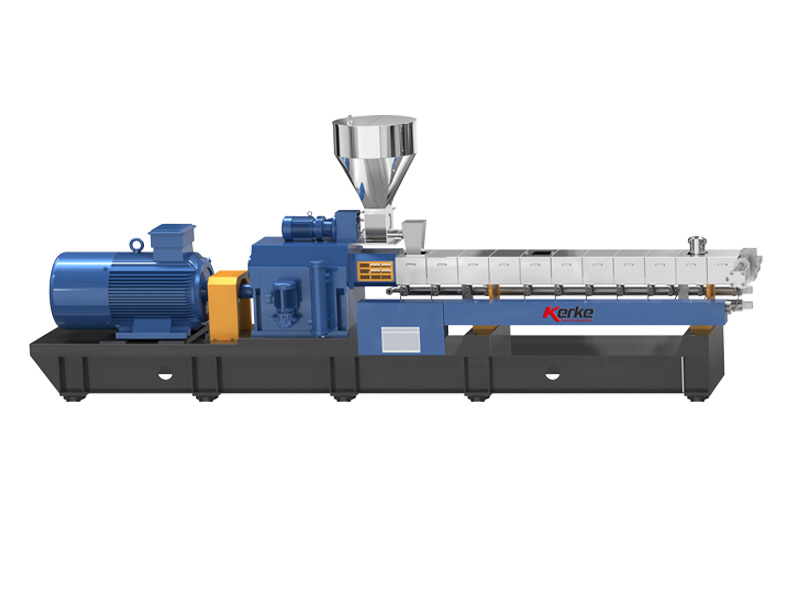
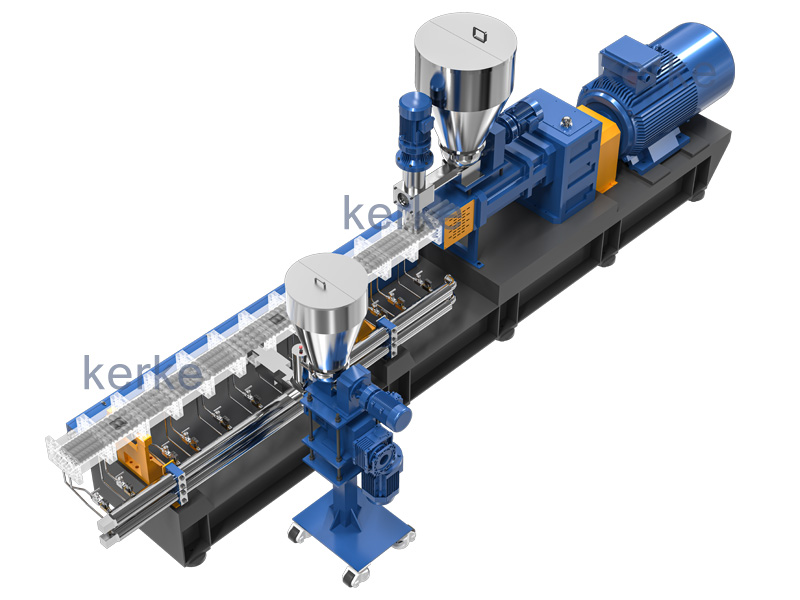
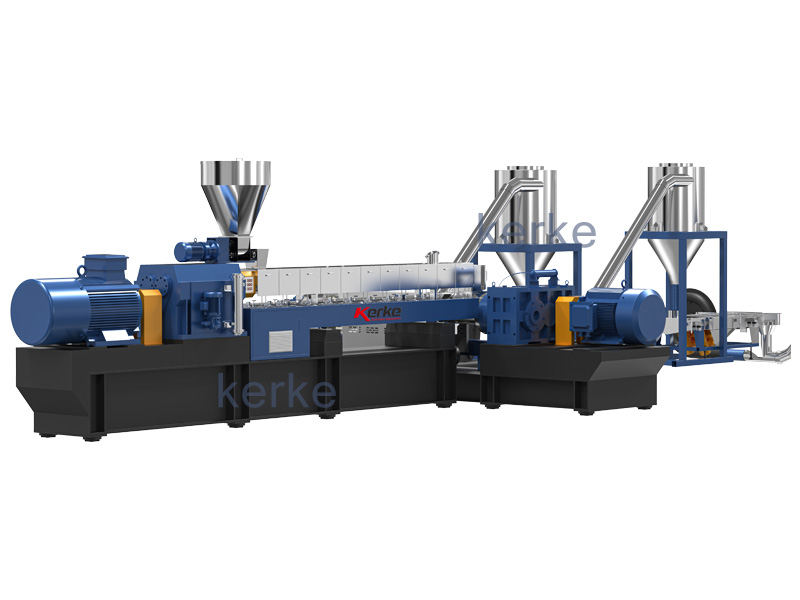
As a professional manufacturer focusing on R&D and manufacturing of twin screw extruders, masterbatch extruders and compounding extruders, Kerke has in-depth technical accumulation in the field of high-performance color masterbatch production. Its series of masterbatch special twin screw extruders are optimized for the production characteristics of high-gloss color masterbatch, and can stably produce high-quality color masterbatch products with high brightness, high gloss and excellent color consistency through precise shear control, efficient plasticizing system, multi-stage exhaust system and intelligent process control. This article will systematically analyze the key factors affecting the brightness and gloss of color masterbatch, explain in detail the core technical principles of twin screw extruders to improve product gloss, introduce the targeted design and configuration of Kerke masterbatch extruders, provide process optimization schemes for different material systems, carry out detailed cost-benefit analysis and return on investment calculation, and share operation and maintenance best practices, providing comprehensive technical reference for color masterbatch production enterprises to improve product quality and market competitiveness.
1. Importance of Brightness and Gloss for High-End Color Masterbatch
1.1 Market Demand for High-Gloss Color Masterbatch
With the continuous upgrading of global manufacturing industry and consumption level, the appearance quality requirements for plastic products are getting higher and higher, which drives the market demand for high-gloss and high-brightness color masterbatch to grow steadily. In the field of household appliances, high-gloss plastic shells can improve the product grade and visual texture, and become the standard configuration of high-end household appliances such as televisions, refrigerators and washing machines. In the automotive industry, high-gloss interior and exterior trim parts can enhance the luxury sense of the car, and the requirements for color masterbatch gloss and weather resistance are extremely strict. In the field of cosmetic and food packaging, high-gloss packaging containers can attract consumers’ attention more and enhance brand image, and have very high requirements for color uniformity and surface finish of color masterbatch.
Compared with ordinary color masterbatch, high-gloss color masterbatch has higher added value and profit margin, and is the key product for color masterbatch enterprises to improve profitability and enter the high-end market. Many medium-sized color masterbatch factories are facing the bottleneck of product upgrading. Due to the limitations of equipment and technology, it is difficult to break through the gloss index, so they can only stay in the low-end market and participate in price competition. Upgrading production equipment and optimizing production process to improve product gloss and quality has become the only way for color masterbatch enterprises to break through the competition and achieve transformation and upgrading.
1.2 Essential Factors Determining Masterbatch Gloss Performance
The gloss of color masterbatch essentially depends on the smoothness of the material surface and the uniformity of internal structure. When light irradiates the surface of color masterbatch particles or final plastic products, the smoother the surface, the stronger the specular reflection component and the higher the gloss; conversely, if the surface is rough, the diffuse reflection is strong and the gloss is low. To achieve high gloss, it is necessary to ensure that the pigment is uniformly dispersed at the nanometer level in the polymer carrier, without pigment agglomeration, crystal points and gel particles, and at the same time ensure that the melt has good plasticizing uniformity and fewer internal defects and bubbles.
Specifically, there are four core factors affecting gloss. The first is the dispersion grade of pigment. If the pigment agglomerates cannot be fully opened, there will be micro unevenness on the surface of the product, reducing the gloss. The second is the plasticizing quality of the melt. If the material is not fully plasticized and there are unmelted particles, it will affect the surface smoothness. The third is the content of volatile matter and low molecular weight substances. Volatile gas will form tiny bubbles inside the material, resulting in surface pits and reducing gloss. The fourth is the stability of processing temperature and shear strength. Unreasonable process will lead to material degradation and uneven mixing, affecting the final surface quality. These four factors are all closely related to the performance of the extruder, so upgrading the extrusion equipment is the most direct and effective way to improve the gloss of color masterbatch.
1.3 Limitations of Traditional Extrusion Equipment in Gloss Improvement
Traditional single screw extruders have weak mixing and dispersion capacity, and it is difficult to fully open pigment agglomerates, resulting in more coarse particles in the product and low surface gloss. At the same time, the exhaust effect of single screw extruder is poor, and the volatile matter and water in the raw material are difficult to remove effectively, which will form pores inside the masterbatch particles and reduce the surface finish. In terms of temperature control, the temperature control accuracy of traditional equipment is low, and the melt temperature fluctuates greatly, which is easy to cause local overheating degradation or insufficient plasticization, affecting the consistency of product gloss.
Some low-end twin screw extruders also have many defects due to unreasonable screw design and low manufacturing accuracy. Excessive local shear will lead to pigment degradation and carrier decomposition, while insufficient overall shear will lead to poor dispersion. The unreasonable exhaust chamber design leads to poor degassing effect, and residual volatiles affect the product surface quality. The poor stability of the transmission system leads to large speed fluctuation, which affects the stability of product quality between batches. These equipment limitations make it difficult for the produced color masterbatch to meet the high-gloss quality requirements, restricting the product upgrading of enterprises.
2. Core Mechanisms of Twin Screw Extruder to Improve Masterbatch Gloss
Twin screw extruder has become the preferred equipment for high-quality color masterbatch production because of its strong mixing dispersion capacity, good exhaust effect and high process control precision. It improves the gloss of color masterbatch mainly through five core mechanisms.
2.1 High-Efficiency Shear Dispersion for Nano-Level Pigment Uniformity
The primary condition for achieving high gloss is to realize the uniform dispersion of pigment at the nano level. The meshing twin screw can generate strong and controllable shear force during operation, which can continuously stretch, fold and shear the melt, effectively open the pigment agglomerates, and evenly disperse the primary pigment particles in the carrier resin. The more uniform the pigment dispersion, the fewer micro agglomerates in the material, the flatter the surface of the finished product, and the higher the corresponding gloss and brightness.
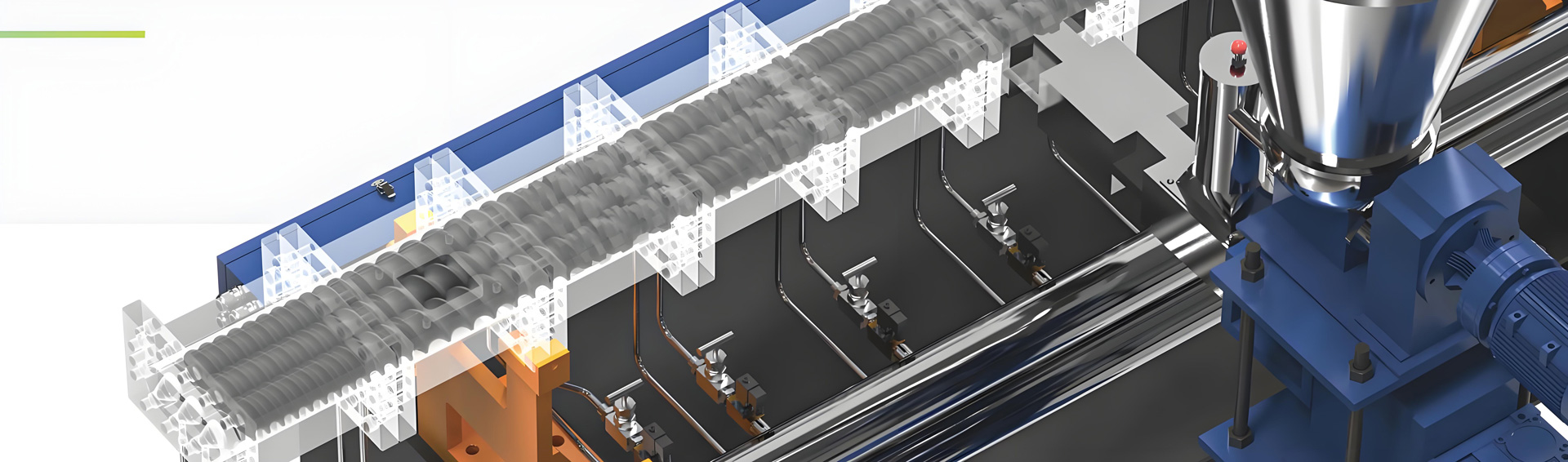
Kerke twin screw extruder adopts a combined screw structure, and the type and arrangement of screw elements can be flexibly configured according to different formulas and process requirements. Through the reasonable combination of conveying elements, kneading blocks and toothed mixing elements, a balanced shear distribution can be achieved, which not only ensures sufficient dispersion shear to open pigment agglomerates, but also avoids excessive local shear leading to pigment decomposition and carrier degradation. This precise shear control can achieve high dispersion grade while maintaining the molecular weight of the material, laying a solid foundation for high-gloss products.
2.2 Uniform Melt Plasticization to Reduce Internal Defects
Sufficient and uniform plasticization is another necessary condition for high gloss. Only when the carrier resin is fully melted and the components are fully mixed uniformly can the melt have good fluidity and form a smooth surface in the subsequent molding process. If the plasticization is uneven and there are unmelted resin particles, it will form micro protrusions on the surface of the masterbatch particles and reduce the surface gloss.
Kerke masterbatch extruder is equipped with a specially optimized screw element combination, which has a long enough melting section and mixing section to ensure that the material fully completes the melting process before entering the dispersion section, and maintains a uniform molten state in the whole machine barrel. The multi-zone independent temperature control system can accurately control the temperature of each section, so that the material can rise step by step according to the set temperature curve, avoiding local overheating or insufficient temperature. Uniform melt plasticization ensures the consistency of material properties, reduces internal defects, and provides a basis for obtaining a smooth surface.
2.3 Multi-Stage Vacuum Exhaust to Eliminate Volatile Residues
Volatile substances, water vapor and low molecular weight decomposition products in raw materials are important factors affecting the surface gloss of color masterbatch. If these gases cannot be discharged in time, they will form tiny bubbles inside the melt. After granulation and cooling, micropores or pits will be formed on the surface of the masterbatch particles, making the surface rough and reducing the gloss. At the same time, residual volatiles will also migrate to the surface during the storage of color masterbatch, forming a spray frost phenomenon, which affects the appearance of the final product.
Kerke twin screw extruder is designed with multi-stage exhaust chambers, usually including natural exhaust and vacuum exhaust stages. The vacuum exhaust system with high vacuum degree can efficiently extract water vapor, monomer residues, oligomers and other volatile substances in the melt, greatly reducing the gas content in the melt. After sufficient exhaust degassing, the melt is dense and bubble-free, and the surface of the prepared color masterbatch particles is smooth and delicate, with significantly improved gloss and brightness. For formulas with more volatile components, the number of exhaust stages and vacuum degree can also be increased to ensure the degassing effect.
2.4 Precise Temperature Control to Avoid Material Degradation
Processing temperature has a very important impact on the gloss of color masterbatch. Too high temperature will lead to thermal degradation of carrier resin and pigment, resulting in color change and reduced gloss; too low temperature will lead to insufficient plasticization and poor dispersion, which will also reduce product gloss. Stable and accurate temperature control is the premise to ensure stable product quality.
Kerke extruder adopts multi-zone independent PID temperature control system, with temperature control accuracy up to ±1℃. Each section of the barrel is independently heated and cooled, which can accurately set different process temperatures according to the functional requirements of each section. The heating element adopts high-quality cast aluminum heater with fast temperature rise and uniform heating; the cooling system adopts forced air cooling or water cooling with sensitive response. The precise temperature control system ensures that the material is always processed within the optimal temperature range, avoiding thermal degradation caused by overheating and insufficient plasticization caused by low temperature, so as to maintain stable color and high gloss of the product.
2.5 Stable Extrusion Output for Consistent Batch Quality
For mass production, the gloss consistency between different batches is as important as the gloss itself. Fluctuations in extrusion output and pressure will lead to changes in shear strength and residence time, resulting in differences in dispersion effect and plasticizing quality, which will be reflected in the difference in gloss and color between batches.
Kerke twin screw extruder adopts high-precision servo drive system, with stable speed operation and small speed fluctuation, ensuring stable extrusion output per unit time. It is matched with a weight loss metering feeding system with high-precision metering to achieve stable and uniform feeding, and avoid changes in material filling degree and shear strength caused by feeding fluctuation. Stable output and process parameters ensure the consistency of product quality between batches, so that each batch of color masterbatch can maintain the same high gloss and color effect, which is crucial for color masterbatch enterprises to maintain stable product quality and win customer trust.
3. Optimized Design of Kerke Masterbatch Extruder for High-Gloss Production
On the basis of the above core mechanisms, Kerke has carried out a number of targeted optimization designs for the production demand of high-gloss color masterbatch, covering all key links from feeding, extrusion, exhaust to granulation, to ensure that the equipment can stably produce high-quality masterbatch with high brightness and high gloss.
3.1 Modular Screw Configuration for Different Pigment Systems
Different pigment systems have great differences in dispersion difficulty and shear sensitivity. For example, inorganic pigments such as titanium dioxide and iron oxide have high hardness and require strong shear to open agglomerates; while organic pigments and dyes are sensitive to shear and are easy to decompose and change color under high shear, requiring mild and uniform shear. Kerke provides targeted screw configuration schemes for different pigment systems to achieve the best balance between dispersion effect and material protection.
For inorganic pigment masterbatch with high dispersion requirements, strengthen the dispersion and mixing section, increase the number of kneading blocks and mixing elements, improve the shear strength, and ensure that the pigment agglomerates are fully opened to achieve high hiding power and gloss. For organic pigment masterbatch that is sensitive to shear, optimize the screw element combination, adopt a milder shear scheme, extend the mixing time, and achieve uniform dispersion through distributive mixing while avoiding pigment degradation caused by strong shear. Customers can also adjust the screw combination by themselves according to different product formulas to flexibly adapt to diversified production needs. Modular screw design enables the same equipment to take into account the production of various products and improves the utilization rate of equipment.
3.2 High-Precision Barrel and Screw Manufacturing Accuracy
The manufacturing accuracy of screw and barrel directly affects the stability of shear and plasticizing effect. If the gap between screw and barrel is too large, the material will have backflow and leakage flow, resulting in uneven shear and reduced plasticizing efficiency, which will affect the dispersion effect and product gloss.
Kerke strictly controls the manufacturing accuracy of core components. The screw and barrel are processed by high-precision CNC machine tools, with small shape and position tolerance and uniform gap between screw and barrel. The inner hole of the barrel is finely bored and honed, with high inner wall smoothness and good wear resistance. The screw element is ground as a whole after quenching treatment, with high tooth profile accuracy and good meshing performance. High manufacturing accuracy ensures stable and uniform shear in the whole process of material conveying and mixing, no dead angle of material retention, and avoids local overheating degradation caused by material retention. High-precision core components are the hardware basis for achieving high-quality dispersion and high-gloss products.
3.3 Multi-Stage Degassing Exhaust System
Aiming at the problem of volatile matter affecting gloss, Kerke masterbatch extruder adopts a two-stage or even three-stage exhaust design as standard. The first stage is natural exhaust, which is used to discharge water vapor and air entrained in the initial feeding stage; the latter one or two stages are vacuum exhaust, which are used to extract low molecular weight volatiles and residual monomers in the molten material under high vacuum.
The exhaust chamber is optimized by fluid dynamics simulation, with reasonable structure and smooth material flow, which will not cause material accumulation and overflow. The vacuum system is equipped with a high-efficiency vacuum pump and a condensable gas recovery device, which can achieve high vacuum degree and stable operation, and effectively extract volatile substances in the melt. For products with high gloss requirements, after sufficient vacuum degassing, the internal compactness of the melt is significantly improved, the surface of the extruded material strip is smooth and bright, and the prepared masterbatch particles have a mirror like luster, and the gloss is significantly improved compared with ordinary exhaust equipment. The multi-stage exhaust system also broadens the application range of raw materials, and can use some recycled materials or materials with high volatile content to produce products with qualified gloss, reducing raw material costs.
3.4 Optimized Die Head and Pelletizing System
The die head and granulation link are the last process to shape the masterbatch particles, which directly affects the surface quality of the particles. If the die runner is unreasonable, it will cause uneven melt flow and surface defects; if the granulation process is unstable, it will cause rough particle surface and affect the gloss.
Kerke is equipped with a special coat hanger type die head for masterbatch production. The runner is designed with flow simulation optimization to ensure uniform material flow velocity at each outlet, consistent pressure and stable discharge. The inner surface of the runner is mirror polished to reduce flow resistance and avoid material retention and degradation. In terms of granulation methods, various granulation processes such as strand cooling pelletizing, water ring pelletizing and underwater pelletizing can be configured. Among them, underwater pelletizing can realize rapid and uniform cooling of melt in water, and the prepared particles have smooth surface, regular shape and better gloss effect, which is the preferred granulation method for high-gloss color masterbatch. The high-quality die head and granulation system ensure the final forming quality of particles and perfectly present the high-gloss characteristics of the melt.
3.5 Intelligent Control System for Stable Production
Stable production process is the guarantee of long-term stable gloss of products. Kerke twin screw extruder adopts PLC + touch screen intelligent control system, which integrates all process parameter control and has the functions of data recording, formula storage and fault alarm.
The system supports storage of hundreds of sets of production formulas. When changing products, you only need to call the corresponding formula with one click, and all temperature, speed, feeding and other parameters are automatically set, avoiding quality fluctuation caused by manual debugging. All process parameters can be recorded and saved in real time, which is convenient for quality traceability and process optimization. The system has a perfect alarm mechanism. When parameters such as temperature, pressure and current are abnormal, it will give an alarm in time and take corresponding protective measures to avoid a large number of defective products. The intelligent control system reduces the dependence on the experience of operators, and even ordinary operators can produce stable high-quality high-gloss color masterbatch.
4. Process Optimization Schemes for Different Material Systems
Different carrier resins and pigment systems have different processing characteristics. To achieve the best gloss effect, it is necessary to match the corresponding process scheme according to the material characteristics.
4.1 PE/PP Carrier Color Masterbatch Process Optimization
PE and PP are the most commonly used carrier resins for general color masterbatch, which are widely used in film blowing, injection molding, drawing and other fields. This kind of polyolefin material has good fluidity and moderate processing difficulty, but to achieve high gloss, it is necessary to pay attention to pigment dispersion and volatile control.
For PE/PP carrier color masterbatch, Kerke recommends medium strength shear screw configuration to ensure full opening of pigment agglomerates without excessive shear leading to molecular chain breakage. The processing temperature should be set according to the melting point of the carrier, usually between 180℃ and 220℃. It is important to control the temperature of the dispersion section to avoid local overheating leading to oxidative degradation of the material. Two-stage exhaust is adopted, with natural exhaust in the front section and vacuum exhaust in the middle and rear section, to remove water and low molecular substances. Under the optimized process, the produced PE/PP color masterbatch has bright color, smooth particle surface and high gloss, which can meet the needs of high-end film and injection molding products.
4.2 PET/PBT Polyester Masterbatch Gloss Enhancement
Polyester color masterbatch is mostly used for fiber, film and engineering plastic products, with high requirements for color uniformity and gloss. PET and other polyester materials are sensitive to water and are easy to hydrolyze at high temperature, so sufficient drying and exhaust degassing are very important.
For polyester masterbatch, Kerke recommends configuring a high-efficiency exhaust scheme with at least two vacuum exhaust stages to fully remove trace moisture and oligomers in the melt and avoid bubbles and surface defects caused by hydrolysis. The screw combination adopts medium shear strength to ensure uniform dispersion of pigments while avoiding excessive shear leading to molecular weight reduction. The processing temperature is controlled between 240℃ and 280℃, and the temperature of each section is accurately controlled to avoid thermal degradation. The raw material must be fully dried before entering the extruder to reduce the burden of the exhaust system. Through the above optimization, the polyester masterbatch has high color brightness, good transparency and excellent gloss, and can meet the needs of high-end spinning and film products.
4.3 ABS/PC Engineering Plastic Masterbatch Process Scheme
Engineering plastic color masterbatch is used for coloring high-end plastic products such as household appliances, automobiles and electronic appliances, and has extremely high requirements for gloss, weather resistance and color consistency. Materials such as ABS and PC have high viscosity and high processing temperature, so higher requirements are put forward for the plasticizing and mixing capacity of the extruder.
For engineering plastic masterbatch, Kerke recommends a screw configuration with strong mixing capacity, which increases the distributive mixing elements to ensure uniform mixing of pigments and carriers, and at the same time controls the shear strength to avoid material degradation and impact on mechanical properties. The processing temperature is between 220℃ and 260℃, with multi-stage precise temperature control to ensure uniform plasticization. Equipped with high-vacuum exhaust system to remove residual monomers and volatile substances, improve the compactness of materials and surface gloss. For products with special requirements such as high weather resistance and high temperature resistance, the process parameters can be further optimized to maintain the functional properties of additives while ensuring gloss. The engineering plastic masterbatch produced under the optimized process has bright color, high surface gloss and excellent comprehensive performance, which can meet the strict requirements of high-end manufacturing fields such as automobiles and household appliances.
4.4 Special Functional Masterbatch Quality Control
In addition to ordinary color masterbatch, there are also various functional masterbatches such as white masterbatch, black masterbatch, flame retardant masterbatch and anti-aging masterbatch, which also have high requirements for gloss and appearance quality. Taking white masterbatch as an example, the dispersion of titanium dioxide directly determines the whiteness, hiding power and surface gloss of the product. High-gloss white masterbatch requires titanium dioxide to achieve primary particle dispersion without agglomeration.
For functional masterbatch with high filler content, Kerke recommends a screw combination with strong dispersion and good conveying capacity, which can achieve uniform dispersion of high-content fillers while avoiding equipment wear. Optimize the feeding method, adopt multi-stage side feeding, add fillers in stages, reduce the wear on the screw and barrel, and ensure the dispersion effect. Equipped with a multi-stage exhaust system to remove air and volatile matter brought in by fillers and improve the surface quality of products. Through targeted process optimization, even masterbatch products with high filler content can obtain good surface gloss and meet the needs of high-end applications.
5. Cost-Benefit Analysis of Upgrading High-Gloss Masterbatch Production
Upgrading equipment to produce high-gloss color masterbatch requires a certain initial investment, but it can bring higher product added value and stronger market competitiveness. The following takes the most common medium-sized masterbatch production line as an example to conduct detailed cost-benefit analysis.
5.1 Initial Investment Breakdown for Different Production Scales
Kerke provides masterbatch extruders of different specifications to meet the needs of customers with different production scales. The following are the price ranges of common configurations for reference only, and the specific quotation shall be subject to the actual configuration scheme.
Small-scale pilot and small-batch production line, with a twin screw extruder of 20 to 35mm diameter, has a production capacity of 10 to 50 kg per hour, suitable for laboratory R&D and small-batch multi-variety production. The standard configuration price is about 25,000 to 45,000 US dollars. The high configuration version with high-precision metering feeding and vacuum exhaust system is priced at 45,000 to 60,000 US dollars. This model has small floor area and low initial investment, and is suitable for start-up enterprises and R&D laboratories.
Medium-sized mass production line, with a twin screw extruder of 50 to 65mm diameter, has a production capacity of 200 to 500 kg per hour, which is the most mainstream model in the masterbatch industry. The standard configuration price is about 85,000 to 120,000 US dollars. The full configuration version with weight loss metering feeding system, multi-stage vacuum exhaust, underwater pelletizing system and intelligent control system is priced at 130,000 to 180,000 US dollars. This model has moderate investment and strong versatility, and can meet the production needs of most conventional color masterbatch products.
Large-scale high-yield production line, with a twin screw extruder of 75 to 95mm diameter, has a production capacity of 800 to 1500 kg per hour, suitable for large masterbatch manufacturers with large order volume. The standard configuration price is about 220,000 to 320,000 US dollars, and the fully automatic high-end configuration can reach 350,000 to 450,000 US dollars. Large-scale production lines have obvious scale effect, lower unit product cost and stronger profitability.
5.2 Quality Improvement and Added Value Promotion
Upgrading to Kerke high-performance masterbatch extruder can significantly improve product quality and thus increase product selling price and profit margin. Taking the medium-sized production line as an example, compared with ordinary low-end equipment, the color masterbatch produced by Kerke equipment has higher gloss, more stable color and better dispersion quality, and the product grade can be upgraded from medium and low end to medium and high end.
In terms of price, ordinary color masterbatch has fierce market competition and thin profit, with a gross profit of about 200 to 300 US dollars per ton; while high-gloss high-quality color masterbatch has higher added value, with a gross profit of 400 to 600 US dollars per ton, and some high-end special color masterbatch can even reach more than 800 US dollars per ton. Calculated on the basis of an annual output of 1500 tons, after upgrading to high-gloss products, the annual gross profit can be increased by at least 300,000 US dollars. At the same time, high-quality products are easier to enter the supply chain of large brand customers, with more stable orders and higher customer loyalty, which is conducive to the long-term stable development of enterprises.
In addition, the improvement of production stability reduces the defective rate. The defective rate of traditional equipment is usually 5% to 8%, while the defective rate of Kerke high-precision equipment can be reduced to less than 1.5%. Calculated on the basis of 1500 tons of annual output, it can reduce about 50 to 100 tons of defective products every year, saving raw material costs of about 30,000 to 60,000 US dollars. The reduction of defective products also saves the cost of rework and secondary processing, and improves the overall production efficiency.
5.3 Operating Cost and Energy Consumption Comparison
While improving product quality, Kerke twin screw extruder also has advantages in operating cost. The optimized screw design and transmission system have high energy efficiency ratio, and the energy consumption per unit output is lower than that of traditional equipment. The intelligent temperature control system reduces invalid heating and heat loss, and saves 15% to 25% of electric energy compared with ordinary extruders of the same output.
Taking the medium-sized 65mm twin screw extruder as an example, the installed power is about 160kW, and the actual average operating power is about 100kW. Calculated based on 7000 hours of annual operation and industrial electricity price of 0.1 US dollars per kWh, the annual electricity cost is about 70,000 US dollars. Compared with traditional equipment of the same output, it can save about 15,000 to 20,000 US dollars in electricity bills every year. In terms of labor cost, the highly automated production line only needs 2 operators per shift, which saves about 1 to 2 labor compared with the traditional semi-automatic production line, and can save about 12,000 to 24,000 US dollars in labor costs every year.
In terms of maintenance cost, the wearing parts of Kerke equipment are made of high-quality wear-resistant materials, with long service life and low annual maintenance cost. Under normal use, the annual maintenance and spare parts cost accounts for about 2% to 3% of the total equipment price, which is lower than the industry average. Comprehensive calculation shows that the annual operating cost of Kerke equipment is about 10% to 20% lower than that of ordinary equipment of the same level.
5.4 Return on Investment Calculation
Taking the medium-sized 65mm high-configuration masterbatch production line as an example, the total initial investment is about 150,000 US dollars. Calculated on the basis of 7000 hours of annual operation, with an average output of 300 kg per hour and an annual output of about 2100 tons.
Annual revenue increment: after the product is upgraded to high-gloss high-quality masterbatch, the gross profit per ton is increased by 300 US dollars on average, and the annual gross profit is increased by 630,000 US dollars. Annual cost savings: electricity cost saving of 18,000 US dollars, raw material loss reduction saving of 60,000 US dollars, labor cost saving of 15,000 US dollars, totaling 93,000 US dollars. The total annual comprehensive benefit increment is about 723,000 US dollars.
Calculated according to the incremental investment of 150,000 US dollars, the static investment payback period is about 150,000 / 723,000 ≈ 0.21 years, that is, about 2.5 months. Even if only the increase in gross profit of products is calculated and the cost savings are not included, the investment payback period is only about 2.9 months. Even if calculated based on 70% capacity utilization, the payback period is only about 3.5 months.
It can be seen that upgrading high-performance masterbatch extruder to produce high-gloss and high-quality products has a very high return on investment, and the cost can be recovered in a very short time. For enterprises with certain customer resources and market foundation, equipment upgrading is a high return investment with quick effect and low risk. For new enterprises, directly choosing high-configuration equipment can help quickly open the high-end market and establish product advantages.
6. Operation and Maintenance Best Practices to Maintain High Gloss Quality
With high-quality equipment, scientific operation and maintenance are also needed to ensure that the equipment can maintain high performance for a long time and stably produce high-gloss color masterbatch products.
6.1 Raw Material Pretreatment and Formula Management
High-quality raw materials are the premise of high-quality products. The moisture content, impurity content and pigment dispersion of raw materials directly affect the final product gloss. All raw materials shall be tested before use, and unqualified raw materials shall be resolutely rejected. For materials that are easy to absorb moisture, such as polyester and engineering plastics, they must be fully dried before use to control the moisture content within the allowable range, so as to avoid bubbles and degradation caused by moisture during processing.
When formulating the formula, the proportion of each component should be reasonably designed to ensure the compatibility between pigment, carrier and dispersant. Appropriate dispersant and lubricant can improve the dispersion effect of pigment and improve product gloss, but the addition amount should be controlled to avoid excessive precipitation affecting the surface quality. The formula shall be verified by experiments to determine the optimal process parameters and form a standardized operation document. Frequent random formula adjustment is not allowed to avoid quality fluctuation.
6.2 Process Parameter Setting and Optimization
Reasonable process parameters are the key to ensure product gloss. The temperature of each section, screw speed, feeding speed, vacuum degree and other parameters should be set corresponding to different formulas and products to achieve the best matching state. For each new product, process debugging should be carried out to find the optimal parameter combination and stored in the control system as a formula for subsequent production calls.
In the production process, keep the parameters stable, and do not adjust the process parameters at will. If quality fluctuation is found, first find out the reason, and then make targeted adjustment. Regularly verify the product gloss and color, and timely adjust the process parameters according to the test results to ensure that the product quality always meets the standard. Make full use of the formula storage function of the control system to ensure the consistency of parameters for each production and reduce the quality difference caused by human factors.
6.3 Daily Equipment Maintenance and Wear Part Management
Good maintenance of equipment is the basis for maintaining long-term stable performance. The screw and barrel are the core components of the extruder, and their wear degree directly affects the dispersion effect and product quality. Regularly check the wear of screw and barrel. When the wear reaches a certain degree, repair or replace it in time to avoid the decline of product quality caused by excessive gap.
Regularly clean the inside of the barrel, die head and filter screen to avoid carbonized materials and old material residues affecting the color and gloss of new products. When changing colors and materials, clean the machine thoroughly to prevent cross contamination. The heating and cooling system shall be maintained regularly to ensure temperature control accuracy. The lubrication system shall be checked regularly to ensure good lubrication of transmission parts and stable operation of equipment. Establish a perfect equipment maintenance system, do a good job in maintenance records, and achieve preventive maintenance, so as to avoid sudden failures affecting production.
6.4 Quality Detection and Process Improvement
Establish a perfect quality testing system, and conduct regular sampling inspection on each batch of products. The testing items include appearance gloss, color difference, dispersion grade, particle size and other indicators, and timely discover quality problems. Gloss tester can be configured to quantitatively detect the gloss value of products, so as to more accurately control product quality and achieve refined quality management.
Record and analyze the quality problems in production, find out the root causes, and continuously optimize the process and equipment. For common quality problems such as surface graininess and poor gloss, analyze the causes from the aspects of raw materials, formula, process and equipment, and formulate improvement measures. Through continuous quality improvement, continuously improve the gloss stability and qualification rate of products, and maintain the competitive advantage of products.
7. Why Choose Kerke as Your Masterbatch Equipment Partner
7.1 Rich Industry Experience and Customized Solution Capability
Kerke has been focusing on the R&D and manufacturing of twin screw extrusion equipment for many years, and has a professional technical team with rich experience in the masterbatch industry. The company has provided hundreds of sets of masterbatch production equipment for customers around the world, and is familiar with the process requirements and quality standards of various color masterbatch and functional masterbatch. Whether it is general color masterbatch or high-end functional masterbatch, Kerke can provide mature and reliable solutions.
The company supports fully customized services. According to the customer’s product type, capacity demand, plant conditions and budget, it tailors the most suitable production line scheme, and can flexibly increase or decrease functional modules to maximize cost performance. For customers with special process requirements, the R&D team can carry out targeted development and test verification to ensure that the equipment meets the production needs. Customers can bring raw materials to the factory for on-site test to intuitively understand the product quality and equipment performance.
7.2 Strict Quality Control and Reliable Equipment Performance
Kerke implements strict quality control throughout the whole production process. Core components such as electrical components, motors and reducers all adopt well-known brands at home and abroad to ensure stable and reliable performance. Key components such as screw and barrel are processed by high-precision CNC machine tools, and each process is strictly inspected to ensure processing accuracy and assembly quality.
Before delivery, each set of equipment must undergo a long-time continuous operation test to test various performance indicators such as plasticizing effect, temperature control accuracy, operation stability and product quality, and can leave the factory only after all indicators meet the design standards. Strict quality control ensures that the equipment can maintain long-term stable operation in actual production, with low failure rate and long service life, creating more value for customers.
7.3 Comprehensive After-Sales Service and Technical Support
Kerke has a complete global after-sales service system, providing customers with full-cycle services from installation and commissioning to later operation and maintenance. After the equipment arrives at the site, senior engineers will be sent to guide the installation and commissioning on site, be responsible for the equipment to reach the designed production capacity and produce qualified products that meet the quality standards, and provide systematic operation and maintenance training for the customer’s staff to ensure that the customer’s team can skillfully operate and maintain the equipment.
The whole machine enjoys a 12-month free warranty, and core components enjoy a longer warranty period. During the warranty period, parts damaged due to quality problems are replaced free of charge. After the warranty period, lifetime technical support and preferential spare parts supply are provided. Conventional spare parts are in sufficient stock and can be shipped quickly. The remote diagnosis function can quickly solve most program and process problems online, reducing customer downtime losses.
Conclusion
With the continuous upgrading of global plastic product quality and the intensification of industry competition, improving the brightness and gloss of color masterbatch has become an important way for masterbatch enterprises to improve product added value and enhance market competitiveness. As the core equipment of masterbatch production, twin screw masterbatch extruder plays a decisive role in pigment dispersion, melt plasticizing quality, volatile removal and product surface molding. Choosing a high-performance professional masterbatch extruder is the most direct and effective way to achieve high-gloss and high-quality production.
As a professional twin screw extruder manufacturer, Kerke’s series of masterbatch special extruders rely on precise shear control, efficient plasticizing system, multi-stage vacuum exhaust and intelligent stable control technology, which can help customers stably produce high-brightness and high-gloss color masterbatch products, significantly improve product grade and profit margin, and the investment return period is very short. Whether you are a start-up enterprise entering the masterbatch industry or an existing manufacturer upgrading product quality and expanding production capacity, Kerke can provide targeted solutions and perfect supporting services. With professional technology, reliable quality and sincere service, Kerke looks forward to working with global customers to promote the technological progress of the masterbatch industry and achieve win-win cooperation.