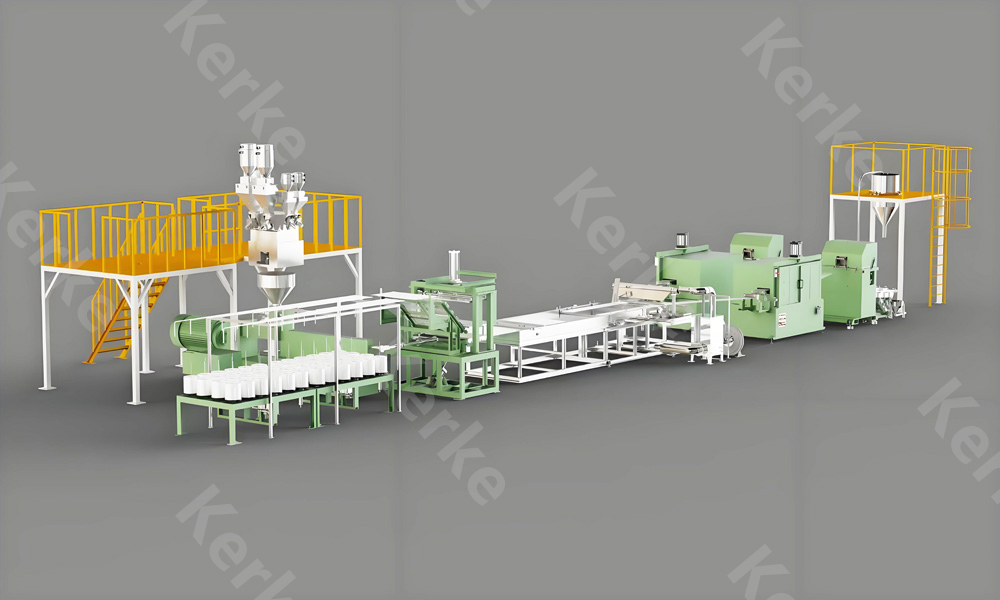
1. Introduction to Flame Retardant Masterbatch for Plastics
Flame retardant masterbatch is a specialized functional additive material designed to improve the fire resistance and flame inhibition performance of thermoplastic and thermosetting plastic products. As one of the most widely used modified masterbatch types in the modern plastic processing industry, it is manufactured by uniformly dispersing high-efficiency flame retardant agents, synergistic additives and auxiliary modifiers in carrier resin through precise compounding, melting, shearing and extrusion processes. Unlike traditional powder flame retardants that suffer from poor dispersion, easy dusting and low utilization rate, flame retardant masterbatch features high purity, stable performance, convenient feeding and excellent compatibility with various plastic substrates, becoming the standard solution for plastic flame retardant modification.
With the continuous upgrading of global fire safety standards for plastic products, ordinary plastic materials that are flammable, fast-burning and prone to dripping have been unable to meet the application requirements of high-standard scenarios such as construction, electrical engineering, new energy vehicles, aerospace and wire and cable. Flame retardant masterbatch can effectively reduce the combustion rate of plastic products, inhibit flame spread, reduce smoke density and toxic gas emission during combustion, and improve the self-extinguishing performance of materials. It enables common plastics such as PE, PP, PVC, ABS, PA and PET to reach UL94 V0, V1, V2 and other international flame retardant grades, greatly expanding the safety application range of plastic materials.
The production quality, flame retardant efficiency and batch stability of plastic flame retardant masterbatch are completely dependent on the performance of compounding and extrusion processing equipment. Twin screw extruder, masterbatch extruder and compounding extruder are the three core processing devices for flame retardant masterbatch production. Due to the high filling ratio, thermal sensitivity and shear sensitivity of flame retardant additives, ordinary extrusion equipment cannot achieve uniform dispersion and stable molding, resulting in unqualified flame retardant effect, poor product consistency and high defective rate. KERKE, a professional extrusion equipment manufacturer, has developed targeted high-performance twin screw extruder, masterbatch extruder and compounding extruder for flame retardant masterbatch production, solving the industry pain points of difficult dispersion of high-content flame retardants, easy thermal decomposition and low production efficiency. This complete guide comprehensively elaborates the classification, working principle, application standards, production process, equipment matching and cost optimization strategies of plastic flame retardant masterbatch, providing systematic technical reference for plastic modification enterprises.
2. Basic Classification and Core Working Principles of Flame Retardant Masterbatch
2.1 Industry Classification of Flame Retardant Masterbatch
According to the chemical composition of flame retardant components, plastic flame retardant masterbatch is mainly divided into halogen-based flame retardant masterbatch and halogen-free flame retardant masterbatch, which have completely different application scenarios and performance characteristics. Halogen-based flame retardant masterbatch takes bromine and chlorine series flame retardants as core functional components, with the advantages of low addition ratio, high flame retardant efficiency and low cost. It can achieve high-standard flame retardant effect with 3%-8% addition amount, and is widely used in low and medium-end plastic products with low environmental protection requirements. However, it will produce toxic and corrosive smoke during combustion, which is gradually restricted by global environmental protection regulations.
Halogen-free flame retardant masterbatch is the mainstream development product of the industry, using phosphorus-nitrogen series, aluminum hydroxide, magnesium hydroxide and other inorganic environmental protection flame retardants. It has the characteristics of low smoke, non-toxic, environmental protection and no corrosion, meeting RoHS, REACH and other international environmental protection standards. The addition ratio is relatively high, generally 15%-30%, which puts forward higher requirements for the shear dispersion capacity and high-load processing performance of extrusion equipment. It is widely used in high-end fields such as food contact plastics, medical equipment, new energy vehicle parts and indoor building materials.
According to applicable plastic substrates, flame retardant masterbatch can be divided into universal type and special type. Universal flame retardant masterbatch is compatible with multiple general plastics such as PE and PP, with wide adaptability but relatively single flame retardant performance. Special flame retardant masterbatch is customized for engineering plastics such as ABS, PA and PC, with targeted formula design, which can maintain the mechanical properties of materials while ensuring efficient flame retardancy, avoiding the problems of material embrittlement and strength reduction caused by ordinary flame retardant masterbatch modification.
2.2 Flame Retardant Working Mechanism
The flame retardant principle of masterbatch mainly covers four core mechanisms: gas phase flame retardancy, condensed phase flame retardancy, heat absorption cooling and synergistic suppression. The gas phase mechanism relies on the non-combustible gas decomposed by flame retardant additives at high temperature to dilute oxygen and combustible gas concentration around the flame, interrupting the combustion chain reaction. Halogen-based flame retardants mainly exert flame retardant effect through gas phase inhibition, which can quickly suppress flame spread in a short time.
The condensed phase mechanism is the core working principle of halogen-free inorganic flame retardant masterbatch. Flame retardant components form a dense carbonized isolation layer on the surface of plastic products during high-temperature combustion, isolating oxygen and heat transfer, preventing the internal plastic matrix from continuing to burn, and avoiding molten dripping. The heat absorption cooling mechanism depends on the thermal decomposition and dehydration reaction of inorganic flame retardants to absorb a large amount of combustion heat, reduce the surface temperature of plastic products, and terminate the combustion condition.
High-quality flame retardant masterbatch adopts multi-component synergistic formula, which organically combines multiple flame retardant mechanisms to achieve comprehensive flame inhibition. The uniform dispersion of flame retardant components in the carrier resin is the prerequisite for giving full play to the synergistic effect, which must rely on the precise shearing and kneading function of professional twin screw extruder and compounding extruder to avoid local concentration unevenness leading to insufficient flame retardant performance.
2.3 International Flame Retardant Grade Standards
The mainstream international evaluation standard for plastic flame retardant performance is the UL94 standard formulated by Underwriters Laboratories, which divides plastic flame retardant grades into HB, V2, V1, V0 and 5VA from low to high. HB grade is the lowest flame retardant grade, requiring slow horizontal combustion and automatic extinguishing within a certain time; V2 grade allows small molten dripping and no flame residue; V1 grade requires no dripping and shorter extinguishing time; V0 grade is the commonly used high-standard grade, requiring automatic extinguishing within 10 seconds and no combustible dripping; 5VA grade is the highest industrial grade, suitable for ultra-high safety fields such as aerospace and precision electronic equipment.
Different application scenarios have mandatory flame retardant grade requirements: ordinary packaging plastics only need HB or V2 grade, building decorative plastics require V1 or V0 grade, wire and cable insulation materials, new energy battery shell plastics and electronic precision parts must reach V0 grade or above. The production process and equipment performance directly determine whether the finished masterbatch can meet the corresponding grade standards, and high-precision compounding extrusion equipment is the core guarantee for stable flame retardant grade.
3. Key Performance Requirements of High-Quality Flame Retardant Masterbatch
3.1 Efficient and Stable Flame Retardant Performance
Qualified flame retardant masterbatch must have high flame retardant efficiency and batch stability. Under the specified addition ratio, it can stably help plastic products reach the target UL94 flame retardant grade, without flame retardant attenuation after long-term high-temperature aging and outdoor exposure. The flame retardant components need to be uniformly dispersed in the plastic matrix without agglomeration, ensuring that every part of the product has consistent fire resistance and avoiding local combustion defects caused by uneven dispersion.
For halogen-free low-smoke flame retardant masterbatch used in wire and cable and building materials, it is also necessary to have low smoke density and low toxic gas emission performance. High-quality masterbatch can effectively reduce the smoke generation amount during plastic combustion, reduce the harm of smoke and toxic gas to personnel escape in fire accidents, and meet the safety requirements of closed space scenarios such as buildings and vehicles.
3.2 Good Material Compatibility and Mechanical Retention
Excellent flame retardant masterbatch needs to have good compatibility with various plastic substrates, no precipitation, no blooming and no migration in the process of product processing and long-term use. Many inferior flame retardant masterbatches will cause surface blooming of plastic products after use, affecting product appearance and surface adhesion performance. At the same time, high-quality masterbatch can minimize the loss of mechanical properties of plastics, maintaining the tensile strength, impact toughness and bending resistance of modified products, avoiding the common problems of material embrittlement and reduced wear resistance caused by excessive flame retardant filling.
3.3 Excellent Processing Adaptability
Flame retardant masterbatch needs to adapt to various plastic processing technologies such as extrusion, injection molding, blow molding and calendering, with stable melting performance and good fluidity. It will not cause mold clogging, product bubble defects and surface blemishes during high-temperature processing. For high-temperature engineering plastics, the masterbatch needs to have high thermal stability, no decomposition and failure under long-term high-temperature processing environment, ensuring stable processing quality of finished products.
3.4 Environmental Protection and Weather Resistance
With the improvement of global environmental protection access standards, qualified flame retardant masterbatch must comply with RoHS, REACH and other environmental protection regulations, containing no heavy metals, prohibited halogen substances and toxic additives. Outdoor plastic products such as architectural profiles and automotive parts also require masterbatch to have excellent weather resistance, anti-aging and anti-ultraviolet performance, ensuring that the flame retardant effect and product appearance do not decay after long-term outdoor use.
4. Production Difficulties of Flame Retardant Masterbatch and Equipment Adaptability Requirements
Compared with ordinary color masterbatch and filling masterbatch, flame retardant masterbatch has prominent production difficulties, which puts forward higher professional requirements for extrusion equipment. Most flame retardant masterbatches have the characteristics of high filling content, thermal sensitivity, shear sensitivity and poor fluidity, which are easy to produce dispersion unevenness, material decomposition, bubble defects and low granulation qualification rate in the extrusion process. Only professional customized extrusion equipment can solve these industrial pain points.
4.1 Core Production Difficulties of Flame Retardant Masterbatch
First, high filling leads to poor melt fluidity. Halogen-free flame retardant masterbatch has a flame retardant filling rate as high as 20%-30%, a large number of inorganic solid particles increase melt viscosity, reduce material fluidity, and easily lead to material stagnation and caking in the extrusion barrel, resulting in uneven plasticization and insufficient dispersion. Ordinary single screw extruders have weak mixing and conveying capacity, which cannot meet the high-load production demand of flame retardant masterbatch.
Second, flame retardant materials are thermally sensitive and easy to decompose. Phosphorus-nitrogen flame retardants and partial bromine flame retardants have low thermal decomposition temperature. Excessively high processing temperature or long-term material residence time will lead to flame retardant decomposition and failure, resulting in reduced product flame retardant performance and material scorching. The production process requires precise temperature control and fast and stable material conveying to avoid material deterioration.
Third, partial flame retardant additives are shear sensitive. Excessive shear force will destroy the molecular structure of synergistic flame retardants, reduce synergistic flame retardant effect, and even cause material discoloration and performance attenuation. Therefore, the production process needs adjustable shear force to balance dispersion effect and material safety, which cannot be realized by ordinary fixed-structure extrusion equipment.
Fourth, it is easy to produce bubble and void defects. Flame retardant raw materials are easy to absorb moisture, and volatile gases will be generated during melting and extrusion. If the exhaust is not complete, a large number of internal bubbles will be formed in the masterbatch particles, reducing product compactness and flame retardant stability, and affecting the processing quality of downstream plastic products.
4.2 Professional Performance Requirements for Extrusion Equipment
Aiming at the above production difficulties, flame retardant masterbatch production equipment must have four core performances: adjustable high-precision shear dispersion capacity, multi-stage precise zoning temperature control system, high-efficiency vacuum exhaust function and stable quantitative feeding system. Twin screw extruder needs modular screw design to realize flexible shear adjustment; masterbatch extruder needs targeted optimization for high filling and low fluidity materials; compounding extruder needs high-precision compounding function to ensure uniform mixing of multi-component formulas.
In terms of structural design, the equipment needs to optimize the melt flow channel to reduce dead corners and material residual, avoid long-term stagnation and decomposition of thermally sensitive flame retardant materials. At the same time, it needs to be equipped with high-torque transmission system to meet the high-load conveying and kneading requirements of high-viscosity flame retardant melt, ensuring stable output and uniform plasticization.
5. KERKE Professional Extrusion Equipment for Flame Retardant Masterbatch Production
Combined with the production characteristics and technical difficulties of plastic flame retardant masterbatch, KERKE has independently developed and optimized full-series twin screw extruder, masterbatch extruder and compounding extruder. All equipment is professionally customized for high filling, thermal sensitivity and shear sensitivity of flame retardant formulas, which can effectively solve the problems of uneven dispersion, flame retardant failure, bubble defects and low production efficiency in traditional production. The following is a detailed introduction of equipment performance, applicable scenarios and project cost price analysis.
5.1 KERKE Twin Screw Extruder for Flame Retardant Masterbatch Compounding
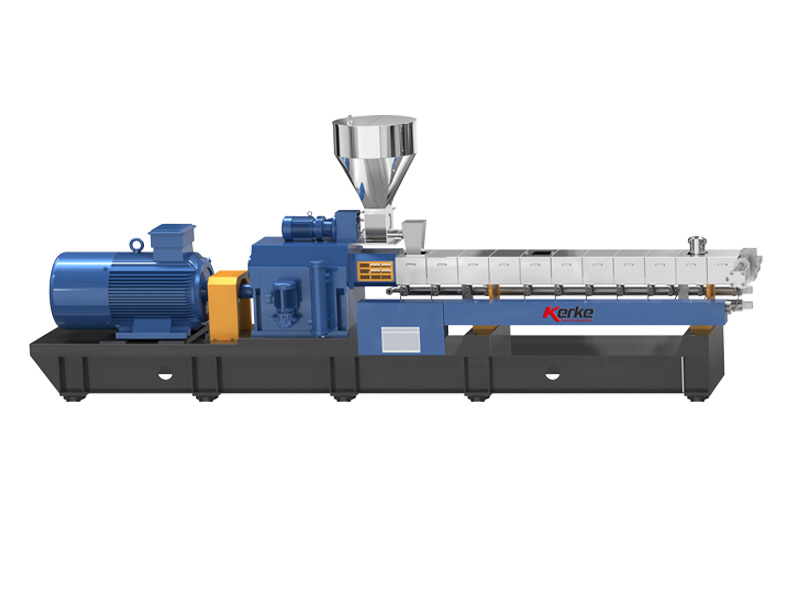
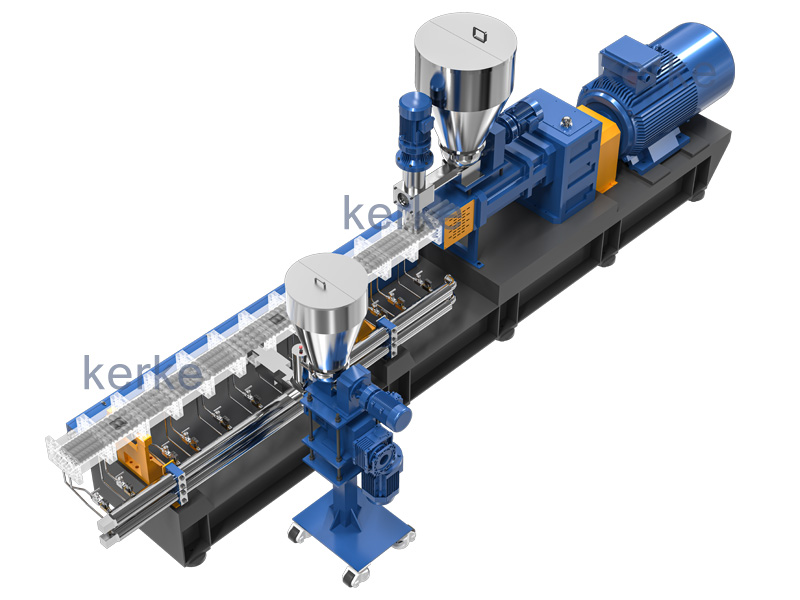
KERKE twin screw extruder is the core mainstream equipment for mass production of flame retardant masterbatch, adopting optimized parallel co-rotating twin screw structure and modular screw element combination design. Aiming at the high filling characteristics of halogen-free flame retardant masterbatch, the equipment is equipped with high-torque screw and enhanced conveying elements, which can stably convey high-viscosity flame retardant melt and avoid material slipping and stagnation. The flexible combination of kneading and shearing elements can realize stepless adjustment of shear force, which can not only fully disperse high-content flame retardant particles, but also avoid excessive shear damage to thermally sensitive flame retardant components, perfectly balancing dispersion effect and material performance stability.
This twin screw extruder is equipped with a multi-stage independent zoning temperature control system, which can set independent temperature parameters for the feeding section, plasticizing section, kneading section and extrusion section according to the thermal decomposition characteristics of different flame retardants. It accurately controls the processing temperature within the safe range of flame retardant materials, completely avoiding material scorching and flame retardant failure caused by local overheating. The built-in high-power vacuum exhaust system can efficiently remove moisture and volatile gases in the melt, eliminate internal bubble defects of masterbatch, and improve product compactness and flame retardant stability.
In terms of production efficiency, KERKE twin screw extruder has stable continuous operation performance, with an hourly output of 280-550kg for conventional flame retardant masterbatch production, which is 25% higher than that of traditional ordinary twin screw equipment. The feeding system adopts high-precision synchronous quantitative feeding, with a feeding accuracy error controlled within ±0.4%, ensuring accurate formula proportioning in batch production and consistent flame retardant performance of finished products.
In terms of project cost and price, the factory price of KERKE medium and small-sized twin screw extruder for flame retardant masterbatch production ranges from $36,000 to $62,000, and the large-scale high-output industrial model is priced from $65,000 to $112,000. The complete set of equipment includes automatic feeding system, host extrusion system, multi-stage temperature control system, vacuum exhaust system, water cooling and pelletizing system. The equipment has low daily energy consumption and failure rate, and the comprehensive production cost per ton of flame retardant masterbatch is reduced by 9%-13% compared with traditional equipment, with outstanding long-term cost performance.
5.2 KERKE Masterbatch Extruder Special for Flame Retardant Masterbatch
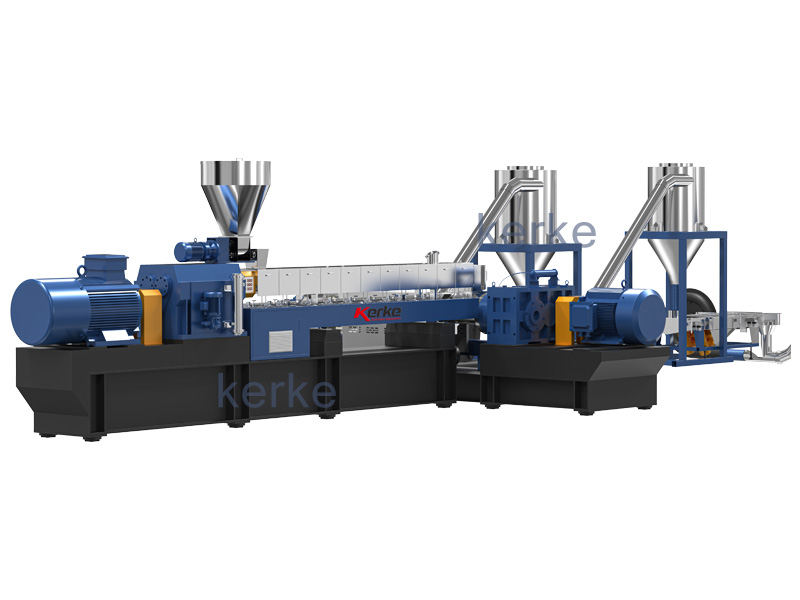
KERKE masterbatch extruder is a special customized equipment independently developed for the fine production of flame retardant masterbatch, optimized and upgraded for the industry pain points of easy decomposition, poor dispersion and low qualification rate of flame retardant materials. The equipment adopts a low-shear high-efficiency kneading screw design, which strengthens the material mixing and kneading effect on the premise of protecting the activity of thermally sensitive flame retardants, realizing uniform dispersion of high-content flame retardant additives, and solving the problem of inconsistent flame retardant performance of masterbatch caused by uneven mixing.
This special masterbatch extruder optimizes the internal flow channel structure of the extrusion barrel, eliminates material residual dead corners, avoids long-term heating and decomposition of flame retardant materials, and ensures the color and performance stability of finished masterbatch. The intelligent linkage control system can automatically match temperature, screw speed and vacuum parameters according to halogen-based and halogen-free flame retardant formulas, realizing one-key parameter switching for different products, greatly reducing manual debugging difficulty and improving production efficiency.
The equipment is suitable for small and medium batch customized production of high-precision flame retardant masterbatch, with an hourly output range of 180-750kg, covering customized production of various special flame retardant formulas. The operation interface is simple and intelligent, and ordinary operators can master the production operation after short-term training. The factory price of KERKE flame retardant special masterbatch extruder ranges from $33,000 to $95,000 according to different automation configurations and output specifications. Compared with universal extrusion equipment, it can reduce the defective rate of flame retardant masterbatch by more than 18%, and the economic benefit of batch production is very significant.
5.3 KERKE Compounding Extruder for High-End Flame Retardant Masterbatch
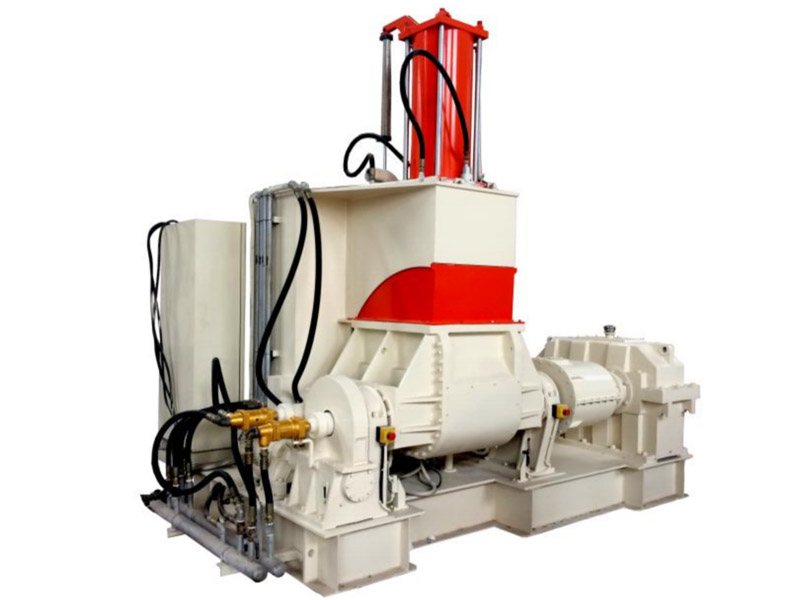
KERKE compounding extruder is a high-end precision compounding equipment, specially designed for the production of high-standard flame retardant masterbatch such as food-grade, medical-grade, new energy vehicle and aerospace special materials. The equipment adopts ultra-precision screw processing technology and imported high-sensitivity temperature control components, with extremely high processing accuracy and operation stability, which can meet the ultra-high requirements of environmental protection, low smoke, non-toxic and high weather resistance of high-end flame retardant masterbatch.
This compounding extruder adopts a fully enclosed dust-free production structure, which avoids external dust and impurity pollution in the production process and ensures the high purity of environmental protection flame retardant masterbatch products. The intelligent energy-saving control system optimizes the operation power of the equipment according to the material processing state, reducing invalid energy consumption by more than 12% compared with ordinary equipment. The multi-stage synergistic kneading technology realizes uniform fusion of multi-component flame retardant formulas, significantly improving the flame retardant synergistic effect and product durability.
The price of KERKE high-precision compounding extruder ranges from $70,000 to $135,000. Although the initial equipment investment is slightly higher, the equipment can stably produce high-value high-end flame retardant masterbatch that meets international high-standard environmental protection and safety certifications. The product profit margin is 15%-25% higher than that of ordinary masterbatch products. For enterprises focusing on high-end new energy and aerospace material markets, the equipment investment can be fully recovered within 1-1.5 years through high-value order income and defect loss reduction, with excellent long-term return on investment.
6. Standard Production Process of Flame Retardant Masterbatch
High-quality flame retardant masterbatch production needs to follow standardized full-process process specifications, including raw material pretreatment, formula batching, pre-mixing, extrusion compounding, cooling pelletizing and finished product inspection. Every process link directly affects the flame retardant performance and product qualification rate of the masterbatch, and needs to be matched with professional extrusion equipment and precise parameter control.
6.1 Raw Material Pretreatment and Batching Process
First, carry out strict pretreatment of raw materials. Flame retardant powder, carrier resin and auxiliary additives are dried at constant temperature to control the raw material moisture below 0.02%, avoiding bubble generation and material hydrolysis failure caused by excessive moisture. Screen and filter flame retardant powder to remove large particle agglomerations and impurities, ensuring uniform raw material particle size and stable formula performance. According to the target flame retardant grade and applicable substrate, accurately proportion the flame retardant agent, carrier resin, dispersant, coupling agent and anti-aging agent to form a scientific and reasonable composite formula.
6.2 High-Speed Pre-Mixing Process
Put the proportioned raw materials into a high-speed mixer for uniform pre-mixing. The high-speed mixing process can preliminarily disperse flame retardant powder particles, break slight agglomerations, and make the flame retardant agent fully contact and blend with the carrier resin and auxiliaries. This process reduces the high-intensity shearing pressure of the twin screw extruder and compounding extruder in the subsequent extrusion process, helps to improve dispersion uniformity, and shortens the material kneading cycle.
6.3 Extrusion Compounding and Molding Process
Put the uniformly mixed materials into the professional extrusion equipment for melting, compounding and extrusion. According to the raw material characteristics and formula type, set graded temperature parameters, screw speed and vacuum degree. For thermally sensitive halogen-free flame retardant materials, adopt low-temperature stable extrusion process to avoid flame retardant decomposition; for high-filling formulas, appropriately increase screw torque and optimize shear element matching to ensure full dispersion and plasticization of materials. The high-precision feeding system ensures stable and uniform material conveying, avoiding formula fluctuation caused by uneven feeding.
6.4 Cooling, Pelletizing and Screening Process
The molten material extruded from the die head is cooled and shaped by circulating water, and then cut into uniform cylindrical masterbatch particles by a high-speed pelletizer. Adopt graded cooling mode to avoid internal stress and particle cracking caused by rapid cooling, and prevent particle adhesion caused by slow cooling. The finished particles are screened by a vibrating screen to remove oversized particles, fine powder and defective particles, ensuring uniform particle size and consistent appearance of finished masterbatch.
6.5 Finished Product Testing and Quality Inspection
Carry out comprehensive performance testing on the finished flame retardant masterbatch, including flame retardant grade test, dispersion uniformity test, melt fluidity test, mechanical compatibility test and environmental protection index test. Verify whether the modified plastic products meet the target UL94 flame retardant grade, detect whether there is blooming and precipitation phenomenon, and confirm that all indexes meet industry standards and customer customization requirements. Store qualified products in a dry and dust-free environment to avoid moisture and pollution affecting product performance.
7. Full-Cycle Cost and Benefit Analysis of Flame Retardant Masterbatch Production
The production and application of flame retardant masterbatch have significant economic and safety value. Reasonable equipment selection and process optimization can effectively reduce comprehensive production costs, improve product qualification rate and market competitiveness. This chapter conducts quantitative analysis of equipment investment, operating cost and profit benefit to clarify the economic advantages of professional extrusion equipment supporting flame retardant masterbatch production.
7.1 Equipment Investment and Operating Cost Analysis
The one-time initial investment of KERKE professional flame retardant masterbatch extrusion equipment ranges from $33,000 to $135,000 according to different models and configurations. Although the initial investment is higher than that of ordinary low-cost extrusion equipment, professional equipment has obvious advantages in long-term operating cost control. In terms of energy consumption, KERKE energy-saving extrusion equipment reduces unit power consumption by 10%-15% compared with traditional equipment, saving $800-$1,500 in monthly electricity cost for a single production line.
In terms of maintenance cost, the equipment adopts high wear-resistant and high-temperature resistant core components, with low failure rate and long service life of vulnerable parts. The monthly maintenance and consumable replacement cost is controlled within $50-$110, far lower than the frequent maintenance cost of ordinary equipment. In terms of raw material cost, the high-precision compounding performance of professional equipment improves the utilization rate of flame retardant raw materials, reduces raw material waste, and saves 7%-10% of raw material cost per ton of finished products.
7.2 Economic Losses of Traditional Low-End Production Mode
Using ordinary single screw extruder and low-precision compounding equipment to produce flame retardant masterbatch has prominent cost losses. Due to insufficient shear dispersion capacity and unstable temperature control, the defective product rate of traditional production reaches 7%-13%. Taking a production line with an annual output of 450 tons of flame retardant masterbatch as an example, the annual defective product loss reaches 31.5-58.5 tons, with a direct economic loss of $10,000-$25,000.
In addition, unstable product quality leads to inconsistent flame retardant grade of finished products, easy customer complaints and order returns, resulting in intangible losses such as customer loss and brand reputation damage. The low production efficiency of traditional equipment cannot meet large-scale order demand, restricting enterprise capacity expansion and market share improvement.
7.3 Comprehensive Economic Benefits of Professional Equipment Production
After adopting KERKE twin screw extruder, masterbatch extruder and compounding extruder for standardized production, the defective product rate of flame retardant masterbatch is reduced to below 1.2%, and the annual defective loss is reduced by more than 88%. The stable product quality ensures 100% qualification rate of customer delivery, eliminates return and complaint losses, and improves customer loyalty and repeat order rate.
The high production efficiency of professional equipment increases the annual output of a single production line by 20%-30%, enabling enterprises to undertake more orders and expand market scale. High-quality high-stability flame retardant masterbatch products have higher market premium capacity, with a product profit margin 12%-22% higher than that of ordinary products. From the long-term operation perspective of 3-5 years, the comprehensive cost saving and profit growth brought by professional equipment far exceed the initial investment difference, with extremely high investment return rate.
8. Common Production Defects and Professional Solutions for Flame Retardant Masterbatch
In the production process of flame retardant masterbatch, defects such as unqualified flame retardant grade, uneven dispersion, particle bubbles and product blooming often occur due to unreasonable formula, equipment parameter deviation and improper process operation. This chapter summarizes typical defects and targeted optimization solutions to help enterprises quickly troubleshoot and stabilize production quality.
8.1 Unqualified Flame Retardant Grade and Insufficient Flame Retardant Effect
This defect is manifested as the modified plastic product cannot reach the preset UL94 flame retardant grade, with slow self-extinguishing speed and combustible dripping during combustion. The main causes include insufficient dispersion of flame retardant particles, thermal decomposition and failure of flame retardant components, unreasonable formula proportion and incomplete raw material reaction. The solutions are to optimize the screw shear element combination of twin screw extruder and compounding extruder to improve dispersion uniformity, reduce processing temperature and shorten material residence time to avoid flame retardant decomposition, adjust the proportion of flame retardant and synergistic agents, and standardize raw material pretreatment process.
8.2 Uneven Dispersion and Local Particle Agglomeration
Uneven dispersion leads to inconsistent flame retardant performance in different parts of plastic products, with local flame retardant failure and color spots. The core inducements are insufficient equipment shear force, unreasonable dispersant proportion and unstable feeding speed. The optimization measures include upgrading high-efficiency KERKE masterbatch extrusion equipment, adjusting formula dispersant content, calibrating the feeding system to ensure stable and uniform feeding, and strengthening raw material pre-mixing treatment.
8.3 Masterbatch Particle Bubbles and Low Compactness
Internal bubbles and loose structure of masterbatch particles reduce product density and flame retardant stability, and are easy to cause surface defects of downstream products. The main reasons are excessive raw material moisture, insufficient vacuum exhaust and unreasonable cooling process. The solutions are to strictly control raw material drying parameters, improve the vacuum degree of the extrusion exhaust system, optimize graded cooling process parameters, and stabilize melt extrusion pressure.
8.4 Product Blooming, Migration and Poor Weather Resistance
After long-term use of modified plastic products, white blooming appears on the surface, accompanied by flame retardant migration and reduced weather resistance. The main causes are unreasonable auxiliary formula, poor compatibility between flame retardant and carrier resin, and insufficient material kneading. The improvement methods are to optimize the coupling agent and lubricant formula, improve the compatibility of flame retardant components, extend the kneading time of extrusion equipment, and ensure full fusion of formula components.
9. Market Application and Industry Development Trend
With the continuous improvement of global plastic fire safety standards and environmental protection regulations, the market demand for high-quality flame retardant masterbatch is growing rapidly. Traditional halogen-based flame retardant masterbatch is gradually replaced by low-smoke, non-toxic and environmental-friendly halogen-free flame retardant masterbatch, which is widely used in new energy vehicles, building energy conservation, electrical and electronic, wire and cable, aerospace and other high-end fields. The market has put forward higher requirements for the high dispersion, high stability, environmental protection and low loss of flame retardant masterbatch.
In terms of production technology, intelligent high-precision compounding extrusion has become the mainstream development trend of the industry. The traditional empirical manual debugging mode is gradually replaced by intelligent parameter linkage control, automatic formula matching and real-time quality monitoring. High-performance twin screw extruder, masterbatch extruder and compounding extruder with low-temperature high-efficiency kneading and precise shear adjustment functions have become the standard equipment for high-end flame retardant masterbatch production, realizing zero-defect and stable batch production.
As a professional extrusion equipment manufacturer, KERKE continues to focus on the technical research and development of flame retardant masterbatch special processing equipment, continuously optimizing equipment shear dispersion performance, temperature control accuracy and intelligent level. It provides efficient, low-cost and stable equipment solutions for global flame retardant masterbatch production enterprises, helping enterprises meet high-standard market demand and promote the standardized and high-quality development of the flame retardant masterbatch industry.
10. Conclusion
Flame retardant masterbatch is a core functional additive for plastic safety modification, and its product quality and production efficiency are directly related to the safety performance and market value of downstream plastic products. High-quality flame retardant masterbatch needs to meet multiple standards of efficient flame retardancy, good compatibility, environmental protection and weather resistance, and its production process has high requirements for equipment precision and process standardization.
Professional twin screw extruder, masterbatch extruder and compounding extruder are the key equipment to solve the production difficulties of high filling, thermal sensitivity and difficult dispersion of flame retardant masterbatch. KERKE series extrusion equipment is specially optimized for the production characteristics of flame retardant masterbatch, with excellent dispersion performance, precise parameter control and stable operation efficiency, which can effectively improve product qualification rate, reduce comprehensive production costs, and help enterprises produce high-standard flame retardant masterbatch that meets international safety and environmental protection standards. In the increasingly competitive high-end plastic modification market, selecting professional KERKE extrusion equipment and standardized production processes is an important way for enterprises to improve core competitiveness and realize long-term sustainable development.