Table of Contents
- Introduction to Anti-UV Weather Resistant Masterbatch
- Understanding UV Degradation Mechanisms in Polymers
- Chemistry of UV Stabilizers: HALS, UV Absorbers, and Quenchers
- Formulation Strategies for Weather Resistant Masterbatch
- Manufacturing Process: Twin Screw Extrusion Compounding
- Equipment Selection for UV Masterbatch Production
- Industrial Applications Across Key Sectors
- Performance Testing and Weathering Standards
- Cost Considerations and Return on Investment
- Troubleshooting Common Production Challenges
- Frequently Asked Questions
- Conclusion
Outdoor polymer products face relentless assault from ultraviolet radiation, moisture, thermal cycling, and atmospheric pollutants. Without adequate protection, polyolefins, engineering plastics, and even some elastomers lose mechanical integrity, discolor, chalk, and embrittle within months of exposure. Anti-UV weather resistant masterbatch has emerged as the most efficient and scalable delivery system for UV stabilizing chemistries, allowing converters to transform standard resin grades into durable outdoor-grade materials with a single dosing step on the production line. This comprehensive guide examines the science, formulation, manufacturing, and equipment considerations behind high-performance weather resistant masterbatch, with particular attention to the compounding extrusion systems that determine final dispersion quality and additive efficiency.
Understanding UV Degradation Mechanisms in Polymers
Ultraviolet degradation is a photochemical process driven by the energy of photons in the 290 to 400 nanometer wavelength range. When polymer chains absorb UV energy that exceeds their bond dissociation thresholds, free radicals form and initiate a cascade of oxidative reactions known as photo-oxidation. The process is autocatalytic: once initiated, it propagates through hydrogen abstraction, peroxide formation, and chain scission, accelerating degradation long after the initial photon absorption event.
Different polymers exhibit varying susceptibilities based on their molecular architecture. Polypropylene, with its tertiary carbon atoms along the backbone, is particularly vulnerable because the carbon-hydrogen bonds at these tertiary sites are weaker and more readily abstracted by free radicals. Polyethylene, while somewhat more resistant due to its simpler linear structure, still degrades through carbonyl formation and crosslinking. Engineering plastics such as polyamides, polyesters, and polycarbonates face additional pathways including Norrish Type I and Type II reactions that cleave ester and amide linkages directly. Even highly UV-stable resins like ABS and HIPS contain butadiene double bonds that act as chromophoric weak points, absorbing UV energy and initiating radical formation.
The visible consequences of unchecked UV degradation manifest in several distinct failure modes. Surface chalking occurs as degraded polymer erodes, exposing filler and pigment particles. Color shift and yellowing result from conjugated carbonyl and chromophore formation. Mechanical property loss—measured as reductions in tensile strength, elongation at break, and impact resistance—reflects the underlying chain scission. Microcracking, gloss loss, and embrittlement follow as the degraded surface layer becomes brittle and unable to accommodate thermal and mechanical stress. For outdoor products designed to last five, ten, or twenty years, these failure modes are unacceptable without intervention.
Anti-UV masterbatch interrupts this degradation cycle through multiple chemical mechanisms working in concert. The masterbatch concentrates one or more UV stabilizing chemistries into a carrier resin at loadings typically ranging from 5 to 30 percent active content, which is then let down into the final product at 1 to 10 percent depending on the application’s durability requirement and the base resin’s inherent stability.
Chemistry of UV Stabilizers: HALS, UV Absorbers, and Quenchers
Effective weather resistant masterbatch rarely relies on a single additive chemistry. Modern formulations combine complementary mechanisms to create synergistic protection that outperforms any individual stabilizer class. Understanding these chemistries is essential for both formulators and converters selecting masterbatch for specific end-use environments.
Hindered Amine Light Stabilizers (HALS) represent the most effective and widely used class of UV stabilizers for polyolefins and many engineering plastics. HALS function not by absorbing UV radiation but by scavenging the free radicals generated during photo-oxidation. The mechanism centers on the nitroxyl radical cycle: the parent amine is oxidized to a stable nitroxyl radical, which then reacts with alkyl radicals to form hydroxylamine ethers. These ethers subsequently react with peroxy radicals, regenerating the nitroxyl radical and continuing the protective cycle. This regenerative mechanism allows a single HALS molecule to neutralize hundreds of radicals, explaining the extraordinary efficiency of HALS even at low concentrations. Multiple generations of HALS—ranging from low-molecular-weight monomeric types to polymeric and oligomeric variants—offer formulators options to balance migration resistance, compatibility, and volatility. Polymeric HALS are preferred for applications requiring long-term durability and minimal additive migration, while low-molecular-weight types deliver faster initial protection and better surface activity.
UV Absorbers (UVA) operate through a fundamentally different mechanism, converting absorbed UV energy into harmless thermal energy through intramolecular proton transfer. Hydroxybenzophenones and hydroxyphenylbenzotriazoles are the dominant chemistries, with benzotriazoles offering superior performance in terms of absorption bandwidth and photostability. UV absorbers function as molecular shields, reducing the UV photon flux that reaches the bulk polymer. Their effectiveness is thickness-dependent: UV absorbers protect the interior of thick sections effectively but offer limited surface protection, since the outermost molecular layers still receive full UV exposure. This characteristic makes UV absorbers ideal partners for HALS, which excel at surface protection. The combination of HALS for surface radical scavenging and UVA for bulk photon attenuation creates the synergistic protection profile that defines premium weather resistant masterbatch.
Excited State Quenchers, typically nickel-based compounds, deactivate excited chromophores before they can initiate radical formation. While highly effective, their use has declined due to environmental concerns and regulatory restrictions on heavy metals. Specialty quenchers based on non-metal chemistries continue to find niche applications in agricultural films and specific engineering plastic formulations where their mechanism addresses degradation pathways not fully covered by HALS and UVA alone.
Secondary Antioxidants and Processing Stabilizers play a supporting but critical role in UV masterbatch. Phosphites and thioethers decompose hydroperoxides formed during both processing and service, preventing these intermediates from fueling photo-oxidation. Phenolic antioxidants provide thermal stability during extrusion compounding, ensuring that the stabilizer package itself is not degraded during masterbatch manufacture. Without adequate processing stabilization, the very additives intended to protect the end product can be partially consumed during compounding, reducing effective loading and field performance.
Formulation Strategies for Weather Resistant Masterbatch
Formulating an effective anti-UV masterbatch requires balancing additive loading, carrier resin compatibility, dispersion quality, let-down ratio, and cost. The target application’s service environment dictates the severity of protection required, which in turn drives the formulation architecture.
For agricultural films and thin-section outdoor products, high HALS loading combined with moderate UV absorber content delivers the surface-dominated protection these applications demand. Let-down ratios of 3 to 8 percent are typical, with masterbatch active content of 15 to 25 percent. The carrier resin is usually a low-density polyethylene or linear low-density polyethylene matching the film resin to ensure compatibility and optical clarity. Migration-controlled polymeric HALS are preferred to prevent additive bloom and loss during extended field exposure, which can exceed twelve months for mulch films and multiple seasons for greenhouse covers.
For thick-section products such as outdoor furniture, playground equipment, and construction profiles, the formulation strategy shifts. Here, UV absorbers become more prominent because their thickness-dependent efficiency provides excellent bulk protection. HALS loading remains substantial to address surface degradation, but the ratio of UVA to HALS increases relative to thin-film formulations. Let-down ratios of 2 to 5 percent are common, and the carrier resin is selected to match the product resin—polypropylene carriers for PP products, engineering polymer carriers for nylon or polyester matrices.
Pigmented outdoor products present additional formulation complexity. Titanium dioxide, the dominant white pigment, is both a UV attenuator and a photocatalyst. Anatase TiO2 grades are highly photocatalytic and can accelerate degradation, while rutile grades with proper surface coatings offer better balance. Carbon black provides outstanding UV absorption and is the pigment of choice for maximum durability applications, but its use is limited to black products. For colored outdoor products, the UV stabilizer package must account for pigment interactions—some organic pigments are themselves photosensitive and can contribute to degradation or be consumed by radical reactions. The table below summarizes typical formulation approaches by application category.
| Application Category | HALS Loading (Active) | UV Absorber Loading | Typical Let-Down Ratio | Primary Carrier Resin | Expected Service Life |
|---|---|---|---|---|---|
| Agricultural Mulch Film | 1.0–1.5% | 0.3–0.5% | 5–8% | LLDPE | 12–24 months |
| Greenhouse Cover Film | 1.5–2.5% | 0.5–1.0% | 3–6% | LLDPE / mLLDPE | 3–5 seasons |
| Outdoor Furniture (PP) | 0.8–1.2% | 0.5–0.8% | 3–5% | PP | 5–10 years |
| Construction Profiles (PVC) | 0.5–1.0% | 0.8–1.5% | 2–4% | PVC | 10–20 years |
| Automotive Exterior (TPO) | 1.0–2.0% | 0.5–1.0% | 3–6% | PP/TPO | 10–15 years |
| Geomembrane (HDPE) | 1.0–1.8% | 0.5–0.8% | 3–5% | HDPE | 20+ years |
The synergy between HALS and UV absorbers is not simply additive but multiplicative in well-designed systems. Formulators must also consider additive interactions with other formulation components. Fillers such as calcium carbonate and talc can adsorb HALS, reducing effective concentration. Flame retardants, antistatic agents, and slip additives may interfere with stabilizer migration and distribution. A robust formulation protocol includes compatibility testing across the complete additive package, not just the UV stabilizer component in isolation.
Manufacturing Process: Twin Screw Extrusion Compounding
The performance of anti-UV masterbatch depends as much on manufacturing quality as on formulation chemistry. Poor dispersion leaves stabilizer agglomerates that create localized under-protected regions and over-protected regions, undermining the uniform protection that field performance requires. Incomplete distributive mixing fails to homogenize the additive throughout the carrier resin, creating streaks and concentration gradients. Thermal degradation during compounding consumes stabilizer before the masterbatch ever reaches the converter. The manufacturing process, therefore, is not merely a mixing operation but a precision engineering challenge that directly determines product value.
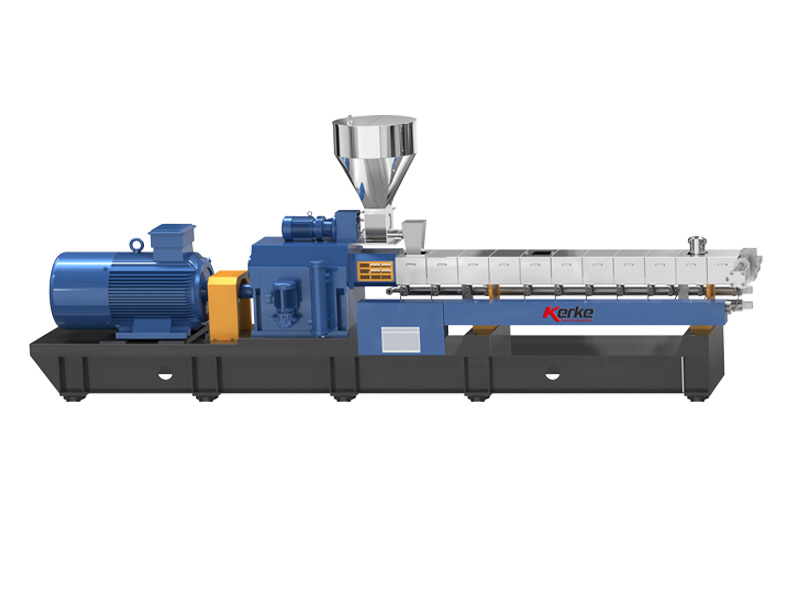
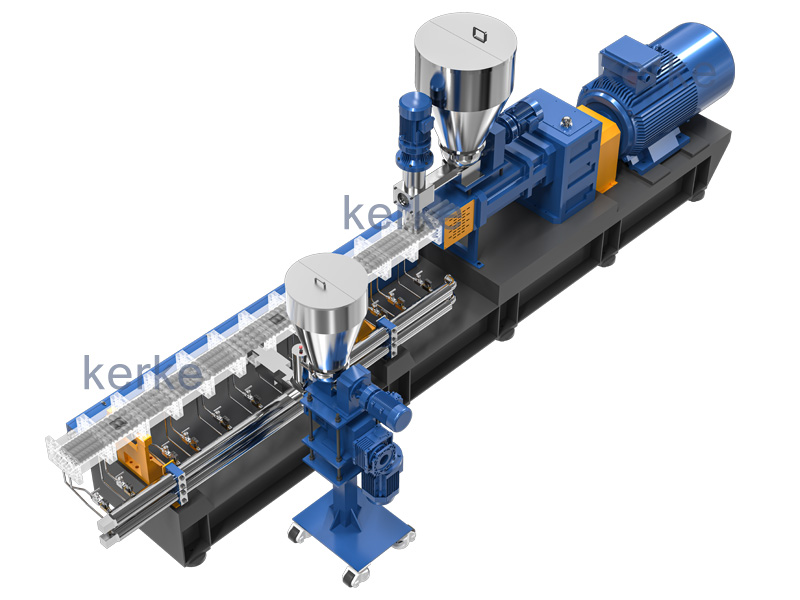
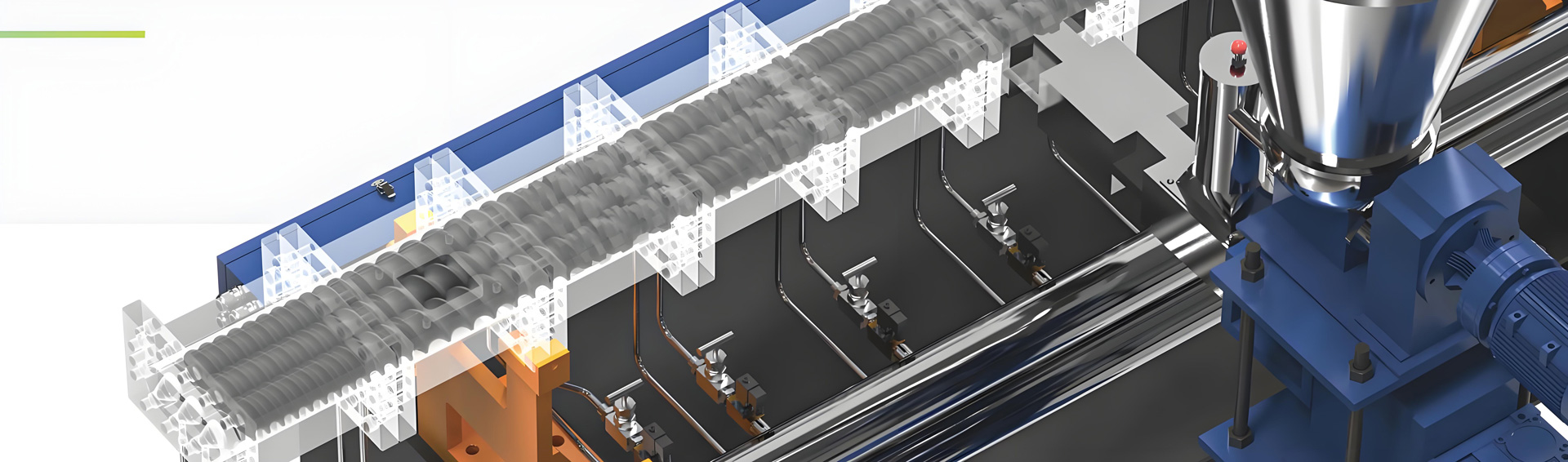
Co-rotating twin screw extruders are the industry standard for UV masterbatch compounding due to their superior mixing efficiency, controlled residence time, and modular barrel configuration. The intermeshing screws of a co-rotating twin screw create both dispersive mixing—breaking agglomerates through high shear—and distributive mixing—spreading components uniformly through the melt. The modular barrel design allows engineers to configure mixing zones, venting zones, and residence time precisely for each formulation, which is critical because UV stabilizers vary widely in melting point, viscosity, and thermal sensitivity.
The compounding process begins with accurate feeding of the carrier resin, UV stabilizer powder or liquid, and any processing aids. Gravimetric loss-in-weight feeders are essential for maintaining the tight concentration tolerances that consistent masterbatch quality requires. The resin enters the first barrel zone and is melted through a combination of conducted heat and shear energy. The molten polymer then encounters the UV stabilizer, which may be introduced as a free powder, a pre-dispersed concentrate, or a liquid via a side-stuffer or injection port downstream of the melting zone.
Downstream addition of UV stabilizers is increasingly preferred because it minimizes thermal history. HALS and UV absorbers, while thermally stable relative to many additives, can still experience partial degradation or volatilization during extended high-temperature residence. By introducing the stabilizer package after the carrier resin is fully melted, the residence time at elevated temperature is minimized. The mixing elements in the downstream zones then disperse and distribute the stabilizer throughout the melt. A vacuum venting stage removes moisture and volatile byproducts that could otherwise create voids or degrade the stabilizer package.
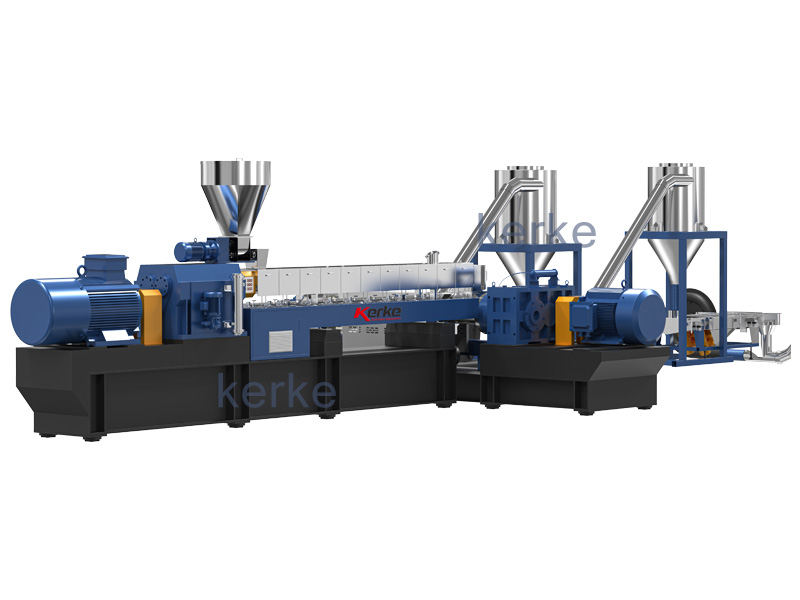
Pelletizing follows the extrusion and filtration stages. For UV masterbatch, strand pelletizing and underwater pelletizing are both common. Underwater pelletizing produces more uniform pellet geometry and is preferred for applications requiring precise dosing, while strand pelletizing offers simplicity and lower capital cost. Either method must produce pellets with consistent size and shape to ensure accurate let-down dosing at the converter’s facility, since pellet size variation translates directly into concentration variation in the final product.
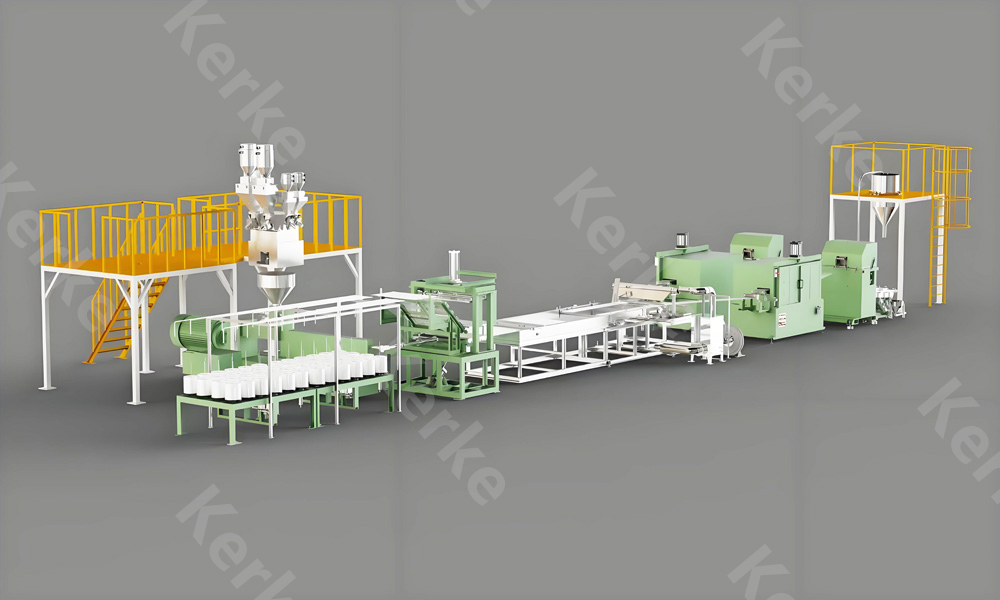
The entire process—from feeding through pelletizing—must be controlled with tight tolerances on melt temperature, screw speed, throughput rate, and vacuum level. Deviations in any of these parameters can compromise the stabilizer package. Kerke, a Wanplas factory specializing in twin screw compounding extruders, has engineered its KTE series specifically to deliver the process control and mixing performance that demanding masterbatch applications require. The KTE series spans from laboratory-scale KTE-16B units used for formulation development through production-scale KTE-135D systems capable of high-throughput commercial compounding, giving manufacturers a scalable platform from R&D through full production.
Equipment Selection for UV Masterbatch Production
Selecting the appropriate extrusion equipment for anti-UV masterbatch production involves matching machine capabilities to formulation requirements, production volume, and quality targets. The decision influences not only throughput and product quality but also operating costs, maintenance requirements, and the flexibility to accommodate future formulation changes.
Screw diameter is the primary determinant of throughput capacity. Laboratory-scale twin screw extruders with 16 to 24 millimeter screw diameters serve formulation development, small-batch production, and specialty masterbatch manufacture where small volumes justify the lower throughput. Mid-range machines in the 40 to 75 millimeter range handle production volumes typical of regional masterbatch manufacturers. Large-scale systems with screw diameters of 90 to 135 millimeters deliver the throughput required by major global masterbatch producers serving high-volume markets.
The KTE series from Kerke addresses this full range. The KTE-16B provides laboratory-scale capability for formulation development and customer sample production, while the KTE-135D represents the high-throughput end of the series. Intermediate models—including the KTE-35, KTE-52, KTE-72, and KTE-95—cover the production volumes typical of most masterbatch manufacturing operations. All KTE series extruders share the parallel co-rotating design that delivers the self-wiping, high-torque performance essential for consistent additive dispersion. As part of the Wanplas family of brands, Kerke backs these systems with the resources and engineering depth of a parent organization that has delivered over 2,000 machines operating across more than 70 countries.
Beyond screw diameter, several equipment features distinguish capable masterbatch extruders. High torque density allows the screws to maintain mixing performance at high throughput without overloading the drive system. The L/D ratio—typically 40:1 to 48:1 for masterbatch applications—provides sufficient barrel length for melting, downstream addition, mixing, venting, and pressurization. Modular screws with interchangeable elements allow process engineers to optimize the mixing configuration for each formulation, which is particularly important when transitioning between different UV stabilizer chemistries with varying dispersion characteristics.
Barrel temperature control precision directly affects stabilizer integrity. Multi-zone temperature control with closed-loop feedback maintains the tight melt temperature windows that thermally sensitive stabilizers require. Water-cooled barrels offer faster response than air-cooled designs, an advantage when processing formulations with narrow processing windows. Vacuum systems with adequate pumping capacity and condensate management remove volatiles effectively without requiring excessive temperatures that could degrade the stabilizer package.
For manufacturers evaluating equipment for UV masterbatch production, the comparison table below outlines how different extruder configurations map to typical production scenarios.
| Equipment Configuration | Throughput Range | Typical Application | Mixing Capability | Relative Investment Level |
|---|---|---|---|---|
| Lab Twin Screw (16–24mm) | 2–15 kg/h | R&D, sample production | High (scalable) | Low |
| Production Twin Screw (35–52mm) | 50–250 kg/h | Regional masterbatch production | Very High | Medium |
| Production Twin Screw (72–95mm) | 300–1,200 kg/h | Large-scale commercial production | Very High | High |
| High-Throughput Twin Screw (120–135mm) | 1,500–4,000 kg/h | Global masterbatch supply | Very High | Very High |
| Tri-Screw Extruder | Varies by size | Specialty dispersion, low-loading | Premium | High |
| Single Screw (with mixing section) | Varies | Simple formulations, pre-dispersed | Medium | Low |
Tri-screw extruders, also available from Kerke, offer enhanced dispersive mixing for formulations containing difficult-to-disperse additives or requiring exceptionally fine stabilizer distribution. The additional screw increases the melt’s exposure to high-shear zones, which can improve the dispersion of high-loading UV stabilizer powders. For manufacturers whose formulations include high concentrations of fine-particle HALS or who serve applications demanding premium dispersion quality, tri-screw technology provides a pathway to product differentiation.
Supporting equipment completes the production system. Gravimetric feeders must be specified with accuracy commensurate with the formulation tolerance—typically ±0.5 percent or better for UV stabilizer dosing. Melt filtration systems with appropriate mesh sizes remove undispersed agglomerates and foreign contaminants. Pelletizing systems must match the throughput and pellet quality requirements. Kerke supplies complete pelletizing systems, including strand cutters and underwater pelletizers, engineered for integration with their KTE extrusion lines. The company’s annual complementary parts allowance, valued at approximately 500 USD per year, supports long-term system reliability for production operations.
Industrial Applications Across Key Sectors
Anti-UV weather resistant masterbatch serves a diverse range of industries, each with distinct performance requirements, regulatory constraints, and economic parameters. Understanding these application spaces helps both masterbatch formulators and equipment manufacturers align their capabilities with market needs.
Agriculture represents one of the largest volume applications for UV masterbatch. Greenhouse films must transmit photosynthetically active radiation while blocking UV that degrades the polymer and can promote plant disease. Mulch films require season-long durability under direct solar exposure. Silage films must maintain integrity through fermentation and storage. The agricultural segment values cost-effective protection and often requires tailored UV cutoff wavelengths for specific crop protection benefits. HALS-dominant formulations with complementary UV absorbers dominate this segment, with polymeric HALS preferred for multi-season films to minimize migration loss.
Automotive applications demand the highest performance levels. Exterior components—bumpers, body cladding, mirror housings, trim—face years of exposure to intense sunlight, thermal cycling, moisture, and atmospheric pollutants. Warranty periods of ten years or more require stabilizer packages that maintain appearance and mechanical integrity throughout the vehicle’s life. TPO (thermoplastic polyolefin) formulations for automotive exteriors typically combine high HALS loading with UV absorbers and processing stabilizers, often with additional additives for scratch resistance and low-temperature impact. The dispersion quality demands in this segment are stringent, as even minor stabilizer distribution non-uniformity creates visible appearance defects after weathering.
Construction applications include window and door profiles, siding, fencing, decking, geomembranes, and roofing membranes. PVC profiles for windows and doors require decades of service life with maintained appearance and dimensional stability. Wood-plastic composite decking combines polymer with wood fiber, creating a composite material where both components require UV protection—the polymer to prevent embrittlement and the wood fiber to prevent photobleaching. Geomembranes for landfill liners and water containment must maintain barrier integrity for twenty years or more, requiring high-performance stabilizer packages with minimal migration. The WPC compounding process, which Kerke’s extrusion systems are engineered to support, requires careful attention to fiber degradation and moisture management alongside UV stabilizer incorporation.
Consumer and Recreational products encompass outdoor furniture, playground equipment, sporting goods, marine accessories, and garden products. These applications balance performance with cost sensitivity, as consumer markets typically will not support premium pricing for durability features that are not immediately visible. Masterbatch formulators serving this segment optimize for cost-performance balance, often using moderate HALS loadings with commodity UV absorbers to achieve acceptable protection at competitive pricing.
Industrial and Infrastructure applications include cable jackets, pipe, conduit, tank liners, and electrical enclosures exposed to outdoor environments. Cable compounding, another application area supported by Kerke’s extrusion systems, requires UV stabilization to maintain jacket integrity in overhead and surface-mounted installations. The long service expectations of infrastructure products—often twenty to fifty years—demand stabilizer packages engineered for maximum longevity, frequently combining multiple HALS generations with high-performance benzotriazole UV absorbers and robust processing stabilization.
Performance Testing and Weathering Standards
Validating the performance of anti-UV masterbatch requires rigorous testing under standardized conditions that correlate with real-world service environments. No single test fully predicts field performance, so comprehensive evaluation protocols combine accelerated weathering with natural exposure and mechanical property assessment.
Accelerated Weathering using xenon arc or fluorescent UV (QUV) apparatus compresses years of outdoor exposure into weeks or months of testing. ASTM G154 defines standard conditions for fluorescent UV apparatus, typically cycling between UV exposure and condensation at controlled temperatures. ASTM G155 governs xenon arc testing, which more closely matches the full solar spectrum including visible and infrared components. ISO 4892 provides internationally recognized equivalents. Test parameters—including irradiance level, exposure cycle, chamber temperature, and humidity—must be selected to represent the target service environment, since tropical, desert, and temperate climates impose significantly different degradation stresses.
Natural Weathering exposure, conducted at standardized test sites such as those operated under ASTM G7 or ISO 877, provides the most reliable correlation to actual field performance. Test fences in Florida (subtropical, high UV, high humidity) and Arizona (desert, intense UV, extreme thermal cycling) serve as reference environments. Samples mounted at fixed angles undergo unfiltered solar exposure, with periodic assessment of appearance, color, and mechanical properties. While natural weathering requires years to generate definitive data, it provides the benchmark against which accelerated test methods are validated.
Performance Metrics assessed during and after weathering include color change (Delta E), gloss retention, tensile strength and elongation retention, impact strength retention, and visual assessment of chalking, cracking, and crazing. The specific metrics and acceptance criteria vary by application. Automotive exterior components may require Delta E below 2.0 after 2,500 hours of xenon arc exposure, while agricultural film may be judged by elongation retention after a defined UV dose. The table below presents typical performance expectations across application categories.
| Performance Metric | Automotive Exterior | Construction Profile | Agricultural Film | Geomembrane |
|---|---|---|---|---|
| Test Method | ASTM G155 Xenon | ASTM G154 QUV | ASTM G154 QUV | ASTM G7 Natural |
| Test Duration | 2,500–5,000 hours | 4,000–10,000 hours | Equivalent 1–3 seasons | 12–24 months |
| Color Change (Delta E) Max | 2.0–3.0 | 3.0–5.0 | Not critical | Not critical |
| Gloss Retention Minimum | 80% | 70% | N/A | N/A |
| Tensile Strength Retention | 80% | 75% | 70% | 85% |
| Elongation Retention | 70% | 65% | 60% | 80% |
| Visual Cracking | None | None | Minor allowed | None |
Establishing a testing program that combines accelerated screening with natural exposure validation enables formulators to develop products with confidence in field performance. Masterbatch manufacturers serving regulated industries or offering extended warranties typically maintain comprehensive weathering databases linking formulation variables to performance outcomes across multiple environments and exposure durations.
Cost Considerations and Return on Investment
The economics of anti-UV masterbatch extend beyond the per-kilogram purchase price to encompass let-down cost, performance longevity, warranty exposure, and brand reputation. A narrow focus on masterbatch unit cost often leads to false economies, as under-stabilized products fail prematurely, generating warranty claims, customer dissatisfaction, and reputational damage that far exceed any material savings.
Masterbatch cost is driven primarily by active stabilizer content and the specific chemistries employed. Commodity HALS and benzophenone UV absorbers offer economical protection for cost-sensitive applications. Premium polymeric HALS and benzotriazole UV absorbers command higher prices but deliver superior performance, particularly in demanding applications requiring long service life. The carrier resin, while a minor cost component, influences both compatibility and processing behavior. The compounding cost—comprising energy, labor, equipment depreciation, and overhead—adds to the formulation cost and is directly influenced by extrusion equipment efficiency.
Let-down cost, calculated as the masterbatch price multiplied by the let-down ratio, represents the actual material cost impact on the final product. A lower-priced masterbatch requiring a higher let-down ratio may produce a higher let-down cost than a more concentrated, higher-priced alternative. Converters should evaluate masterbatch on a let-down cost basis rather than unit price, while also considering the performance implications of let-down ratio on other formulation components and processing behavior.
The return on investment in high-quality UV masterbatch becomes apparent when total cost of ownership is considered. A geomembrane liner that fails after fifteen years instead of twenty creates replacement costs, environmental remediation exposure, and liability that dwarf any masterbatch savings. An automotive component that chalks or fades within the warranty period generates claims and erodes brand value. Agricultural film that degrades mid-season can destroy an entire crop cycle. In each case, the incremental cost of premium UV stabilization—often a fraction of one percent of the final product cost—pays for itself many times over through extended service life and reduced failure risk.
Equipment investment decisions parallel masterbatch selection economics. A higher-capability extrusion system with superior mixing and process control may command a higher initial investment but produces more consistent masterbatch, reducing formulation over-design required to compensate for dispersion variability. Kerke’s KTE series offers production-scale systems that balance capability with investment, and the company’s complementary annual parts allowance helps control long-term operating costs. The scalability from laboratory to production within a single equipment family enables manufacturers to develop formulations on equipment that directly predicts production behavior, reducing the risk and cost of scale-up.
Troubleshooting Common Production Challenges
Even with well-designed formulations and capable equipment, UV masterbatch production encounters recurring challenges that require systematic troubleshooting. Addressing these issues promptly maintains product quality and production efficiency.
Poor Dispersion manifests as visible streaks, agglomerates, or inconsistent let-down performance. Root causes include insufficient shear in the mixing zone, inadequate melting of the carrier resin before stabilizer addition, stabilizer feed rate instability, or moisture in the stabilizer powder. Diagnosis begins with examining the screw configuration to confirm appropriate mixing elements are positioned at the stabilizer addition point. Process adjustments—increasing screw speed, adjusting barrel temperature profile, or moving the stabilizer addition downstream—often resolve mild cases. Persistent dispersion problems may indicate that the stabilizer’s particle size or morphology requires a pre-dispersion step or a different feeding approach.
Stabilizer Degradation During Compounding reduces effective loading and compromises field performance. Symptoms include lower-than-expected weathering performance, color formation during processing, or volatile emissions at the vent. The solution involves reducing thermal history by moving stabilizer addition downstream, lowering melt temperature within the formulation’s processing window, reducing residence time through throughput and screw configuration adjustments, or adding processing stabilizers to protect the UV package during compounding.
Pellet Quality Issues including inconsistent size, shape, or bulk density disrupt converter dosing and can cause feeding problems at the let-down stage. Underwater pelletizing issues often trace to die temperature, water temperature, or cutter speed adjustments. Strand pelletizing problems may involve inconsistent strand formation, water bath temperature, or pelletizer feed rate. Systematic adjustment of pelletizing parameters, informed by the specific pellet characteristics required by the target customer’s dosing equipment, resolves most pellet quality issues.
Color Shift in pigmented masterbatch can result from stabilizer-pigment interactions, excessive thermal history, or contamination. HALS can interact with certain organic pigments, particularly in the presence of acidic co-additives or flame retardants. Identifying the interaction through controlled testing and adjusting the stabilizer chemistry or pigment selection resolves color stability issues. Maintaining strict contamination control prevents color contamination from cross-batch carryover.
Inconsistent Let-Down Performance reported by customers often traces to masterbatch concentration variation, pellet size variation, or carrier resin incompatibility with the customer’s resin. Statistical process control of masterbatch active content, pellet dimensional uniformity, and carrier resin specification control prevent most let-down consistency problems. When customer-specific issues arise, joint evaluation of the let-down process—feeder calibration, mixing in the customer’s extruder, and carrier resin compatibility—identifies the root cause.
Frequently Asked Questions
What let-down ratio should I use for anti-UV masterbatch in my application?
Let-down ratios depend on the masterbatch’s active content, the base resin’s inherent UV stability, the product’s section thickness, and the required service life. Thin agricultural films typically require 3 to 8 percent let-down, while thick-section products like construction profiles may require only 2 to 4 percent. Automotive exterior applications often use 3 to 6 percent. Always consult the masterbatch supplier’s recommendations for your specific resin and service environment, and validate performance through weathering testing of the final compounded product rather than relying on masterbatch loading alone.
Can I use the same UV masterbatch for polypropylene and polyethylene products?
While the UV stabilizer chemistries are effective in both polymers, the carrier resin must be compatible with the product resin for optimal dispersion and mechanical performance. A polypropylene-based masterbatch in a polyethylene product, or vice versa, can create dispersion issues and mechanical property inconsistencies. For best results, use a masterbatch with a carrier resin matching or closely compatible with your product resin. If you produce both PP and PE outdoor products, work with your masterbatch supplier to develop resin-specific grades.
How does carbon black compare to HALS-based UV stabilization?
Carbon black provides excellent UV protection through a combination of absorption and radical scavenging, and it is the pigment of choice for maximum durability in black products. However, carbon black is limited to black coloration and does not offer the regenerative radical scavenging mechanism that makes HALS so efficient. For colored or white products, HALS-based stabilization is essential. Even in black products, combining carbon black with HALS can provide synergistic protection beyond what carbon black alone delivers. The choice depends on color requirements, service life targets, and cost considerations.
What is the difference between accelerated weathering test results and real-world performance?
Accelerated weathering tests compress time but cannot perfectly replicate the full spectrum of environmental variables—seasonal variation, pollutant exposure, biological factors, and mechanical stress—that outdoor products experience. Xenon arc testing generally correlates better with natural exposure than fluorescent UV testing, but both require validation against natural weathering data for reliable field performance prediction. The correlation factor varies by polymer type, stabilizer package, and geographic environment. Manufacturers of critical outdoor products should establish their own correlation through combined accelerated and natural testing rather than relying on generic acceleration factors.
How important is the extrusion equipment in determining masterbatch quality?
Extrusion equipment is critically important to masterbatch quality because it determines dispersion quality, stabilizer integrity, and batch-to-batch consistency. Even the best formulation will underperform if the stabilizer is poorly dispersed or thermally degraded during compounding. Co-rotating twin screw extruders with appropriate screw configuration, precise temperature control, and downstream additive addition capability—such as Kerke’s KTE series—provide the mixing performance and process control that UV masterbatch requires. Investing in capable equipment pays dividends in product consistency, formulation efficiency, and the ability to serve demanding applications that premium markets require.
Can UV masterbatch be used in recycled or post-consumer resin?
Yes, UV masterbatch can stabilize recycled resins, but the formulation approach must account for the recycled material’s degradation history. Recycled polyolefins often contain elevated levels of carbonyl and hydroperoxide groups that act as photo-oxidation initiators, requiring higher stabilizer loading than virgin resin for equivalent protection. Additionally, recycled resin may contain residual additives, fillers, or contaminants that interact with the UV stabilizer package. Formulators experienced with recycled resin stabilization can design masterbatch systems that compensate for these factors, enabling quality outdoor products from recycled feedstock and supporting circular economy objectives.
Conclusion
Anti-UV weather resistant masterbatch is an enabling technology that transforms commodity and engineering polymers into durable outdoor materials capable of years or decades of reliable service. The science spans polymer photochemistry, stabilizer mechanisms, formulation strategy, and precision compounding engineering. Success in this field demands not only formulation expertise but also the manufacturing capability to disperse, distribute, and protect stabilizer chemistries with consistency and efficiency.
The compounding extrusion system is the heart of masterbatch production, and equipment selection directly determines the quality ceiling that formulation science can reach. Co-rotating twin screw extruders, exemplified by the KTE series from Kerke, provide the mixing performance, process control, and scalability that UV masterbatch production demands. From laboratory-scale formulation development to high-throughput commercial production, the ability to maintain dispersion quality and stabilizer integrity across the full production range distinguishes capable equipment from merely adequate alternatives.
As outdoor polymer applications continue expanding into agriculture, construction, automotive, infrastructure, and consumer markets, the demand for high-performance UV stabilization will grow accordingly. Manufacturers who invest in formulation expertise, testing capability, and production equipment engineered for the specific demands of UV masterbatch will be positioned to capture this demand with products that deliver genuine durability and value. The combination of advanced stabilizer chemistry and precision compounding technology, backed by the engineering resources and global experience of organizations like Kerke and its parent brand Wanplas, provides the foundation for masterbatch products that meet the outdoor durability challenges of 2026 and beyond.