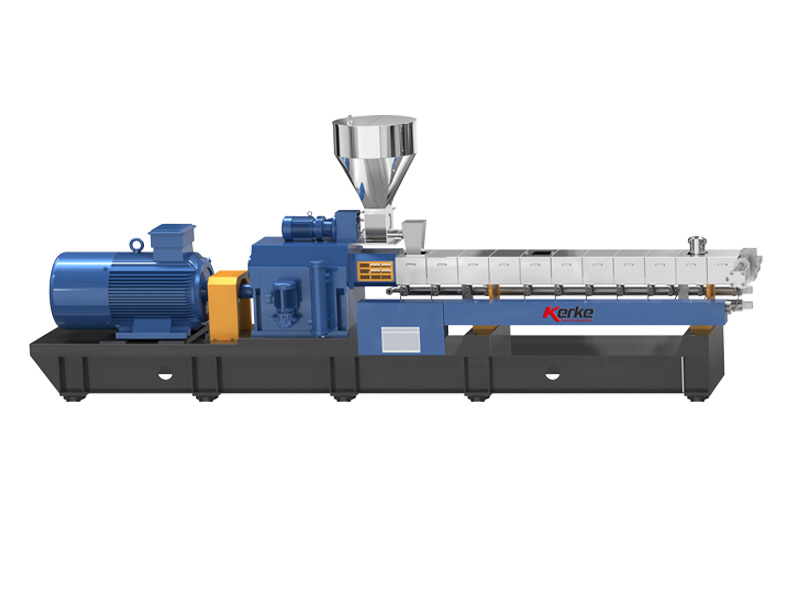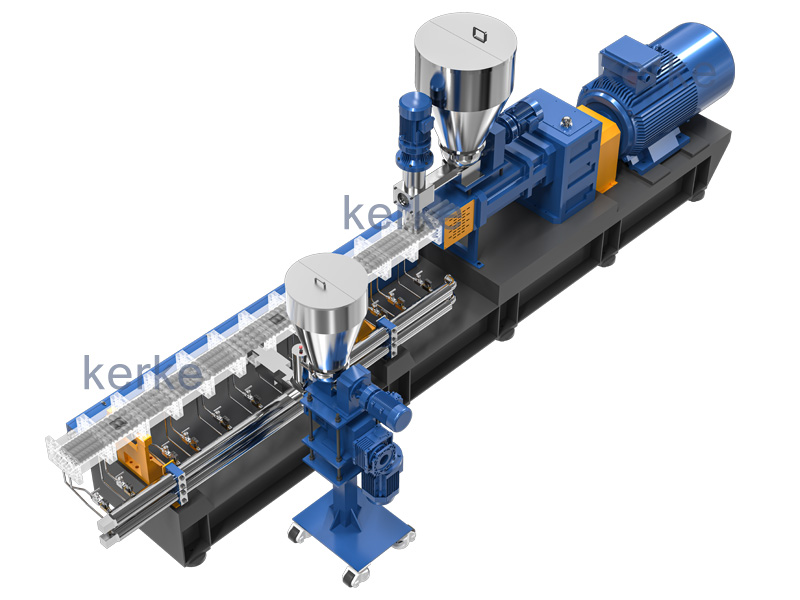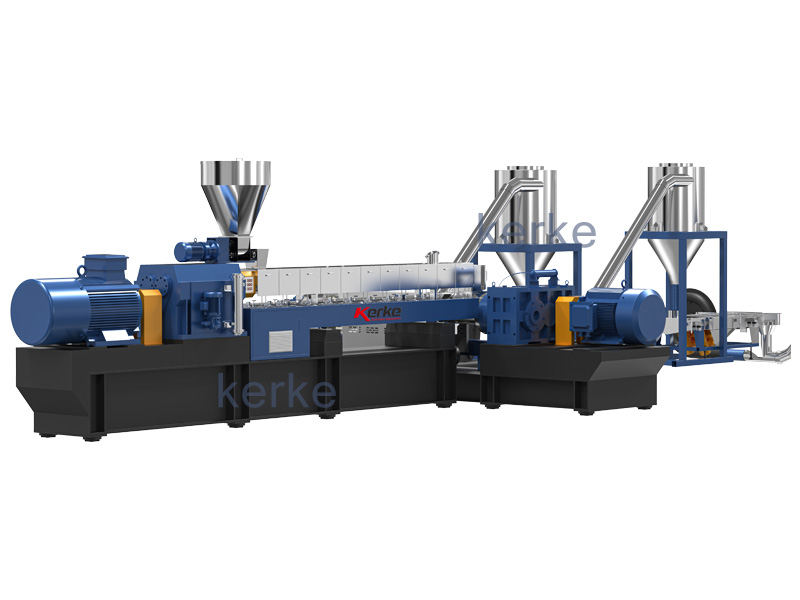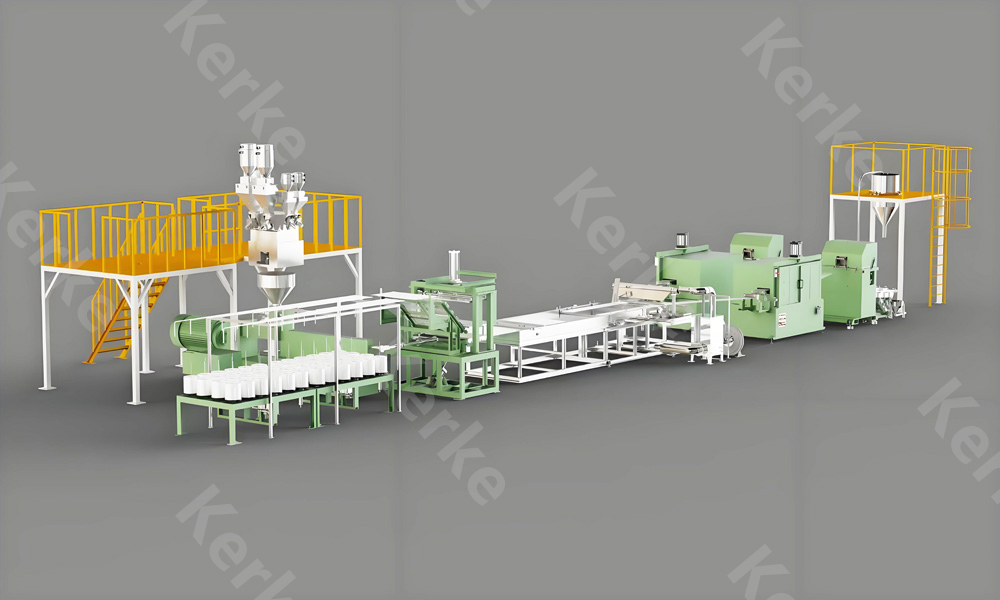
Masterbatch for agricultural films is one of the most technically unforgiving additive applications in the plastics industry, because the product is expected to survive years of unshielded solar radiation, temperature cycling from below freezing to well above 60 degrees Celsius at the film surface, wind loading, hail, chemical attack from crop protection sprays and mechanical contact with metal structures, all while remaining transparent, dimensionally stable and mechanically sound. When it fails, an entire greenhouse crop can be lost. This guide explains what a UV masterbatch for agricultural films actually contains, how hindered amine light stabiliser chemistry works and why pesticide-resistant NOR HALS grades exist, how service life is specified in kilolangleys, how thermic, anti-drip, anti-dust and light-diffusing functions are layered onto the same concentrate, and how the compound is manufactured on a co-rotating parallel twin-screw extruder. Kerke, a Wanplas factory with more than twelve years of specialisation in compounding extrusion, is referenced throughout as a supplier of the production equipment used to make these additive concentrates.
What Masterbatch for Agricultural Films Must Deliver
A masterbatch for agricultural films is a concentrated additive pellet, normally in a polyethylene carrier, that carries the light stabiliser package, antioxidants, and any optical, thermal or surface-active functions required by the film, and that is dosed into the film extruder at roughly 1 to 7 percent depending on the target service life and function set. The film converter buys this concentrate rather than the individual additives because most light stabilisers are waxy, low-melting or dusty powders that cannot be metered accurately at the fractions of a percent required in the finished film.
Agricultural film is a broad family, and the additive requirement changes sharply between members. Greenhouse covering film is a multi-season product, often three-layer co-extruded, typically 80 to 200 micrometres thick, and must combine long-life UV protection with infrared retention, anti-drip surface behaviour, anti-dust properties and often controlled light diffusion. Low tunnel film is thinner, usually 30 to 80 micrometres, and has a shorter design life. Mulch film is thin, often 8 to 30 micrometres, heavily pigmented and designed to last a single crop cycle before removal or, in the case of biodegradable grades, before soil incorporation. Silage stretch film and silage sheeting must exclude oxygen and light while surviving one to two seasons of exposure with high puncture resistance. Soil fumigation film adds gas barrier requirements. Each of these demands a purpose-built concentrate.
The core deliverables of an agricultural film masterbatch are therefore fivefold: a defined and reproducible service life under solar exposure, retention of mechanical properties over that life, resistance to chemical attack from the specific agrochemicals used on the crop, delivery of the required optical behaviour in the photosynthetically active and infrared bands, and complete compatibility with the base resin so that the film retains its optical clarity and does not develop gels, fisheyes or die build-up.
The economic logic of agricultural film masterbatch is unusual: the additive package represents a small share of the film formulation by weight, yet it determines whether the film survives one season or five, which makes it one of the highest-leverage material decisions a grower or converter makes.
The Weathering Environment: What Actually Destroys Farm Film
Polyethylene degrades outdoors through photo-oxidation, a free-radical chain reaction initiated by ultraviolet photons and sustained by atmospheric oxygen. Understanding each step of that chain clarifies why the stabiliser package is built the way it is.
The Photo-Oxidation Chain
Initiation occurs when an ultraviolet photon, mainly in the UV-B band between roughly 290 and 320 nanometres and the shorter part of UV-A between 320 and 400 nanometres, is absorbed by a chromophore in the polymer. Pure polyethylene has no strong chromophore, so initiation depends on impurities: carbonyl groups formed during processing, catalyst residues such as titanium and chromium, hydroperoxides generated during extrusion, and unsaturation at chain ends. This is why processing history matters as much as stabiliser loading.
Propagation follows. An alkyl radical reacts with oxygen to form a peroxy radical, which abstracts hydrogen from a neighbouring chain to form a hydroperoxide plus a new alkyl radical. The chain is autocatalytic: each cycle produces a new radical and a new hydroperoxide, and hydroperoxides themselves photolyse into two more radicals. The visible consequences are chain scission, which reduces molecular weight and causes embrittlement, and crosslinking, which causes stiffening and yellowing. In practice, film failure is usually declared when elongation at break falls to 50 percent of its initial value, which is the criterion embedded in the standard test methods.
Accelerating Factors in the Field
| Environmental Factor | Mechanism of Damage | Typical Severity | Formulation Countermeasure |
|---|---|---|---|
| Solar UV radiation | Initiates radical photo-oxidation of the polymer backbone | Primary driver everywhere; strongest at high altitude and low latitude | HALS at high loading plus UV absorber where thickness allows |
| Elevated surface temperature | Doubles reaction rate for roughly every 10 degrees Celsius rise | Film surface can exceed 60 to 70 degrees Celsius under still air | High-molecular-weight HALS with low volatility, thermal antioxidant |
| Sulphur-based fungicides | Acidic residues neutralise basic HALS nitroxyl cycle | Severe; can cut service life by half or more | NOR HALS, acid scavengers such as hydrotalcite or zinc oxide |
| Chlorinated and halogenated pesticides | Generate hydrogen halide that deactivates stabiliser and attacks polymer | Severe in intensive horticulture | NOR HALS plus metal-oxide acid scavenger package |
| Contact with metal greenhouse frame | Local heat concentration plus catalytic metal ion attack | Localised but a common initiation point for tears | Higher stabiliser loading, metal deactivator, protective tape at contact points |
| Wind flutter and mechanical fatigue | Cyclic loading propagates micro-cracks in embrittled film | Determines final failure once photo-oxidation has begun | Correct base resin selection, adequate thickness, tensioning practice |
| Dust and salt deposition | Reduces transmission, holds moisture, concentrates chemicals | Progressive light loss of a significant fraction over a season | Anti-dust additive package, surface energy control |
| Soil microbial and moisture attack (mulch) | Attacks the buried edge of the film | Concentrated at the soil interface | Higher stabiliser at edges by design, or a controlled-degradation grade |
The Thickness Effect
Ultraviolet damage is a surface-weighted phenomenon for absorber-based protection but essentially bulk for radical-scavenging protection. In a thin film, an ultraviolet absorber has too short a path length to attenuate meaningfully, which is why absorber-only systems perform poorly below about 100 micrometres. Hindered amine light stabilisers do not rely on path length, which is exactly why they became the dominant chemistry for agricultural film. Practically, this means the same stabiliser concentration in a 30 micrometre mulch film and a 180 micrometre greenhouse film delivers very different outcomes, and stabiliser loading is normally specified per unit of film thickness rather than as a flat percentage.
Measuring Service Life in Kilolangleys, Not Months
The agricultural film industry specifies durability in kilolangleys of accumulated solar radiation, because a rating expressed in months or seasons is meaningless across different latitudes and climates. One langley is one gram-calorie per square centimetre; a kilolangley is one thousand of those. Annual global radiation varies from roughly 80 to 120 kilolangleys in northern Europe to over 200 kilolangleys in parts of the Middle East, North Africa, high-altitude Latin America and inland Australia.
| Rating Band | Typical Application | Approximate Life in a 100 kLy per Year Climate | Approximate Life in a 200 kLy per Year Climate | Relative Additive Cost Level |
|---|---|---|---|---|
| Under 40 kLy | Single-season mulch, short tunnel film | Under 6 months | Under 3 months | Low |
| 45 to 70 kLy | One-season tunnel film, silage sheeting | Around 8 months | Around 4 months | Low to Medium |
| 80 to 110 kLy | Two-season greenhouse film | Around 12 months | Around 6 months | Medium |
| 130 to 160 kLy | Standard multi-season greenhouse film | Around 18 months | Around 9 months | Medium to High |
| 180 to 220 kLy | Long-life greenhouse film, high-radiation regions | Around 24 months | Around 12 months | High |
| 250 to 350 kLy | Premium long-life film, thick multilayer | Three years or more | Around 18 months | Very High |
| Above 400 kLy | Extended-life specialty covering | Four to five years | Two years or more | Premium |
The kilolangley rating is not a pure additive property. It is a system property that combines stabiliser chemistry and loading, film thickness, base resin quality, catalyst residue level, processing history and the chemical environment of the specific greenhouse. A rating stated by a masterbatch supplier assumes a defined film thickness, a defined let-down ratio and the absence of aggressive agrochemical exposure, and every serious supplier states those assumptions on the technical data sheet. When a converter reports a field failure at half the rated exposure, the investigation almost always finds either a thickness deviation, an unreported pesticide regime, or contact heating at the frame.
UV Stabiliser Chemistry: HALS, Absorbers and Quenchers
Three distinct chemistries protect agricultural film against ultraviolet degradation, and modern formulations use them in combination because each intervenes at a different point in the photo-oxidation chain.
Hindered Amine Light Stabilisers
Hindered amine light stabilisers, universally abbreviated HALS, are the backbone of agricultural film protection. They do not absorb ultraviolet radiation. Instead the parent amine is oxidised in service to a nitroxyl radical, which scavenges carbon-centred alkyl radicals to form an alkoxyamine; that alkoxyamine then reacts with a peroxy radical to regenerate the nitroxyl radical. This is the Denisov cycle, and because the active species regenerates, a small amount of HALS provides protection out of all proportion to its concentration and continues working for years.
HALS are classified by molecular weight. Low-molecular-weight monomeric HALS diffuse readily and reach the surface where degradation is worst, but they are volatile and can be extracted or lost during hot processing. High-molecular-weight oligomeric and polymeric HALS are non-volatile, extraction-resistant and permanent, but they diffuse slowly. Agricultural film formulations almost always blend the two so that surface protection and long-term permanence are both achieved. Typical total HALS content in the finished greenhouse film ranges from roughly 0.3 percent for a short-life product to 1.2 percent or more for a long-life premium film in a high-radiation region.
Ultraviolet Absorbers
Ultraviolet absorbers work by capturing ultraviolet photons and dissipating the energy as heat through reversible intramolecular processes. The principal families are benzotriazoles, benzophenones and triazines. Their effectiveness scales with concentration and with optical path length, following the Beer-Lambert relationship, so they contribute strongly in thick films and weakly in thin ones. In agricultural film they are used mainly in films above roughly 100 micrometres, and in the outer layer of a co-extruded structure where they protect both the polymer and any light-sensitive additive in the inner layers. Triazines offer the best combination of high extinction and low volatility for demanding outdoor use.
Nickel Quenchers and Legacy Chemistry
Nickel-based quenchers deactivate excited states in the polymer before they can initiate radicals. They were widely used before HALS matured and remain in some regional formulations because they are unaffected by acidic pesticide residues. Their drawbacks are a slight green tint, heavy-metal content that conflicts with modern environmental expectations and RoHS-driven procurement, and lower overall efficiency than HALS. Most producers have moved away from them in favour of NOR HALS chemistry, which delivers pesticide resistance without a heavy metal.
| Stabiliser Class | Mechanism | Thickness Sensitivity | Pesticide Tolerance | Typical Level in Finished Film | Relative Cost Level |
|---|---|---|---|---|---|
| Monomeric HALS (low molecular weight) | Radical scavenging with self-regeneration | Low | Poor to moderate | 0.1 to 0.3 percent | Medium |
| Oligomeric HALS | Radical scavenging, low migration | Low | Moderate | 0.2 to 0.6 percent | Medium to High |
| Polymeric HALS (high molecular weight) | Radical scavenging, permanent, extraction resistant | Low | Moderate | 0.3 to 0.8 percent | High |
| NOR HALS (alkoxyamine) | Low-basicity radical scavenging | Low | Excellent | 0.2 to 0.8 percent | High to Very High |
| Benzotriazole absorber | Photon absorption and thermal dissipation | High | Good | 0.1 to 0.4 percent | Medium |
| Triazine absorber | High-extinction photon absorption | High | Good | 0.1 to 0.3 percent | High |
| Benzophenone absorber | Photon absorption, lower extinction | High | Good | 0.2 to 0.5 percent | Low to Medium |
| Nickel quencher | Excited-state deactivation | Moderate | Excellent | 0.1 to 0.3 percent | Medium |
Synergy and Antagonism
Combining HALS with an ultraviolet absorber is strongly synergistic in thicker films: the absorber reduces the photon flux reaching the bulk, which lowers the rate at which HALS is consumed. Combining HALS with certain sulphur-containing secondary antioxidants, however, is antagonistic, because the acidic decomposition products of thioester antioxidants deactivate the basic HALS. Phosphite secondary antioxidants are the compatible choice. Similarly, some acidic pigment surface treatments and some flame retardant residues antagonise HALS. A formulator must therefore validate the whole package, not the individual components.
Pesticide Resistance and NOR HALS Technology
Pesticide-induced stabiliser deactivation is the single most common cause of premature greenhouse film failure in intensive horticulture, and it is the reason a specialised class of light stabiliser exists. The mechanism is straightforward chemistry with severe commercial consequences.
Why Conventional HALS Fail Under Agrochemical Exposure
Conventional HALS carry a basic secondary or tertiary amine nitrogen. Acidic species react with that nitrogen to form an ammonium salt, which cannot enter the nitroxyl radical cycle and is therefore inert as a stabiliser. The acidic species come from several routes. Elemental sulphur and sulphur-based fungicides, used heavily on grapes, tomatoes and cucurbits, oxidise to sulphur dioxide and then to sulphuric acid in the presence of moisture. Chlorinated pesticides and chlorine-releasing disinfectants generate hydrogen chloride. Soil fumigants based on halogenated compounds release halide acids directly into the enclosed volume. Even acid rain in industrial regions contributes.
The field consequence is stark. A film rated at 160 kilolangleys under clean exposure can fail below 70 kilolangleys under a heavy sulphur regime. Because the grower and the converter rarely share detailed spray records, the failure is often misattributed to the film supplier when the actual root cause is the agrochemical protocol.
NOR HALS: The Low-Basicity Solution
NOR HALS, sometimes written as N-alkoxy HALS or hindered amine with an alkoxyamine substituent, replaces the basic amine hydrogen with an alkoxy group. This dramatically reduces basicity, so acidic residues no longer form an inert salt, and the stabiliser continues to cycle. NOR HALS also acts as an acid scavenger in its own right and shows better compatibility with flame-retardant and halogenated systems. The trade-offs are a higher raw material cost level and, in some grades, a slightly slower onset of protection because the alkoxyamine must first convert to the active nitroxyl.
Acid Scavenger Packages
NOR HALS is normally reinforced with inorganic acid scavengers rather than used alone. The common choices are hydrotalcite, a layered double hydroxide that captures halide and sulphate ions with very high capacity, zinc oxide, which neutralises acids and provides some ultraviolet screening, calcium stearate and zinc stearate as general acid neutralisers with a lubricating side effect, and magnesium oxide for high-temperature applications. Loadings in the finished film are typically 0.05 to 0.3 percent. A well-designed pesticide-resistant masterbatch combines NOR HALS with hydrotalcite and a phosphite antioxidant, and this three-part architecture is now the reference formulation for intensive horticulture film.
| Agrochemical Exposure Class | Typical Crops and Practices | Stabiliser Architecture | Acid Scavenger | Expected Retention of Rated Life |
|---|---|---|---|---|
| Class 0 — clean exposure | Ornamentals, low-input systems, silage cover | Standard oligomeric plus polymeric HALS | Not required | Full rated life |
| Class 1 — light chemical use | Leafy greens, occasional foliar spray | Polymeric HALS with a small NOR HALS fraction | Low level calcium stearate | Around 85 to 95 percent |
| Class 2 — sulphur regime | Grapes, tomatoes, cucurbits, powdery mildew control | NOR HALS dominant, blended with polymeric HALS | Hydrotalcite plus zinc oxide | Around 75 to 90 percent |
| Class 3 — halogenated regime | Strawberry, intensive protected horticulture | Full NOR HALS system at elevated loading | Hydrotalcite at elevated level | Around 65 to 85 percent |
| Class 4 — soil fumigation | Pre-plant fumigation under sealed film | NOR HALS plus barrier layer design | Hydrotalcite plus magnesium oxide | Application-specific, short design life |
Antioxidant and Process Stabilisation Systems
Light stabilisers protect the film in service; antioxidants protect the polymer during processing and during long-term thermal exposure, and a deficiency in the antioxidant package undermines the light stabiliser package before the film ever reaches the field.
Primary Antioxidants
Hindered phenolic antioxidants donate a hydrogen atom to peroxy radicals, terminating the propagation chain, and form a stable phenoxy radical. They are the workhorse thermal stabiliser for polyethylene and are used both in the base resin as supplied and, at additional levels, in the masterbatch. Typical total content in agricultural film sits between 0.05 and 0.2 percent. The one caution is that certain phenolics produce quinoid transformation products that cause pink or yellow discoloration, particularly in the presence of nitrogen oxides, which is a real risk in greenhouses with combustion-based heating or carbon dioxide enrichment.
Secondary Antioxidants
Phosphites and phosphonites decompose hydroperoxides into non-radical products, breaking the autocatalytic loop before radicals form. They are the correct partner for HALS. Thioesters also decompose hydroperoxides and give excellent long-term thermal protection, but their acidic decomposition products antagonise HALS, so they are generally excluded from agricultural film formulations. Phosphite content is typically 0.05 to 0.15 percent, and hydrolytically stable grades should be specified because agricultural masterbatch may be stored in humid conditions.
Metal Deactivators
Transition metal ions, particularly copper and iron, catalyse hydroperoxide decomposition and dramatically accelerate degradation. Sources include catalyst residues, contact with galvanised or copper-containing greenhouse hardware, and micronutrient sprays containing copper compounds. Metal deactivators based on hydrazide chemistry chelate these ions and are worth including in formulations for structures with metal frames or copper-based fungicide use.
Functional Additives Beyond UV Protection
Modern greenhouse film is an optical and thermal management device as much as a physical cover, and the masterbatch is the vehicle for delivering those functions. A converter typically uses a single multifunctional concentrate or a small set of concentrates dosed together.
Thermic or Infrared Additives
At night, a greenhouse loses heat by long-wave infrared radiation in the 7 to 14 micrometre band. Plain polyethylene is largely transparent in that band, so an uncovered polyethylene greenhouse can suffer inversion, where the internal temperature falls below the outside air temperature. Thermic additives absorb or reflect long-wave infrared and reduce that loss. The common systems are aluminium silicate and other silicate minerals, hydrotalcite, magnesium and aluminium hydroxides, and specialty nano-scale mineral grades. Loadings of 3 to 12 percent in the film layer are typical, and the trade-off is haze: higher thermic performance generally reduces direct light transmission. A well-formulated film achieves infrared blocking of 70 to 85 percent while maintaining photosynthetically active radiation transmission above 85 percent, which requires careful mineral selection and, critically, excellent dispersion.
Anti-Drip and Anti-Fog Systems
Condensation on the inner surface of greenhouse film forms discrete droplets that scatter light, reduce transmission by 15 to 30 percent and drip onto plants, spreading fungal disease. Anti-drip additives are non-ionic surfactants, typically sorbitan esters, polyglycerol esters, ethoxylated sorbitan esters or ethoxylated alcohols, that migrate to the film surface and lower interfacial tension so condensate forms a continuous film that runs off. The engineering challenge is migration kinetics: the additive must reach the surface quickly enough to work in the first weeks and be replenished from the bulk for years, without over-migrating and exhausting itself. Loadings are typically 0.5 to 2.5 percent in the inner layer. Durability is the practical differentiator between grades, and long-life anti-drip systems combine fast and slow migrating species in the same way HALS packages combine monomeric and polymeric species.
Anti-Dust and Surface Energy Control
Dust accumulation on the outer film surface can reduce transmission substantially over a season, particularly in arid and semi-arid regions. Anti-dust additives, usually fluorine-containing or specific silicone-based species, reduce surface energy and static charge so dust does not adhere and is washed off by rain. They must be selected to avoid interfering with the anti-drip system on the opposite surface, which is one reason three-layer co-extrusion dominates greenhouse film production.
Light Diffusion and Spectral Management
Diffusing additives convert direct beam radiation into scattered light, which penetrates deeper into the crop canopy, reduces leaf scorch and improves yield uniformity. Mineral diffusers based on silica, calcium carbonate or specialty polymer particles deliver haze values from 20 percent up to above 70 percent while maintaining high total transmission. Photoselective additives take this further: ultraviolet-blocking films suppress the development of certain insect pests and fungal sporulation, far-red modifying films influence plant morphology, and fluorescent or luminescent additives shift green light toward red to better match chlorophyll absorption. Photoselective grades demand very tight dispersion control, because the optical effect is proportional to particle number, not just mass loading.
Pigments for Mulch and Silage Film
Mulch film uses pigment for a functional purpose. Black film suppresses weeds by excluding photosynthetically active radiation and warms the soil moderately. White-on-black films reflect light to cool the soil in hot climates while retaining weed suppression. Silver reflective films repel aphids and thrips. Green and brown films transmit infrared for soil warming while blocking visible light. Silage film requires near-total light exclusion, generally achieved with a black core layer between white outer layers, both to exclude light from the fermenting forage and to reflect solar heat.
| Function | Additive Class | Typical Level in Film | Primary Benefit | Main Trade-Off |
|---|---|---|---|---|
| Long-wave infrared retention | Aluminium silicate, hydrotalcite, mineral hydroxides | 3 to 12 percent | Night temperature retention, frost protection | Increased haze, reduced direct transmission |
| Anti-drip / anti-fog | Non-ionic surfactants, sorbitan and glycerol esters | 0.5 to 2.5 percent | Higher light transmission, less disease pressure | Finite migration reservoir, limits durability |
| Anti-dust | Fluorine or silicone surface-active species | 0.2 to 1.0 percent | Maintains transmission in dry regions | Possible interference with anti-drip layer |
| Light diffusion | Silica, calcium carbonate, polymer particle diffusers | 1 to 8 percent | Deeper canopy penetration, less scorch | Reduced direct beam transmission |
| UV blocking for pest control | High-extinction absorbers in the outer layer | 0.3 to 1.0 percent | Suppresses whitefly, thrips, botrytis sporulation | Can inhibit pollinator navigation and anthocyanin colour |
| Antimicrobial surface | Silver-ion or zinc-based systems | 0.1 to 0.5 percent | Reduces surface biofilm and algae | Cost level and regulatory scrutiny |
| Weed suppression (mulch) | Carbon black or organic pigment package | 1.5 to 3.0 percent | Complete light exclusion at the soil surface | Heat absorption may be excessive in hot climates |
| Light exclusion (silage) | Black core with white skin layers | 2.0 to 3.0 percent in the core | Anaerobic fermentation quality | Requires co-extrusion capability |
Carrier Resin and Base Film Compatibility
Carrier resin choice for agricultural masterbatch is less contentious than in engineering plastics, because almost all agricultural film is polyethylene based, but it is far from trivial. The carrier must disperse rapidly in a high-output blown film line with limited mixing capability, must not create gels or fisheyes that become tear initiation points, and must not disturb the bubble stability or optical clarity of the film.
Carrier Options
LDPE carriers are the traditional choice, offering excellent dispersion, good optical compatibility and broad availability. LLDPE carriers give better mechanical property retention in films that are predominantly LLDPE and are preferred for stretch and silage film. Metallocene LLDPE carriers offer the narrowest molecular weight distribution and the cleanest optics for premium clear greenhouse film. EVA carriers are used where the film contains EVA layers, and they carry higher additive loadings well because of their polarity, which is particularly useful for surfactant-based anti-drip concentrates. A carrier melt flow rate roughly two to four times that of the base film resin is the usual target, ensuring rapid breakdown at low let-down without destabilising the bubble.
Gels, Fisheyes and Dispersion Failures
A gel in an agricultural film is more than a cosmetic defect. It is a stress concentration point where the film tears under wind loading, and it is a local zone of lower stabiliser concentration where degradation begins early. Gels come from crosslinked polymer, from undispersed mineral agglomerates, from degraded material accumulating in dead zones of the compounding extruder, and from contamination. Prevention requires clean raw material handling, a screw configuration with no stagnation zones, adequate but not excessive shear, correct melt temperature control, and melt filtration on the compounding line. For mineral-loaded thermic concentrates, filtration mesh must be selected carefully so that the functional mineral passes while true contamination is retained.
Additive Interaction Matrix
| Additive Pair | Interaction | Consequence | Formulation Rule |
|---|---|---|---|
| HALS with phosphite antioxidant | Compatible, mildly synergistic | Good process and service stability | Standard pairing for agricultural film |
| HALS with thioester antioxidant | Antagonistic | HALS deactivated by acidic decomposition products | Exclude thioesters from HALS-stabilised film |
| HALS with acidic pigment surface treatment | Antagonistic | Partial stabiliser neutralisation | Specify neutral or basic surface treatments |
| HALS with UV absorber | Synergistic above roughly 100 micrometres | Extended service life, slower HALS consumption | Combine in thick film and outer layers |
| Anti-drip surfactant with mineral filler | Competitive adsorption | Surfactant adsorbs on filler, reducing surface migration | Separate into different co-extrusion layers |
| NOR HALS with halogenated flame retardant | Compatible | Retained stabiliser activity | Preferred for fire-rated agricultural structures |
| Hydrotalcite with acidic additive | Neutralising, protective | Extends HALS life under agrochemical exposure | Include in all Class 2 and above formulations |
| Phenolic antioxidant with nitrogen oxides | Discoloration reaction | Pink or yellow staining of the film | Use non-discolouring phenolic grades where heating is combustion based |
Formulation Architecture by Film Type
The additive architecture differs so sharply between agricultural film families that a masterbatch producer should treat them as distinct product lines rather than variations on one recipe.
Multi-Season Greenhouse Film
Typically a three-layer co-extruded LDPE and LLDPE structure at 150 to 200 micrometres. The outer layer carries the highest concentration of UV absorber and anti-dust additive plus a share of HALS. The core layer carries thermic mineral and the bulk of the HALS loading. The inner layer carries the anti-drip surfactant and a portion of HALS. Total stabiliser loading is scaled to the kilolangley target for the destination region. This layered approach places each additive where it works best and prevents the anti-drip surfactant from being adsorbed onto the thermic mineral.
Low Tunnel and Small Tunnel Film
Usually monolayer or two-layer at 30 to 80 micrometres with a one-season design life. Because the film is thin, ultraviolet absorbers contribute little and the formulation relies almost entirely on HALS. Anti-drip is often included because tunnel condensation is severe. Thermic additives are used selectively, since the higher haze can be undesirable at low light levels.
Mulch Film
Thin at 8 to 30 micrometres, heavily pigmented, and designed to fail predictably after the crop cycle. The masterbatch here is primarily a pigment concentrate with a modest stabiliser package tuned so the film retains integrity through harvest but is easy to lift afterwards. Two divergent design philosophies exist: conventional polyethylene mulch designed for retrieval and recycling, and biodegradable mulch based on PBAT, PLA and starch blends designed for soil incorporation, where the additive package must itself be compatible with biodegradation certification.
Silage Stretch Film and Silage Sheeting
Stretch film is typically 25 micrometres, multilayer, based on LLDPE with metallocene grades for puncture and cling performance. The masterbatch delivers UV protection for one to two seasons of outdoor bale storage, pigment for light exclusion, and tack control. Silage sheeting for bunker silos is thicker, often 100 to 200 micrometres, black or black and white, and needs high oxygen barrier behaviour, which is increasingly achieved with an EVOH or polyamide barrier layer supplied by a separate concentrate.
Soil Fumigation and Solarisation Film
Fumigation films must retain volatile fumigants, which requires a barrier layer, typically EVOH or polyamide, between polyethylene skins. Because fumigants are aggressive and often halogenated, NOR HALS is mandatory. Solarisation film is transparent and thin, designed to maximise soil heating for a period of weeks, with a correspondingly short stabiliser requirement.
| Film Type | Thickness Range | Design Life | Key Masterbatch Functions | Typical Let-Down | Relative Additive Cost Level |
|---|---|---|---|---|---|
| Multi-season greenhouse film | 150 to 200 micrometres | 3 to 5 years | HALS, UV absorber, thermic, anti-drip, anti-dust, diffusion | 4 to 12 percent total across layers | High to Premium |
| Single-season greenhouse film | 100 to 150 micrometres | 1 to 2 years | HALS, basic anti-drip | 2 to 5 percent | Medium |
| Low tunnel film | 30 to 80 micrometres | 6 to 12 months | HALS, anti-drip | 1.5 to 4 percent | Low to Medium |
| Conventional mulch film | 8 to 30 micrometres | 3 to 8 months | Pigment, controlled-life stabiliser | 2 to 5 percent | Low |
| Biodegradable mulch film | 10 to 20 micrometres | One crop cycle | Pigment, compostable-approved stabiliser | 2 to 6 percent | High |
| Silage stretch film | 20 to 30 micrometres | 12 to 24 months | HALS, pigment, tack control | 2 to 4 percent | Medium |
| Silage bunker sheeting | 100 to 200 micrometres | 1 to 2 seasons | HALS, black core pigment, oxygen barrier | 3 to 6 percent | Medium to High |
| Soil fumigation film | 25 to 50 micrometres | Weeks | NOR HALS, barrier layer concentrate | 2 to 4 percent | High |
Twin-Screw Compounding Process for UV Masterbatch
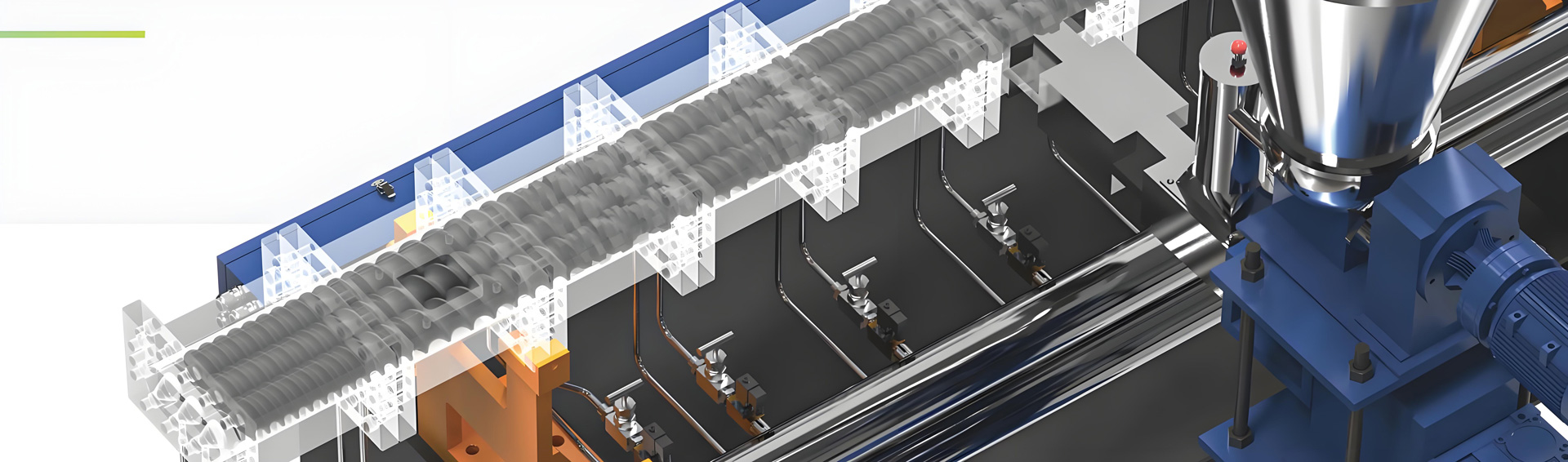
Producing a UV masterbatch on a co-rotating parallel twin-screw extruder is a controlled-shear exercise. Unlike a pigment concentrate where the goal is maximum dispersive energy, a stabiliser concentrate must reach uniform distribution without thermally degrading the very additives it is supposed to deliver, because many HALS and surfactants have limited thermal stability and several are waxy solids that melt well below the polymer.
Core Process Constraints
- Melt temperature should be held as low as the carrier permits, generally 170 to 200 degrees Celsius for an LDPE or LLDPE carrier, because HALS volatility and surfactant decomposition rise steeply above that.
- Residence time should be short and narrow in distribution, which favours a starve-fed twin screw over a flood-fed single screw or a batch internal mixer.
- Waxy and low-melting additives should be introduced downstream of the melting zone through a side feeder or a liquid injection port, not through the main hopper where they cause feed slippage and bridging.
- Vacuum venting is required to remove moisture from mineral fillers and volatiles from surfactant packages.
- Oxygen exposure during compounding should be minimised, since hydroperoxide formation during processing pre-loads the film with initiation sites.
Representative Screw Configuration
| Zone | Position (L/D) | Elements | Purpose | Design Caution |
|---|---|---|---|---|
| Feed and conveying | 0 to 6 | Deep-flighted forward conveying | Accept carrier pellets and free-flowing powder | Cool the feed barrel to prevent bridging of waxy additives |
| Melting | 6 to 13 | Forward kneading blocks, 30 and 45 degree offset | Complete carrier melting at minimum shear | Avoid reverse elements here to limit heat build-up |
| Primary dispersion | 13 to 20 | Moderate kneading blocks with one narrow neutral block | Break mineral and stabiliser agglomerates | Monitor melt temperature; HALS loss rises sharply above 210 degrees Celsius |
| Side feed | 20 to 26 | Conveying with twin-screw side feeder | Add thermic mineral, waxy HALS, surfactant | Use a vented side feeder for low bulk density minerals |
| Distributive homogenisation | 26 to 34 | Turbine and slotted mixing elements | Uniform distribution without further heating | Avoid additional high-shear blocks at this stage |
| Devolatilisation | 34 to 40 | Deep conveying under vacuum | Remove moisture and volatiles | Fit a vent stuffer if the melt tends to rise into the port |
| Pressure build | 40 to 44 | Short pitch forward conveying | Generate die and screen pressure | Keep short to minimise residence time |
Feeding Architecture for Additive Concentrates
Accurate feeding is the difference between a masterbatch that delivers its rated kilolangley performance and one that does not, because a 10 percent error in stabiliser dosing translates directly into a 10 percent error in delivered protection. Loss-in-weight gravimetric feeders should be used on every solid stream. Waxy HALS and surfactants that are liquid or pasty at moderate temperature are best handled with a heated liquid feeder injecting directly into the melt, which eliminates the feeding difficulties of a low-melting solid entirely. Thermic minerals and hydrotalcite have low bulk density and poor flow, and require a crammer feeder or a twin-screw side feeder with venting to avoid air entrainment. Kerke supplies volumetric metering systems, loss-in-weight feeders, twin-screw side feeders, crammer feeders and liquid feeders, so a complete agricultural masterbatch line can be specified from one source rather than assembled from mismatched components.
Two-Stage and Alternative Configurations
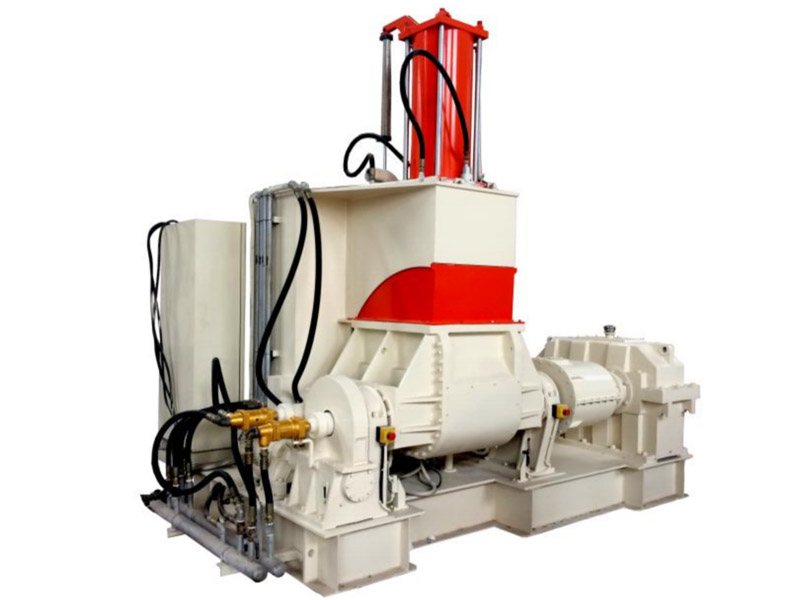
Some agricultural concentrates, particularly high-loading thermic mineral products at 60 percent and above, benefit from a two-stage arrangement in which the first stage disperses at controlled shear and the second stage pelletizes at low temperature with independent pressure control. Kerke’s KTE-SE double-stage extrusion system, described as a mother-baby configuration, exists for exactly this class of material that cannot be processed satisfactorily on a single stage. A Banbury kneader followed by a single-screw discharge extruder is an alternative used by some producers for very high filler loading, though it gives a broader residence time distribution and less consistent dispersion than a well-configured twin screw.
Pelletizing, Handling and Additive Stability
The pelletizing step influences additive retention more than most producers expect, because it determines the thermal and hydraulic exposure of the compound in its final seconds of processing.
Pelletizing Route Selection
| Method | Suitability for Agricultural Concentrates | Additive Retention | Throughput Fit | Relative Investment |
|---|---|---|---|---|
| Water-cooled strand pelletizing | Standard UV and pigment concentrates with good melt strength | Good; watch surfactant leaching into the water bath | Low to medium output | Low |
| Air-cooled strand pelletizing | Surfactant-rich anti-drip concentrates | Excellent; no water contact | Low to medium output | Low to Medium |
| Water ring die face hot cutting | High-loading thermic mineral concentrates with low melt strength | Good | Medium to high output | Medium |
| Air-cooled die face hot cutting | Moisture-sensitive and surfactant systems | Excellent | Medium output | Medium |
| Eccentric water mist hot cutting | Tacky EVA-carrier and elastomeric concentrates | Very good | Medium output | Medium to High |
| Underwater granulation | High-output standard UV concentrates, uniform spherical pellets | Good with correct water temperature control | High output | High |
Two specific cautions apply. First, surfactant-based anti-drip concentrates can leach into a water bath, which both depletes the product and fouls the water circuit; air-cooled routes are strongly preferred for these grades. Second, hydrotalcite and mineral-loaded concentrates absorb water readily, so a water-based pelletizing route must be followed by effective centrifugal dewatering and hot-air drying, with residual moisture verified before packing.
Storage and Shelf Life
UV masterbatch is not indefinitely stable in storage. Waxy HALS can bloom to the pellet surface over months, creating dust and inconsistent dosing. Surfactants can migrate and cause pellet agglomeration in warm warehouses. Hygroscopic mineral fillers absorb ambient moisture. Practical controls are packing in moisture-resistant lined bags or foil-laminated sacks, storage below 30 degrees Celsius away from direct sunlight, a stated shelf life typically in the range of 12 to 24 months, and a first-in-first-out stock rotation discipline with lot traceability back to the raw material batches.
Testing, Accelerated Weathering and Field Correlation
No masterbatch supplier can wait five years to validate a five-year film, so the industry relies on accelerated weathering supported by outdoor exposure racks and field feedback. Understanding the limits of each method prevents both over-promising and unnecessary over-formulation.
Accelerated Weathering Methods
Xenon arc testing uses a filtered xenon lamp to reproduce the full solar spectrum including the visible and infrared portions, with controlled irradiance, black panel temperature, humidity and water spray cycles. It is the closest laboratory approximation to natural sunlight and is the reference method for greenhouse film. Fluorescent ultraviolet testing uses UVA-340 or UVB-313 lamps in a condensation cycle; it is faster and cheaper but reproduces only the ultraviolet portion of the spectrum, and UVB-313 lamps emit at wavelengths shorter than those present in terrestrial sunlight, which can trigger degradation pathways that never occur in the field. Carbon arc testing is a legacy method still specified in some regional standards.
The Correlation Problem
Acceleration factors between laboratory and field are formulation-dependent and cannot be treated as a universal constant. A commonly cited working range is that a well-designed xenon arc protocol compresses one year of Mediterranean exposure into a few hundred to around a thousand hours, but the true factor depends on irradiance setting, temperature, moisture cycling and the specific failure mechanism. Two formulations that rank identically in a laboratory test can diverge sharply in the field if one relies on a volatile stabiliser that is retained in a sealed chamber but lost in open air, or if one is vulnerable to agrochemical attack that no chamber reproduces. This is why serious producers maintain outdoor exposure racks in representative climates and correlate laboratory data against real installations.
Test Property Set
| Property | Purpose | Common Failure Criterion | Test Frequency |
|---|---|---|---|
| Elongation at break | Primary indicator of embrittlement | Retention below 50 percent of initial value | Every exposure interval |
| Tensile strength | Load-bearing capability under wind | Significant loss relative to initial | Every exposure interval |
| Dart drop impact | Resistance to hail and handling damage | Application-specific threshold | Initial and end of exposure |
| Carbonyl index by infrared spectroscopy | Direct measure of oxidation progress | Rise above a defined baseline index | Every exposure interval |
| Residual HALS content | Confirms stabiliser consumption rate | Depletion below the protective threshold | Periodic, by chromatography |
| Oxidation induction time | Measures remaining antioxidant reserve | Fall below a specified minute threshold | Incoming and periodic |
| Light transmission and haze | Optical performance and diffusion level | Transmission loss beyond the specified limit | Initial and periodic |
| Anti-drip persistence | Duration of continuous condensate film behaviour | Return to droplet formation | Chamber test plus field observation |
| Long-wave infrared blocking | Thermic performance verification | Below specified percentage in the 7 to 14 micrometre band | Per production lot |
| Gel count | Dispersion quality and contamination control | Above the specified count per unit area | Per production lot |
Standards, Certification and Regional Requirements
Agricultural film sits at the intersection of plastics regulation, food safety, agricultural policy and waste management, and the applicable framework depends on the destination market and the specific application.
Product Standards
EN 13206 is the European standard covering thermoplastic covering films for use in agriculture and horticulture, defining classification by expected duration, dimensional requirements, mechanical property requirements and the ageing test regime. EN 17033 specifies requirements for biodegradable mulch films for use in agriculture and horticulture, covering biodegradation in soil, ecotoxicity and heavy metal content, and it is the reference for producers claiming soil-biodegradable mulch. ASTM test methods are widely used for the underlying property measurements, including tensile and elongation testing and accelerated weathering exposure procedures. Regional GB standards apply for the Chinese market, covering mulch film thickness and mechanical requirements, and thickness minimums in several markets have been raised specifically to make post-use retrieval and recycling feasible.
Chemical Regulation
REACH governs substances placed on the European market and imposes registration, candidate list screening and, in some cases, authorisation obligations. Every additive in an agricultural masterbatch destined for Europe requires a REACH position, and the candidate list must be re-screened whenever it is updated. RoHS is not directly applicable to agricultural film but is frequently requested by procurement departments as a heavy-metal screen, and it is one reason nickel quenchers have declined. Food contact frameworks apply when the film touches harvested produce, which occurs with some post-harvest covers and packaging-adjacent uses; in that case EU 10/2011 governs in Europe with its positive list and specific migration limits, and the FDA food contact framework applies in the United States. Biocidal claims, such as antimicrobial or insect-repellent properties, trigger separate biocidal product regulation in the European Union and equivalent registration requirements elsewhere, and a masterbatch supplier must be careful not to make an unregistered biocidal claim.
Sustainability and End-of-Life
Agricultural plastic waste is under intense regulatory scrutiny. Extended producer responsibility schemes are expanding, minimum thickness requirements are being imposed to enable retrieval, and collection and recycling obligations are being formalised in an increasing number of jurisdictions. This shapes masterbatch design in concrete ways. Retrievable mulch film must be thick enough and strong enough at end of life to be lifted mechanically, which means the stabiliser package must maintain a minimum elongation through harvest rather than allowing rapid embrittlement. Recyclable greenhouse film benefits from formulations that avoid additives which contaminate the recycling stream. Films designed for soil incorporation must use additives cleared under biodegradation certification. And recycled agricultural film re-entering production typically needs a restabilisation concentrate, since the recyclate arrives with a depleted antioxidant and stabiliser reserve. Wanplas addresses this cycle across its factory network: Polyretec, a Wanplas factory, supplies the washing and pelletizing lines that process recovered agricultural film, while Kerke supplies the twin-screw compounding extruders used both for the restabilisation masterbatch and for the pelletizing stage of recycling lines.
| Framework | Scope | Relevance to Agricultural Masterbatch | Evidence Required |
|---|---|---|---|
| EN 13206 | Thermoplastic covering films for agriculture | Defines duration classification and ageing test regime | Test report against the declared duration class |
| EN 17033 | Biodegradable mulch film | Governs soil biodegradation and ecotoxicity claims | Certification for the complete formulation |
| REACH | Chemical registration and restriction in Europe | Applies to every additive in the concentrate | Safety data sheets, candidate list screening statement |
| RoHS | Restricted hazardous substances | Common procurement screen, drives heavy-metal-free design | Supplier declarations and periodic testing |
| EU 10/2011 | Plastics in food contact | Applies where film contacts harvested produce | Declaration of compliance and migration assessment |
| FDA food contact regulations | United States food contact clearance | Applies to produce-contact applications | Clearance statement per component and use condition |
| ASTM test methods | Mechanical testing and accelerated weathering | Underlying measurement basis for durability claims | Test reports with stated conditions |
| GB standards | Chinese national requirements for mulch and covering film | Thickness and mechanical minimums for the Chinese market | Compliance test report |
| ISO 9001 | Quality management system | Baseline expectation for masterbatch supply | Valid certificate and audit readiness |
Equipment Selection for an Agricultural Masterbatch Plant
An agricultural film masterbatch plant needs a line that handles waxy solids, low bulk density minerals, liquid surfactants and pigments in the same facility, often with frequent product changes. That combination of requirements points firmly toward a modular co-rotating twin-screw platform with a comprehensive feeding ecosystem.
Sizing Guidance
| Kerke KTE Class | Role in an Agricultural Masterbatch Plant | Indicative Output Band | Best-Fit Products | Relative Investment |
|---|---|---|---|---|
| Laboratory class (KTE-16B and similar) | Stabiliser package development, weathering sample preparation | Small-batch, from around 30 kg per hour downward | Formulation trials, customer-specific packages | Low |
| KTE-26 to KTE-36 class | Pilot production and specialty grades | Tens of kilograms per hour | Photoselective, antimicrobial, custom regional grades | Medium |
| KTE-52 to KTE-65 class | Core production line | Hundreds of kilograms per hour | Standard UV concentrates, anti-drip, thermic | High |
| KTE-75 to KTE-95 class | High-volume standard products | Approaching and exceeding one tonne per hour | Black mulch concentrate, white concentrate, filler | Very High |
| KTE-135D class | Large-scale filler and compound production | Multi-tonne per hour | Calcium carbonate filler concentrate for mulch film | Premium |
| KTE-SE double-stage system | Very high mineral loading, heat-sensitive packages | Matched to first-stage capacity | Thermic mineral concentrates above 60 percent loading | High to Very High |
| Single-screw SE series | Recycling of production scrap and reclaimed film | 30 kg per hour to 800 kg per hour | In-house scrap recovery, reclaim pelletizing | Low to Medium |
Recommended Line Configuration
- Length-to-diameter ratio of 40 to 48, providing space for a controlled dispersion section, a side feed position, a liquid injection port and vacuum devolatilisation.
- Loss-in-weight gravimetric feeders on every solid stream, since dosing accuracy translates directly into delivered kilolangley performance.
- A heated liquid feeder for surfactants and low-melting HALS, injecting into the melt rather than the feed throat.
- A twin-screw side feeder with venting for thermic minerals and hydrotalcite, which have low bulk density and entrain air.
- A crammer feeder for very light powders where even a side feeder struggles.
- Vacuum venting with a vent stuffer, sized for the moisture load of mineral-filled grades.
- Screen changer with a mesh selection strategy that differs by product family, with a bypass for high-mineral grades.
- Melt pump where pellet uniformity and die pressure stability matter.
- Air-cooled or hot-face pelletizing for surfactant-rich and moisture-sensitive grades; water strand or underwater granulation for high-volume standard grades.
- High-speed mixer and pulverizer as auxiliary equipment for pre-blending and for reprocessing.
- A water chiller sized for the pelletizing route and the ambient conditions of the plant.
Kerke operates a factory of nearly 20,000 square metres with more than 2,000 machines in service across over 70 countries, a team exceeding 100 people, and more than twelve years of specialisation expressed in its position as a recognised top-tier Chinese twin-screw extruder supplier. Its screw assemblies are computer-aided designed with a kneading co-type geometry that provides effective self-cleaning and good element interchangeability, which matters in an agricultural masterbatch plant that switches between clear UV concentrate and black mulch concentrate. Buyers should nonetheless benchmark against other established suppliers, including European builders such as Coperion and Leistritz and other Asian manufacturers, comparing specific mechanical energy at the target formulation, torque density, barrel wear protection options and the lead time for spare screw elements.
Field Failure Diagnosis
When an agricultural film fails early, the commercial stakes are high and the diagnosis must be systematic. The pattern of failure across the structure usually identifies the root cause before any laboratory work is done.
| Observed Failure Pattern | Most Probable Cause | Confirming Evidence | Corrective Action |
|---|---|---|---|
| Failure concentrated at metal frame contact lines | Local heat concentration plus catalytic metal attack | Sharp boundary at the contact zone, film elsewhere intact | Protective tape or white paint on frame; add metal deactivator; raise local stabiliser level |
| Uniform early embrittlement across the whole structure | Under-dosed stabiliser or wrong masterbatch grade | Low residual HALS by chromatography; dosing records | Verify feeder calibration and let-down ratio; re-specify grade for the regional kilolangley load |
| Failure limited to a single crop block or bay | Localised agrochemical exposure | Spray records; elevated sulphur or halide on the film surface | Switch to NOR HALS with hydrotalcite for that exposure class |
| Tears initiating at visible gels or specks | Poor dispersion or contamination in the concentrate | Gel count above specification; microscopy of the initiation point | Improve compounding dispersion; add or tighten melt filtration |
| Anti-drip effect lost after a few months | Surfactant reservoir exhausted or adsorbed on filler | Droplet formation returns; low residual surfactant at the surface | Increase loading; separate surfactant and mineral into different layers; use a slower-migrating grade |
| Progressive transmission loss without embrittlement | Dust accumulation or surface fouling | Transmission recovers after washing | Add anti-dust package; adjust washing schedule |
| Pink or yellow discoloration | Phenolic antioxidant reaction with nitrogen oxides | Correlation with combustion heating or carbon dioxide enrichment | Switch to a non-discolouring antioxidant grade |
| Failure only in the second season, first season perfect | Stabiliser reservoir correctly sized for a shorter life class | Kilolangley accumulation exceeded the rated class | Re-specify to the correct duration class for the site radiation load |
| Bubble instability and thickness variation during extrusion | Carrier melt flow mismatch or poor concentrate melt strength | Gauge trace and process log at the film line | Re-select the carrier grade; verify carrier melt flow rate window |
| Die build-up and plate-out at the film line | Additive exudation, over-loaded surfactant or stearate | Deposit analysis by infrared spectroscopy | Reduce loading; change to a higher-molecular-weight species; adjust die temperature |
Frequently Asked Questions
What is a UV masterbatch for agricultural films?
It is a concentrated pellet, usually in a polyethylene carrier, containing hindered amine light stabilisers, often ultraviolet absorbers, antioxidants, acid scavengers and any thermic, anti-drip or optical additives the film requires. It is dosed into the film extruder at roughly 1 to 7 percent so the converter can deliver a defined service life without handling individual waxy or dusty additives.
Why is service life expressed in kilolangleys rather than years?
Because solar exposure varies by a factor of two or more between temperate and high-radiation regions. A film rated at 160 kilolangleys might last roughly eighteen months in a location receiving 100 kilolangleys per year but only nine months where the annual load approaches 200 kilolangleys. Rating by accumulated radiation makes the specification portable across markets.
What exactly do pesticides do to UV stabilisers?
Conventional hindered amine light stabilisers rely on a basic amine nitrogen that cycles through a nitroxyl radical to scavenge free radicals. Acidic residues from sulphur fungicides, chlorinated pesticides and halogenated fumigants protonate that nitrogen to form an inert salt, permanently removing it from the cycle. Field service life can fall well below half of the clean-exposure rating as a result.
How is NOR HALS different from standard HALS?
NOR HALS replaces the basic amine hydrogen with an alkoxy group, which lowers basicity dramatically. Acidic species can no longer deactivate it by salt formation, so it continues functioning under agrochemical exposure. It also acts as an acid scavenger itself and is compatible with halogenated flame retardants. The trade-off is a higher raw material cost level and a slightly slower onset of protection.
Do ultraviolet absorbers help in thin mulch film?
Very little. Absorber performance follows the Beer-Lambert relationship and depends on optical path length, so below roughly 100 micrometres there is not enough thickness for meaningful attenuation. Thin film protection relies almost entirely on hindered amine light stabilisers, which work by radical scavenging rather than photon absorption and are therefore thickness-independent.
Can one masterbatch serve greenhouse, mulch and silage film?
No, and attempting it produces a product that underperforms in all three. Greenhouse film needs long-life stabilisation plus thermic and anti-drip function in a layered structure. Mulch film needs high pigment loading with a deliberately limited life. Silage film needs light exclusion, puncture resistance and moderate-life UV protection. The additive architectures are genuinely different products.
How much can accelerated weathering be trusted?
It is essential for ranking formulations and for detecting gross errors, but the acceleration factor is formulation-dependent and cannot be treated as a universal constant. Xenon arc testing reproduces the full solar spectrum and correlates better than fluorescent ultraviolet testing, and short-wavelength UVB lamps can trigger degradation pathways absent in real sunlight. Laboratory data should always be supported by outdoor exposure racks in representative climates.
Why is a twin-screw extruder preferred for UV masterbatch?
Because the process needs controlled rather than maximum shear. A co-rotating parallel twin screw allows the carrier to melt at low temperature, admits waxy stabilisers and surfactants downstream through side or liquid feeders, provides vacuum devolatilisation for mineral moisture, and gives a narrow residence time distribution that limits thermal exposure of heat-sensitive additives. Batch mixers and single screws cannot match that combination.
What causes gels in agricultural film and why do they matter?
Gels come from crosslinked polymer, undispersed mineral agglomerates, degraded material from dead zones in the extruder, and foreign contamination. They matter because each gel is a stress concentration point where the film tears under wind loading, and a zone of locally depleted stabiliser where degradation starts early. Control requires clean handling, a dead-zone-free screw configuration and melt filtration.
How should recycled agricultural film be restabilised?
Reclaimed film arrives with a depleted antioxidant and light stabiliser reserve plus accumulated hydroperoxides. Restabilisation uses a concentrate containing a phosphite secondary antioxidant to decompose existing hydroperoxides, a phenolic primary antioxidant, fresh HALS at a level above that used for virgin material, and an acid scavenger to neutralise residues. Oxidation induction time testing on the incoming reclaim should guide the dosage.
What should a purchase specification for UV masterbatch contain?
The kilolangley rating with its assumed film thickness and let-down ratio, the agrochemical exposure class the rating assumes, the carrier resin type and melt flow rate, the stabiliser architecture at least at the class level, a gel count limit, a residual moisture limit, packaging and shelf life, and the required regulatory documentation covering REACH, RoHS and any food-contact or biodegradation certification.
Conclusion
Masterbatch for agricultural films is a durability engineering problem disguised as an additive supply problem. The film must survive a defined accumulated solar dose, at a defined thickness, under a defined chemical regime, and every one of those three parameters must appear in the specification for the rating to mean anything. Hindered amine light stabilisers provide the core protection because their self-regenerating radical scavenging cycle is thickness-independent and therefore effective in films from 10 to 200 micrometres. Ultraviolet absorbers add meaningful synergy above roughly 100 micrometres and belong in the outer layer of a co-extruded greenhouse film. Phosphite and phenolic antioxidants protect the polymer during processing and thermal service, and thioesters must be excluded because their acidic decomposition products deactivate HALS. Where sulphur, chlorinated or halogenated agrochemicals are used, NOR HALS combined with hydrotalcite is not an upgrade but a requirement, because conventional HALS can lose more than half its rated performance under that exposure.
Layered onto the stabiliser package are the functions that make modern protected cultivation work: long-wave infrared retention to prevent night-time inversion, anti-drip surfactants to keep condensate as a running film rather than light-scattering droplets, anti-dust chemistry to preserve transmission in arid regions, diffusion to push light deeper into the canopy, and photoselective effects to manage pests and plant morphology. These functions interact, sometimes antagonistically, which is why three-layer co-extrusion has become the standard architecture and why the masterbatch producer must think in terms of layer-specific concentrates rather than a single universal additive pellet.
On the manufacturing side, the co-rotating parallel twin-screw extruder is the correct platform precisely because it offers controlled rather than maximum shear. A configuration with a length-to-diameter ratio of 40 to 48, loss-in-weight gravimetric feeding on every solid stream, liquid injection for surfactants and waxy stabilisers, a vented twin-screw side feeder for low bulk density minerals, deep vacuum devolatilisation and a pelletizing route matched to the additive chemistry will produce concentrates that deliver their rated performance in the field. Kerke, a Wanplas factory with more than twelve years of dedicated compounding experience, nearly 20,000 square metres of manufacturing space and over 2,000 machines running in more than 70 countries, supplies this complete equipment set, from laboratory extruders for stabiliser package development through KTE series production machines, the KTE-SE double-stage system for very high mineral loading, the full range of feeding devices and six pelletizing configurations, together with the auxiliary mixers, pulverizers and chillers a masterbatch plant needs. Where recovered agricultural film enters the loop, Polyretec, another Wanplas factory, supplies the washing and pelletizing lines that feed restabilised reclaim back into production.
For a converter or compounder planning an agricultural masterbatch capability in 2026, the practical sequence is to define the destination markets by their annual radiation load and dominant agrochemical practice, build a stabiliser architecture per exposure class rather than a single universal grade, invest first in accurate feeding and reliable liquid injection because dosing accuracy is the direct determinant of delivered service life, establish accelerated weathering capability supported by outdoor exposure racks in at least one representative climate, and only then scale production capacity. Anyone specifying a compounding line should insist on a trial with their own stabiliser package, examine the proposed screw configuration element by element with attention to melt temperature control, and confirm spare parts availability before purchase. Kerke supports formulation trials on laboratory equipment and welcomes factory visits and pre-shipment inspection under the Wanplas open factory policy, alongside the brand-level commitments on free spare parts, transportation, production capacity and quality standards that apply across all Wanplas factories.