Masterbatch for plastic toys sits at the intersection of color, function, and child safety, where a single non-compliant additive can turn a popular product into a recall. Toy articles are among the most strictly regulated plastic goods in the world because children mouth, chew, and handle them for prolonged periods, so the chemicals allowed in a toy masterbatch are bounded by heavy-metal migration limits, phthalate bans, and substance-restriction lists that differ slightly across regions but converge on the same principle: keep hazardous substances out of reach of the child. This guide explains the regulatory framework behind safe toy masterbatch, the formulation rules for carriers and pigments, how clean twin-screw compounding prevents cross-contamination, and how to select and verify a supplier. It is written for compounders, brand owners, and converters who must meet EN 71-3, ASTM F963, GB 6675, REACH SVHC, and RoHS while still delivering the color and performance buyers expect.
What Is Masterbatch for Plastic Toys?
A masterbatch for plastic toys is a concentrated blend of pigments, white or functional fillers, and a compatible carrier resin, compounded into pellets that are let down at a few percent into a toy-grade base polymer. The difference from a standard masterbatch is the chemical screen: every component, from the carrier to the smallest additive, must satisfy the toy-safety rules of the destination market. A toy masterbatch is therefore defined less by what it adds and more by what it must exclude: lead, cadmium, mercury, hexavalent chromium, certain arsenic and barium compounds, restricted phthalates, and substances on the REACH candidate list of substances of very high concern.
Toy masterbatches are produced for a wide base-resin set, including polyethylene, polypropylene, ethylene-vinyl acetate, and ABS, and increasingly for bio-based and recycled-content toys where the same chemical rules still apply. The masterbatch may be purely color, or it may carry function such as UV stabilization, antibacterial protection, or anti-static behavior. Whatever the function, the safety screen is non-negotiable, and it applies to the whole formulation rather than only to the pigment.
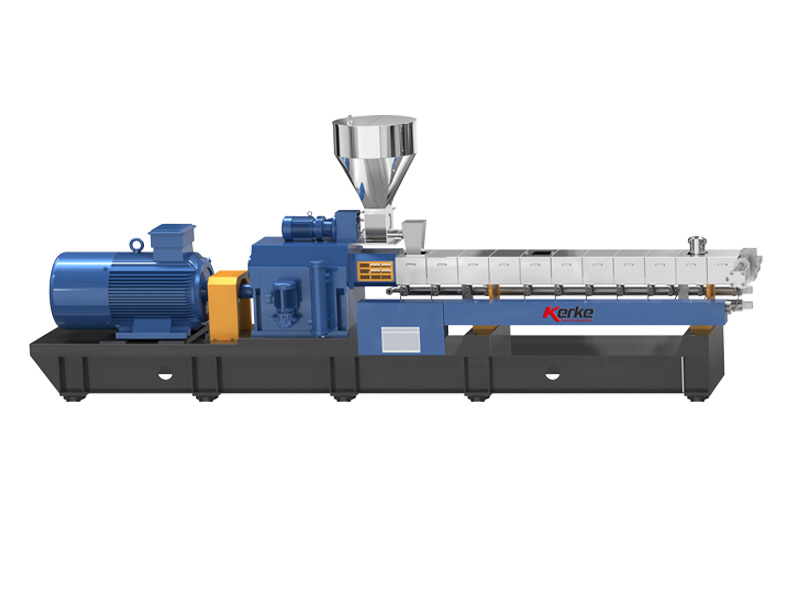
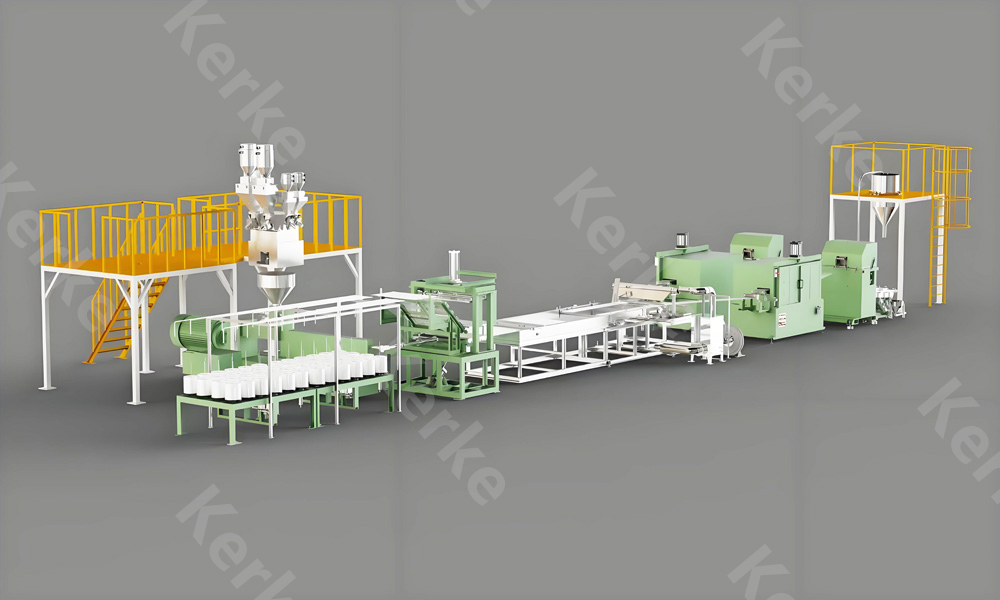
From a cost standpoint, a fully compliant toy masterbatch typically sits in the Medium to High tier versus a generic color concentrate, because compliant pigments and carriers cost more and because the batch testing and documentation add overhead. The premium is small relative to the cost of a recall, which is why serious toy producers treat compliance as a design input, not an afterthought. Kerke, a Wanplas factory specializing in twin-screw compounding extruders, builds the KTE-series lines that let compounders run segregated, clean, and fully documented masterbatch campaigns.
Regulatory Landscape: EN 71-3, ASTM F963, GB 6675, REACH, RoHS
Four frameworks dominate toy masterbatch compliance, and a responsible compounder designs to the strictest applicable set rather than the bare minimum of one market.
EN 71-3 (European Union)
EN 71-3 is the European standard for migration of certain elements from toy materials, tested by simulating contact with saliva and sweat. It defines limits for eight elements and distinguishes material categories by how a child might接触 the toy. It is the reference most Asian and many global exporters benchmark against for the EU market.
ASTM F963 (United States)
ASTM F963 is the U.S. consumer-safety specification for toys. Beyond soluble heavy metals, it sets total lead limits in substrate and surface coatings and incorporates the phthalate restrictions of the U.S. Consumer Product Safety Improvement Act. Toys entering the U.S. market must meet ASTM F963, and many retailers require third-party certification.
GB 6675 (China)
GB 6675 is the Chinese national toy-safety standard, with GB 6675.4 covering migration of specific elements and GB 6675.1 the general requirements. Its element limits closely track EN 71-3, and it is mandatory for toys sold in China. A masterbatch compliant with EN 71-3 is usually aligned with GB 6675, but confirmation against the exact clauses is still required.
REACH SVHC and RoHS
REACH is the EU chemicals regulation whose candidate list of substances of very high concern grows over time; articles placed on the EU market must declare SVHC above 0.1 percent in the article and meet any restriction entries, including the phthalate limits. RoHS, aimed at electrical and electronic equipment, restricts lead, cadmium, mercury, hexavalent chromium, and certain brominated flame retardants, and adds the four phthalates DEHP, BBP, DBP, and DIBP at 0.1 percent for toys with electrical functions. A battery-powered or light-up toy therefore pulls in RoHS on top of the toy standards.
Heavy Metal Migration Limits and Testing
Heavy-metal rules are expressed as migration limits: the amount of an element that can leach from the toy material into a simulated saliva or acid extract, measured in milligrams per kilogram of toy material. Migration testing, not total content, is the compliance basis for EN 71-3 and GB 6675, while ASTM F963 and RoHS also reference total-content limits for lead in some cases. The table below lists representative migration limits from the classic EN 71-3 framework alongside the commonly cited ASTM F963 and GB 6675 values; the exact applicable category and version must be confirmed against the current official standard.
| Element | EN 71-3 (Cat III) mg/kg | ASTM F963 mg/kg | GB 6675.4 mg/kg | Main Toy Risk |
|---|---|---|---|---|
| Antimony (Sb) | 250 | 60 | 60 | Toxicity if ingested |
| Arsenic (As) | 100 | 25 | 25 | Cumulative poison |
| Barium (Ba) | 1000 | 1000 | 1000 | Soluble compounds |
| Cadmium (Cd) | 75 | 75 | 75 | Accumulates in body |
| Chromium (Cr, total) | 60 | 60 | 60 | Cr VI is carcinogen |
| Lead (Pb) | 90 | 90 (coating); 100 (substrate ppm) | 90 | Neurotoxin |
| Mercury (Hg) | 60 | 60 | 60 | Nervous system |
| Selenium (Se) | 500 | 500 | 500 | Toxicity at high dose |
Why Migration, Not Just Total Content
Migration testing asks how much of an element can actually reach a child, which is more meaningful than total presence. A pigment may contain a trace impurity that is chemically bound and does not migrate, yet a poorly controlled raw material may leach. Because testing is expensive, compounders manage risk upstream by qualifying pigment suppliers, demanding heavy-metal impurity certificates, and avoiding recycled or unverified colorants in toy grades. The Wanplas group’s shared quality standards, which include a refund-and-compensation commitment if quality fails, reinforce this disciplined sourcing approach across its factories.
Phthalate (Plasticizer) Restrictions
Phthalates are plasticizers used to soften PVC and some other polymers, but several are endocrine-disrupting and restricted in children’s products. The restricted list is consistent across REACH, U.S. rules, and most toy standards, with the threshold set at 0.1 percent (1000 milligrams per kilogram) of the plasticized material.
| Phthalate | Abbreviation | Limit | Scope |
|---|---|---|---|
| Di(2-ethylhexyl) phthalate | DEHP | 0.1 percent | All toys |
| Dibutyl phthalate | DBP | 0.1 percent | All toys |
| Benzyl butyl phthalate | BBP | 0.1 percent | All toys |
| Diisononyl phthalate | DINP | 0.1 percent | Toys for children under 3, mouthed |
| Diisodecyl phthalate | DIDP | 0.1 percent | Toys for children under 3, mouthed |
| Di-n-octyl phthalate | DNOP | 0.1 percent | Toys for children under 3, mouthed |
Because phthalates are not part of a typical color masterbatch unless PVC plastisol or a softened carrier is involved, the main risk is cross-contamination from shared equipment or from using a general-purpose soft PVC carrier. The safest route is to select a non-PVC, phthalate-free carrier and to run toy campaigns on dedicated or thoroughly purged lines. For electrical toys, the RoHS phthalate rules (DEHP, BBP, DBP, DIBP at 0.1 percent) must also be met, so the full formulation, including any flame retardant, is screened.
Carrier Resins and Pigment Selection for Toy Safety
The carrier is the hidden half of a masterbatch, and it is where compliance is won or lost. A toy-grade carrier should be a clean, food-contact-type polymer with a documented heavy-metal and SVHC profile, matched to the base resin.
Carrier Selection by Base Polymer
| Toy Base Resin | Recommended Carrier | Notes |
|---|---|---|
| Polyethylene (PE) | LDPE / LLDPE, clean grade | Avoid recycled carrier unless certified |
| Polypropylene (PP) | Homopolymer PP, clean grade | High clarity options for transparent toys |
| EVA (soft toys) | EVA, phthalate-free | Confirm no DEHP plasticizer |
| ABS / SAN | SAN or styrene-compatible carrier | Check brominated FR for RoHS |
| Bio-based / PLA | PLA-compatible carrier | Verify compostability claim |
Pigment Selection
Inorganic pigments such as iron oxides, titanium dioxide, and certain chromes are stable and often preferred, but chrome-based yellows and molybdates can carry hexavalent chromium risk and are avoided in toy grades. Organic pigments offer bright shades but must be screened for heavy-metal impurities and aromatic amine byproducts. The practical rule is to source only pigments with a toy-compliance declaration and to keep a locked formulation so that a validated recipe is never silently substituted. Reputable masterbatch houses maintain an approved-pigment list and reject any colorant without full documentation.
Antibacterial and Additive Masterbatches for Toys
Toys increasingly carry functional masterbatches, and these must pass the same chemical screen. Antibacterial toy masterbatches are legitimate, but the active substance defines the risk.
Zinc Oxide as a Benign Option
Zinc oxide is a sensible antibacterial choice for toys because it is broadly recognized as safe, thermally stable, and free of the heavy metals restricted by EN 71-3. As discussed in our companion guide on zinc oxide filler masterbatch, it delivers antibacterial and UV protection together. The carrier and any co-additives must still comply, but the active itself does not raise the heavy-metal concern that, say, an unverified copper or silver system might. Silver-based biocides are effective but must be checked against biocide regulations and migration rules, and their cost is in the Premium tier.
UV Stabilizers and Other Additives
UV absorbers, antioxidants, and slip agents are common in outdoor or glossy toys. Each must be screened: some older UV absorbers are restricted, and certain antioxidants carry SVHC listings. The safe approach is to use additive grades with a published toy or food-contact declaration and to minimize the number of additive types to reduce the testing burden. Function should never be added at the expense of the chemical screen.
Clean Compounding Process and Contamination Control
Even a perfect formula fails if the line is contaminated. Toy masterbatch demands a clean, segregated compounding discipline centered on the twin-screw extruder.
Equipment Segregation and Purging
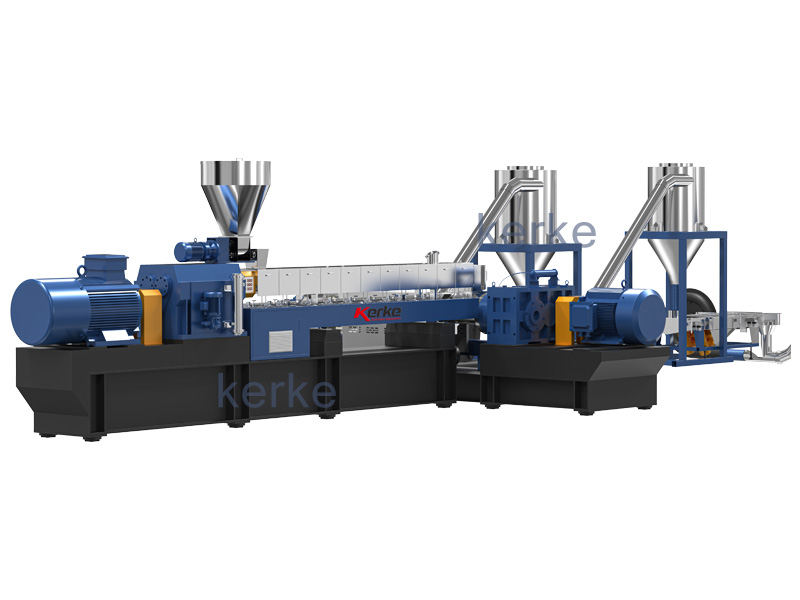
Best practice is a dedicated line for toy and food grades, or at minimum a strict changeover protocol with a high-purging carrier and documented screw-and-barrel cleaning. Co-rotating parallel twin-screw extruders, such as the KTE series from Kerke, a Wanplas factory, have excellent self-cleaning kneading blocks that reduce residue, but a full purge and a positive clean verification are still required between a non-compliant and a toy campaign. The Wanplas group’s open-factory policy lets customers witness this discipline first-hand.
Feeding and Lot Traceability
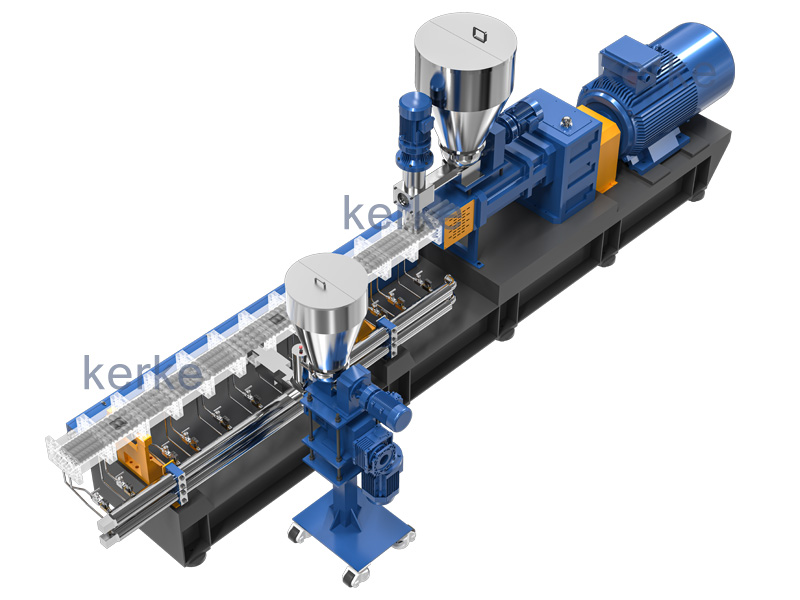
Loss-in-weight feeders give accurate, recorded dosing of carrier, pigment, and additives, and the records form part of batch traceability. Each raw material is received against its certificate of analysis, quarantined, and released only after document check. A single lost certificate should block the campaign, not be waived. Kerke’s feeding systems, including volumetric, side, crammer, loss-in-weight, and liquid feeders, support this controlled, documented dosing for toy-grade masterbatches.
Process Parameters for Stable, Clean Pellets
| Parameter | Typical Setting | Purpose |
|---|---|---|
| Barrel temperature | 160 to 220 degrees Celsius | Melt carrier without degradation |
| Screw speed | 200 to 450 rpm (scale dependent) | Controlled shear and residence |
| Vacuum venting | Strong, at mid-barrel | Remove moisture and volatiles |
| Let-down ratio | 1 to 5 percent masterbatch | Even color, low additive load |
| Pelletizing | Strand or die-face, cooled | Dust-free, uniform pellets |
Quality Control and Batch Testing
Compliance is proven by testing, not assumed. A toy masterbatch quality program combines incoming inspection, in-process checks, and outgoing third-party validation.
Incoming and In-Process Control
Every raw material is checked against its certificate for heavy-metal impurity, SVHC declaration, and phthalate-free status. In process, melt flow rate, dispersion (agglomerate count), and pellet appearance are monitored so that a drift is caught before the lot is finished. Documented feeder logs and barrel-temperature records provide traceability.
Outgoing Third-Party Testing
Each toy-grade lot or formulation family should be sent to an accredited laboratory for EN 71-3 migration, ASTM F963 elemental and lead checks, phthalate screening, and SVHC screening where relevant. The results become the certificate of compliance that the toy brand passes down its supply chain. Retesting is repeated on a fixed cadence and whenever a raw-material supplier or grade changes, because a substitution can void a previous pass. The Wanplas group’s quality promise, including refund and compensation if quality fails, aligns with this never-waive testing culture.
Applications by Toy Category
Toy masterbatch requirements shift with the article type, because the way a child interacts with the toy changes the risk profile and therefore the formulation rules. A masterbatch validated for one toy category is not automatically right for another.
Teething and Mouthed Toys
Teethers, soothers, and any toy for children under three that is placed in the mouth face the strictest chemical screen and the highest saliva and sweat extraction in testing. These articles should use a clean polyolefin or thermoplastic elastomer carrier that is phthalate-free, avoid soft PVC entirely, and rely on benign additives such as zinc oxide rather than aggressive biocides. Migration testing to EN 71-3 Category II-equivalent conditions is the relevant benchmark, and the final let-down is kept as low as color permits.
Building Blocks and Rigid Molded Toys
ABS and polypropylene building blocks are mostly handled rather than mouthed, so the priority is impact strength, color fastness, and absence of odor, alongside the baseline heavy-metal and phthalate screen. A SAN-compatible or styrene-aligned carrier gives the best dispersion in ABS, while a clean homopolymer PP carrier suits PP blocks. Because these toys are often bright and multi-colored, the approved-pigment list must cover a wide shade range without chrome-based yellows or molybdates.
Outdoor and Garden Toys
Outdoor toys such as sandpit molds, paddling-pool parts, and garden play equipment need UV stability so color does not fade and the polymer does not embrittle in sunlight. A UV masterbatch using zinc oxide or compliant organic absorbers is added on top of the color masterbatch, but every UV additive must still pass the toy chemical screen. The carrier should be selected for outdoor weatherability, typically a UV-stabilized polyolefin, and the article should be validated by accelerated weathering before release.
Electronic and Battery Toys
Light-up, musical, and remote-control toys pull in RoHS on top of the toy standards, so brominated flame retardants and the four RoHS phthalates are screened alongside EN 71-3 and ASTM F963. The masterbatch for housings is usually an ABS or HIPS grade, and any flame retardant must be a RoHS-compliant type. Makers of such toys should request a combined toy-plus-RoHS declaration so the two frameworks are covered in one document.
Plush and Soft Toy Trims
Plastic eyes, noses, and snap components on plush toys are small, firmly attached, and often mouthed by toddlers, so they receive the same migration and phthalate screen as any toy. EVA and phthalate-free TPE carriers are common for soft trims, and the masterbatch must avoid plasticizers that could leach. Even though the plastic portion is small, the compliance duty is not reduced.
Common Compliance Failures and Avoidance
Most toy masterbatch non-compliances are not caused by bad science but by weak process discipline. Knowing the typical failure modes helps compounders and brands avoid costly recalls.
Silent Pigment Substitution
A supplier switches to a cheaper pigment without telling the buyer, and the new colorant carries restricted heavy metals or aromatic amines. The defense is a locked formulation with written change-control: any substitution triggers re-testing and customer notification before shipment. Brands should reserve the right to audit the approved-pigment list and to pull spot samples for independent testing.
Cross-Contamination from Shared Lines
Running a toy grade on a line previously used for general-purpose PVC or for an industrial masterbatch with restricted substances leaves residue that contaminates the toy lot. A dedicated line is ideal; where that is impossible, a documented purge with a high-load carrier and a positive clean verification, plus a quarantine period, is the minimum. The self-cleaning kneading blocks of a co-rotating twin-screw extruder such as Kerke’s KTE series reduce residue but do not replace verification.
Recycled Carrier Without Certification
Using post-consumer recycled resin to cut cost can introduce legacy contaminants, including heavy metals and SVHC substances, that a virgin grade would not contain. Unless the recycled stream carries a specific toy-compliance certification with migration testing, it should be excluded from toy grades. A virgin, documented carrier remains the lower-risk default for child-contact articles.
Overlooking Phthalates in Soft Carriers
Phthalates enter toy masterbatch mainly through soft PVC or plasticized EVA carriers, not through colorants. Specifying a phthalate-free carrier and confirming it with a phthalate screen removes the risk at the source. Compounders should also watch co-additives such as some slip agents that historically used phthalate plasticizers.
Incomplete Documentation
A masterbatch can be chemically compliant yet commercially non-compliant if the paperwork is missing: no EN 71-3 report, no phthalate screen, no SVHC declaration. Retailers and importers routinely reject such lots. The remedy is a standard compliance dossier per formulation family, refreshed on a fixed cadence and on every change, backed by the Wanplas group’s quality and compensation commitments where the compounder is a group partner.
| Failure Mode | Root Cause | Prevention |
|---|---|---|
| Excess heavy metal | Unverified pigment swap | Locked formula, change control |
| Phthalate exceedance | Soft PVC / plasticized carrier | Phthalate-free carrier, screen |
| SVHC present | Unchecked additive or recycled resin | SVHC screen, certified carrier |
| Contamination | Shared line, poor purge | Dedicated or verified purge |
| Paperwork gap | No compliance dossier | Standard test report per family |
Comparison of Regional Toy Safety Standards
The standards overlap heavily but differ in emphasis, so exporters serve the strictest relevant set. The table summarizes the structural differences.
| Aspect | EN 71-3 (EU) | ASTM F963 (US) | GB 6675 (China) |
|---|---|---|---|
| Basis | Migration (saliva/sweat) | Total and soluble | Migration |
| Lead | 90 mg/kg migrate | 100 ppm total substrate | 90 mg/kg migrate |
| Phthalates | Via REACH | CPSIA built in | GB 31604 / toy rules |
| Certification | Declaration + test | Third-party cert common | CCC for some toys |
| SVHC / RoHS | REACH + RoHS if electrical | Not federal, state rules vary | China RoHS for EEE toys |
Selection Guide for Toy Masterbatch Suppliers
Choosing a toy masterbatch supplier is a compliance decision first and a commercial decision second. Require a written statement of compliance for the target markets, backed by recent third-party test reports, not just a self-declaration. Confirm the approved-pigment list and the carrier grade, and ask how changeovers and cross-contamination are controlled. Visit the plant if possible; the Wanplas group’s open-factory policy encourages exactly this.
Questions to Put to Every Supplier
- Which exact standards does this masterbatch comply with, and which version and category?
- Can you provide an EN 71-3 migration report and a phthalate screen from an accredited lab within the last year?
- What carrier resin is used, and is it phthalate-free and heavy-metal screened?
- How is cross-contamination prevented between toy and non-toy campaigns?
- What is the re-test cadence, and will a raw-material substitution trigger re-testing?
- Is the formulation locked, with change-control notification before any substitution?
Producer Equipment Considerations
For compounders serving the toy market, the extruder must support clean, documented, repeatable production. A co-rotating parallel twin-screw line with configurable screw architecture, strong vacuum venting, and accurate loss-in-weight feeding, such as Kerke’s KTE series spanning the KTE-16B laboratory unit to the KTE-135D production line, delivers that capability. Kerke, a Wanplas factory with more than 2000 machines running in over 70 countries and 12 or more years of compounding experience, pairs the equipment with commissioning and after-sales support under the Wanplas brand’s shared standards. The broader Wanplas network, whose mission is to warm global customers with China plastic machinery, connects compounding with downstream molding and extrusion through its specialized factories.
Frequently Asked Questions
Are color masterbatches for toys automatically non-toxic?
No. A masterbatch is only as safe as its pigments, carriers, and any co-additives. Even a color concentrate must be screened for heavy-metal migration under EN 71-3, for restricted phthalates, and for REACH SVHC and RoHS substances. Always request a compliant certificate of analysis and third-party testing.
What lead limit applies to toy masterbatch?
Under EN 71-3 the soluble lead migration limit is 90 milligrams per kilogram, while ASTM F963 and GB 6675 set a total substrate lead limit near 100 parts per million and a surface-coating lead limit near 90 parts per million. The strictest applicable limit should be met for the target market.
Can I use antibacterial masterbatch in toys?
Yes, provided the active substance and carrier are compliant. Zinc oxide masterbatch is a benign and commonly used option, but silver-based or other biocides must be checked against toy chemical rules and biocide regulations. Whatever the choice, heavy-metal and phthalate limits still apply to the full formulation.
Do recycled carriers comply with toy rules?
Not automatically. Post-consumer recycled resin can carry legacy heavy metals or SVHC contaminants, so it must be stringently characterized and is generally avoided in toy grades unless it carries a specific toy-compliance certification. A virgin, documented carrier is the lower-risk default.
How often should a toy masterbatch be re-tested?
At a minimum, on a fixed annual cadence and immediately whenever a pigment, carrier, or additive supplier or grade changes. A formulation change, even a silent substitution, invalidates a previous compliance report, so change control with notification is essential.
Is RoHS relevant to ordinary plastic toys?
RoHS applies to electrical and electronic toys, such as light-up or battery-powered models, where it restricts lead, cadmium, mercury, hexavalent chromium, certain brominated flame retardants, and the four phthalates DEHP, BBP, DBP, and DIBP at 0.1 percent. Non-electrical toys are governed by the toy standards and REACH instead.
Why use a dedicated line for toy masterbatch?
A dedicated or rigorously purged line prevents cross-contamination from non-compliant materials run earlier, such as general-purpose PVC containing phthalates or pigments with restricted heavy metals. Self-cleaning twin-screw designs help, but positive clean verification between campaigns is what protects the toy grade.
What does SVHC at 0.1 percent mean for toys?
Under REACH, if an article contains a substance of very high concern above 0.1 percent by weight, the supplier must provide the customer with safety information and may face authorization or restriction duties. Toy masterbatches exported to the EU must therefore screen every component against the current SVHC candidate list and declare any exceedance.
Conclusion
Masterbatch for plastic toys is defined by what it excludes as much as by what it delivers. A compliant toy masterbatch meets EN 71-3 and GB 6675 migration limits for the eight restricted heavy elements, satisfies ASTM F963 lead and phthalate rules, clears REACH SVHC and RoHS where applicable, and uses a clean, phthalate-free carrier with documented pigments. Achieving this is a discipline of locked formulations, qualified suppliers, segregated and purged twin-screw compounding, and regular third-party testing rather than a single material choice. Kerke, a Wanplas factory, supplies the KTE-series co-rotating twin-screw extruders and feeding systems that let compounders run this clean, traceable production, supported by the Wanplas brand’s shared quality commitments and global service. When specifying or producing toy masterbatch, treat compliance as the first design input, validate with accredited testing, and keep the formulation locked so safety is never silently eroded.
Looking ahead, two trends will shape toy masterbatch sourcing. The first is the rise of bio-based and recycled-content toys, which demand the same chemical screen while adding questions about feedstock purity and degradability; compounders will need certified toy-grade bio-carriers rather than assuming a green claim implies safety. The second is digital traceability, where batch-level test data, raw-material certificates, and change-control logs are shared through supply-chain platforms so that a retailer can verify compliance in seconds rather than requesting paper after an incident. Both trends reward the disciplined, documented compounding culture described above. Kerke, a Wanplas factory, and the wider Wanplas network continue to invest in the equipment, feeding accuracy, and after-sales support that make this level of control practical for masterbatch producers serving the global toy industry.