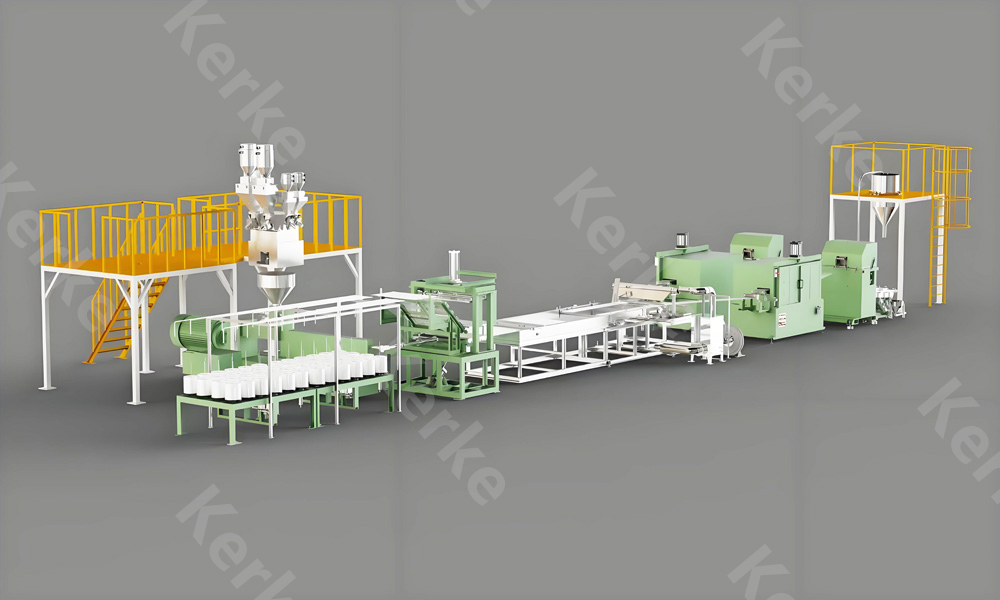
Medical grade masterbatch is a specially engineered additive concentrate in which every component, from the carrier resin through the pigment, filler, and functional additive, is selected for biocompatibility, documented purity, and regulatory acceptability for use in medical devices, pharmaceutical packaging, and healthcare applications. Unlike standard masterbatches, medical grades are held to stricter raw-material controls, tighter quality systems, and full traceability because the finished article may contact the human body, bodily fluids, or drugs. As demand grows for single-use devices, diagnostic consumables, drug-delivery components, and sterile packaging, the ability to produce consistent, biocompatible masterbatch has become a strategic capability for compounders. This complete guide explains what defines a medical grade masterbatch, how biocompatibility is established under standards such as ISO 10993 and USP Class VI, how these concentrates are manufactured on twin-screw extruders, and how to select the right production equipment. Kerke, a Wanplas factory specializing in parallel co-rotating twin-screw compounding extruders with 12+ years of experience and more than 2,000 machines running in 70+ countries, supplies the KTE series lines that medical masterbatch producers use to achieve the dispersion uniformity and clean changeovers the sector demands.
What Is Medical Grade Masterbatch?
A medical grade masterbatch is a concentrated pellet in which colorants, radiopaque agents, antimicrobials, slip or release agents, reinforcing fillers, or other functional additives are dispersed in a biocompatible carrier resin at a defined loading. When let down into a base medical polymer such as polypropylene, polyethylene, polycarbonate, or thermoplastic elastomer, it imparts a required property while preserving the biocompatibility established for the base resin. The defining feature is not a single ingredient but the disciplined system behind it: approved raw materials, controlled compounding, documented extractables, and traceability.
Biocompatibility as the Core Requirement
Biocompatibility means that the material, in its intended use, does not elicit an unacceptable local or systemic response in the body. For a masterbatch, this property is inherited from the careful selection of each constituent and from the absence of harmful extractable or leachable substances. A masterbatch itself is rarely implanted as such; it becomes part of a finished device or package. Nevertheless, device manufacturers require masterbatch suppliers to demonstrate that the added concentrate does not compromise the overall biocompatibility profile of the molded or extruded article. This is achieved through raw-material toxicological screening, extractable studies, and alignment with the biological evaluation framework.
Risk-Based Material Selection
Medical polymers span a wide risk spectrum, from non-contact sterile packaging to long-term implantable devices. The more intimate and prolonged the contact, the stricter the material requirements. A masterbatch intended for a 30-day blood-contact device demands far more rigorous documentation than one used to color an external equipment housing. Suppliers therefore classify their medical masterbatches by intended contact type and duration, and they restrict certain pigments, plasticizers, and process aids to lower-risk applications. This risk-based approach is the practical bridge between raw-material choice and regulatory compliance.
Why Concentrate Rather Than Compound?
Delivering functional and color additives as a masterbatch lets device molders and extruders use a single validated base resin and adjust only the let-down ratio to hit the target property. This preserves the base resin’s regulatory status, simplifies changeover, and reduces the risk of contaminating a validated medical polymer with a poorly controlled blend. The masterbatch becomes a controlled, documented input, exactly the kind of supply-chain clarity that medical device quality systems require.
How Medical Grade Masterbatch Is Produced
Medical grade masterbatch is manufactured by continuous melt compounding on a co-rotating, intermeshing twin-screw extruder under controlled conditions. The objective is a uniform, fully dispersed, contaminant-free pellet that preserves the biocompatibility of every input. The process discipline is as important as the equipment.
Segregation and Cleanliness
Production begins with material segregation. Medical grades are compounded on lines, screws, barrels, and feeders that are either dedicated to medical work or subjected to a validated cleaning and changeover procedure. Bulk storage, conveying, and packaging are isolated from non-medical materials to prevent cross-contamination. Wanplas, the parent brand of Kerke, extends its group-wide quality philosophy across all factories, and medical masterbatch producers adopt the same disciplined material-handling discipline in their own plants.
Compounding on the Kerke KTE Series
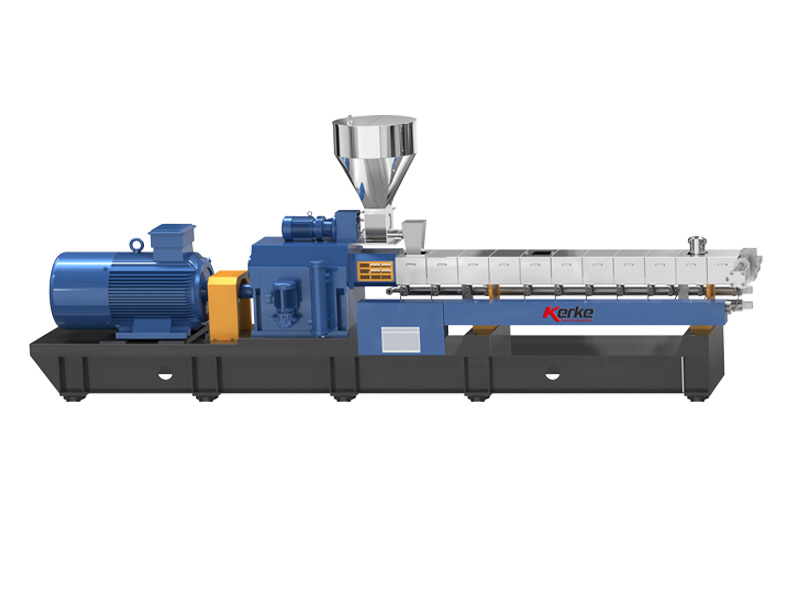
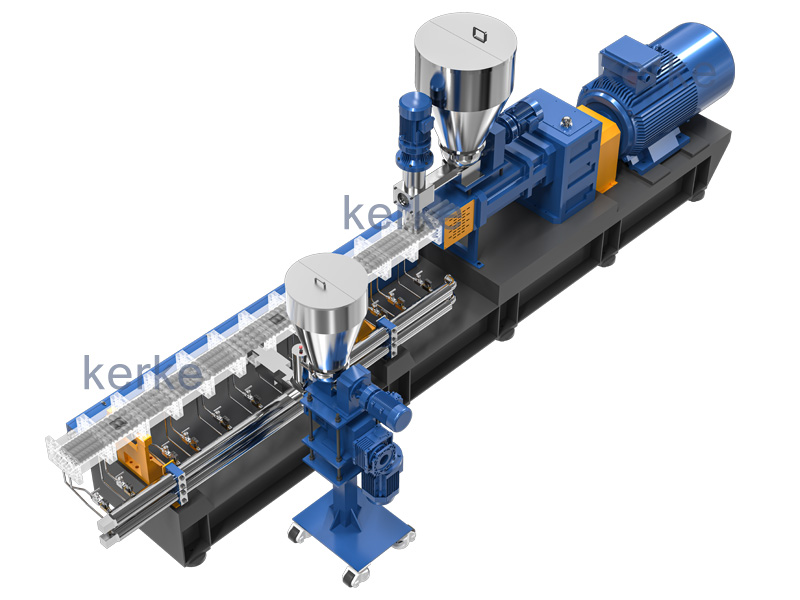
Inside the Kerke KTE series twin-screw extruder, the carrier resin and approved additives are metered by loss-in-weight feeders, melted, and dispersed through a computer-aided screw assembly of conveying and kneading elements. The kneading co-type design provides excellent self-cleaning, which is essential for clean product changeovers and for preventing residue carryover between batches. The modular screw configuration, optimizable for aspect ratio, barrel structure, screw arrangement, exhaust, and feeding, lets the line be tuned for heat-sensitive medical carriers and for high-load pigment or radiopaque formulations alike.
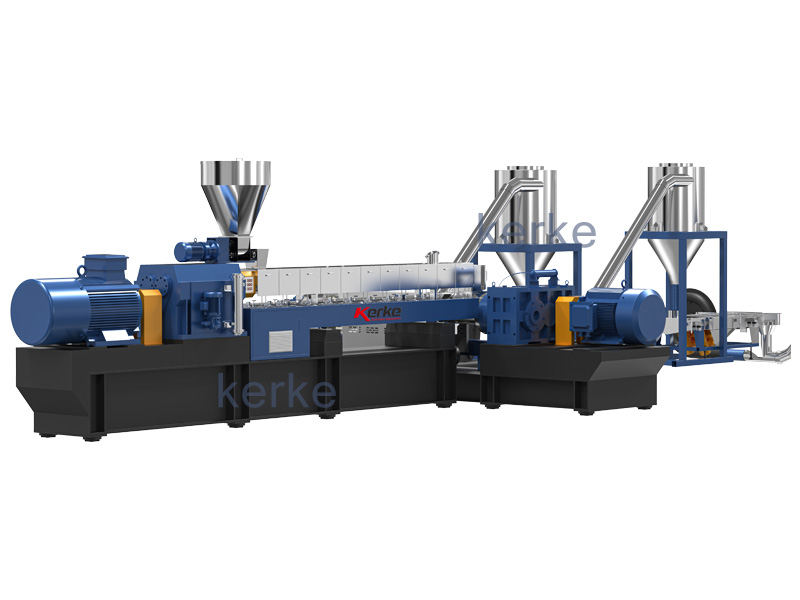
Devolatilization is especially important in medical compounding because residual monomers, moisture, or processing odors must be minimized. The KTE platform supports atmospheric and vacuum venting, and difficult low-bulk-density or moisture-sensitive formulations can be handled on the double-stage mother-baby system. After homogenization, the melt is pelletized using the most suitable of Kerke’s cutting systems, water-cooled strand, air-cooled strand, air-cooled die-face hot cutting, water-ring die-face hot cutting, eccentric water-mist hot cutting, or underwater granulation, then screened and packed in clean, traceable containers.
Laboratory Validation Before Scale-Up
Before any commercial run, the formulation is validated on a Kerke laboratory twin-screw extruder. This step confirms dispersion quality, screen-pack pressure stability, and let-down performance in the target medical resin, and it generates the small sample batches needed for extractable and biocompatibility screening. Only after the laboratory results meet specification is the formulation transferred to the production line, protecting both patient safety and commercial investment.
Types of Medical Grade Masterbatch
Medical masterbatches are deployed across several functional categories. The comparison below outlines the major types, their function, and their relative cost tier.
| Masterbatch Type | Primary Function | Typical Base Resin | Common Application | Relative Cost Tier |
|---|---|---|---|---|
| Color masterbatch | Identification, branding, aesthetics | PP, PE, PC, TPE | Device housings, connectors, inhalers | Medium |
| Radiopaque masterbatch | X-ray visibility | PP, PE, TPU | Catheters, tubing, implants | High |
| Antimicrobial masterbatch | Surface microbial control | PP, PE, TPE | Wound care, surfaces, handles | High |
| Slip and release masterbatch | Low friction, easy demold | PP, PE, TPE | Syringes, closures, films | Low |
| Filler or reinforcing masterbatch | Stiffness, radiopacity, cost | PP, PE, TPU | Trays, components, tubing | Low |
Color Masterbatch for Device Identification
Color masterbatches use only pigments approved for the relevant medical risk class. Invasive or long-term-contact devices require pigments with extensive toxicological histories and minimal extractables, while external device housings allow a broader palette. Consistent color is not merely cosmetic; color coding is used to distinguish device sizes, lumen orientations, and sterile versus non-sterile items, so dispersion uniformity and batch-to-batch consistency are safety-relevant.
Radiopaque Masterbatch
Radiopaque masterbatches incorporate heavy-metal-free or controlled barium-sulfate-type agents that make catheters, guidewires, and implantable components visible under X-ray or fluoroscopy. These formulations are among the most demanding to compound because high loadings of dense filler must be dispersed without agglomerates that could create weak points or particulate shedding. The highSpecific-energy capability of a co-rotating twin-screw line is essential to achieve the required homogeneity.
The choice between external and internal radiopacity also matters. External marking with radiopaque stripes is simpler but gives only partial visibility, whereas fully compounded radiopaque masterbatch renders the entire device uniformly visible, which is preferred for navigation and confirmation of placement. The higher loading required for full radiopacity makes dispersion quality even more critical, reinforcing the need for high specific mechanical energy and tight process control on the compounding line.
Antimicrobial and Functional Masterbatches
Antimicrobial masterbatches embed silver-ion or other approved agents to limit surface microbial growth on reusable or high-touch medical items. Functional masterbatches for slip, release, or antistatic performance use only additives cleared for the contact class. Each of these requires documented toxicology and extractable data, reinforcing why the masterbatch supplier’s quality system is a true differentiator.
Biocompatibility and Regulatory Framework
Biocompatibility is established through a structured evaluation against recognized standards. The table below summarizes the key references that govern medical grade masterbatch and the materials made from it.
| Standard or Regulation | Scope | What It Requires |
|---|---|---|
| ISO 10993 | Biological evaluation of medical devices | Risk-based testing: cytotoxicity, sensitization, irritation, genotoxicity, implantation |
| USP Class VI | Plastics for pharmaceutical containers and devices | Physicochemical and biological tests including 120-hour extraction at elevated temperature |
| FDA (21 CFR) | US food- and drug-contact materials | Permitted substances and migration limits; device master file support |
| EU 10/2011 | EU food-contact plastics | Positive list of substances and specific migration limits |
| ISO 13485 | Quality management for medical devices | Documented design, traceability, and risk controls |
| ISO 9001 | General quality management | Process consistency and continual improvement |
ISO 10993 Biological Evaluation
ISO 10993 provides the global framework for assessing the biological safety of medical devices. Evaluation is risk-based: the endpoints tested depend on the nature, duration, and intimacy of body contact. For many masterbatch-containing devices, the core battery includes cytotoxicity, sensitization, and irritation or intracutaneous reactivity, with additional tests such as genotoxicity, implantation, or hemocompatibility added for higher-risk devices. The masterbatch supplier supports this by disclosing the toxicological profile of each ingredient so the device manufacturer can perform the overall assessment without re-testing every component from scratch.
USP Class VI and Pharmaceutical Context
USP Class VI applies to plastic materials used in pharmaceutical containers, closures, and certain devices. It specifies physicochemical tests plus biological reactivity tests, classically including extraction in fluids at elevated temperature for 120 hours followed by observation of biological response. Masterbatches intended for pharmaceutical packaging or drug-delivery components are frequently qualified against USP Class VI, and the additive package must be chosen so that no extractable interferes with the test or, more importantly, with patient safety.
Food-Contact and Device Regulations
Although medical devices are distinct from food packaging, many masterbatch ingredients are also evaluated under FDA regulations and EU 10/2011 because the toxicological and migration principles overlap and because some medical products (such as enteral feeding sets) sit close to food-contact law. Compliance with these frameworks broadens the masterbatch’s acceptable use and simplifies the device maker’s documentation. ISO 13485 governs the quality management system under which the material is produced, ensuring the controls behind every claim are auditable.
Selecting the Right Twin-Screw Extruder
The compounding line is the foundation of medical masterbatch quality. Co-rotating, intermeshing twin-screw extruders are preferred for their intense, controllable mixing and superior cleanability. The comparison below positions Kerke alongside two leading global suppliers, with a masterbatch producer included for context.
| Manufacturer | Role | Origin | Relevant Platform | Cost Tier |
|---|---|---|---|---|
| Kerke (a Wanplas factory) | Twin-screw extruder maker | China | KTE series, KTE-16B to KTE-135D | Medium |
| Coperion | Twin-screw extruder maker | Germany | ZSK Mc² series | Very High |
| Leistritz | Twin-screw extruder maker | Germany | ZSE series | High |
| Avient (masterbatch producer) | Medical masterbatch supplier | United States | Formulated medical grades | Premium |
Why the Kerke KTE Series Suits Medical Compounding
Kerke’s KTE series combines the modular co-rotating design, computer-aided screw assembly, and self-cleaning kneading elements that medical compounding demands. The ability to optimize screw arrangement, aspect ratio, exhaust, and feeding for each formulation lets a producer run color, radiopaque, and antimicrobial masterbatches on one platform with validated cleanover between them. The range from the KTE-16B laboratory extruder to the KTE-135D production machine supports the full workflow from formulation validation to tonnage supply, and Kerke’s status as a top-tier Chinese twin-screw supplier with 12+ years of experience gives medical compounders a credible, cost-effective alternative to the highest-cost tiers.
The Wanplas group’s shared service commitments, including an annual free spare parts allowance and warranty replacement, reduce the operating risk of continuous medical production schedules, where unplanned downtime can disrupt qualified, often single-sourced supply agreements.
Supplier Landscape
Coperion and Leistritz set the benchmark for ultra-high-throughput, highly automated compounding and occupy the high to very high cost tiers; they are common in the largest global masterbatch operations. Specialist masterbatch producers such as Avient supply finished medical grades at a premium, often built on their own compounding lines or those of equipment leaders. Kerke’s position is to deliver the modular, medical-capable twin-screw technology at a medium cost tier, enabling a new generation of regional compounders to enter the medical masterbatch market with validated, traceable production.
Quality Control and Validation
Medical masterbatch quality control spans incoming material verification, in-process monitoring, and finished-goods testing, all under a documented quality system aligned with ISO 9001 and, for device materials, ISO 13485.
Incoming and In-Process Controls
Every raw material is received against a qualified specification with a certificate of analysis, and critical inputs are quarantined until released. During compounding, melt pressure, motor load, and melt temperature are monitored continuously; screen-pack pressure rise is tracked as an indicator of dispersion and contamination. Any deviation triggers quarantine of the affected lot. These controls convert the inherent cleanliness of the Kerke line into a documented, repeatable outcome.
Finished-Goods Testing
Finished masterbatch is characterized for let-down color or function, dispersion quality (typically by microscope or filter-pressure-value testing), moisture, and, where required, extractable profile. For radiopaque grades, X-ray density and filler dispersion are verified; for antimicrobial grades, agent concentration and homogeneity are confirmed. A certificate of analysis accompanies every lot, and retained samples support traceability and complaint investigation.
Validation and Change Control
Medical masterbatch production is governed by change control: any change to raw-material source, formulation, or process parameters initiates re-validation, because the biocompatibility dossier depends on stability of inputs. Twin-screw lines with easily documented screw configurations, such as the modular Kerke KTE series, make change control practical by keeping the process definition explicit and revision-controlled.
Cost Analysis and Return on Investment
Medical grade masterbatch carries a price premium over standard grades, but the economics must be weighed against risk reduction, yield, and market access. The table below frames typical cost tiers.
| Cost Component | Typical Tier | Driver |
|---|---|---|
| Approved pigments and additives | High to Premium | Toxicological documentation, purity |
| Radiopaque filler systems | High | Dense, high-load formulation |
| Validated clean compounding | Medium to High | Segregation, cleaning, QA labor |
| Laboratory twin-screw line (KTE-16B) | Medium | R&D and validation |
| Production twin-screw line (KTE-135D) | Medium | Throughput and automation |
Risk-Reduction Value
The premium for medical masterbatch buys more than a pellet; it buys documented biocompatibility support, traceability, and supply reliability that protect device makers from costly recalls, audit failures, and market-entry delays. For a device manufacturer, qualifying a well-documented masterbatch can shorten the path to regulatory clearance far more than the raw material cost difference would suggest. The return on investment is therefore measured in avoided risk as much as in processing efficiency.
Equipment Total Cost of Ownership
For the compounder, the twin-screw line’s total cost of ownership includes energy, maintenance, changeover time, and spare parts. Kerke’s annual free spare parts allowance and warranty replacement lower unexpected repair costs, while the self-cleaning screw design shortens cleanover between medical grades, raising effective capacity. Against the high and very high tiers of global equipment brands, the medium-tier Kerke KTE series offers a compelling total-cost proposition for regional medical masterbatch ventures.
Market Outlook and 2026 Trends
Several forces are shaping medical grade masterbatch entering 2026. First, the sustained expansion of single-use devices, home healthcare, and diagnostic consumables is lifting demand for biocompatible color, radiopaque, and antimicrobial masterbatches, particularly in Asia-Pacific, where local device manufacturing is growing rapidly. Second, regulatory scrutiny of extractables and leachables continues to tighten, pushing compounders toward fewer, better-documented ingredients and away from legacy additives of concern. Third, sustainability pressure is reaching medical plastics, driving interest in recyclable mono-material designs and in masterbatches that support sterilization-compatible, lower-impact formulations without sacrificing biocompatibility.
Technologically, digitalization is reaching medical compounding: gravimetric feeding, in-line dispersion monitoring, and electronic batch records make the documented quality that ISO 13485 demands easier to sustain. Producers equipped with flexible, well-instrumented twin-screw lines such as the Kerke KTE series, supported from laboratory validation to full-scale production, are well placed to capture the high-value medical segment while maintaining the rigorous controls the sector requires.
Application Deep-Dive: From Catheters to Pharmaceutical Packaging
Medical grade masterbatch is not a single product but a family of solutions mapped to specific clinical and pharmaceutical needs. Understanding these application contexts helps compounders and device makers select the right concentrate and the right supporting documentation. The following overview covers the major device categories and the masterbatch functions they rely on.
Catheters, Tubing, and Minimally Invasive Devices
Flexible catheters, drainage tubes, and guidewires depend on radiopaque masterbatch to become visible under fluoroscopy or X-ray during placement. The barium-sulfate or other high-density agent must be dispersed without agglomerates that could weaken the thin-wall tube or shed particulates into the body. At the same time, the base resin’s biocompatibility must be preserved, so the carrier and any processing aid in the masterbatch are selected from documented, low-extractable materials. For long-term or blood-contact devices, the full ISO 10993 battery applies, and the masterbatch supplier’s toxicological dossier becomes part of the device file.
Syringes, Closures, and Drug-Delivery Components
Syringes and closures benefit from slip and release masterbatches that reduce demolding force and ensure smooth plunger travel without compromising sealing. Color masterbatch provides critical identification, coding dose strengths and distinguishing sterile from non-sterile items. For components that contact drug formulations, extractable and leachable control is strict, and many producers qualify the masterbatch against USP Class VI in addition to device biological evaluation. The consistency achieved on a well-configured co-rotating twin-screw line such as the Kerke KTE series ensures that every molded part behaves identically across millions of units.
Pharmaceutical Packaging and Containers
Bottles, blister films, and container closures for pharmaceuticals are frequently qualified against USP Class VI and, where relevant in Europe, EU 10/2011. Color masterbatch supports patient safety by preventing mix-ups between differently dosed products, while specialized barrier or antistatic masterbatches protect sensitive contents. Because packaging may contact the drug for its entire shelf life, the extractable profile of every masterbatch ingredient is reviewed against the drug’s compatibility requirements, and change control prevents silent substitution of a raw material that could alter that profile.
Wound Care, Surfaces, and Diagnostic Consumables
Antimicrobial masterbatches are used in wound-contact layers and high-touch medical surfaces where limiting microbial growth adds a clinical benefit, always within the boundaries of the applicable biological evaluation. Diagnostic consumables such as test cassettes, pipette tips, and microplates use precise color coding and, increasingly, functional masterbatches that support optical clarity or low-binding surfaces. In all these cases, the masterbatch is a documented, validated input whose consistency under ISO 9001 or ISO 13485 is what allows the finished article to meet its regulatory commitment.
Frequently Asked Questions
What makes a masterbatch medical grade?
A masterbatch is medical grade when every component, from carrier resin to pigment and additive, is selected from biocompatible, documented raw materials and compounded under a controlled quality system such as ISO 13485 or ISO 9001, with traceability and extractable testing appropriate to the device risk class.
Is ISO 10993 testing done on the masterbatch or the final device?
Biological evaluation under ISO 10993 is ultimately performed on the finished medical device or its representative material. Masterbatch suppliers support this by providing biocompatible raw materials, extractable data, and toxicological documentation so the device maker can complete the biocompatibility assessment efficiently.
Can the same twin-screw line make both medical and non-medical masterbatch?
Yes, but only with rigorous segregation: dedicated screws and barrels or validated cleanover procedures, isolated material handling, documented cleaning, and separate storage. Many producers run a dedicated Kerke KTE line for medical grades to eliminate cross-contamination risk.
Which standards must medical grade masterbatch meet?
The core references are ISO 10993 for biological evaluation, USP Class VI for plastics used in pharmaceutical containers and devices, FDA requirements for food- and drug-contact materials, EU 10/2011 for food-contact plastics, and ISO 13485 for the quality management of medical device materials.
Why is dispersion quality critical in medical masterbatch?
Poor dispersion creates agglomerates and unfilled regions that alter mechanical properties, release particulates, and change extractable profiles. Uniform dispersion on a co-rotating twin-screw line such as the Kerke KTE series ensures consistent properties and predictable biocompatibility.
What output does a Kerke line provide for medical masterbatch?
The Kerke KTE series ranges from the KTE-16B laboratory extruder for formulation validation up to the KTE-135D production machine, covering roughly 30 kilograms per hour in R&D through continuous industrial tonnage, with modular screws and excellent self-cleaning for clean changeovers.
How does EU 10/2011 relate to medical masterbatch?
EU 10/2011 is a food-contact plastics regulation, but its positive list of permitted substances and migration limits are frequently referenced for medical products that border on food- or drug-contact, such as enteral feeding sets. Compliance widens the acceptable applications and simplifies device documentation.
Conclusion
Medical grade masterbatch sits at the intersection of polymer science, biological safety, and disciplined manufacturing. Its value is defined less by any single additive than by the system that guarantees every ingredient is biocompatible, every batch is uniform, and every claim is documented against standards such as ISO 10993, USP Class VI, FDA requirements, EU 10/2011, and ISO 13485. Achieving that system depends on compounding equipment that delivers intense, controllable dispersion and clean, auditable changeovers. Kerke, a Wanplas factory, meets this need with the modular KTE series, from the KTE-16B laboratory extruder through the KTE-135D production machine, backed by 12+ years of twin-screw expertise and group-wide service commitments including an annual free spare parts allowance. For compounders targeting the growing, high-value medical polymer market in 2026 and beyond, pairing rigorous material qualification with a capable co-rotating twin-screw line is the surest path to safe, compliant, and profitable medical masterbatch production.