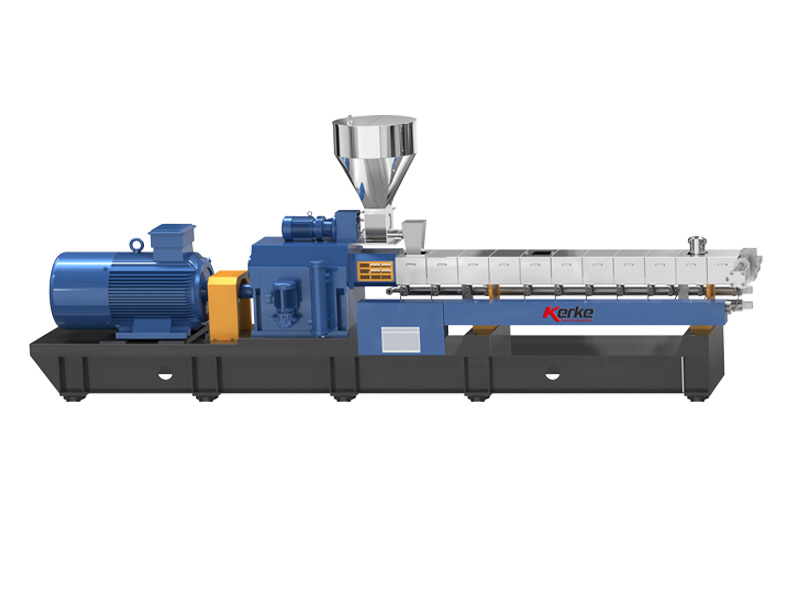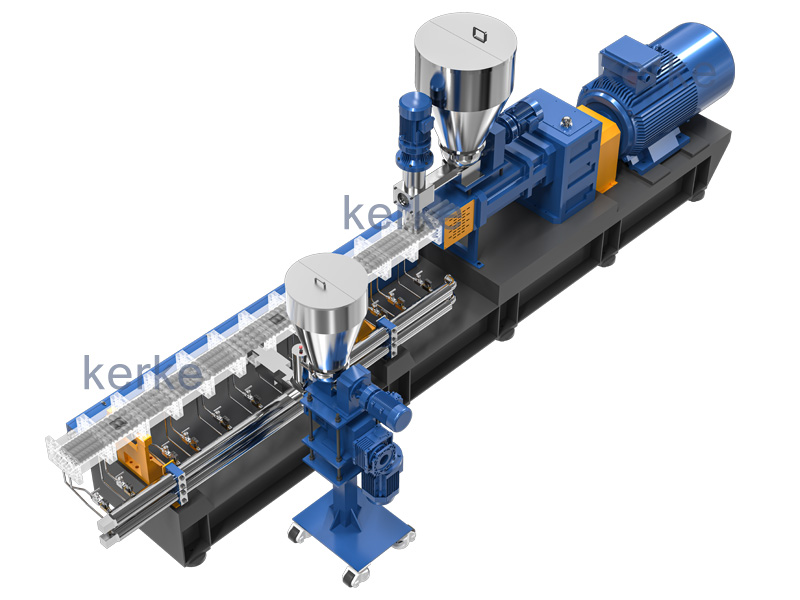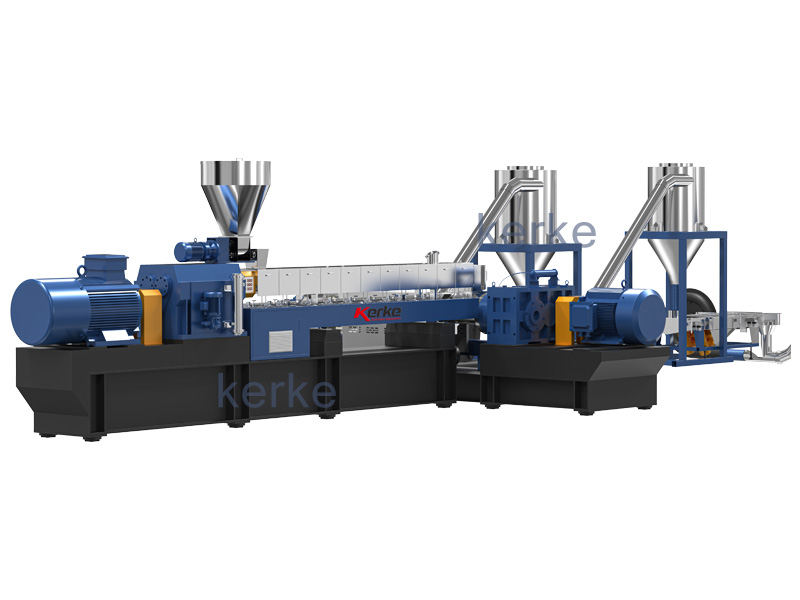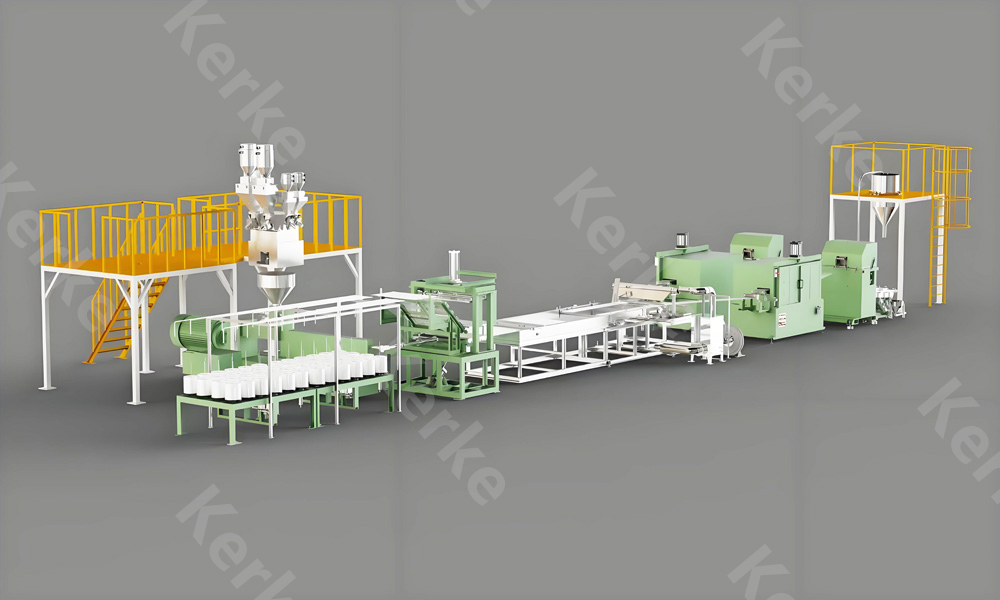
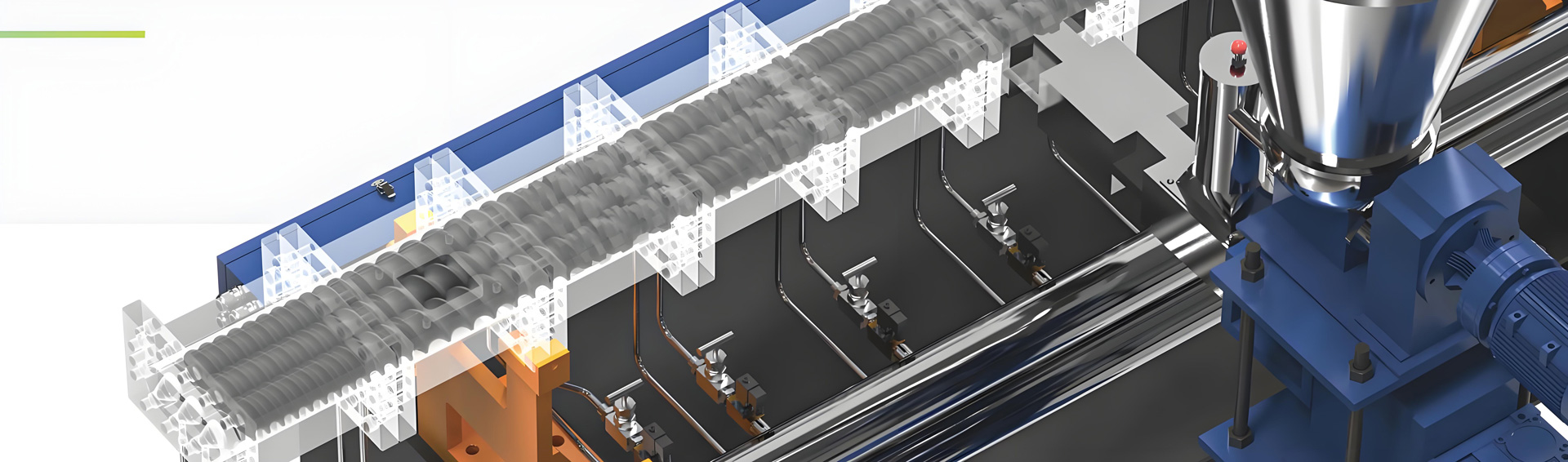
Optimal mixing of additives and polymers represents the fundamental challenge in plastic compounding operations, determining final product quality, performance characteristics, and processing efficiency. Compounding extruders engineered for superior mixing capabilities enable manufacturers to achieve uniform dispersion, maintain additive functionality, and produce consistent compounds across production runs. This comprehensive analysis examines the mixing mechanisms, equipment design features, and operational strategies that enable compounding extruders to optimize additive-polymer mixing, with detailed focus on Kerke extruder solutions and their cost implications.
Fundamental Principles of Polymer-Additive Mixing
Distributive Mixing Mechanisms
Distributive mixing involves the spatial redistribution of components throughout the polymer matrix without necessarily reducing particle size. This mechanism ensures that additives are uniformly distributed throughout the material volume, preventing concentration variations that could affect product performance. Compounding extruders achieve distributive mixing through specialized screw elements that divide, fold, and recombine material streams multiple times as it progresses through the extruder barrel.
Kerke compounding extruders employ various distributive mixing elements including kneading blocks, gear mixers, and Maddock mixers positioned strategically along the screw configuration. These elements create multiple splitting and recombination events, typically achieving 20-50 distributive mixing zones throughout the processing length. This extensive distributive mixing ensures uniform additive distribution while maintaining adequate melt temperature and residence time control.
The effectiveness of distributive mixing depends on the number of split-and-recombine events and the mixing element geometry. Kerke extruders feature modular screw configurations that allow optimization of distributive mixing for specific additive types and loading levels. High pigment loading applications may require 30-50 mixing elements, while polymer blends with similar viscosity characteristics may achieve adequate distribution with 15-25 mixing elements.
Dispersive Mixing Mechanisms
Dispersive mixing focuses on breaking down additive agglomerates and achieving uniform particle size distribution throughout the polymer matrix. This mechanism requires application of sufficient shear stress to overcome particle-particle attraction forces while preventing excessive shear that could damage sensitive additives or polymer chains. Compounding extruders balance dispersive mixing intensity with residence time to achieve optimal dispersion without degrading materials.
Kerke twin screw extruders generate dispersive mixing through high-shear zones created by kneading block configurations with staggered angles between adjacent elements. These high-shear zones generate shear rates of 500-2000 s-1, sufficient to break down most additive agglomerates while maintaining thermal stability of temperature-sensitive materials. The modular screw design allows precise adjustment of shear intensity based on additive characteristics.
Dispersive mixing effectiveness depends on shear stress magnitude, residence time under high shear, and material temperature. Kerke extruders optimize these parameters through carefully designed screw configurations that include progressive shear zones, temperature-controlled mixing sections, and adjustable throughput rates. This optimization achieves complete additive dispersion while preserving polymer molecular weight and additive functionality.
Melt Mixing and Heat Transfer
Melt mixing involves the thermal homogenization of polymer and additive components, ensuring consistent temperature throughout the material. Effective heat transfer prevents temperature gradients that could cause localized degradation or inconsistent additive performance. Compounding extruders achieve melt mixing through barrel temperature control, screw frictional heating, and conductive mixing elements that distribute thermal energy throughout the melt.
Kerke extruders feature multi-zone barrel heating with independent temperature control, typically 8-12 zones depending on machine size. This precise temperature control enables thermal profiling optimized for specific materials and additives. Temperature variations are maintained within ±2°C across barrel sections, ensuring consistent melt conditions throughout the mixing process.
Screw-generated heat through frictional forces contributes significantly to melt mixing, particularly for high-viscosity materials and high-shear mixing zones. Kerke screw designs incorporate friction-enhancing elements and cooling channels that balance heat generation and removal to maintain optimal melt temperatures. This thermal balance prevents overheating of temperature-sensitive additives while ensuring sufficient melt fluidity for effective mixing.
Compounding Extruder Design Features
Twin Screw Configuration Advantages
Twin screw extruders provide superior mixing performance compared to single screw alternatives due to multiple intermeshing screw flights and multiple material flow paths. The intermeshing action creates intensive mixing zones at screw intersection points, while the twin channels provide multiple flow paths that enhance distributive mixing. Kerke co-rotating twin screw extruders maximize these advantages through optimized screw geometry and precise manufacturing tolerances.
The co-rotating configuration of Kerke extruders promotes self-wiping action between screw flights, preventing material accumulation and degradation while maintaining consistent mixing intensity. This self-wiping action becomes particularly important when processing materials with wide viscosity differences or additives that tend to accumulate on metal surfaces. The intermeshing distance of 0.1-0.3mm ensures thorough material exchange between screws without excessive mechanical stress.
Screw length-to-diameter ratio (L/D) significantly impacts mixing capability, with longer screws providing more mixing elements and greater residence time for dispersion. Kerke offers L/D ratios from 28:1 to 48:1, enabling optimization for specific mixing requirements. High-performance compounding applications typically benefit from 40:1 L/D ratio, providing adequate length for progressive melting, mixing, and devolatilization zones.
Modular Screw Element Systems
Modular screw element systems enable customization of mixing profiles for different additive types and loading levels. Kerke extruders feature interchangeable screw elements including conveying elements, kneading blocks, reverse elements, and specialized mixing elements. This modularity allows precise configuration of shear zones, residence times, and mixing intensity for optimal additive dispersion.
Conveying elements establish material flow and residence time through the extruder. Kerke provides various conveying geometries including standard flight, wide flight, and mixing flight options. Different conveying configurations combined with screw speed and throughput adjustments enable optimization of residence time from 30 seconds to 5 minutes depending on mixing requirements.
Kneading blocks create high-shear dispersive zones that break down additive agglomerates. Kerke offers kneading blocks in various widths (10mm, 20mm, 30mm, 40mm) and staggered angles (30°, 45°, 60°, 90°). Wide-angle kneading blocks (90°) create high-shear zones for difficult-to-disperse additives, while narrow-angle blocks (30-45°) provide gentler mixing for sensitive materials.
Barrel Design and Temperature Control
Barrel design significantly influences mixing efficiency and product quality. Kerke extruders feature nitrided steel or bimetallic barrel construction with excellent wear resistance and thermal conductivity. The barrel configuration includes multiple heating/cooling zones, venting ports for devolatilization, and optional side feeding ports for late-stage additive addition.
Temperature control systems maintain precise barrel temperatures for optimal mixing conditions. Kerke extruders utilize electric heating zones with integrated cooling channels, providing rapid heating and cooling response. Temperature control accuracy of ±1°C enables optimization of melt viscosity for mixing while preventing thermal degradation of temperature-sensitive additives.
Optional venting ports facilitate removal of volatiles, moisture, and entrained air that could affect mixing quality and product appearance. Kerke provides vented barrel sections with vacuum or atmospheric venting capabilities. Effective devolatilization reduces voids and bubbles in the final product, improving mechanical properties and appearance quality.
Additive-Specific Mixing Considerations
Pigment and Colorant Mixing
Pigment dispersion presents particular challenges due to the small particle size requirements and tendency to form agglomerates. Achieving color consistency requires breaking pigment agglomerates to sub-micron particle sizes and uniform distribution throughout the polymer matrix. Kerke compounding extruders achieve excellent pigment dispersion through high-shear zones and specialized mixing elements designed specifically for colorant applications.
Organic pigments require careful control of shear intensity and processing temperature to prevent color shift or degradation. Kerke screw configurations for pigment applications typically include multiple high-shear zones with moderate shear stress (500-1000 s-1) and temperature control maintained below pigment decomposition points. This approach achieves complete pigment dispersion without compromising color quality.
Inorganic pigments such as titanium dioxide and iron oxides present different dispersion challenges due to their larger particle size and higher density. Kerke extruders incorporate specialized mixing elements that provide high shear stress (1000-2000 s-1) for complete pigment deagglomeration while maintaining appropriate residence time for pigment wetting and dispersion throughout the polymer matrix.
Filler and Reinforcement Mixing
Fillers including calcium carbonate, talc, and glass fibers require different mixing approaches compared to pigments. Fillers typically have larger particle sizes and different surface characteristics, influencing dispersion requirements. Kerke compounding extruders provide customized mixing configurations optimized for various filler types and loading levels.
Calcium carbonate filling demands careful balance of dispersion intensity and residence time to prevent polymer degradation. Kerke extruders for high-calcium loading applications (up to 60% by weight) feature progressive mixing zones with decreasing shear intensity to achieve initial dispersion without excessive mechanical degradation. This approach maintains polymer molecular weight while achieving complete filler distribution.
Glass fiber reinforcement presents unique challenges due to fiber breakage during processing. Kerke screw configurations for glass-reinforced materials minimize fiber breakage through optimized conveying elements and reduced shear mixing zones. These configurations typically achieve fiber length retention of 70-85% of original fiber length, maintaining reinforcement effectiveness while achieving adequate dispersion.
Additive Package Mixing
Complex additive packages including antioxidants, UV stabilizers, processing aids, and flame retardants require systematic mixing approaches to ensure uniform distribution of all components. Different additives may have different compatibilities, densities, and optimal incorporation temperatures. Kerke extruders employ multi-stage feeding and specialized mixing zones to accommodate these complex additive packages.
Sequential additive feeding enables optimization of incorporation conditions for each additive component. Kerke extruders support main hopper feeding of base polymers, side feeding of temperature-sensitive additives downstream of melting zones, and liquid injection ports for liquid additives. This staged feeding approach optimizes mixing conditions for each additive while maintaining overall processing efficiency.
Liquid additive injection systems enable uniform incorporation of liquid processing aids, plasticizers, and stabilizers. Kerke provides precision liquid metering pumps and injection nozzles that distribute liquid additives into the melt stream with 2-5% concentration uniformity. This precise liquid incorporation ensures consistent additive performance and prevents localized over-concentration that could affect product properties.
Processing Parameter Optimization
Screw Speed and Throughput Relationships
Screw speed and throughput significantly impact mixing efficiency and product quality. Higher screw speeds increase shear rates and reduce residence time, affecting dispersive and distributive mixing effectiveness. Kerke extruders enable independent control of screw speed and throughput to optimize mixing for specific applications.
Shear rate scales approximately linearly with screw speed, with Kerke extruders generating 200-400 s-1 shear rates at 100 rpm for typical polymer melts. This relationship allows adjustment of shear intensity through screw speed control, enabling optimization for different additive types. Sensitive additives may require lower screw speeds (100-200 rpm) with adequate throughput for dispersion, while robust additives can be processed at higher speeds (300-500 rpm) for increased productivity.
Residence time decreases with increased throughput at constant screw speed, affecting mixing completeness. Kerke provides residence time calculation capabilities and process monitoring that ensure adequate residence time for mixing while maintaining production efficiency. Typical residence times range from 30 seconds for simple systems to 3-5 minutes for complex additive packages requiring thorough mixing.
Temperature Profile Optimization
Temperature profile along the extruder barrel significantly influences mixing quality by affecting melt viscosity and additive compatibility. Kerke extruders feature multi-zone temperature control enabling profile optimization for specific materials and additives. Proper temperature profiling ensures adequate melt fluidity for mixing while preventing thermal degradation of sensitive components.
Melting zone temperatures must be sufficient to achieve complete polymer melting without excessive thermal stress. Kerke typically sets melting zone temperatures 10-20°C above polymer melting point for thermoplastics, providing adequate melt fluidity for mixing while minimizing thermal degradation. The gradual temperature increase through feeding, compression, and melting zones prevents thermal shock and ensures smooth melting.
Mixing zone temperatures influence melt viscosity and additive compatibility. Lower temperatures increase viscosity and shear stress, improving dispersive mixing but potentially increasing residence time requirements. Kerke enables temperature optimization based on additive characteristics, with mixing zone temperatures typically maintained at 10-30°C above polymer melting point depending on additive requirements.
Ventilation and Devolatilization
Proper ventilation removes volatiles, entrapped air, and moisture that could affect mixing quality and final product appearance. Kerke extruders feature vented barrel sections with atmospheric or vacuum venting capabilities, enabling removal of volatile components generated during processing or present in raw materials.
Atmospheric venting removes air entrapped during material feeding and low-boiling volatiles generated during processing. Kerke provides vented barrel sections located after mixing zones where volatiles are most readily released. Atmospheric venting typically removes 50-80% of entrapped air and low-boiling volatiles, reducing void formation and improving product appearance.
Vacuum venting provides enhanced removal of high-boiling volatiles and moisture that atmospheric venting cannot effectively eliminate. Kerke offers vacuum venting systems capable of achieving 0.1-0.3 bar absolute pressure, effectively removing moisture and high-boiling volatiles. This enhanced devolatilization reduces defects and improves product quality, particularly for applications requiring high clarity and purity.
Kerke Compounding Extruder Solutions
KTE Series Compounding Models
Kerke offers a comprehensive range of twin screw extruders designed specifically for compounding applications, from laboratory development to high-volume production. The KTE series features modular designs optimized for additive mixing, with specialized screw configurations and temperature control systems that ensure consistent, high-quality compounds across production runs.
Laboratory-scale KTE-20 model provides 3-15 kg/hour capacity for formulation development and small-batch production. This model features 21.7mm screw diameter, 28-40:1 L/D ratio, and 4kW motor power, providing laboratory-scale mixing performance equivalent to production equipment. The KTE-20 enables development and optimization of mixing profiles before scaling to production.
Mid-range production models including KTE-36, KTE-50, and KTE-65 provide capacities from 20-500 kg/hour for commercial compounding operations. The KTE-50B offers 50.5mm screw diameter, 55kW motor power, and 100-280 kg/hour capacity, ideal for medium-volume compound production. These mid-range models provide the throughput needed for commercial applications while maintaining precise mixing control.
High-capacity production models such as KTE-75 and KTE-95 provide 400-1000+ kg/hour capacity for large-scale compounding operations. The KTE-75D features 71mm screw diameter, 200-315kW motor power, and 500-1000 kg/hour capacity, suitable for continuous operation supplying major polymer processors. These high-capacity models maintain the same mixing quality and process control as smaller Kerke models.
Specialized Mixing Configurations
Kerke offers specialized screw configurations optimized for specific compounding applications. These configurations include high-shear profiles for difficult-to-disperse additives, gentle mixing profiles for temperature-sensitive materials, and custom configurations for unique applications. The modular nature of Kerke screw systems enables rapid reconfiguration for different product requirements.
High-dispersion configurations incorporate multiple narrow-angle kneading blocks and mixing elements for challenging applications. These configurations typically include 8-12 kneading blocks with 30-45° stagger angles, generating shear rates of 1500-2000 s-1 for complete additive deagglomeration. High-dispersion configurations are ideal for high pigment loading, difficult-to-disperse fillers, and applications requiring superior color consistency.
Gentle mixing configurations utilize wide-angle kneading blocks and reduced mixing element density to minimize shear stress. These configurations typically include 4-6 kneading blocks with 60-90° stagger angles, generating shear rates of 300-600 s-1. Gentle mixing configurations are ideal for temperature-sensitive polymers, biodegradable materials, and applications requiring preservation of polymer molecular weight.
Quality Control Integration
Kerke compounding extruders integrate with comprehensive quality control systems ensuring consistent mixing quality across production runs. These systems include in-line rheometry, densitometry, melt pressure monitoring, and automated sampling capabilities that provide continuous quality assessment during production.
In-line rheometers measure melt viscosity and rheological characteristics, providing real-time assessment of mixing quality. Kerke integrates slit die or capillary rheometers that measure viscosity at multiple shear rates, detecting variations that could indicate incomplete mixing or additive degradation. Real-time rheological monitoring enables immediate process adjustments to maintain consistent mixing quality.
Melt pressure monitoring throughout the extruder provides insight into mixing effectiveness and material consistency. Kerke installs pressure sensors at multiple barrel locations to monitor pressure profiles during operation. Deviations from expected pressure profiles indicate potential mixing problems, enabling rapid detection and correction of processing issues before product quality is affected.
Performance Evaluation and Quality Assessment
Color and Dispersion Quality Measurement
Color consistency represents the primary quality metric for pigment and colorant applications. Kerke compounding processes achieve color consistency within ±0.5 delta E across production runs, ensuring uniform color in final products. This consistency results from precise control of mixing parameters and thorough dispersion of pigment agglomerates.
Dispersion quality assessment typically includes microscopy analysis of particle size distribution and agglomerate presence. Kerke processes achieve pigment particle size distributions with 95% of particles below 5 microns for organic pigments and below 10 microns for inorganic pigments. This fine dispersion ensures uniform color strength and eliminates specks and streaks in final products.
Color strength measurement provides quantitative assessment of pigment dispersion efficiency. Kerke mixing processes typically achieve 95-105% of theoretical color strength, indicating excellent pigment wetting and dispersion. Color strength consistency within ±3% across production runs ensures predictable color performance in end applications.
Mechanical Properties Consistency
Mechanical properties including tensile strength, impact resistance, and modulus must remain consistent across batches for reliable end-use performance. Kerke compounding processes achieve mechanical property variations within ±5% of target values, ensuring consistent product performance. This consistency results from uniform additive distribution and preservation of polymer molecular weight during processing.
Tensile strength consistency indicates uniform dispersion of reinforcing additives and preservation of polymer matrix integrity. Kerke processes achieve tensile strength variations within ±3 MPa for typical engineering plastics, demonstrating excellent mixing consistency and minimal polymer degradation during processing.
Impact resistance sensitivity to mixing quality makes it an important indicator of dispersion effectiveness. Kerke processes achieve impact strength variations within ±5 J/m for typical materials, indicating uniform distribution of impact modifiers and preservation of additive functionality during processing.
Processing Consistency Assessment
Melt flow index (MFI) consistency indicates uniform additive distribution and polymer integrity. Kerke compounding processes achieve MFI variations within ±5% across batches, ensuring consistent processing characteristics for downstream operations. This consistency facilitates consistent molding and extrusion operations using Kerke-produced compounds.
Melt viscosity profiles measured by capillary rheometry provide detailed assessment of mixing quality and additive functionality. Kerke processes maintain viscosity variations within ±10% across the shear rate range, indicating uniform additive distribution and preservation of polymer molecular structure. This consistent viscosity behavior enables predictable processing performance in diverse applications.
Residual stresses measurement indicates uniform thermal and shear history throughout the material. Kerke processes minimize residual stress variations through precise temperature control and optimized mixing intensity. Reduced residual stress variations prevent warpage and dimensional instability in final products, improving overall product quality.
Cost Analysis and Economic Considerations
Equipment Investment Costs
Investment in compounding extruders varies based on production capacity, included features, and customization requirements. Kerke laboratory-scale KTE-20 extruders cost approximately $12,000-15,000, providing economical formulation development capabilities. Mid-range production models such as KTE-50B cost $45,000-60,000, while high-capacity systems like KTE-75D range from $150,000-250,000 depending on configuration.
Additional equipment for complete compounding systems includes feeding systems, pelletizing equipment, and quality control instrumentation. High-precision gravimetric feeders add $15,000-30,000 to system cost, while underwater pelletizers for premium pellets add $40,000-80,000. Quality control instrumentation including in-line rheometers and densitometers adds $20,000-50,000 depending on configuration.
Facility modifications including electrical upgrades, foundation preparation, and material handling integration typically add 10-20% to basic equipment costs. These modifications are necessary for optimal equipment performance and operator safety. Proper facility preparation ensures reliable operation and minimizes maintenance requirements.
Operating Cost Components
Energy consumption represents a significant operating cost for compounding operations. Kerke extruders consume 0.4-0.6 kWh per kg of output, varying by material and processing conditions. At $0.10 per kWh, energy costs range from $0.04-0.06 per kg of compound, representing approximately 5-8% of total operating costs for typical operations.
Material costs constitute the largest operating cost component, typically 70-80% of total costs. Kerke mixing efficiency minimizes material waste through precise additive metering and consistent quality that reduces scrap generation. Typical material yields exceed 99.5%, minimizing material waste and improving overall cost efficiency.
Labor costs vary with automation level but typically represent 5-10% of operating costs for well-automated systems. Kerke extruders feature advanced automation that reduces operator requirements to 0.5-1.0 operators per shift for most applications. This reduced labor requirement improves cost efficiency while maintaining consistent quality.
Return on Investment Analysis
Payback periods for compounding extruders typically range from 24-48 months depending on production volume and value-added product capabilities. In-house compounding provides cost savings of 20-40% compared to purchasing pre-compounded materials, generating substantial annual savings that support equipment investment. This cost advantage comes from raw material cost savings and elimination of compounding service fees.
Value-added product capabilities enable premium pricing of 10-30% compared to standard materials. Specialty compounds with enhanced properties or color effects generated by Kerke mixing capabilities command premium pricing in the market. This premium pricing provides additional revenue enhancement that supports equipment investment.
Production flexibility reduces inventory requirements and improves response to customer requirements. In-house compounding enables rapid formulation changes and reduced lead times, improving customer satisfaction and reducing working capital requirements. This operational flexibility provides strategic advantages beyond direct cost savings.
Advanced Mixing Technologies
Nanomaterial Dispersion
Nanomaterial dispersion including nano-clays, carbon nanotubes, and graphene presents extreme challenges due to the strong tendency of nanomaterials to agglomerate. Kerke extruders achieve effective nanomaterial dispersion through high-shear zones, specialized mixing elements, and optimized processing conditions that break down nanomaterial agglomerates while preserving their unique properties.
High-shear zones generating 2000-3000 s-1 shear rates provide sufficient stress to overcome nanomaterial agglomeration forces. Kerke screw configurations for nanomaterial dispersion include multiple narrow-angle kneading blocks and specialized mixing elements that generate these high shear rates while maintaining appropriate residence times for complete dispersion.
Temperature control during nanomaterial dispersion prevents degradation while providing adequate melt fluidity for mixing. Kerke processes nanomaterials at temperatures optimized for specific nanomaterial types, typically 10-20°C above polymer melting point. This temperature balance enables effective dispersion while preserving nanomaterial functionality.
Reactive Compounding
Reactive compounding combines mixing with chemical reactions, enabling in-situ polymer modification, grafting, and compatibilization. Kerke extruders support reactive compounding through specialized screw configurations, temperature profiles, and injection systems for reactive components. This capability enables creation of advanced materials with enhanced properties through in-situ reactions.
Residence time distribution optimization is critical for reactive compounding to ensure complete reaction without excessive degradation. Kerke screw configurations for reactive compounding include conveying sections that control residence time and mixing sections that promote reaction. This optimization achieves 95-99% conversion for typical reactions while maintaining polymer quality.
Temperature profiling during reactive compounding balances reaction kinetics with thermal stability requirements. Kerke provides multi-zone temperature control enabling precise thermal management of exothermic or endothermic reactions. This thermal control prevents runaway reactions or insufficient conversion while maintaining polymer integrity.
Degradation Control Technologies
Polymer degradation during compounding can significantly affect material properties and product quality. Kerke extruders incorporate degradation control technologies including optimized screw geometry, precise temperature control, and inert gas blanketing that minimize thermal, oxidative, and mechanical degradation during processing.
Oxidative degradation prevention utilizes nitrogen blanketing systems that displace oxygen from the melt. Kerke offers nitrogen blanketing ports and flow control systems that maintain oxygen levels below 0.5% in the melt, preventing oxidative degradation of susceptible polymers. This oxygen exclusion extends material stability and preserves mechanical properties.
Thermal degradation prevention utilizes optimized heating profiles and heat removal systems that prevent temperature excursions. Kerke barrel cooling systems rapidly remove excess heat generated during high-shear mixing, maintaining melt temperatures within tight tolerances. This thermal control prevents localized overheating that could cause polymer degradation.
Applications and Case Studies
Engineering Plastics Compounding
Engineering plastics including PA, PBT, and POM require precise compounding to achieve desired mechanical properties and performance characteristics. Kerke extruders achieve uniform additive distribution and reinforcement dispersion for these demanding applications, producing compounds with consistent properties across production runs.
Polyamide compounds with glass fiber reinforcement require careful dispersion to achieve optimal mechanical properties while preserving fiber length. Kerke processes PA compounds with 15-40% glass fiber loading, achieving fiber length retention of 75-85% and tensile strength within ±5% of target values. This consistent quality enables reliable performance in demanding automotive and electrical applications.
PBT flame retardant compounds require precise distribution of flame retardant additives while maintaining polymer properties. Kerke processes PBT flame retardant compounds with uniform additive distribution, achieving UL94 V-0 ratings consistently across batches. This reliable performance enables certification for demanding electrical and automotive applications.
Biodegradable Materials Compounding
Biodegradable polymers including PLA, PBAT, and starch blends require gentle processing to prevent degradation while achieving effective additive dispersion. Kerke extruders provide gentle mixing configurations and temperature control optimized for biodegradable materials, achieving consistent product quality without compromising biodegradability.
PLA blends with starch require careful control of moisture content and mixing intensity to prevent PLA hydrolysis while achieving uniform starch dispersion. Kerke processes PLA-starch blends with 20-40% starch loading, achieving uniform dispersion while maintaining PLA molecular weight and biodegradation characteristics. This capability enables production of cost-effective biodegradable materials.
PBAT blends with PLA require uniform mixing of dissimilar polymers to achieve consistent properties. Kerke processes PLA-PBAT blends with uniform polymer distribution, achieving consistent mechanical properties and processing characteristics across production runs. This consistent quality enables reliable production of biodegradable film applications.
Specialty Color Applications
Specialty color applications including metallic effects, pearlescent effects, and high-opacity whites require exceptional dispersion quality to achieve consistent appearance. Kerke extruders achieve superior dispersion for these demanding applications, producing color compounds with consistent appearance and performance.
Metallic pigment compounds require careful dispersion to achieve uniform metallic effect without pigment orientation or damage. Kerke processes metallic compounds achieving uniform appearance with consistent metallic luster across production runs. This consistency enables reliable production of premium automotive and consumer products.
High-opacity white compounds require exceptional titanium dioxide dispersion to achieve maximum hiding power. Kerke processes high-opacity whites achieving L* values above 94 and consistent opacity across production runs. This performance enables cost-effective formulation of high-performance white compounds.
Future Developments and Industry Trends
Smart Mixing Control Systems
Advanced mixing control systems incorporating artificial intelligence and machine learning enable optimization of mixing parameters in real-time. Kerke is developing smart mixing systems that adjust screw speed, temperature profile, and feed rates based on real-time quality measurements, optimizing mixing efficiency while maintaining product quality.
Predictive quality algorithms forecast mixing quality based on processing parameters and material characteristics. Kerke is developing AI systems that predict color consistency, dispersion quality, and mechanical properties from process data, enabling proactive quality control that prevents defects before material reaches downstream processes.
Adaptive mixing control automatically adjusts process parameters based on real-time quality measurements. Kerke is developing systems that modify screw speed, temperature profile, and feed rates in response to in-line quality measurements, maintaining optimal mixing conditions despite material variations.
Sustainable Compounding Technologies
Sustainable compounding technologies focus on energy efficiency, material conservation, and use of recycled content. Kerke extruders incorporate energy-efficient designs, material yield optimization, and recycled material processing capabilities that support sustainable manufacturing practices.
Energy-efficient screw designs reduce power consumption while maintaining mixing performance. Kerke is developing screw geometries that achieve equivalent mixing quality with 10-15% reduced power consumption, improving energy efficiency and reducing operating costs. These energy savings contribute to sustainability goals and cost reduction.
Recycled material processing capabilities enable use of post-consumer and post-industrial recycled content in compounds. Kerke provides screw configurations and process parameters optimized for recycled materials, achieving consistent quality with up to 100% recycled content in some applications. This capability supports circular economy initiatives and material sustainability.
Industry 4.0 Integration
Industry 4.0 technologies enable enhanced monitoring, control, and optimization of compounding processes. Kerke extruders incorporate IoT sensors, cloud connectivity, and data analytics that provide comprehensive process visibility and optimization opportunities for compounding operations.
Digital twin technology enables simulation and optimization of compounding processes before physical production. Kerke is developing digital twin capabilities that simulate mixing, predict quality, and optimize process parameters, reducing development time and improving first-pass quality for new formulations.
Remote monitoring and control enable management of compounding operations from anywhere with internet connectivity. Kerke provides cloud-based monitoring systems that provide real-time process visibility, historical trend analysis, and remote control capabilities, improving operational efficiency and reducing response time to process issues.
Conclusion
Optimal mixing of additives and polymers through advanced compounding extruders represents the foundation for producing high-quality plastic compounds with consistent performance characteristics. Kerke twin screw extruders provide comprehensive mixing capabilities through modular screw configurations, precise temperature control, and specialized mixing elements that achieve superior dispersion for diverse additive types and loading levels.
The investment in high-quality compounding equipment delivers substantial returns through product quality improvement, cost reduction, and enhanced market competitiveness. In-house compounding with Kerke equipment provides 20-40% cost savings compared to purchasing pre-compounded materials while enabling customization and rapid response to customer requirements.
As material requirements continue to evolve and performance demands increase, the importance of superior mixing capabilities will only grow. Kerke’s commitment to mixing technology innovation and equipment quality ensures that customers benefit from the latest advances in compounding technology while maintaining reliable, consistent production. Contact Kerke today to discover how compounding extruder solutions can optimize your additive mixing requirements.