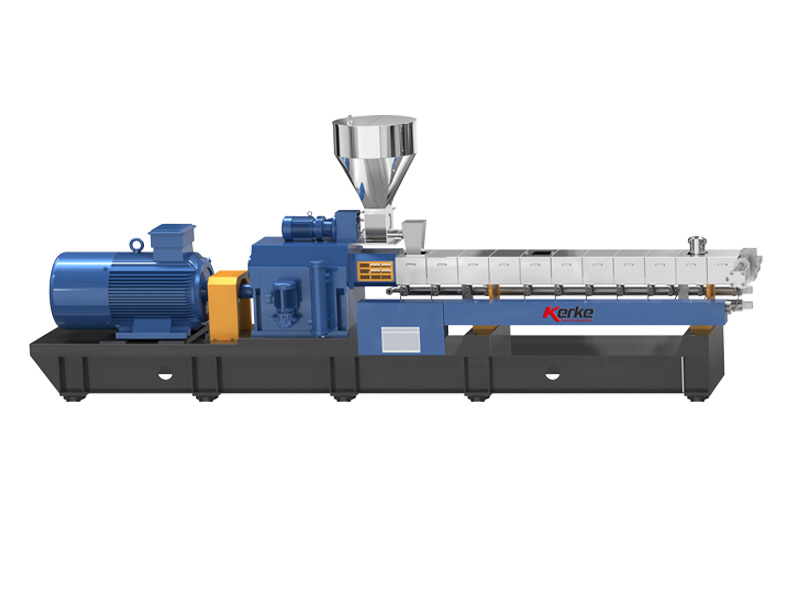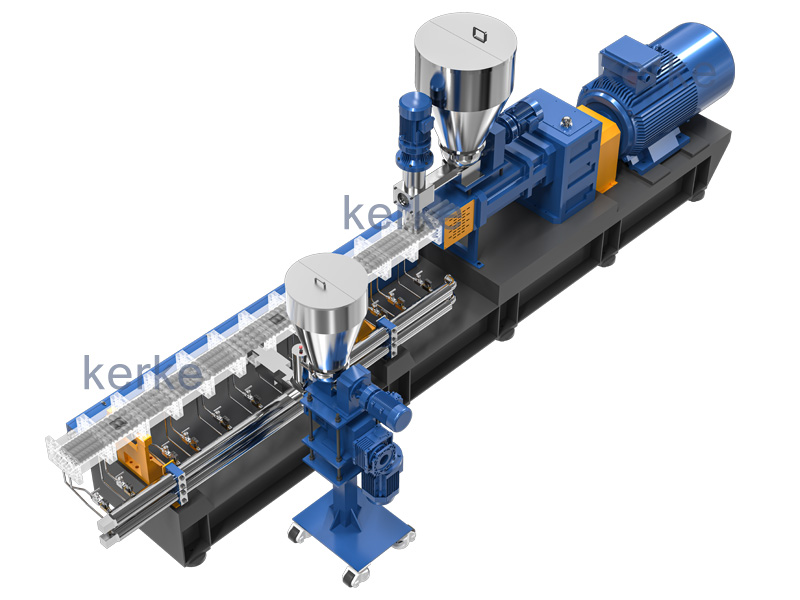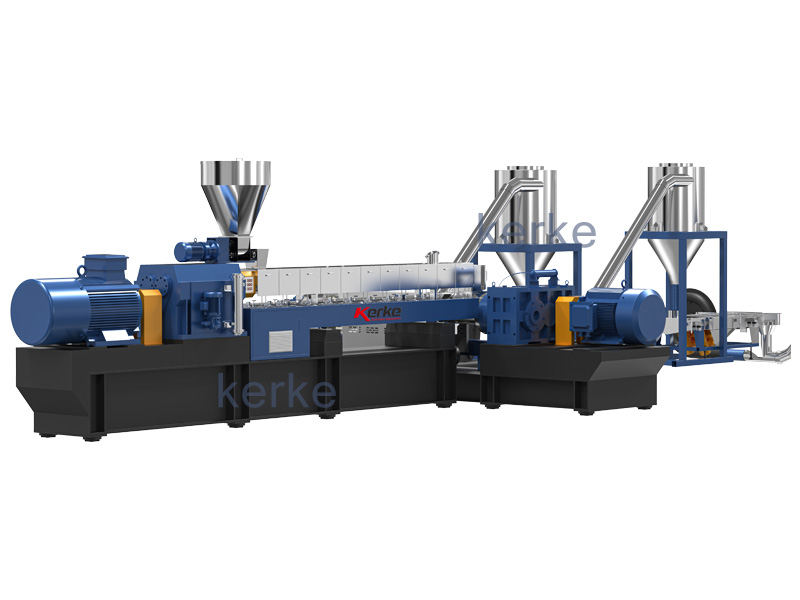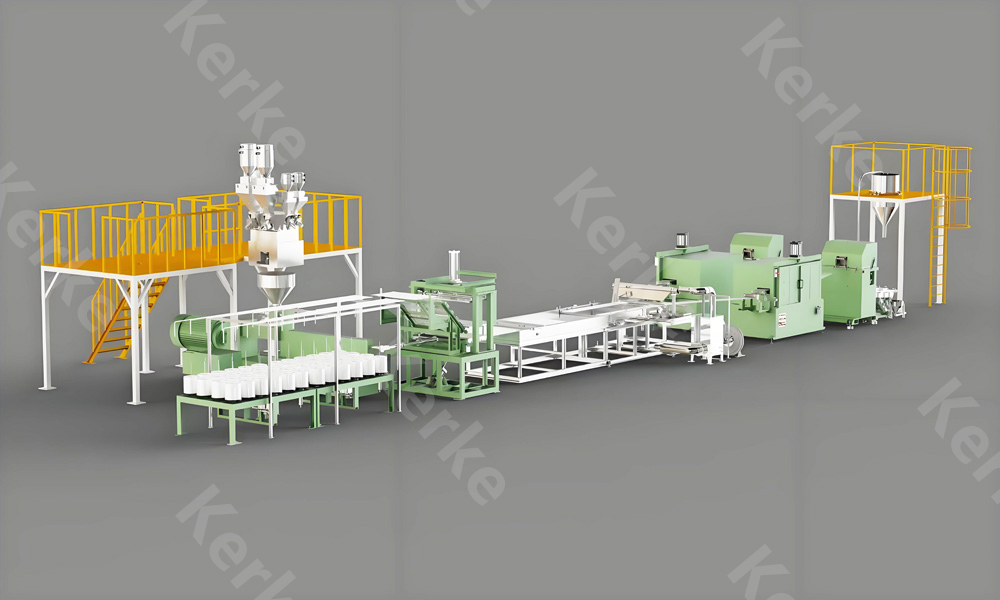
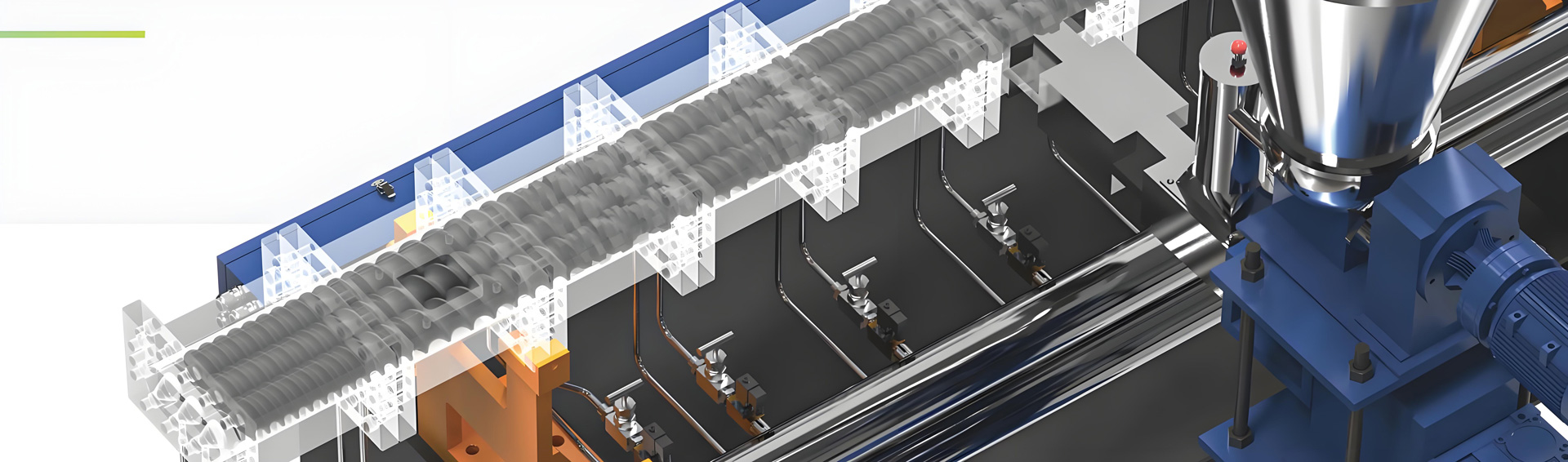
Color masterbatch is the core coloring and functional modification material for plastic products, widely used in food packaging, daily chemicals, automotive plastics, electronic appliances, textile plastic modification and other fields. With the continuous globalization of the plastic supply chain, color master products must comply with unified international quality and safety standards to enter mainstream overseas markets. As the core production equipment of color masterbatch, the twin screw extruder, also known as compounding extruder and masterbatch extruder, determines the physical properties, color consistency, safety and stability of finished color masterbatches in all dimensions. Most low-end ordinary extrusion equipment on the market cannot meet strict international standard requirements due to insufficient dispersion accuracy, unstable plasticization performance and poor impurity control, resulting in unqualified color master products failing customs inspection and market access.
Kerke professional masterbatch extruders are specially optimized for international standard color masterbatch production, with precise plasticization control, ultra-fine shear dispersion, strict impurity filtration and stable batch consistency performance. This article systematically elaborates the core international quality standards that color masterbatches need to comply with, the key equipment performance requirements behind standard compliance, the core technical advantages of Kerke twin screw compounding extruders in meeting international standards, standardized production processes, common non-compliance problems and equipment solutions, as well as detailed equipment price and project cost-benefit analysis. It provides comprehensive professional guidance for color masterbatch manufacturers to produce internationally compliant products and expand global market share.
1. Core International Quality Standards for Commercial Color Masterbatches
Global mainstream markets have formed a complete set of mandatory and recommended quality standards for color masterbatches, covering safety and environmental protection indicators, color performance indicators, physical and mechanical properties, and batch stability. All exported color master products must pass corresponding standard detection and certification to avoid market access restrictions and order losses. The mainstream applicable international standards include EU REACH regulation, RoHS directive, FDA food-grade safety standard, ISO color detection standard and industrial plastic modification quality specification system, which jointly restrict the production and manufacturing of high-quality color masterbatches.
1.1 EU REACH & RoHS Environmental Safety Standards
The EU REACH regulation is the core environmental access standard for plastic masterbatch products, strictly limiting the content of harmful substances such as heavy metals, polycyclic aromatic hydrocarbons, phthalates and persistent organic pollutants in color masterbatches. The RoHS directive further restricts the use of lead, mercury, cadmium, hexavalent chromium and other harmful heavy metal elements in electronic and electrical plastic masterbatches. For color masterbatch production, unqualified extrusion equipment will cause incomplete decomposition and residual mixing of harmful additives and impure pigments, leading to excessive harmful substance detection and product non-compliance.
International standard compliant color masterbatch production requires equipment to achieve uniform mixing and full reaction of raw materials, avoid local enrichment of harmful impurities, and ensure that all substance indicators are within the standard limit range. Kerke masterbatch extruders adopt low-shear homogenizing plasticization technology, which can fully disperse and stabilize various additives and pigments without producing new harmful decomposition substances during the extrusion process, perfectly meeting REACH and RoHS full-standard detection requirements.
1.2 FDA Food-Grade Safety Standards for Food Packaging Masterbatches
Color masterbatches used in food contact packaging, beverage containers and food-grade plastic products must comply with US FDA food safety regulations and EU food contact material standards. The core detection indicators include no harmful substance precipitation, stable high-temperature resistance, no migration of pigment molecules, and no odor residue. Ordinary extruders have unstable plasticization temperature and poor impurity filtration performance, which easily cause additive precipitation and pigment migration, failing food-grade safety certification.
Kerke food-grade dedicated twin screw compounding extruders are equipped with food-grade wear-resistant screw and barrel materials, precise multi-stage temperature control systems and high-precision impurity filtration devices. The whole production process avoids secondary pollution, ensures that the produced food-grade color masterbatches have zero harmful precipitation and stable molecular structure, fully meeting international food-grade safety quality standards and supporting long-term supply to global food packaging brand customers.
1.3 ISO International Color Consistency & Dispersion Standards
ISO standardized color detection specifications define core quality indicators such as color difference value, pigment dispersion grade, tinting strength and gloss uniformity of color masterbatches. International high-quality color masterbatches require color difference ΔE≤1.0 between batches, 99% pigment dispersion uniformity, no visible particle agglomeration, and stable tinting strength attenuation range. Poor shear dispersion performance of traditional extruders leads to uneven pigment distribution, obvious batch color difference and low dispersion grade, making products unable to meet international mid-to-high-end procurement standards.
Kerke twin screw extruders rely on modular screw combination and segmented shear dispersion technology to realize ultra-fine grinding and uniform mixing of pigment particles. The equipment can stably control the color difference of finished color masterbatches within ΔE≤0.8, exceeding the international ISO standard threshold, and maintain consistent dispersion and color performance of products in long-term continuous production, meeting the strict color quality requirements of international high-end brands.
1.4 International Industrial Durability & Weather Resistance Standards
Color masterbatches used in automotive plastics, outdoor building materials and engineering plastics need to comply with international weather resistance, aging resistance and mechanical stability standards, including UV resistance, high and low temperature cycle resistance, and long-term color stability. Unreasonable extrusion plasticization process will damage the anti-aging and weather-resistant functional structure of masterbatches, resulting in color fading, yellowing and performance attenuation of plastic products in long-term outdoor use.
Kerke masterbatch extruders optimize the melt homogenization process and internal molecular structure of color masterbatches, fully retaining the activity of weather-resistant and anti-aging additives, eliminating internal residual stress of products, and enabling finished color masterbatches to pass international UV aging test and temperature cycle test standards. The products can maintain stable color and performance after long-term outdoor use, meeting the quality requirements of international industrial high-standard application scenarios.
2. Key Equipment Defects That Cause Color Masterbatch Non-Compliance with International Standards
Most small and medium-sized color masterbatch manufacturers rely on ordinary low-end extrusion equipment for production, which has inherent technical defects in plasticization, dispersion, temperature control and impurity filtration, making it difficult to meet international quality standards. These equipment defects directly lead to unqualified color difference, excessive harmful substances, insufficient dispersion and poor weather resistance of color masterbatches, becoming the main obstacle for products to enter the global market.
2.1 Insufficient Shear Dispersion Leading to Substandard Color & Dispersion Indicators
Traditional single screw extruders and ordinary low-end twin screw extruders have single shear structure and insufficient kneading capacity, unable to fully peel and disperse nano and micron pigment agglomerates. Undispersed pigment particles cause uneven color of finished masterbatches, obvious color difference between batches, low tinting strength and poor gloss, which cannot meet ISO international color consistency standards. In addition, insufficient dispersion will also lead to local pigment enrichment, resulting in partial excessive heavy metal detection and failing international environmental protection standards.
Different from ordinary equipment, Kerke compounding extruders adopt multi-stage kneading block screw combination design, which can realize multi-cycle shear peeling and uniform dispersion of pigments and additives. The ultra-fine dispersion performance completely solves the problem of pigment agglomeration, ensuring that the color difference and dispersion grade of color masterbatches fully meet international standard requirements.
2.2 Unstable Temperature Control Causing Material Decomposition & Precipitation Risks
Ordinary extruders adopt single-point integral temperature control, with large temperature fluctuation range and low precision. Local overheating in the barrel will cause thermal decomposition of heat-sensitive pigments and functional additives, producing harmful decomposition products and leading to excessive organic volatile substances in masterbatches, failing REACH and RoHS detection. Local low temperature will cause incomplete resin plasticization, unstable molecular structure of masterbatches, and easy pigment migration and precipitation in subsequent use, failing food-grade safety standards.
Kerke masterbatch extruders are equipped with independent multi-stage zoning temperature control system, with temperature control accuracy up to ±1℃. Each barrel zone independently adjusts heating and cooling according to material plasticization requirements, avoiding material overheating decomposition and incomplete plasticization, ensuring stable molecular structure of masterbatches and no harmful substance precipitation, and meeting international safety and environmental protection standards.
2.3 Lack of Precision Filtration System Leading to Impurity Exceedance
Traditional extrusion equipment has simple filter structure and low filtration precision, unable to filter mechanical impurities, raw material agglomerates and degraded carbonized materials in the production process. Impurity residues will cause surface spots and particle defects of color masterbatches, and also lead to unqualified safety indicators, making products unable to pass international standard certification. In continuous mass production, the filter screen of ordinary equipment is easy to block and deform, resulting in unstable filtration effect and fluctuating product quality.
Kerke twin screw extruders are equipped with multi-stage precision automatic filtration systems, which can filter micro-impurities and carbonized particles in melt materials in real time. The high-precision filter assembly ensures zero impurity residue in finished color masterbatches, effectively avoiding quality problems caused by impurities, and enabling products to meet international high-purity masterbatch quality standards.
2.4 Unstable Extrusion Process Causing Poor Batch Consistency
Ordinary extruders have unstable feeding speed, fluctuating screw speed and uneven melt pressure, resulting in inconsistent plasticization degree and pigment dispersion state of different batches of masterbatches. Large batch color difference and performance fluctuation make it impossible to meet international standardized batch production requirements, resulting in failed long-term cooperation with international customers. Low equipment automation leads to large manual operation errors, further aggravating product quality instability.
Kerke masterbatch extruders adopt intelligent linkage control of feeding, screw speed and melt pressure, with fully automated production process and stable parameter output. The system can lock standardized production parameters to ensure consistent production process of each batch of products, realizing zero fluctuation of color masterbatch quality between batches and meeting international standard batch consistency requirements.
3. Core Technical Advantages of Kerke Masterbatch Extruder for International Standard Compliance
As professional twin screw compounding extruder equipment optimized for international standard color masterbatch production, Kerke masterbatch extruders have carried out targeted technical upgrades in dispersion performance, temperature control precision, impurity filtration, process stability and safety production. All core performances fully match the detection indicators of international color masterbatch quality standards, helping manufacturers produce fully compliant high-quality color masterbatch products stably and efficiently.
3.1 Modular Screw Shear System for ISO Standard Ultra-Fine Dispersion
To meet ISO international pigment dispersion and color consistency standards, Kerke twin screw extruders adopt customized modular screw element combination, including special low-shear high-dispersion kneading blocks, forward conveying elements and reverse pressure stabilizing elements. The screw structure is professionally optimized for different types of color pigments, realizing gradual shear, layered dispersion and uniform mixing of pigment particles. For high-concentration color masterbatches, the multi-stage kneading structure fully breaks pigment agglomerates; for fine powder pigments, the low-shear design avoids pigment degradation and color deviation.
This professional screw design enables Kerke equipment to stably produce color masterbatches with dispersion grade higher than international standard, batch color difference ΔE≤0.8, and tinting strength fluctuation less than 2%, completely meeting the strict color quality requirements of global high-end markets. Compared with ordinary extruders, the product qualification rate of international standard color masterbatches is increased by more than 15%.
3.2 High-Precision Zoned Temperature Control System for Safety Standard Compliance
Kerke compounding extruders are equipped with 6 to 12 independent temperature control zones according to different machine models, covering barrel feeding section, plasticization section, kneading section and extrusion molding section. Each zone adopts independent heating and circulating water cooling dual control, with temperature control accuracy of ±1℃, realizing precise temperature matching for different plasticization stages of color masterbatches. The low-temperature plasticization technology for heat-sensitive pigments avoids thermal decomposition of pigments and additives, ensuring no harmful volatile substances are generated during production.
For food-grade and medical-grade color masterbatch production, the equipment supports ultra-low temperature stable extrusion, effectively preventing molecular migration and precipitation of color masterbatches, fully complying with FDA food safety standards and EU food contact material regulations. The stable temperature control system eliminates the risk of excessive harmful substances caused by material decomposition, ensuring that products pass REACH and RoHS full-item detection stably.
3.3 Multi-Stage Precision Melt Filtration System for High-Purity Standard Production
In order to meet international high-purity color masterbatch quality standards, Kerke masterbatch extruders are equipped with multi-layer high-precision filter mesh and automatic screen changing system. The equipment can filter micro-carbonized particles, raw material impurities and undispersed large-particle agglomerates in the melt in real time, ensuring that the finished color masterbatch has no visible impurities and no micro-defects. The automatic screen changing design avoids material pollution and quality fluctuation caused by manual screen changing, ensuring continuous stable production of high-purity compliant products.
The sealed melt conveying structure of the whole machine avoids external dust and moisture pollution in the production process, realizing dust-free and pollution-free production environment for color masterbatches. This structural advantage ensures that the impurity content of finished products is far lower than the international standard limit, meeting the high-purity quality requirements of electronic-grade and food-grade color masterbatches.
3.4 Intelligent Full-Process Parameter Locking for Batch Consistency Standards
Kerke twin screw extruders adopt intelligent PLC full-process control system, pre-storing standardized production parameter formulas for various international standard color masterbatches including food-grade, environmental protection-grade and industrial weather-resistant grade. All core parameters such as screw speed, feeding volume, zoning temperature and melt pressure can be locked one-key to avoid quality fluctuation caused by manual parameter adjustment errors.
The equipment supports real-time monitoring and automatic correction of production parameters, with fully automated continuous production process. The batch difference of finished color masterbatches is controlled within the international standard range, ensuring that every batch of products can stably pass international standard detection. The data recording function of the system can track all production parameters of each batch of products, providing complete quality traceability documents for international customer certification and inspection.
3.5 Low-Residue Environmental Protection Extrusion Technology for Green Production Standards
Aiming at the international green environmental protection production standards, Kerke compounding extruders adopt low-shear low-degradation extrusion technology, which can complete masterbatch compounding without damaging the molecular structure of raw materials and additives, avoiding the generation of harmful degradation residues. The vacuum exhaust system with high negative pressure can completely extract volatile organic compounds and moisture in the melt, reducing VOC content of finished products to the international standard limit or below.
The whole machine has no oil leakage and no dust pollution design in the production process, meeting international clean production standards. The produced color masterbatches have no peculiar smell, low volatile content and zero harmful residue, fully complying with global environmental protection and safety access standards, helping enterprises obtain international green product certification and expand overseas market channels.
4. Standard Production Process of Kerke Extruder for International Standard Color Masterbatch
Relying on the professional performance advantages of Kerke masterbatch extruders, standardized production processes can be formulated for different international standard color masterbatches to ensure that each production link meets international quality requirements. The whole process covers raw material pretreatment, precise batching, low-degradation plasticization, ultra-fine dispersion, precision filtration, stable molding and finished product inspection, realizing full-process standard control of compliant products.
4.1 Raw Material Pretreatment & Purification (Standard Compliance Foundation)
Before production, all raw materials such as carrier resin, color pigments and functional additives are screened and purified in accordance with international standard requirements. Remove impure raw materials and deteriorated materials that may cause excessive harmful substances, and perform dehumidification and drying treatment to control raw material moisture within the standard range and avoid bubble defects and molecular hydrolysis precipitation of finished masterbatches. Adopt fully sealed automatic batching system to avoid external pollution in the batching process and ensure raw material purity meets production standards.
4.2 Precise Batching & Uniform Mixing
According to the formula ratio of international standard color masterbatches, the automatic batching system accurately weighs various raw materials with a batching accuracy of ±0.1%. High-speed uniform mixing ensures that pigments, additives and carrier resins are fully mixed in advance, avoiding local component deviation. Uniform raw material proportion lays a foundation for subsequent uniform extrusion dispersion and stable product quality, preventing component imbalance from causing unqualified safety and color indicators.
4.3 Low-Degradation Plasticization & Ultra-Fine Shear Dispersion
The pretreated mixed materials enter the Kerke twin screw extruder for staged plasticization and shear dispersion. Through multi-stage zoning precise temperature control, the materials are gradually melted and homogenized to avoid thermal degradation. The modular screw structure performs multi-cycle ultra-fine shear and kneading on the melt to completely disperse pigment agglomerates and uniformly distribute functional additives. The low-shear production process ensures no new harmful substances are generated, and the molecular structure of the masterbatch is stable, meeting international safety and performance standards.
4.4 Multi-Stage Filtration & Vacuum Exhaust Purification
The molten masterbatch material passes through multi-stage high-precision filter screens to completely filter impurities and carbonized particles. At the same time, the high-negative-pressure vacuum exhaust system removes moisture, volatile organic compounds and residual gas in the melt, reducing VOC content of the product and eliminating internal bubble defects. This purification process ensures that the purity and safety indicators of the color masterbatch fully meet international standard limits.
4.5 Stable Extrusion Molding & Cooling Shaping
After purification, the melt is extruded and molded stably through the precise die head of the Kerke compounding extruder. The constant-pressure extrusion system ensures uniform melt output and stable product dimensional consistency. The graded circulating cooling system cools the finished pellets evenly to avoid internal residual stress and uneven molding, ensuring stable physical properties and appearance quality of the color masterbatches, meeting international product appearance and dimensional standard requirements.
4.6 Online Inspection & Standard Sampling Detection
Finished color masterbatches undergo online appearance screening and dimensional inspection to eliminate defective products with impurities, spots and uneven particles. Regular sampling is carried out for professional detection including color difference, dispersion grade, heavy metal content and volatile content to ensure all indicators meet international standards. Qualified products are sealed and stored in a dust-free environment to avoid secondary pollution, ensuring long-term stable quality of compliant products.
5. Common International Standard Non-Compliance Problems & Kerke Equipment Solutions
In actual color masterbatch production, many manufacturers often encounter product non-compliance problems such as excessive harmful substances, unqualified color difference, insufficient dispersion and poor weather resistance, which restrict product export. Most problems are caused by backward equipment performance and non-standard production processes. The following analyzes common non-compliance issues and targeted solutions based on Kerke masterbatch extruder performance advantages.
5.1 Excessive Heavy Metals & VOCs (REACH/RoHS Non-Compliance)
Problem Causes: Ordinary extruders have excessive shear heat and inaccurate temperature control, resulting in thermal decomposition of raw materials and generation of harmful volatile substances; low filtration precision leads to impurity residue and heavy metal exceedance; open production process causes external pollution.
Kerke Solutions: The equipment adopts precise zoning low-temperature plasticization technology to avoid material thermal decomposition and reduce VOC generation; multi-stage high-precision filtration system removes impurity residues; fully sealed production structure prevents secondary pollution. After equipment upgrading, the heavy metal and volatile content of color masterbatches are stably controlled within international standard limits, ensuring full compliance with REACH and RoHS regulations.
5.2 Excessive Batch Color Difference & Unqualified Dispersion (ISO Color Standard Non-Compliance)
Problem Causes: Ordinary extruders have insufficient shear dispersion capacity, unstable feeding and extrusion pressure, resulting in inconsistent pigment dispersion and uneven color of different batches of products, unable to meet ISO color consistency standards.
Kerke Solutions: Modular multi-stage shear screw structure realizes ultra-fine pigment dispersion; intelligent linkage control of feeding and extrusion pressure ensures stable production parameters; one-key parameter locking ensures consistent batch production. The finished product color difference ΔE is stably less than 0.8, dispersion grade meets international high standard, completely solving color and dispersion non-compliance problems.
5.3 Pigment Migration & Harmful Precipitation (FDA Food-Grade Non-Compliance)
Problem Causes: Unstable plasticization temperature of ordinary equipment leads to incomplete resin melting, loose masterbatch molecular structure, easy pigment migration and additive precipitation, failing food-grade safety detection.
Kerke Solutions: High-precision constant temperature plasticization ensures full melting and uniform molecular structure of carrier resin; low-shear stable extrusion locks pigment molecules firmly; food-grade anti-precipitation production process eliminates migration risks. The produced food-grade color masterbatches have zero harmful precipitation, fully meeting FDA food contact safety standards.
5.4 Poor Weather Resistance & Aging Resistance (Industrial Standard Non-Compliance)
Problem Causes: Excessive shear of ordinary extruders damages the molecular structure of weather-resistant additives, resulting in reduced product UV resistance and aging resistance, unable to meet international outdoor industrial plastic standards.
Kerke Solutions: Low-shear homogenizing extrusion technology retains the full activity of functional additives; optimized molecular molding structure improves the internal stability of masterbatches. The finished products pass international UV aging and temperature cycle tests, with long-term stable color and performance, meeting international industrial high-standard application requirements.
6. Kerke Masterbatch Extruder Price & Full Project Cost-Benefit Analysis
Upgrading international standard compliant color masterbatch production equipment is a necessary investment for manufacturers to expand global markets. Kerke provides serialized twin screw compounding extruders and masterbatch extruders for international standard color masterbatch production, with transparent pricing and significant long-term cost-saving and profit-increasing benefits. The following is a detailed equipment price and project full-cycle cost-benefit analysis.
6.1 Kerke International Standard Color Masterbatch Extruder Price Range
Kerke serialized twin screw extruders cover experimental small-batch, medium mass production and large high-output models, all equipped with international standard compliant production configurations such as precise temperature control, ultra-fine dispersion and high-precision filtration. The FOB price of small experimental twin screw extruders for formula research and development and small-batch high-standard masterbatch production is 29,000 US dollars to 38,000 US dollars. The standard medium-sized compounding extruders, the mainstream model for mass production of export-grade color masterbatches, are priced at 46,000 US dollars to 59,000 US dollars.
The large high-torque twin screw extruders for large-scale export masterbatch factories have a price range of 63,000 US dollars to 76,000 US dollars. All standard models are equipped with intelligent parameter locking system, multi-stage temperature control and precision filtration devices, fully meeting international standard production needs. Optional customized food-grade production configuration and high-precision detection modules are priced at 2,600 US dollars to 5,200 US dollars, which can be selected according to product certification requirements.
6.2 Comprehensive Operating Cost Reduction After Equipment Upgrading
Replacing ordinary equipment with Kerke masterbatch extruders can significantly reduce comprehensive production costs caused by non-compliant products. Traditional equipment has a non-compliant defective rate of 6% to 10% for export-grade color masterbatches, resulting in a large amount of raw material waste and order compensation losses. After upgrading to Kerke equipment, the product standard compliance rate is stabilized above 99.5%, reducing raw material waste and defective product losses by 38,000 to 68,000 US dollars annually for a single medium-sized production line.
In terms of energy consumption, Kerke equipment adopts full servo energy-saving drive and precise temperature control technology, reducing hourly power consumption by 20% to 26% compared with ordinary extruders. Calculated based on 16-hour daily production and 300-day annual working hours, the annual electricity cost can be saved by 5,200 to 7,300 US dollars. In terms of maintenance, the optimized mechanical structure reduces vulnerable part wear, with annual maintenance cost reduced from 3,500 US dollars to less than 2,100 US dollars.
6.3 Export Profit Improvement & Investment Payback Cycle
International standard compliant color masterbatches have a 15% to 25% market premium compared with ordinary non-compliant products, and can enter high-end overseas markets with higher profit margins. After using Kerke equipment, enterprises can stably obtain international product certification, expand global customer resources, and increase annual export order volume by 20% to 35%. A single medium-sized production line can increase annual net profit by 42,000 to 85,000 US dollars by producing export-grade standard products.
The comprehensive investment payback period of equipment upgrading is only 2 to 3 months. In the long run, stable product standard compliance avoids customs detention, order cancellation and brand reputation losses caused by non-compliant products, bringing continuous and stable profit growth and market expansion space for enterprises. The equipment has a service life of more than 15 years, providing long-term reliable equipment support for enterprises' global market layout.
7. Kerke Brand Professional Advantages & Full-Cycle Service Support
Kerke is a professional manufacturer of high-performance twin screw compounding extruders and masterbatch extruders, focusing on the research and development of extrusion equipment for international standard compliant plastic masterbatch production. The company has long-term technical accumulation in color masterbatch fine dispersion, safety production and standard quality control, and its equipment performance fully matches the global mainstream color masterbatch quality standard system.
All Kerke twin screw extruders undergo strict factory testing of international standard production indicators before delivery, including color dispersion uniformity, product safety indicators and batch stability, ensuring that each equipment can stably produce fully compliant export-grade color masterbatches. The equipment’s intelligent parameter system pre-stores mature production formulas for various international standard masterbatches, helping customers quickly launch compliant product production and obtain international certification.
In terms of after-sales service, Kerke provides one-stop full-cycle technical support for export-oriented masterbatch manufacturers. Pre-sales professional engineers formulate personalized equipment selection and production process schemes according to customer product types and target market standards. After-sales free on-site installation, commissioning and standardized production technical training help customers master international standard production skills.
All Kerke equipment enjoys a two-year full-machine free warranty and 24-hour remote technical support. For product standard detection and quality debugging problems encountered by customers in export production, the technical team provides professional solutions in real time to ensure long-term stable and standard operation of the production line, helping customers steadily expand the global color masterbatch market.
8. Conclusion
Meeting international quality standards is the core prerequisite for color masterbatch products to enter the global market and obtain high-profit orders. The performance of masterbatch extruders, twin screw extruders and compounding extruders fundamentally determines whether color masterbatches can meet international safety, color, dispersion and stability standards. Ordinary traditional extrusion equipment has inherent technical defects, which make it difficult to avoid product non-compliance problems and restrict the international development of enterprises.
Kerke professional twin screw compounding extruders solve various standard non-compliance pain points in color masterbatch production through ultra-fine dispersion screw technology, high-precision temperature control system, multi-stage impurity filtration device and intelligent standardized production management. The equipment can stably produce color masterbatches that fully comply with EU REACH, RoHS, FDA food-grade and ISO international quality standards, with high product qualification rate, low comprehensive production cost and significant export profit advantages.
For color masterbatch manufacturers aiming at global market expansion, upgrading to Kerke international standard dedicated masterbatch extruders is the most effective way to realize product standard upgrading, eliminate export barriers and improve market competitiveness. With reliable equipment performance, perfect standardized production process and comprehensive after-sales technical support, Kerke helps enterprises achieve stable production of high-standard color masterbatches and sustainable growth in global export business.