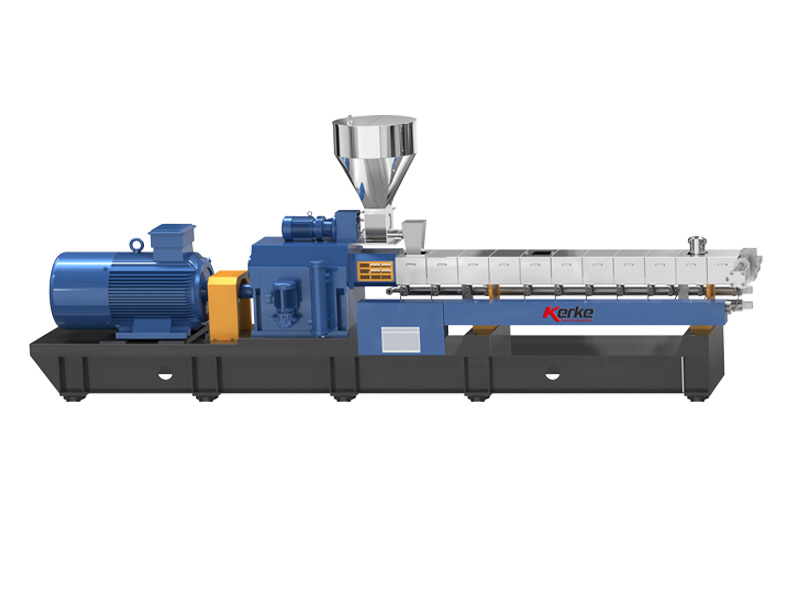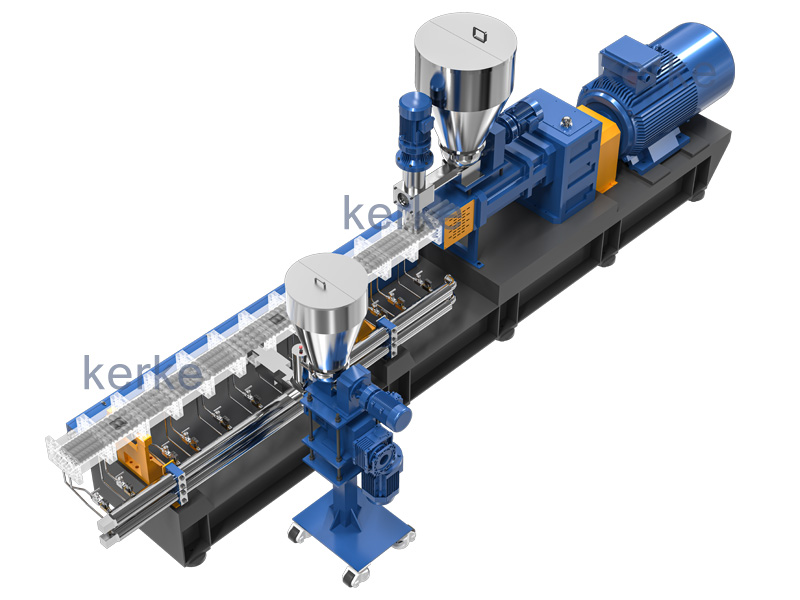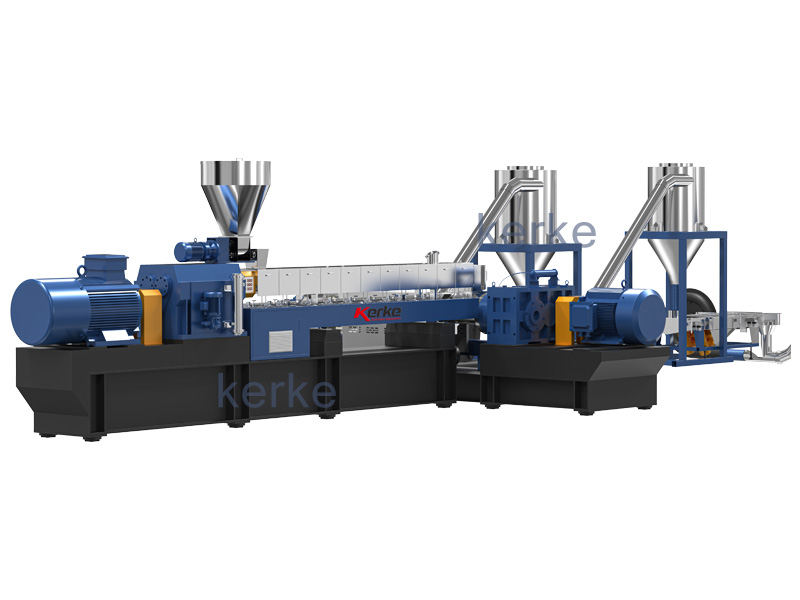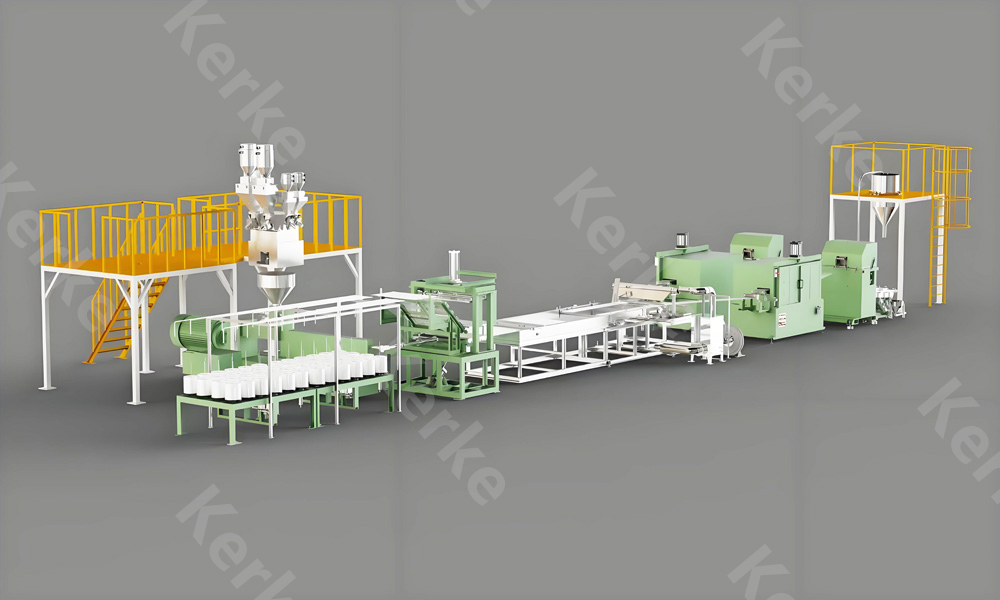
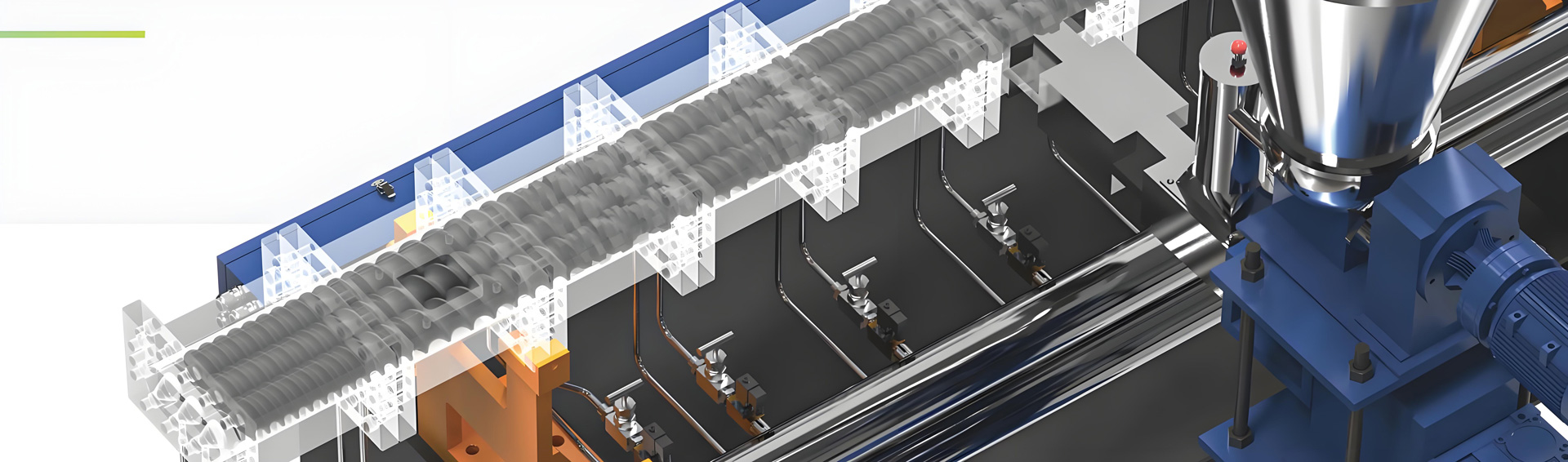
Masterbatch extruders, also recognized as twin screw compounding extruders, are core processing equipment for color masterbatch, functional masterbatch, and modified plastic production. These twin screw extruder devices rely on precise meshing screw rotation, high-temperature melting, and strong shear compounding to disperse pigments, fillers, and functional additives evenly into carrier resins, forming high-performance plastic masterbatch particles. In long-term continuous industrial production, key components including twin screws, barrel liners, kneading blocks, screw shafts, and discharge heads are prone to severe abrasive wear, corrosion wear, and fatigue wear due to high-load operation, high-filler raw materials, and complex thermal-mechanical interaction.
Component wear is the primary cause of reduced masterbatch production efficiency, unstable product quality, and increased equipment maintenance costs. Worn screw elements lead to weakened material shearing and poor dispersion uniformity, resulting in unqualified color difference and inconsistent physical properties of finished masterbatch. Severe barrel wear causes material leakage, pressure fluctuation, and increased energy consumption, while damaged kneading blocks directly reduce compounding precision and batch production stability. For masterbatch manufacturing enterprises, uncontrolled component wear will shorten equipment service life, increase spare parts replacement costs, and cause frequent production shutdowns, bringing huge economic losses to mass compounding production.
As a professional manufacturer of high-precision twin screw extruder and masterbatch compounding equipment, KERKE focuses on the research and development of wear-resistant equipment structure and stable compounding technology. KERKE masterbatch extruders adopt optimized alloy wear-resistant materials and modular structural design, with excellent anti-wear performance adapting to high-fill, high-abrasion, and high-temperature masterbatch production scenarios. This article comprehensively analyzes the classification and root causes of key component wear in masterbatch extruders, summarizes systematic wear reduction strategies including raw material optimization, parameter tuning, structural maintenance, and daily management, and matches targeted KERKE twin screw compounding extruder models with detailed price estimation and full-cycle operation cost-benefit analysis, providing a complete practical guide for enterprises to extend equipment service life and reduce production costs.
1. Overview of Key Wear Components in Masterbatch Extruders
Masterbatch compounding production features high filler content, complex material formulas, and continuous high-load operation, making key moving and bearing components of twin screw extruders vulnerable to wear damage. Different components bear different shear force, friction load, and thermal load during operation, showing distinct wear characteristics and failure modes. Clarifying the wear prone parts and performance characteristics is the premise of targeted wear reduction and scientific equipment maintenance.
1.1 Twin Screw and Screw Shaft Assembly
The twin screw assembly is the core working component of the masterbatch extruder and the most severely worn part in compounding production. Composed of modular screw elements, conveying blocks, and kneading blocks, the twin screws mesh with each other to complete material conveying, melting, shearing, dispersion, and compounding processes. In high-fill masterbatch production such as titanium dioxide, calcium carbonate, and carbon black masterbatch, hard filler particles continuously rub and impact the screw surface, causing gradual abrasive wear. Long-term high-speed rotation and alternating load operation will also produce fatigue wear on the screw root and shaft shoulder, leading to reduced screw meshing precision and unstable material conveying.
The screw shaft bears the entire torque and axial thrust during operation. Long-term high-load operation will cause micro-abrasion and slight deformation of the shaft surface, resulting in unstable screw rotation, increased vibration, and aggravated wear of matching parts. Worn twin screws will directly reduce the compounding uniformity of masterbatch, cause color deviation of finished products, and increase material residual rate in the barrel.
1.2 Extruder Barrel and Liner
The barrel is the outer protection and material forming cavity of the twin screw extruder, equipped with high-precision wear-resistant liners inside. The inner wall of the barrel liner directly contacts with high-speed flowing molten materials and hard filler particles, bearing continuous sliding friction and particle impact wear. In high-temperature masterbatch production, the thermal expansion and cold contraction of the barrel will cause alternating stress on the liner surface, forming thermal fatigue wear. For corrosive masterbatch formulas containing flame retardants and functional additives, the barrel liner will also suffer chemical corrosion wear, accelerating surface roughness increase and structural damage.
Local wear of the barrel liner will lead to uneven gap between screw and barrel, resulting in material backflow, pressure fluctuation, and incomplete melting of materials. Severe liner wear will cause equipment air leakage and material leakage, seriously affecting the stability of masterbatch compounding quality.
1.3 Kneading Blocks and Mixing Elements
Kneading blocks and special mixing elements are key components for masterbatch dispersion and compounding, responsible for crushing pigment agglomerates and realizing uniform mixing of fillers and resins. These components bear the strongest shear force and material impact in the entire extrusion system. The irregular edge structure of kneading blocks makes them extremely vulnerable to abrasive wear from hard filler particles. After wear, the shear strength and mixing efficiency of the blocks decrease significantly, unable to fully disperse fine pigment particles, resulting in poor color rendering and low qualification rate of masterbatch products.
1.4 Auxiliary Wear Components
In addition to core screw and barrel components, auxiliary parts such as thrust bearings, sealing rings, screen changers, and discharge die heads also belong to wear vulnerable parts of masterbatch extruders. Thrust bearings bear axial impact force during material extrusion, prone to friction wear and fatigue damage. Sealing rings are worn by long-term high-temperature material erosion, causing material leakage. The die head inner wall is impacted by high-speed molten materials for a long time, resulting in wall thickness wear and discharge unevenness, affecting the dimensional stability of masterbatch particles.
2. Classification and Root Causes of Component Wear in Masterbatch Extruders
Component wear of twin screw compounding extruders in masterbatch production is not caused by single factor, but the comprehensive result of material characteristics, process parameters, equipment operation status, and maintenance management differences. Scientific classification and in-depth analysis of wear causes can help enterprises formulate targeted wear reduction schemes and avoid blind maintenance and part replacement.
2.1 Abrasive Wear Caused by Hard Fillers
Abrasive wear is the most common wear type in masterbatch extruder production, accounting for more than 70% of total component wear failure. Most color masterbatches and functional masterbatches contain a large number of hard inorganic fillers, including titanium dioxide, calcium carbonate, talc powder, carbon black, and silicon powder. These filler particles have high hardness and irregular particle shapes. During the high-speed shearing and flowing process in the twin screw extruder, the hard particles continuously scratch, impact, and polish the surface of screws, barrel liners, and kneading blocks, resulting in gradual loss of component surface materials.
The higher the filler content and particle hardness, the faster the component wear speed. Especially for high-fill masterbatch production with filler content exceeding 50%, the abrasive wear rate of key components is 2 to 3 times higher than that of ordinary low-fill formulas. Long-term accumulation of abrasive wear will form uniform scratches and pits on the component surface, reducing equipment operation precision and service life.
2.2 Thermal Fatigue Wear Under High-Temperature Operation
Masterbatch compounding requires continuous high-temperature melting and plasticization, with the operating temperature of twin screw extruders usually maintained between 180℃ and 280℃. Long-term high-temperature operation will cause thermal aging and thermal fatigue of key component materials. The repeated thermal expansion and cold contraction of screws and barrel liners during startup and shutdown will produce alternating thermal stress on the metal surface, resulting in micro-cracks and fatigue spalling.
Local overheating caused by unreasonable temperature parameters will aggravate thermal fatigue wear. When the local temperature of the barrel exceeds the material tolerance range, the surface hardness of the liner decreases, wear resistance drops sharply, and it is more vulnerable to material friction damage. Thermal fatigue wear mostly occurs in the melting section and compounding section of the extruder, which are the core temperature-bearing areas of masterbatch production.
2.3 Corrosive Wear from Special Additives
Functional masterbatches such as flame retardant masterbatch, antibacterial masterbatch, and weather-resistant masterbatch contain corrosive chemical additives. These additives will decompose acidic or alkaline corrosive substances under high-temperature extrusion environment, causing chemical corrosion on the surface of metal components. Corrosion will destroy the surface wear-resistant layer of screws and barrel liners, forming corrosion pits and loose oxide layers.
The loose corrosion layer cannot resist the friction and impact of filler particles, which will be quickly worn off in the production process, accelerating the damage of components. Corrosive wear is often accompanied by abrasive wear, forming composite wear damage, which greatly shortens the service life of key components and is the main cause of frequent component replacement in special masterbatch production.
2.4 Accelerated Wear Caused by Unreasonable Process Parameters
Unoptimized extrusion process parameters are important human factors leading to accelerated component wear. Excessively high screw rotation speed increases the relative friction speed between components and materials, enhancing abrasive wear strength. Excessively high feeding load causes overloaded operation of the twin screw extruder, increasing screw torque and axial pressure, aggravating component fatigue wear.
Unreasonable temperature gradient setting leads to uneven material melting. Unmelted solid particles will produce strong impact friction on screws and barrel walls during extrusion, causing local severe wear. In addition, unreasonable screw element combination will lead to excessive local shear force, resulting in concentrated stress wear of kneading blocks and screw roots.
2.5 Wear Aggravation Caused by Improper Operation and Maintenance
Irregular daily operation and inadequate maintenance will significantly accelerate component wear. Forced startup with materials remaining in the barrel, frequent sudden shutdowns, and unloaded high-speed operation will cause abnormal vibration and impact of components, resulting in impact wear and structural deformation. Long-term failure to clean residual materials in the barrel will lead to material carbonization and adhesion, forming hard carbon deposits. The hard carbon deposits will continuously wear component surfaces during subsequent operation.
Infrequent lubrication of transmission bearings, untimely replacement of worn accessories, and lack of regular gap calibration between screw and barrel will lead to increased equipment operation resistance and aggravated overall wear of key components.
3. Hazards of Excessive Component Wear in Masterbatch Production
Slight component wear will not cause obvious production abnormalities, but long-term unmanaged excessive wear will bring multi-dimensional losses to masterbatch compounding production, covering product quality, production efficiency, equipment cost, and economic benefits. Clarifying the production hazards of excessive wear can help enterprises attach importance to wear reduction maintenance and standardized equipment management.
3.1 Declined Masterbatch Product Quality Stability
Worn screws and kneading blocks have reduced shearing and dispersion capabilities, unable to fully crush pigment agglomerates and evenly disperse fillers. This leads to uneven color distribution, obvious color difference between batches, and poor gloss of finished masterbatch. Excessive barrel wear causes unstable material extrusion pressure and uneven material melting degree, resulting in inconsistent particle size and density of masterbatch particles, which affects the processing performance and final product quality of downstream plastic products.
3.2 Reduced Production Efficiency and Increased Energy Consumption
After key components are worn, the material conveying efficiency and extrusion stability of the twin screw extruder decrease significantly. To ensure product qualification rate, enterprises often reduce production speed and increase repeated compounding processes, resulting in reduced hourly output and overall production capacity. At the same time, increased friction resistance of worn components leads to increased equipment operation load, rising motor power consumption, and 10% to 18% higher unit energy consumption than standard equipment operation.
3.3 Increased Spare Parts and Maintenance Costs
Excessive wear shortens the replacement cycle of core components such as screws, barrel liners, and kneading blocks. Frequent replacement of high-precision alloy wear-resistant parts increases direct equipment investment costs. In addition, wear-induced equipment faults require frequent shutdown maintenance and debugging, consuming a lot of labor and time costs, and increasing the comprehensive operation and maintenance expenses of the production line.
3.4 Shortened Overall Equipment Service Life
Local excessive wear of key components will cause unbalanced equipment operation, increased vibration, and abnormal load of transmission parts. Long-term unbalanced operation will cause linkage wear and damage of bearings, gearboxes, and transmission systems, affecting the overall operating precision and service life of the twin screw compounding extruder. Serious wear faults will even lead to equipment scrapping in advance, resulting in huge equipment investment losses.
4. Systematic Wear Reduction Strategies for Masterbatch Extruder Key Components
Aiming at multiple wear mechanisms of masterbatch extruder key components, this chapter summarizes full-link and operable wear reduction schemes from raw material pretreatment, process parameter optimization, equipment structural adjustment, and daily maintenance management, which can effectively slow down component wear, extend service life, and stabilize production quality.
4.1 Raw Material Pretreatment and Formula Optimization
Optimizing raw material formula and pretreatment process is the fundamental measure to reduce abrasive wear. For high-hard filler masterbatch formulas, appropriately adjust the particle size gradation of fillers, adopt fine and uniform particle raw materials, and reduce sharp large-particle impurities to weaken scratching and impact wear on components. Strictly screen raw materials before production to remove metal impurities, hard sundries, and agglomerated hard blocks mixed in fillers and resins, avoiding severe impact wear caused by foreign matters.
For corrosive masterbatch formulas, add appropriate high-temperature stabilizers and corrosion inhibitors to reduce the decomposition of corrosive substances under high temperature and weaken chemical corrosion wear of metal components. Uniformly mix materials through high-speed mixing pretreatment to avoid local excessive filler concentration, ensuring uniform material friction load during extrusion and preventing local concentrated wear of components.
4.2 Scientific Extrusion Process Parameter Tuning
Optimize screw speed parameters according to different masterbatch formulas. Avoid long-term high-speed operation for high-fill and high-abrasion formulas, adopt medium and stable rotating speed to balance production efficiency and wear degree. For low-viscosity and low-abrasion masterbatches, appropriately increase speed to ensure production capacity without aggravating wear. Avoid frequent speed adjustment and sudden speed change to reduce alternating fatigue wear of components.
Formulate graded temperature gradient parameters to ensure full and uniform melting of materials in the barrel. Set reasonable temperature values for feeding section, melting section, and compounding section to avoid local overheating thermal fatigue wear and unmelted particle impact wear. Control uniform feeding quantity to prevent equipment overload operation, stabilize screw torque and extrusion pressure, and reduce axial and radial alternating load wear of components.
4.3 Optimized Screw Element Combination and Structural Matching
Adopt targeted screw element combination schemes for different masterbatch production scenarios. For high-abrasion filler masterbatches, reduce the number of high-shear kneading blocks, adopt low-shear and high-dispersion element layout, and replace partial strong shearing structures with uniform mixing structures to reduce component shear friction load. For high-viscosity masterbatch formulas, optimize the arrangement density of conveying blocks to avoid material accumulation and excessive friction.
Regularly calibrate the gap between twin screws and between screw and barrel to ensure the meshing precision of the twin screw extruder. Maintain a reasonable uniform gap to avoid local friction and wear caused by offset collision of components. For worn single elements, replace them in time and adjust the combination balance to ensure consistent overall operation state of the screw assembly.
4.4 Standardized Equipment Operation Specifications
Formulate standardized startup and shutdown operation procedures. Preheat the equipment step by step before startup to ensure uniform temperature of the barrel and full softening of residual materials, avoiding forced startup friction wear. Clean the internal residual materials completely before shutdown to prevent material carbonization and hardening, which will cause wear in the next startup operation. Prohibit unloaded high-speed operation and overload feeding operation to avoid no-load friction and overload impact damage of components.
Reduce frequent startup and shutdown times in batch production. Frequent temperature alternation and equipment start-stop will aggravate thermal fatigue and mechanical fatigue wear of key components. Adopt continuous stable production mode for long-term batch production to maintain stable equipment operation state.
4.5 Regular Cleaning, Lubrication and Maintenance
Establish a regular equipment cleaning mechanism. Clean the barrel, screw surface, and die head residual materials thoroughly after daily production to remove carbon deposits and adhered hard materials, preventing secondary wear caused by residual sundries. Conduct deep disassembly and cleaning of screw elements and kneading blocks every week to ensure smooth component surface and stable friction performance.
Implement regular lubrication maintenance for transmission bearings and rotating parts to ensure sufficient lubricating oil film, reduce metal friction resistance, and slow down mechanical wear. Regularly check the wear degree of sealing rings, liners, and other vulnerable parts, replace aging and worn accessories in time, and avoid aggravated wear caused by accessory failure.
5. KERKE Masterbatch & Compounding Twin Screw Extruder Recommendation and Price Cost Analysis
Equipment material quality and structural design are the core hardware basis for reducing component wear. Ordinary traditional twin screw extruders adopt ordinary carbon steel or ordinary alloy materials, with poor wear resistance and short service life of key components, unable to adapt to long-term high-load masterbatch compounding production. KERKE twin screw extruders and masterbatch compounding extruders independently developed and manufactured adopt high-strength wear-resistant alloy materials and optimized anti-wear structural design, with excellent anti-abrasion, anti-corrosion and anti-fatigue performance, which can fundamentally reduce component wear rate and lower long-term operation costs. This chapter recommends targeted KERKE models for different production scales, with detailed price estimation and full-cycle cost-benefit analysis.
5.1 Small-Scale Experimental and Pilot Production Twin Screw Extruder
This small twin screw compounding extruder is suitable for laboratory formula research and development, small-batch trial production, and new masterbatch product debugging. The core components such as screws and barrel liners are made of high-chromium alloy wear-resistant materials, with integrated anti-corrosion and anti-wear treatment on the surface. The equipment adopts optimized low-shear uniform mixing structure, which can effectively reduce component friction and impact wear during small-batch frequent formula switching. The modular screw design supports flexible element combination, adapting to different masterbatch formula production and reducing targeted wear of single components.
Equipment Price Estimation: The FOB price of KERKE small experimental twin screw extruder ranges from 12,800 US dollars to 16,500 US dollars. The annual component maintenance and replacement cost of the equipment is controlled within 600 US dollars. Compared with ordinary small extruders, the component wear rate is reduced by more than 65%, the service life of core parts is extended by 1.8 times, and it has extremely high cost performance for experimental research and small-batch production scenarios.
5.2 Medium-Scale Mass Production Masterbatch Extruder
This mainstream full-automatic twin screw masterbatch extruder is the most widely used model in industrial masterbatch compounding production, suitable for stable batch production of color masterbatch, functional masterbatch, and modified plastic particles. KERKE adopts integral bimetallic barrel and high-precision alloy twin screw structure for this model. The screw surface is treated with vacuum quenching and wear-resistant coating, with strong abrasion resistance and corrosion resistance. The equipment is equipped with intelligent parameter adaptive system, which can automatically match optimal speed, temperature and feeding parameters according to different formulas, avoid process-induced excessive wear, and realize low-wear stable compounding production.
Equipment Price Estimation: The FOB price of KERKE medium-scale masterbatch twin screw extruder ranges from 28,600 US dollars to 35,200 US dollars. This model reduces the annual component replacement and maintenance cost by more than 72% compared with ordinary equipment of the same type, saving annual comprehensive maintenance and shutdown loss of about 5,800 US dollars. The investment payback period of wear reduction benefits is only 8 to 10 months, which is the preferred equipment for most medium-sized masterbatch production enterprises.
5.3 High-Speed High-Wear-Resistant Compounding Extruder
This high-end customized twin screw compounding extruder is oriented to high-fill, high-abrasion, and high-corrosion masterbatch mass production scenarios, such as high-concentration carbon black masterbatch, talc powder high-fill masterbatch, and flame retardant functional masterbatch. The core key components adopt imported high-hardness alloy materials and integrated forging molding process, with ultra-high wear resistance and fatigue resistance. The equipment is equipped with intelligent wear monitoring system, which can real-timely monitor component wear state and operation load, automatically adjust process parameters to avoid excessive wear, and support 24-hour uninterrupted high-load stable production.
Equipment Price Estimation: The FOB price of KERKE high-speed wear-resistant compounding extruder ranges from 42,500 US dollars to 49,800 US dollars. Although the initial equipment investment is relatively high, the core component service life is more than 3 times that of ordinary extruders, the annual failure downtime loss is reduced by more than 90%, and the long-term comprehensive operation cost is far lower than traditional equipment. It has significant economic advantages for large-scale high-standard masterbatch compounding production projects.
6. Regular Wear Detection and Fault Judgment Methods
Timely wear detection and fault judgment are important links to prevent excessive component wear and sudden equipment failure. Masterbatch production enterprises need to establish regular wear detection mechanisms, accurately judge the wear degree of key components, and formulate scientific replacement and maintenance plans to avoid production risks caused by excessive wear.
6.1 Daily Operation State Monitoring and Preliminary Judgment
Observe the equipment operation sound and vibration state during daily production. Uniform and stable operation sound indicates normal component state; abnormal friction sound and increased vibration often mean slight wear and gap deviation of screws or bearings. Monitor the stability of extrusion pressure and masterbatch particle uniformity in real time. Fluctuating extrusion pressure and uneven particle size are typical early signs of screw and barrel wear.
6.2 Weekly Precision Wear Detection
Use professional precision measuring tools to detect the surface wear thickness and gap change of screws, kneading blocks, and barrel liners every week. Record the wear data of key components, compare with the initial equipment parameters, and judge the wear rate. For components with wear thickness exceeding 0.1mm, mark them as key monitoring parts and strengthen operation parameter optimization and maintenance frequency.
6.3 Monthly Disassembly Inspection and Wear Evaluation
Complete regular disassembly and inspection of the twin screw assembly every month, comprehensively check the surface wear, scratch, corrosion and fatigue crack of each screw element and kneading block. Evaluate the overall wear state of the equipment, formulate targeted maintenance, replacement and debugging schemes, and eliminate hidden dangers of excessive wear in advance.
7. Long-Term Cost-Benefit Analysis of Wear Reduction Management
Implementing standardized component wear reduction strategies and adopting KERKE high-wear-resistant twin screw extruder equipment can bring continuous and stable economic benefits to masterbatch compounding enterprises, effectively reducing equipment maintenance costs, material waste, energy consumption and production loss, and improving overall project profitability.
7.1 Spare Parts Replacement Cost Saving
Traditional ordinary extruders need to replace core wear components 2 to 3 times a year in high-load masterbatch production. After adopting KERKE wear-resistant equipment and standardized wear reduction management, the component replacement cycle is extended to 1.5 to 2 years. For a medium-sized masterbatch production line, it can save annual spare parts replacement cost of about 4,200 US dollars, greatly reducing equipment investment and maintenance expenses.
7.2 Production Downtime Loss Reduction
Excessive component wear causes frequent equipment faults and maintenance shutdowns, resulting in annual production capacity loss of about 8%. Scientific wear reduction management eliminates wear-induced sudden shutdowns, improves continuous production stability, increases annual effective production time by more than 7%, and brings direct output growth benefits for enterprises.
7.3 Energy Consumption and Material Waste Saving
Worn components increase equipment operation resistance and material residual rate. Wear reduction optimization can reduce unit energy consumption by 12% to 16%, and reduce material waste caused by incomplete extrusion and unqualified products by more than 80%. A single medium-sized production line can save annual energy and material comprehensive loss of about 3,600 US dollars.
7.4 Product Quality and Market Benefit Improvement
Stable low-wear equipment operation ensures consistent masterbatch compounding precision and product quality, reducing batch color difference and defective rate. High-quality stable masterbatch products can enhance customer trust and market competitiveness, forming long-term stable order benefits and product premium space for enterprises.
8. KERKE Professional Technical Support and After-Sales Service
KERKE provides global customers with full-cycle professional technical services for twin screw extruders and masterbatch compounding equipment. In the pre-sales stage, professional engineers formulate exclusive equipment selection and anti-wear configuration schemes according to customers' masterbatch formula types, filler content, and production scale, matching the most suitable wear-resistant structural design and material configuration.
In the after-sales stage, KERKE provides on-site equipment installation and commissioning, operation technical training, and wear reduction process guidance, helping operators master standardized operation, daily maintenance, and wear detection skills. The technical team provides regular remote equipment inspection and parameter optimization services, dynamically adjusting process parameters according to production formula changes to ensure long-term low-wear stable operation of equipment.
All KERKE twin screw compounding extruders enjoy a two-year full-machine free warranty and lifelong technical follow-up service. Professional anti-wear technical solutions and high-quality equipment hardware support help customers effectively control component wear, reduce comprehensive production costs, and maximize project economic benefits.
9. Conclusion
Key component wear of masterbatch extruders is mainly caused by the superposition of abrasive wear of hard fillers, thermal fatigue wear of high-temperature operation, corrosive wear of special additives, unreasonable process parameters, and irregular daily maintenance. Excessive wear will lead to reduced product quality, decreased production efficiency, and increased enterprise operation costs. Adopting raw material optimization, scientific parameter tuning, structural optimization, and standardized operation and maintenance can effectively slow down component wear and extend equipment service life.
As a professional manufacturer of twin screw extruder and compounding extruder equipment, KERKE series masterbatch extruders adopt high-strength wear-resistant alloy materials and intelligent anti-wear process control technology, with excellent component wear resistance and stable compounding performance. Multiple models fully adapt to experimental small-batch and industrial mass production of various masterbatch products, with reasonable investment cost and significant long-term cost-saving benefits. Adopting KERKE high-quality equipment and standardized wear reduction management strategies can help masterbatch production enterprises stabilize product quality, reduce comprehensive operating costs, and obtain sustainable market competitive advantages.